
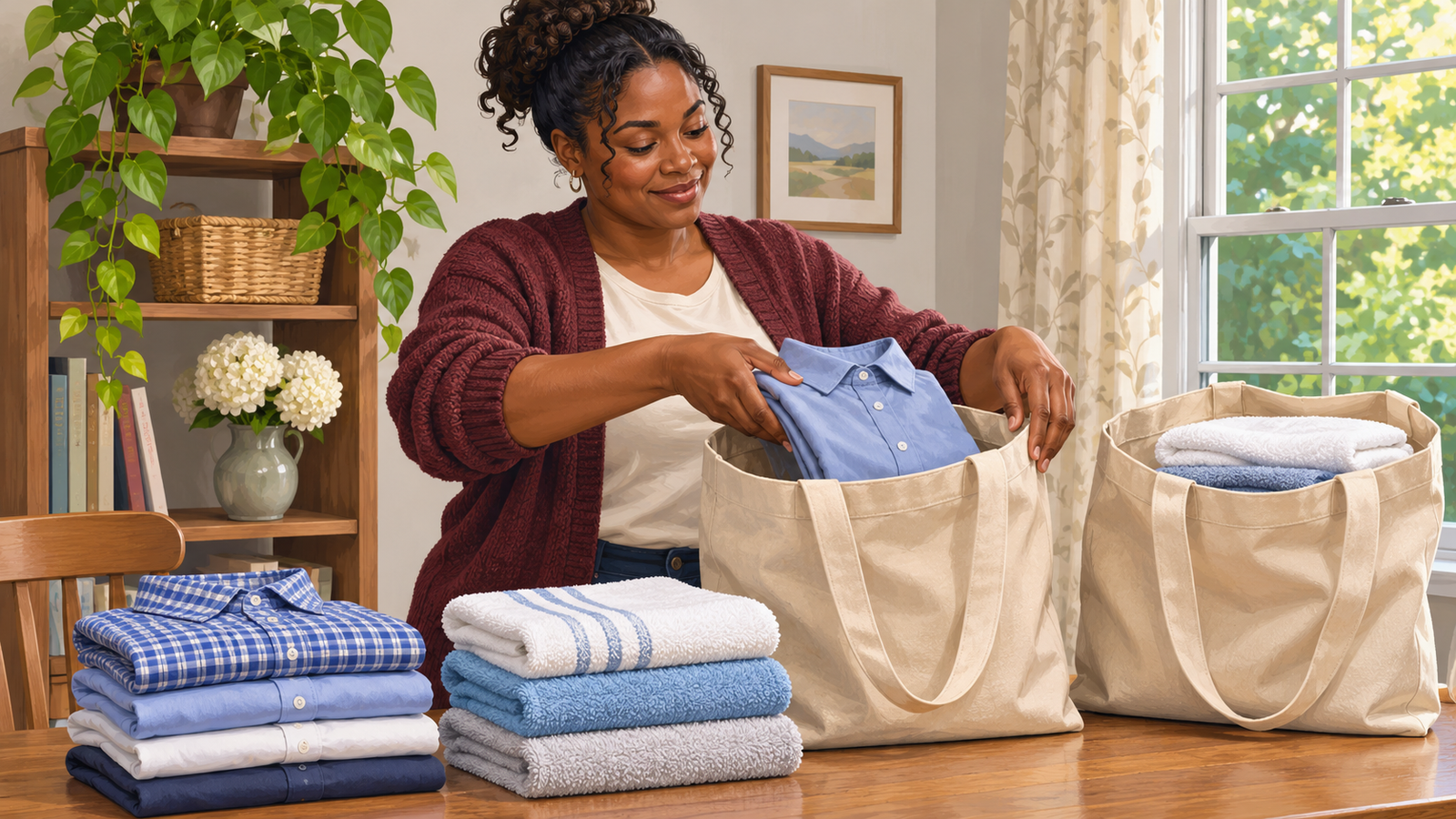
Clothing, shoes and linens need their own sorting and drop-off plan. Start small, check what each collector accepts and keep donations clean and dry.
By David LaGuerre
A worn towel, a coat that no longer fits and a pair of shoes with plenty of life left do not necessarily belong in the same destination bag. Before clearing the closet, decide what each item needs and where it can actually go.
For Oneida and Herkimer County households, one rule is clear: the Oneida-Herkimer Solid Waste Authority says clothing and textiles do not belong in the curbside recycling bin. The authority lists clothing collection boxes at the Utica and Rome EcoDrops.
A useful cleanout ends with an appropriate handoff, not a stack of bags waiting indefinitely by the door. This guide combines verified collection information with a practical sorting routine you can complete a little at a time.
Start with one manageable group
Choose a shelf, a drawer or one person’s outgrown clothing. Set aside a clear surface and a few bags or boxes. Avoid emptying every closet if you do not have time to sort the contents and put the keepers away.
Separate clothing from other household items before looking for a destination. A bag that includes shoes, a broken appliance and a loose battery creates several different disposal questions. Textile collection is not a general household cleanout service.
Make a short note of what is in each group. You do not need to count every sock. A description such as clean adult coats, paired shoes or worn cotton towels is enough to help you ask a collector an accurate question.
Give useful items a chance to stay useful
The New York State Department of Environmental Conservation encourages reuse and repair, including donating usable goods and mending items. Consider whether a small repair would let you keep using something you already like.
Keep the repair group realistic. Write down the actual job, such as replacing one button, and decide who will do it. If you do not plan to make the repair, ask a textile collector whether that condition is acceptable rather than storing an unlimited someday pile.
Offer usable items to someone only if they want them. Describe the size and condition honestly. Set a clear handoff arrangement instead of assuming another household will take anything you no longer need. An unwanted bag is still an unfinished job.
Separate wearable donations from recycling questions
A collector seeking clothing for immediate use may have different rules from a program that accepts damaged textiles. The New York State Association for Reduction, Reuse and Recycling lists many potentially recoverable textiles, while warning that individual collectors do not accept everything on the list.
Its guidance includes some worn or torn items when they are clean, dry and odorless and the destination accepts them. That is not permission to place any damaged item in any donation bin.
Use separate bags for items in good wearable condition and items needing a recycling decision. This makes it easier to follow different rules without reopening every bag at the collection point. Label your own bags for clarity, while following the collector’s packaging instructions.
Check the exact item and condition
Ask about footwear, linens, stuffed animals and other categories separately. Do not assume that a location accepting shirts also accepts every rug, pillow or bulky bedding item. Describe unusual items before making the trip.
The local authority’s clothing entry lists clean, dry clothing, footwear, accessories, linens and stuffed animals. Use that entry as a starting point, then confirm the current rules for the collection site you intend to use.
Set wet, moldy, strongly odorous or otherwise questionable items aside from clean donations. Tell the receiving program what condition you found and ask for appropriate handling or disposal instructions. Do not hide an unacceptable item inside a bag of usable clothing.
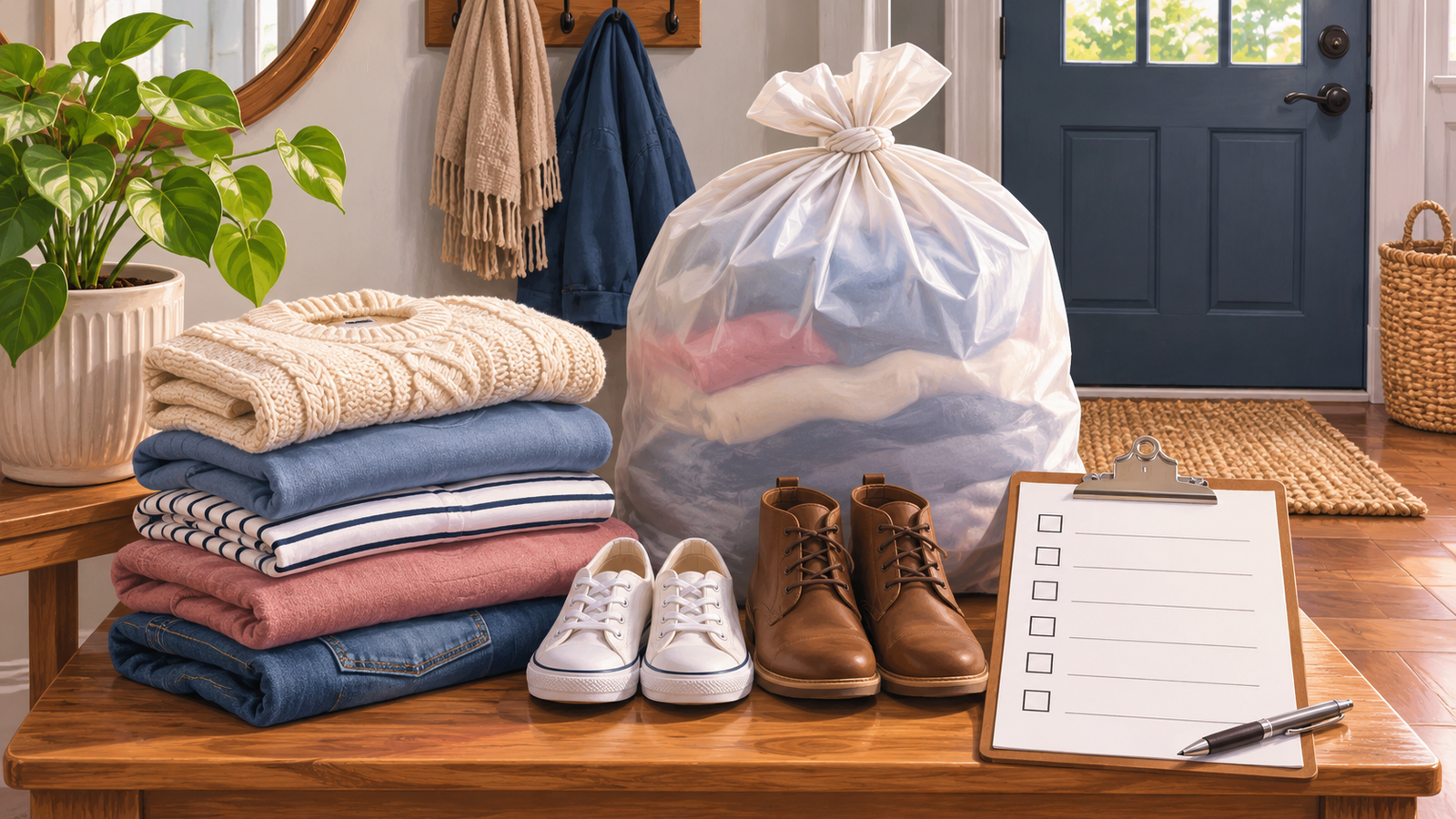
Verify the destination before loading the car
The authority identifies the Utica EcoDrop at 824 Sewage Plant Road and the Rome EcoDrop at 575 Perimeter Road as textile drop-off locations. Check current facility information and collection instructions before traveling.
If another destination is more convenient, the authority’s reuse directory offers additional starting points and advises contacting organizations directly about accepted goods and drop-off arrangements. A directory listing does not guarantee that a program can accept your particular bag today.
Ask three practical questions: Is the program currently accepting these items? How should they be packaged? Where and when should they be delivered? Save the answer with the destination name so another household member can complete the trip if necessary.
Keep the bags clean and dry until handoff
Follow the receiving program’s instructions for bags, boxes and closures. Pack only the items that belong in that collection. Keep shoes together and use a simple contents note for your own reference if it helps.
Choose a dry storage spot while waiting for the trip. A bag placed outdoors is not protected simply because its contents were clean when packed. If a bag becomes wet or damaged, check it and resolve the condition before donating.
In a Mohawk Valley household, pair the trip with an errand only after checking both the destination and your transportation plan. Avoid leaving textile bags in a vehicle indefinitely. Put the intended drop-off on the calendar and name the person responsible.
Have a plan for a full or unavailable collection point
Do not leave bags beside a full bin or outside a closed collection area. Follow the posted instructions. If you cannot complete the handoff as directed, take the items home and contact the operator or choose another verified destination.
Keep a second possible location in your notes if practical, but confirm its rules before treating it as a backup. Two sites can have different accepted-item lists even when both collect clothing.
Record whether the trip was completed. A note that says delivered is more useful than assuming someone else handled the bags. If items were refused, write down the reason so you can choose the next step accurately.
Reduce the next round of sorting
When you put the keepers away, organize them so you can see what you own. Keep clothing awaiting a specific repair separate from clothing ready to wear. Before buying a replacement, check whether the item you need is already in that repair group.
Use one small collection bag for future outgrown or unwanted textiles, with a note about the destination’s rules. Review it before each handoff. Do not assume a program’s current policy will remain unchanged forever.
The finished job is simple to recognize: usable items have a purpose, repairs have a real next step and outgoing textiles have reached an appropriate collector. One completed drawer is a useful start.
Primary sources checked November 5, 2026: Oneida-Herkimer Solid Waste Authority, NYSDEC and NYSAR3. Collection rules and access can change. Sorting and scheduling examples are practical suggestions. Images are AI-generated editorial illustrations.