
Your daily companion
The Daily Voice
A little perspective, something new to learn and practical ideas for a better everyday.
Word of the day
Perspective
A way of looking at or understanding something.
Quote of the day
Make room for a conversation that helps you see your community in a new way.
An original thought from Mohawk Valley Voice.
Three helpful reads
Read three complete guides below, with practical steps you can use at home.
Emergency Savings on a Tight Budget: Build a Cushion One Small Win at a Time
By David Laguerre
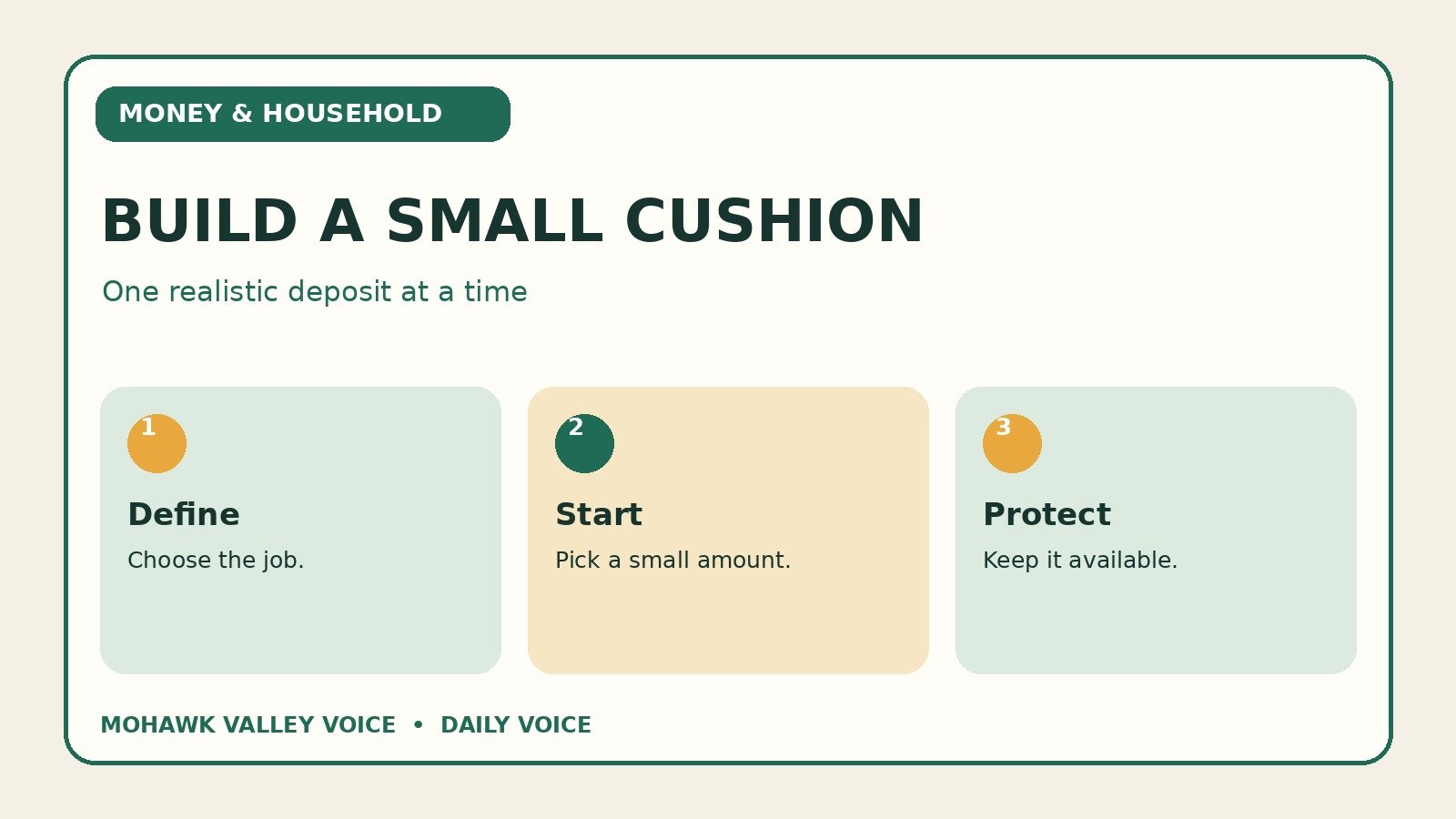
Emergency savings on a tight budget may begin with an amount that looks too small to matter. It still matters. A modest cushion can keep a minor surprise from becoming a larger problem, and the act of saving teaches you when money is available and where it disappears.
This guide does not assume that every household can save immediately. When income does not cover essentials, the first step may be asking about assistance, negotiating a bill or finding a safer due date. The goal is to create a method that works when room appears, not to shame anyone for financial conditions they cannot solve with a spreadsheet.
Define what the fund is for
Write a one-sentence rule for your emergency fund. Examples include an urgent car repair needed for work, an unexpected prescription or a necessary household repair. Keep predictable yearly expenses, such as holidays or routine registration fees, in a separate planned-expense list.
A clear rule reduces arguments with yourself later. It also helps you choose the right place for the money. Emergency funds generally need to be accessible, but they should not sit where every daily purchase can consume them. Compare account terms, fees, minimum balances, access methods and deposit insurance before opening anything.
Choose a starter target you can see
Do not begin with a frightening number. Choose a first milestone tied to a real expense: perhaps a common copay, a basic repair or one important bill. Your actual target depends on your household.
Break that milestone into deposits. A $120 starter target can be twelve $10 deposits or twenty-four $5 deposits. This arithmetic does not create spare money, but it turns a vague wish into a visible path. Put the target and current balance on a private tracker. Celebrate reaching the first milestone, then decide whether to build a larger one.
Study cash flow, not just the monthly total
List when income arrives and when essential bills leave. A household can have enough money for the month on paper and still face a shortage during a particular week. Mark variable costs such as groceries, utilities and transportation with realistic estimates based on recent records.
Look for a small timing opportunity rather than an imaginary spending category to eliminate. You may notice that one pay period carries fewer bills or that a subscription you no longer use is still active. Canceling something is useful only if it is genuinely unwanted. Do not cut medication, food, insurance or another essential merely to make a savings chart look better.
Create a holding place
If you use a bank or credit union, ask about a separate savings account and review fees and withdrawal limits. The Consumer Financial Protection Bureau’s emergency fund guide describes recurring transfers and split direct deposit as ways to save consistently.
Automatic saving needs guardrails. Schedule a transfer after income normally arrives, not immediately before a large bill. Turn on low-balance alerts if available. The CFPB warns that you should monitor checking balances so an automatic transfer does not cause an overdraft fee. If income varies, manual transfers may be safer than a fixed schedule.

Find small deposits without pretending they are painless
Use windfalls and savings from real changes. A rebate, refund, cash gift or unusually low utility bill can supply a deposit. Decide the percentage or dollar amount before the money arrives, while leaving room for overdue essentials.
Try a replacement rule: when you avoid a purchase you truly did not need, transfer part of that amount. Do not claim savings for a purchase you were never going to make. Another option is rounding your weekly spending total and moving the difference if the account balance safely allows it. Keep the experiment small enough that it does not trigger borrowing later.
Use a bill review to find leaks
Review one category at a time. Check recurring charges, insurance renewal documents, phone plans and services with introductory rates that changed. Contact providers through official numbers and ask what lower-cost options exist. Understand any tradeoff before changing coverage or service.
Be cautious with offers that require an upfront payment to lower debt or guarantee dramatic savings. Verify the business and read the agreement. If a bill is wrong, use the provider’s dispute process and keep records. Savings produced by correcting an error can help your household before any portion goes to the emergency fund.
Make an emergency withdrawal deliberate
When a problem occurs, pause and check three questions: Is it necessary? Is it unexpected? Does delaying it make the situation worse? If it fits your rule, using the fund is not failure. That is its purpose.
Write down the amount, date and reason. Pay through the safest normal channel and save the receipt. If the expense may be covered by insurance, a warranty or another program, verify that before assuming the full cost belongs to you. Avoid exposing bank details to an unsolicited caller who says urgent payment is required.
Rebuild without punishment
After a withdrawal, restart with the smallest deposit that works. Review whether the event should become a planned expense in the future. A yearly car service is not unexpected even if the amount varies, so it may deserve its own sinking fund.
Do not double transfers automatically to make up for a withdrawal if that creates another shortage. A steady restart is better than a rebound plan that causes overdrafts or credit use. Update the goal if your household changed.
Pair saving with the right help
If essentials exceed income, search for legitimate assistance before taking on expensive debt. Use official state and county resources, and confirm current program rules. Oneida County residents can begin with the county’s published social services contacts or New York’s myBenefits screening tool, but eligibility is determined through each program’s process.
For debt questions, look for reputable nonprofit counseling and verify fees and services. Do not send money or sensitive information because a social media advertisement promises instant relief. If a collector contacts you, learn your rights and verify the debt using official consumer guidance before paying.
Your first 30 days
Week one: define the fund and review cash-flow dates. Week two: choose the holding place and make a safe first deposit. Week three: review one recurring expense. Week four: check the balance, adjust the method and set the next small milestone.
The CFPB’s research on emergency savings and financial security documents meaningful differences in financial outcomes at different savings levels, but it does not mean every household has equal ability to save. Start with your actual circumstances. A useful emergency fund grows from honest numbers, safe storage and a rule you can live with.
Sources checked October 9, 2026. This article is general education, not individualized financial, tax or legal advice.
Cook Once, Eat Twice: A Safe Weekly Meal Plan That Cuts Waste
By David Laguerre
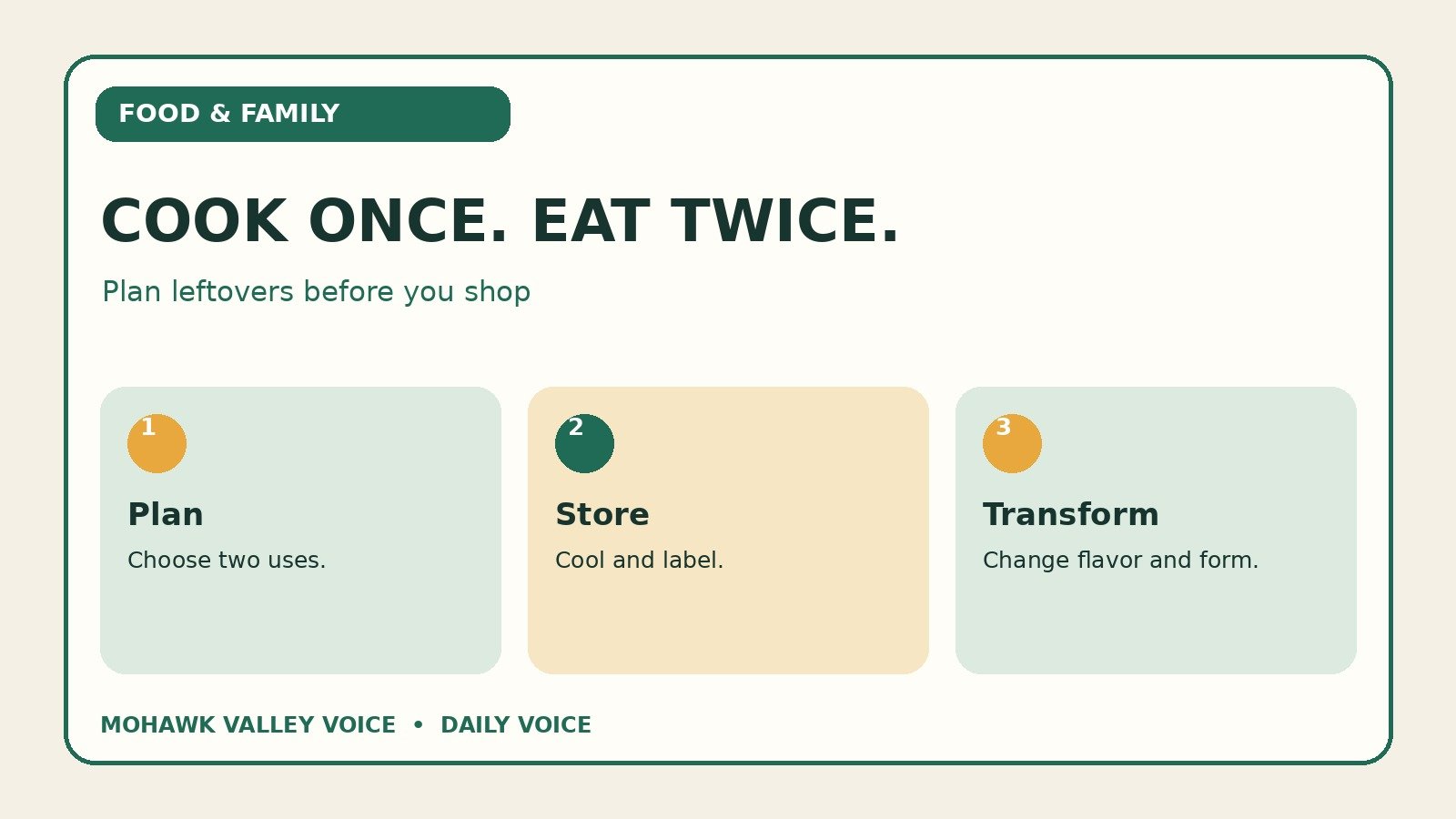
Cook once, eat twice is a simple idea: prepare one meal with a planned second use, then store and transform the extra food safely. The method can reduce weeknight work and help families use what they buy.
The important word is planned. Leftovers should not become mystery containers that remain in the refrigerator until no one trusts them. Decide the second meal before shopping, label stored food and follow official cooling and storage guidance. Your plan should fit household size, dietary needs and the time people are actually home.
Start with the household calendar
Before choosing recipes, mark late workdays, school activities, appointments and evenings when someone will eat elsewhere. Plan easier meals on the busiest days. Count who will be present rather than cooking the same quantity every night.
Choose two anchor meals for the week. Each anchor produces components for a second meal. For example, cooked chicken could become a grain bowl, or roasted vegetables could become a soup or egg dish. Check dietary restrictions and food allergies first. When serving a person with a medically prescribed diet, follow the guidance of their health professional.
Shop from the kitchen outward
Check the refrigerator, freezer and pantry before making the list. The USDA MyPlate planning guidance recommends building meals around foods you have, foods your family enjoys and items that are good buys. It also advises planning to use leftovers and eating fresh foods before they spoil.
Write the second use beside each anchor meal on the list. Buy only the quantity your storage and schedule can handle. Compare unit prices when package sizes differ, but remember that a lower unit price saves nothing if the extra food is wasted.
Build meals from flexible parts
Think in components: a protein food, vegetables or fruit, a grain or starch and a sauce or seasoning. This is a planning framework, not an individualized nutrition prescription.
Cook components with moderate seasoning when you want different flavors later. A batch of beans might become tacos and then soup. Roasted vegetables might accompany dinner and later fill a wrap. Keep sauces separate if they will make stored foods soggy. Avoid repeatedly reheating the whole batch; portion what you need for each meal.
Use a two-anchor sample week
Sunday anchor: roast or otherwise safely cook chicken, vegetables and a grain. Sunday dinner uses the components as a plate. Monday uses properly stored portions in bowls with a different sauce.
Wednesday anchor: cook beans or lentils with vegetables. Serve them with bread or rice, then use a safely stored portion in Friday soup. Tuesday and Thursday can use quick foods already on hand, while Saturday can use the freezer or another planned meal. Substitute foods based on culture, preference, price and dietary needs. The value lies in the pattern, not these exact ingredients.
Cool leftovers promptly
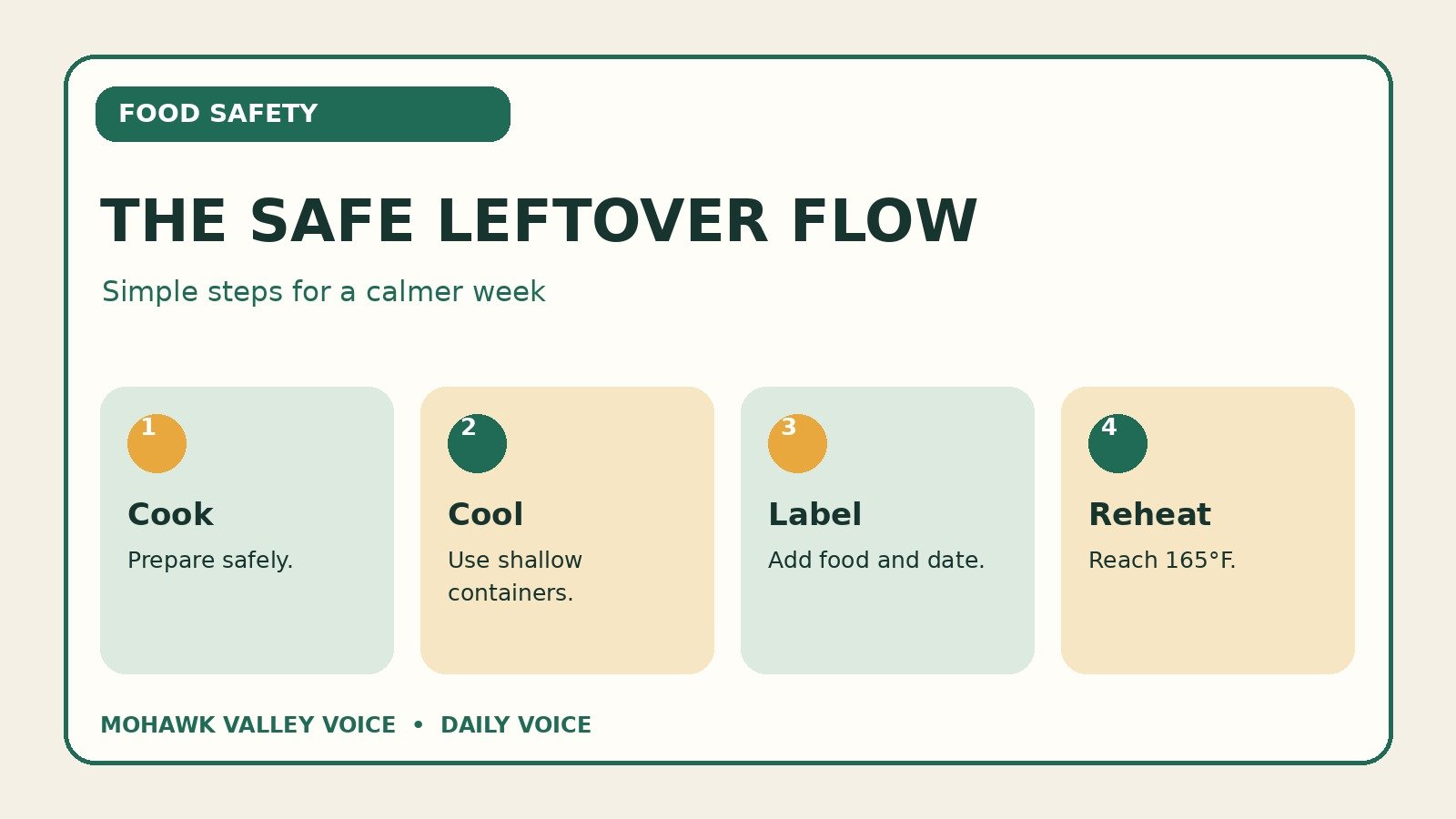
USDA food safety guidance says perishable food should not remain at room temperature for more than two hours, or one hour when the temperature is above 90 degrees Fahrenheit. Divide large amounts into shallow containers for faster cooling and refrigerate or freeze promptly.
Do not wait for a large pot to sit on the counter all evening. Portion the food after serving and label it. Keep raw meat and its juices away from foods that will be eaten without further cooking. Wash hands and use clean containers and utensils.
Label with facts, not guesses
Write the food name and preparation date on each container. Add the planned meal if that helps, such as Wednesday lunch. Put older food where people can see it.
USDA says most cooked leftovers can be refrigerated for three to four days. Freeze them for longer storage rather than pushing the refrigerator window. Freezer storage recommendations often address quality as well as safety, so consult the FoodSafety.gov cold storage chart or FoodKeeper resource for the specific food.
Reheat safely
USDA guidance says leftovers should be reheated to 165 degrees Fahrenheit, checked with a food thermometer. Bring soups, sauces and gravies to a rolling boil when reheating, following the applicable official guidance. Cover food and rotate or stir it when using a microwave so cold spots are less likely.
Reheat only the portion you plan to eat. If food was not stored safely or you do not know how long it has been out, do not taste it to test whether it is safe. When in doubt, discard it.
Make the second meal feel different
Change the format and flavor, not the safety rules. Turn roasted vegetables into a warm sandwich filling, or use cooked grains in a bowl with crisp vegetables and a new dressing. Add fresh texture after reheating rather than storing delicate toppings with hot food.
Ask household members which transformations they actually enjoy. Repeating a successful combination saves more money than creating elaborate leftovers nobody eats. Keep a short list on the refrigerator: three sauces, three quick vegetable sides and three ways to use cooked grains.
Plan for changing schedules
If the second meal will not happen within the safe refrigerator window, freeze the planned portion early. Label the package and record it on a freezer list. A freezer list can be a sheet on the door with the food, date and approximate portions.
Move a frozen item to the refrigerator to thaw safely, or use another safe method described by USDA. Food thawed in the microwave should be heated immediately. Do not leave frozen food on the counter to thaw.
Control waste without risking safety
Keep a small use-first area in the refrigerator for foods nearing their planned use date. Include only items stored safely. Schedule one weekly check before grocery shopping.
Food safety takes priority over avoiding waste. The prevention work happens earlier: buy realistic quantities, cool food promptly, label it and freeze portions before the refrigerator window closes. Composting may be an option for some inedible scraps, but follow local rules and do not let a wish to avoid waste override safety.
Set up next week in 15 minutes
Pick two anchor meals, identify each second use and write the storage plan. Add a note about which portions will be refrigerated and which will be frozen. Then make the shopping list from what is missing.
The USDA’s Healthy Eating on a Budget resources support meal planning and price comparison, while USDA’s leftovers guidance explains safe handling. A good cook-once plan should make the week calmer, not create a complicated production line. Start with one anchor meal and one dependable second use.
Food planning and safety sources checked October 9, 2026.
New York Benefits: A Practical Guide to Finding Help Before Bills Pile Up
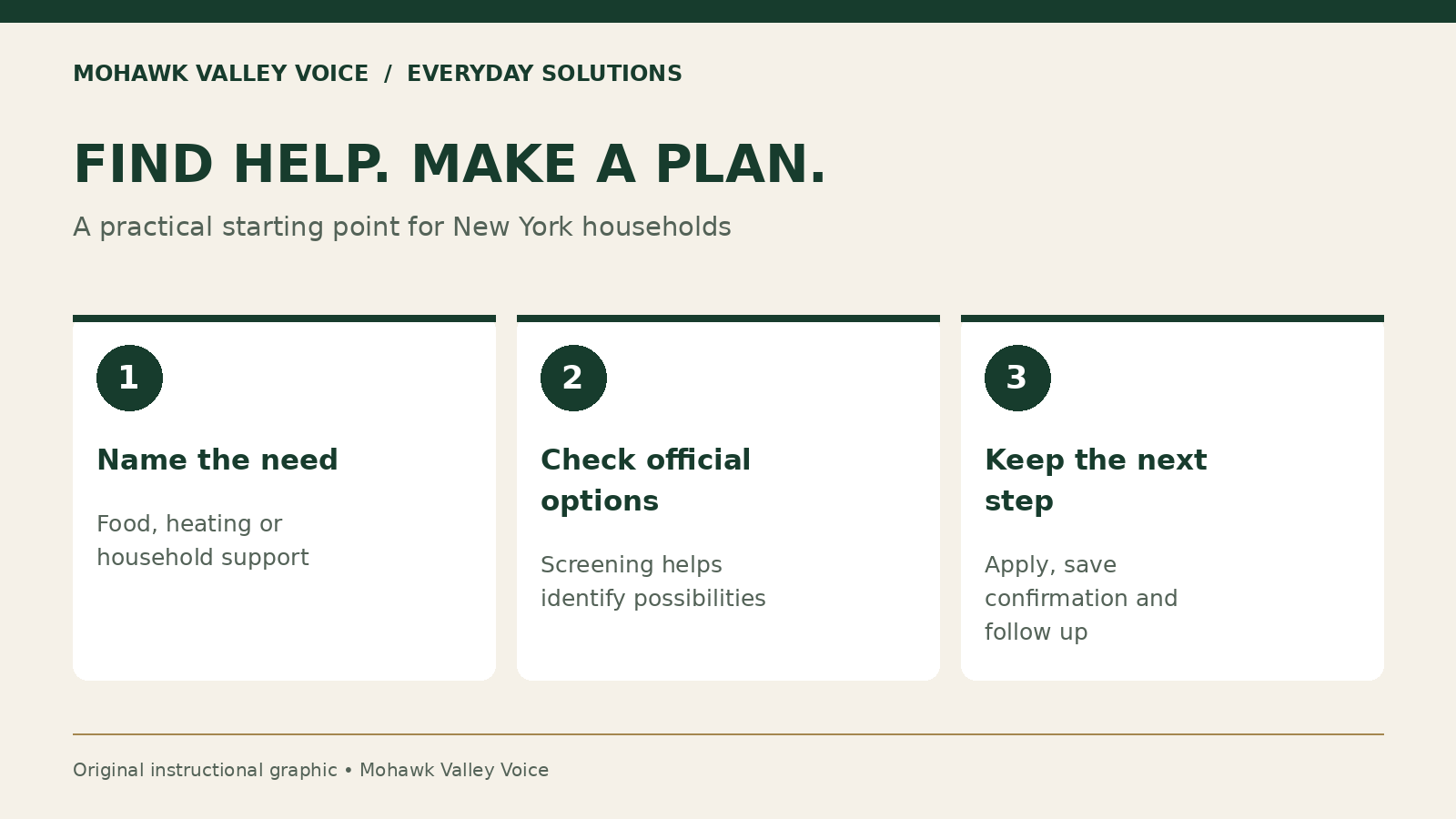
A step-by-step guide to checking New York assistance programs, organizing an application and finding the right local contact without guessing whether you qualify.
By David Laguerre
New York benefits can be easier to explore when you break the process into small steps. You do not have to understand every program before asking for help. Start with the problem you need to solve, gather a few household details and use an official resource to find the next action.
A family facing a high heating bill may also be worried about groceries. A worker whose hours were reduced may need help that differs from a retiree managing prescription expenses. Treat each need separately, then build one organized record of the calls, applications and notices involved. The goal is a clear plan, not a promise that every program will approve you.
Start with the need, not a program name
Take a blank sheet and make three columns: what is needed, how urgent it is and what you have already tried. Write specific items such as food for this week, a utility notice, questions about health coverage or help paying an upcoming bill. Include the actual deadline from any notice.
Put urgent needs at the top. When you contact an agency, explain that urgency first. Say, for example, that you have a shutoff notice dated for a particular day rather than simply saying money is tight. Ask whether there is a separate emergency process and what action you should take immediately. This is a suggested calling method, not a guarantee of emergency assistance.
Use the state screening tool as a starting point
New York’s official myBenefits screening tool asks about household members, income, housing costs and other bills. It can identify programs that may fit your situation, including food assistance, home energy assistance and several services for older adults.
The state emphasizes that a screening result is not an approval. You must apply for a final decision, and incomplete answers can produce inaccurate results. Set aside uninterrupted time, read the instructions and use the buttons within the tool rather than your browser’s back button. Keep a private note of the programs the results suggest, along with the next steps shown. Do not treat the list as an application confirmation.
Make a reusable household information sheet
Before filling out a long form, assemble a working information sheet. Include household names, contact details, current sources of income, housing expenses and the problem you need help addressing. Use recent records to check amounts rather than relying on memory.
Build a folder for related documents. Depending on the program, an agency may request identity, income, residence or expense information. Ask for its actual checklist before assuming that every item in your folder is required. Label files clearly, such as Income-September or Utility-Notice-October. Avoid putting Social Security numbers in filenames. A simple index can tell you what you already have and what you still need to request.
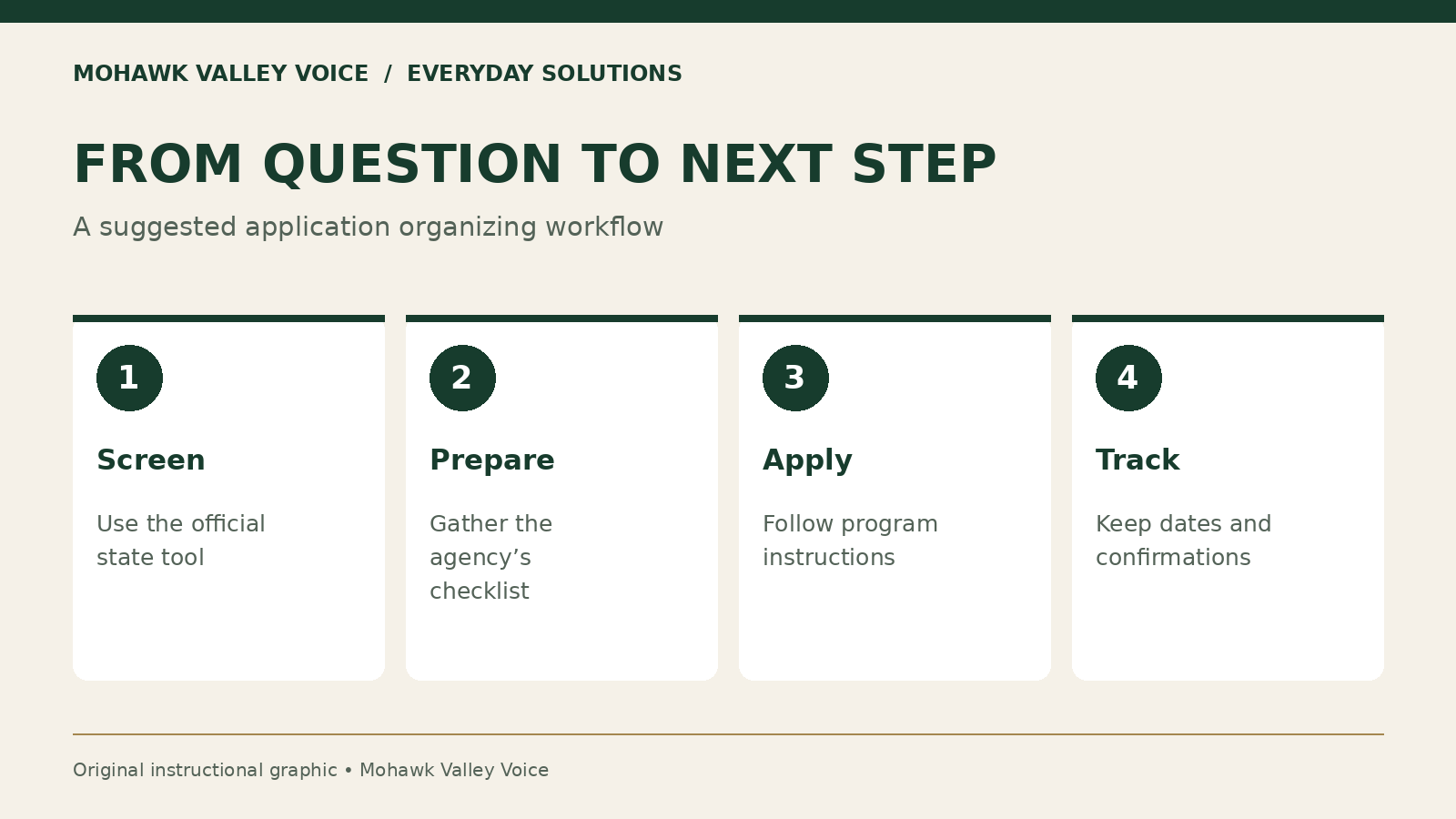
Separate screening, applying and following up
Keep these three stages distinct. Screening helps identify possibilities. Applying puts your request into the program’s process. Following up helps you respond to questions and understand the outcome.
After an online application, save the receipt or confirmation if one is provided. For mailed or delivered material, keep a copy and a record of when and how it was sent. Ask the receiving office how to confirm receipt. Record any case number in a secure place, together with the program name. Avoid submitting repeated applications simply because you have not heard back; contact the agency and ask about the status and its preferred next step.
Find the right Oneida County contact
For Oneida County food assistance questions, the county’s official SNAP page lists 315-798-5502 and SNAP@oneidacountyny.gov. It says online applications are available and telephone interviews can be provided. The page also lists assistance with online applications through community organizations.
Call before traveling to verify the current location, hours, appointment needs and documents to bring. Keep your question narrow: Do I need an appointment? How do I submit a requested document? How can I confirm that my application was received? Residents of Herkimer, Madison or another county should contact their own county department rather than assume Oneida County handles their case. The state myBenefits website is a useful starting point across New York.
Treat heating assistance as a program with changing availability
Heating help deserves its own entry on your planning sheet. A winter bill and an immediate loss of heat may involve different questions, and program availability can change by season and funding.
The state’s OTDA application guidance directs residents outside New York City to myBenefits for a Regular HEAP application when that program is open. Check the current guidance before applying. Ask the local office which benefit or process fits your situation, whether applications are currently accepted and what deadlines apply. This guide does not state that a particular HEAP component is open today or that you qualify.
Use a call log to prevent the process from becoming a blur
Create a small log with the date, agency, person or unit reached, question asked and next action. At the end of each call, repeat the instructions back in your own words. Ask whether you understood the deadline correctly and which submission method the office wants you to use.
Here is a suggested example: October 12, food assistance office, asked about missing income proof, instructed to submit two recent pay records through the approved channel, follow up after submission. Use your real dates and instructions. Set a reminder for your next action. If you cannot reach someone, note the attempt and try the office’s published alternative contact rather than sending sensitive documents to a random address.
Protect your information while seeking help
Open official websites directly and check the full web address. Do not enter private details into a page merely because an unsolicited text says you must act quickly. If a message claims to come from an agency, verify it using the phone number or website you already trust.
Keep your working folder private. On a shared computer, sign out after use and avoid leaving downloaded identity documents behind. When someone helps you complete a form, stay involved and understand what is being submitted. If a form or instruction is confusing, ask the program about language help, accessibility assistance or another way to apply. Do not guess at a question that could change the information you report.
Begin with one manageable action
Choose one step today: complete a screening, call the correct county office or gather the document named in a notice. Then choose the next step only after you know what is needed.
Before putting the folder away, check that you have the program name, application or case reference if available, next deadline and a verified contact. These four details turn a stressful pile of papers into a working plan. Official program rules and agency decisions control eligibility; this article offers an organizing method to help you reach those decisions with better information and fewer avoidable gaps.
Source and contact information checked October 8, 2026. Recheck official pages before relying on hours, program openings or application instructions.