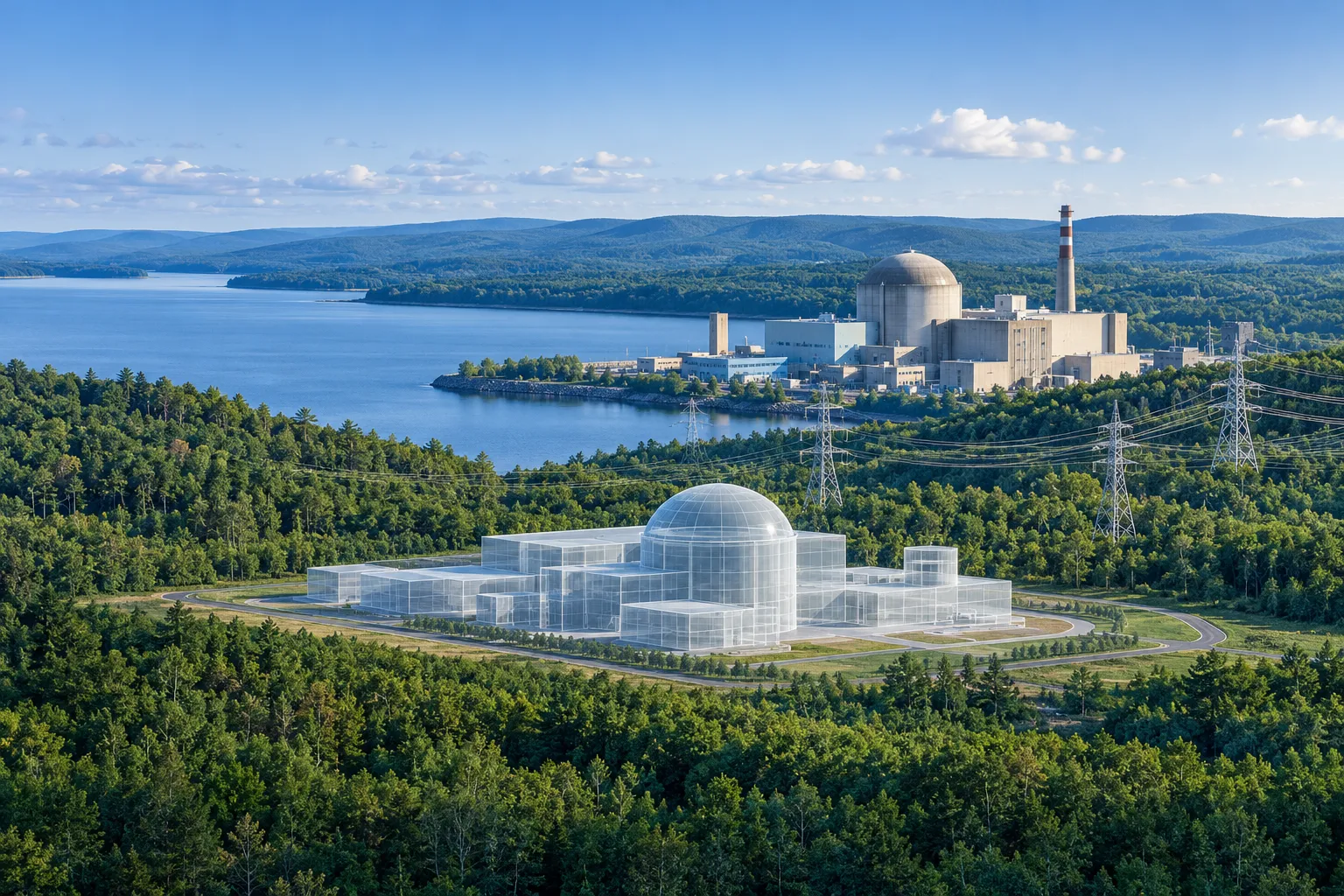
An 8.4-gigawatt nuclear goal is not permission to build a reactor. New York Nuclear Master Plan Sets Goals, Not Plant Approvals captures the key distinction: the state has laid out a strategy for nuclear power, but individual projects still need licensing, financing, environmental review, and other applicable permits.
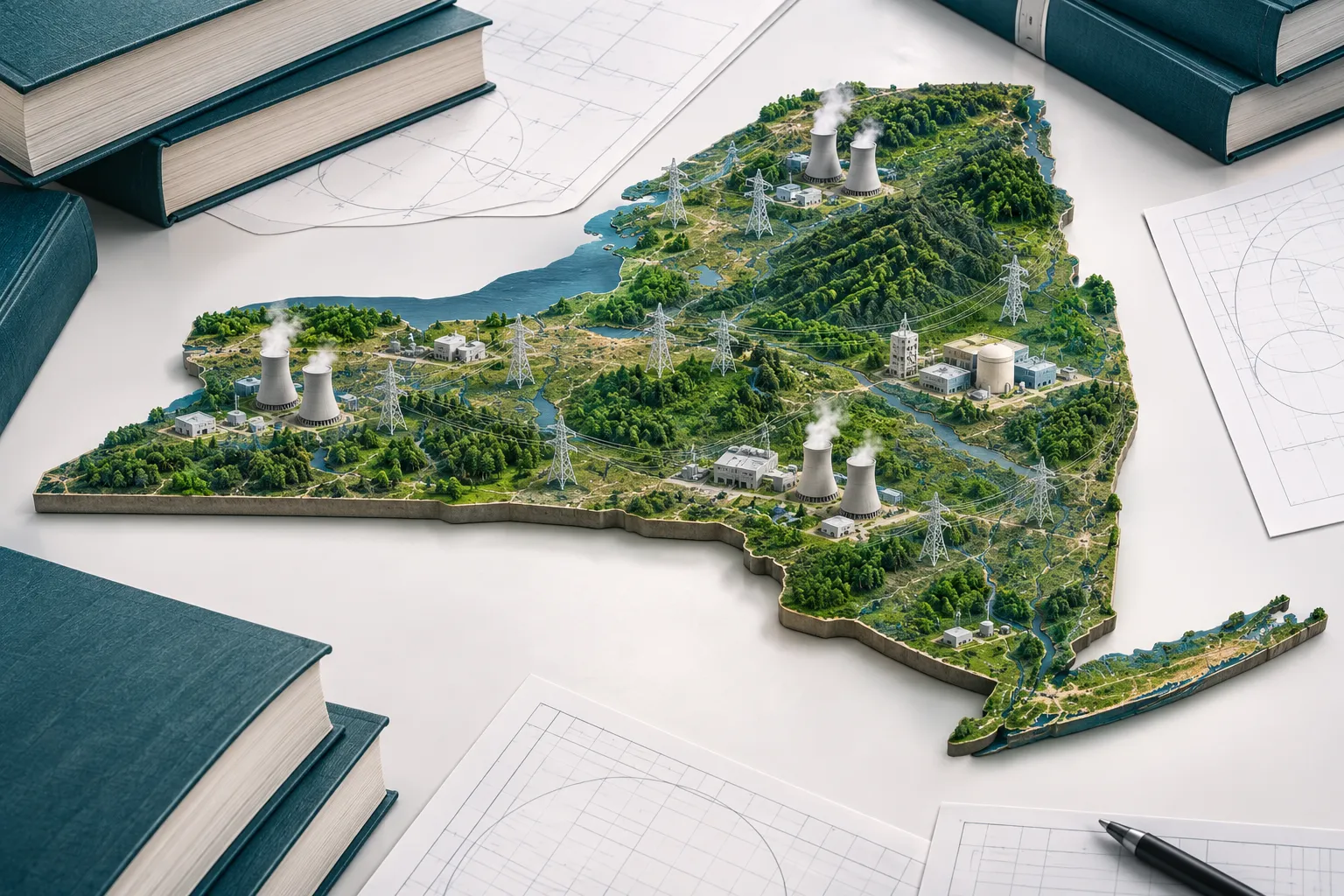
What Are the Main Goals in New York’s Nuclear Master Plan?
New York’s plan aims to establish nuclear power as a long-term source of dependable, low-emission electricity. The November 2026 completion announcement describes an 8.4 GW Nuclear Reliability Backbone, including a long-term goal of 5 GW of new advanced nuclear capacity.
The announcement describes a 30-point plan supported by 12 studies and more than 1,000 pages of analysis. NYSERDA, the New York State Energy Research and Development Authority, and DPS, the Department of Public Service, provide institutional leadership.
The work addresses technology, workforce needs, supply chains, potential sites, and policy choices. It builds on expert and stakeholder input through the state’s blueprint and summit process, outlined in NYSERDA’s advanced nuclear energy program.
The plan is useful for utilities, developers, communities, and policymakers assessing future options. It is not a construction manual or a promise to build in any particular town.
Common mistake: treating the total capacity target as entirely new construction. The overall nuclear backbone and the new advanced nuclear goal are different measures.
Why Does “New York Nuclear Master Plan Sets Goals, Not Plant Approvals” Matter?
The distinction matters because a state policy goal cannot replace project-specific permission. The master plan establishes direction; approvals determine whether a particular developer can build and operate a particular reactor at a particular site.

Planning actionWhat it meansWhat it does not meanCapacity targetDesired future electricity supplyGuaranteed plant deliveryPolicy options paperPossible support mechanismsBinding funding commitmentSite identificationLocation merits further studyApproved construction sitePSC proceedingFormal review of regulatory choicesFederal reactor license
The Advanced Nuclear Policy Options Paper explores mechanisms, not automatic mandates. The DPS White Paper likewise belongs to policy development, not plant authorization.
The Public Service Commission’s Nuclear Reliability Backbone proceeding begins a state regulatory pathway. Federal nuclear safety licensing remains a separate responsibility of the Nuclear Regulatory Commission.
A planning document can identify a need without authorizing the project intended to meet it.
For residents, the practical test is simple: look for an actual application, licensing action, permit, or funding decision, rather than relying on an announcement headline.
When Will Implementation Start, and When Could Construction Be Approved?
Implementation can begin through studies, agency proceedings, workforce planning, and project development before any reactor receives construction permission. The master plan’s completion does not establish a guaranteed groundbreaking date.
New York has also announced development steps for at least 1 GW of nuclear energy in upstate New York. That project-development effort should not be confused with approval of the full statewide capacity goal.
A proposed project generally needs:
-
A defined proposal: developer, technology, capacity, and location.
-
Feasibility work: cooling water, grid access, geology, and emergency planning.
-
Regulatory review: federal licensing and applicable state and local decisions.
-
Financial commitments: contracts, financing, and clear allocation of risk.
-
Construction authorization: the required permissions for the proposed work.
Some steps overlap. The path also depends on reactor design and licensing approach.
Timing rule: treat a projected opening year as conditional until the developer explains the licensing schedule, funding, equipment supply, and construction risks.
Why Is New York Focusing on Nuclear, and How Could It Help Carbon Goals?
New York is considering nuclear because reactors can supply electricity regardless of sunlight or wind conditions. Nuclear generation produces no carbon dioxide during operation, although mining, fuel processing, and construction have life-cycle impacts.
The state’s announcement on facilitating advanced nuclear development frames the effort around energy needs and future development. Firm electricity could help support electrified buildings, transport, and industry while limiting reliance on fossil-fuel generation.
What Alternatives to Nuclear Does New York Consider?
The relevant comparison is a mix of resources, not nuclear against one replacement technology. Wind, solar, hydropower, storage, transmission, efficiency, and demand response all serve different roles.
New York’s broader climate investment agenda shows that nuclear planning sits within a wider clean-energy effort.
Decision rule: compare options by dependable supply, delivery date, total system cost, and emissions avoided. A cheaper energy source may still need storage or transmission; a firm reactor may arrive too late to solve an immediate shortage.
Will Indian Point or Other Existing Nuclear Plants Stay Open?
The master plan does not reopen Indian Point, and it cannot guarantee that another plant will operate indefinitely. Indian Point is shut down and undergoing decommissioning; any restart proposal would require a separate technical, commercial, and regulatory process.
Existing operating plants face their own license conditions, maintenance needs, safety requirements, and business decisions. State support cannot substitute for federal safety oversight.
Common mistake: assuming “preserve nuclear capacity” means reversing every past closure. Supporting an operating reactor is very different from restarting a retired one.
For communities near existing plants, useful questions concern license status, planned investment, employment, emergency preparedness, and eventual decommissioning responsibilities.
How Much Will the Nuclear Master Plan Cost?
There is no single construction price for a roadmap covering multiple possible projects. Planning costs, development spending, reactor construction, financing, and electricity purchases are separate categories.
The supplied capacity targets do not establish an approved statewide construction budget or a guaranteed customer bill impact.
Cost questionEvidence neededWhat will construction cost?Site-specific design and estimateWho pays for delays?Contract and financing termsWill electricity bills rise?Approved cost-recovery mechanismWhat happens after closure?Decommissioning funding arrangements
Advanced reactors may offer design or manufacturing benefits, but those benefits should not be treated as proven savings for an unbuilt New York project.
Consumer test: ask who bears overruns, whether payments depend on delivery, and how competing options were assessed. A public funding announcement and a finished asset are different milestones.
How Does New York Compare With Other States, and Who Supports the Plan?
New York’s approach combines statewide capacity goals, technical studies, and public regulatory review. Comparisons with other states are useful only when they distinguish planning programs from licensed, financed, or operating projects.
A state with an announced nuclear initiative is not necessarily further ahead than a state with a smaller but more developed project. Compare:
-
Whether a specific site and developer exist.
-
Whether a licensing application has been filed.
-
Whether funding and customer protections are settled.
-
Whether construction has legal authorization.
Who Supports and Who Opposes the Nuclear Master Plan?
Supporters emphasize dependable power, skilled jobs, industrial growth, and lower operational emissions. Critics question costs, delivery schedules, radioactive waste, safety, and whether nuclear spending could crowd out faster clean-energy investments.
The completion announcement presents the administration’s leadership case; that should not be mistaken for universal expert or public agreement. Support for studying nuclear also does not equal support for every reactor proposal.
Practical distinction: judge arguments about a specific project separately from broad positions for or against nuclear energy.
What Do People Misread When New York Nuclear Master Plan Sets Goals, Not Plant Approvals?
The most common error is collapsing several decisions into one: a goal becomes a project, a possible site becomes a selected site, and a proceeding becomes permission to build. None of those steps follows automatically.
Another error is treating “advanced nuclear” as one settled technology. Designs can differ in fuel, cooling systems, commercial readiness, and licensing needs.
What Happens If New York Doesn’t Meet These Nuclear Goals?
Missing a planning target would not automatically authorize replacement plants or cancel climate obligations. The consequences would depend on later laws, orders, contracts, and enforceable requirements.
New York could need more efficiency, transmission, storage, renewable generation, or other dependable resources. Reliability and emissions effects would depend on which alternatives arrive and when.
Troubleshooting rule: if a project slips, ask what replaces its expected output and who pays. A credible energy plan needs fallback options, not only an ambitious target.
FAQ
These short answers separate the statewide strategy from decisions that must be made for individual plants.
Does the master plan approve new nuclear plants?
No. The master plan sets direction; individual projects still require applicable licenses, permits, and financial commitments.
Does identifying a site mean construction will happen?
No. Site screening identifies locations for study. Environmental, technical, financial, or community concerns can prevent a project from advancing.
Is the 5 GW goal one large plant?
No. The stated long-term goal covers new advanced nuclear capacity across multiple projects.
Does a PSC proceeding replace NRC licensing?
No. State utility regulation and federal nuclear safety licensing serve different purposes.
Will small modular reactors necessarily be cheaper?
No. Costs depend on design maturity, manufacturing scale, financing, construction performance, and site conditions.
Can residents influence a proposed project?
Residents can follow relevant proceedings and use public comment or hearing opportunities. Participation rules depend on the agency and review stage.
Related reading: For wider New York infrastructure and workforce context, see coverage of MTA capital plan funding and free community college legislation for adult New Yorkers. Neither article establishes nuclear project approval.
Conclusion
New York’s nuclear master plan provides goals and a framework for further decisions, not blanket permission to build. Its value will depend on whether proposed projects can meet safety, reliability, cost, and delivery tests.
The next step is to track specific regulatory filings, site proposals, funding commitments, and customer protections. Those records will show whether the nuclear strategy is becoming a workable project, rather than remaining an ambition.