
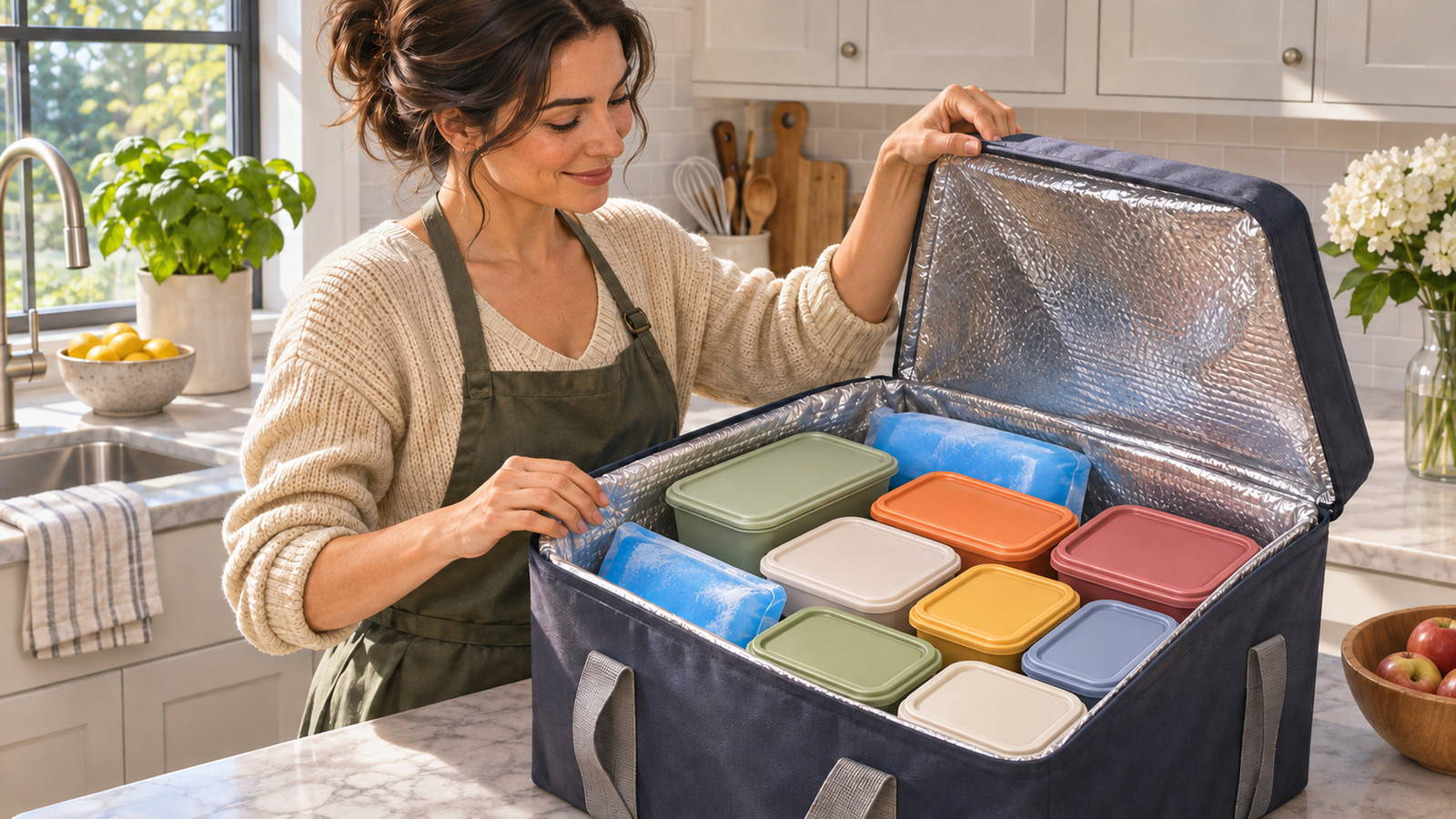
Make the arrival check part of the order, not an afterthought once dinner is underway. Remember to prioritize food delivery safety during this process.
By Michelle LaGuerre
A box on the porch can contain a week’s groceries or the ingredients for tonight’s meal. Before putting everything away, take a few minutes to check what arrived and whether it has been handled with food delivery safety in mind.
The delivery notification is the start of that process. It does not tell you the food’s temperature, whether a package leaked or what happened during a delay, all of which are crucial for food delivery safety.
A practical routine begins before ordering and ends with suitable food stored promptly, any problem documented and the next meal planned, always considering food delivery safety. This guide covers household grocery deliveries and shipped meal kits, with a separate reminder about prepared meals.
Ask how the company handles a problem
Before ordering, find the company’s instructions for receiving perishable food. Look for the delivery window, safe-handling information and the way to report a damaged or unsafe shipment.
FoodSafety.gov’s delivery guide recommends asking about food-safety practices and how the company responds when food arrives at an unsafe temperature.
Save the contact route with your order confirmation. A customer-service address is more useful when you can find it without searching through marketing messages while groceries sit on the counter.
If the site does not answer an important question, ask before placing the order. Do not treat an attractive insulated box in a photograph as a description of the actual shipping process.
Choose a window you can manage
Arrange for someone to receive the delivery and put perishables away. If a trusted neighbor agrees to help, discuss the task rather than assuming they can store an entire order.
Write the expected window on the household calendar. Decide who is watching for the delivery and who will act if it is delayed. A person working from home may still be unavailable during a meeting.
In the Mohawk Valley, do not use the day’s outdoor temperature as a substitute for checking the food. A porch or delivery vehicle is not a monitored household refrigerator.
If the timing changes, review the arrangement. Contact the company about the order’s actual options instead of assuming a parcel can remain outside until convenient.
Prepare a clear receiving area
Make room on a clean counter and check that refrigerated or frozen items will have space. Keep the food thermometer available before the box arrives.
Ask anyone helping you to keep the delivery separate from an unrelated cleanup project. You want to inspect it without mixing new packages with old containers or losing the order information.
Keep a place for the outer packaging and a way to note the arrival time. There is no need to create an elaborate inspection station. A clear surface, the right tools and a few uninterrupted minutes are enough to begin.
If the company includes special handling instructions for its packing materials, read them before handling those materials. Do not improvise with something unfamiliar.
Inspect the package, then the food
Check that the outer box and individual packages are intact. Note torn wrapping, leakage or a damaged container before unpacking everything together.
Look at the labels to identify which items require refrigeration or freezing. The USDA’s description of perishable foods includes items such as meat, poultry, fish, dairy and cooked leftovers that need appropriate cold storage for safety.
If you see a problem, photograph the relevant package and label for your private order record. Keep order numbers and address labels out of any public post.
Do not let documenting a complaint delay putting unaffected food into appropriate storage. Separate the immediate food-safety decision from the later discussion about a refund or replacement.
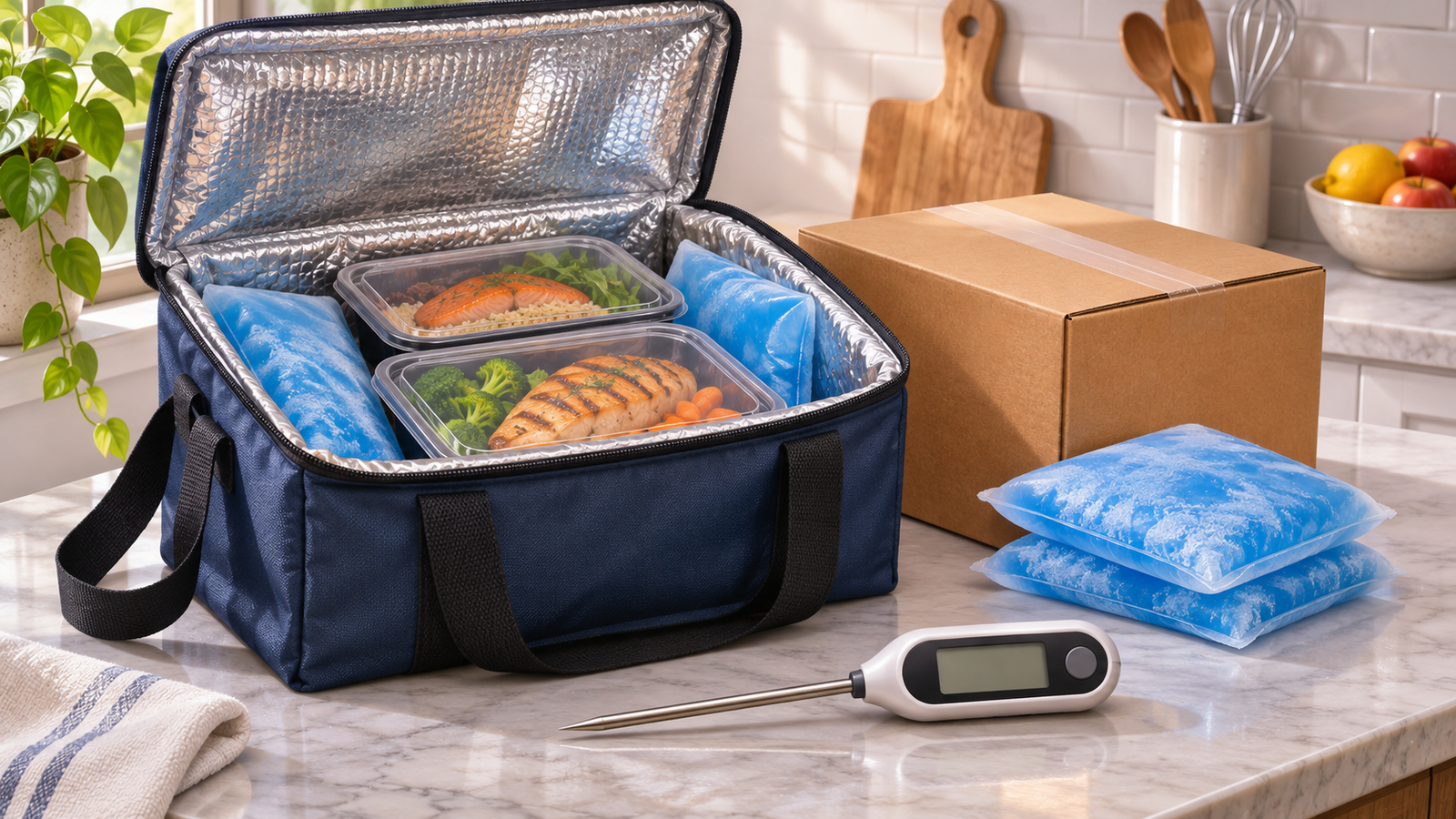
Check the actual temperature of cold shipped food
FoodSafety.gov says shipped perishable food should arrive frozen, partly frozen with visible ice crystals or refrigerator-cold at 40°F or below. Use a food thermometer to check it.
A cool-feeling box or a gel pack is not a reading of the food’s temperature. Follow the thermometer’s instructions for use and cleaning, and the supplier’s appropriate product-handling directions.
If shipped perishable food arrives above 40°F, FoodSafety.gov advises notifying the company and not eating or tasting it. Do not use a small sample as a safety test.
If you cannot establish that questionable food is safe, do not serve it while waiting for customer service to respond. A replacement discussion and a safe meal are separate needs.
Put suitable food away promptly
The FDA’s storage guidance recommends a refrigerator at 40°F or below and a freezer at 0°F. Check appliance thermometers rather than relying only on a control dial.
Follow package storage directions and keep raw foods separate from ready-to-eat foods. FDA also advises against packing a refrigerator so tightly that air cannot circulate.
Keep the cooking and storage instructions with a meal kit until you have used it. If you divide ingredients among shelves, make a simple note so someone else can locate the complete meal.
Do not remove every label just to make containers match. Useful product information belongs with the food or in a clearly identified household record.
Use timing rules for local and prepared deliveries
For foods that require refrigeration, FDA gives a room-temperature limit of two hours, reduced to one hour when the air is above 90°F. This includes takeout and leftovers.
Those limits are not an instruction to leave groceries out until the deadline. Put appropriate food into storage promptly. If an order arrives late or its history is unclear, raise that specific concern with the provider.
New York’s consumer food-safety guidance also calls for refrigerating leftovers within two hours of serving. If you plan to save a delivered meal, make its storage part of the arrival plan.
Do not combine a fresh arrival with older leftovers and then lose track of which is which. Keep dates and storage plans clear.
Report the facts you can verify
A useful message identifies the order, arrival time, item involved and observed problem. If you measured the food temperature, state the reading and how you checked it. Avoid guessing when or where a problem began.
Ask what the company will do next and what documentation it needs. Save the response and any replacement or refund confirmation.
If food safety is in doubt, do not interpret a discount offer as confirmation that the product can be eaten. Follow official safety guidance and seek appropriate advice about the food itself.
Make the next delivery easier
After the order is resolved, review the routine. Was the delivery window workable? Could you find the thermometer? Did the company provide instructions you could follow?
Keep the parts that worked and change the obstacle. A smaller order, a different receiving time or clearer household responsibilities may make the next delivery easier to manage.
The essential sequence is straightforward: plan for arrival, inspect, check cold food, store promptly and document problems. A delivery is convenient only when the food can safely become a meal.
Official guidance checked November 10, 2026. Images are conceptual and do not establish actual food temperatures or handling conditions.