
A step-by-step guide to checking New York assistance programs, organizing an application and finding the right local contact without guessing whether you qualify.
By David LaGuerre
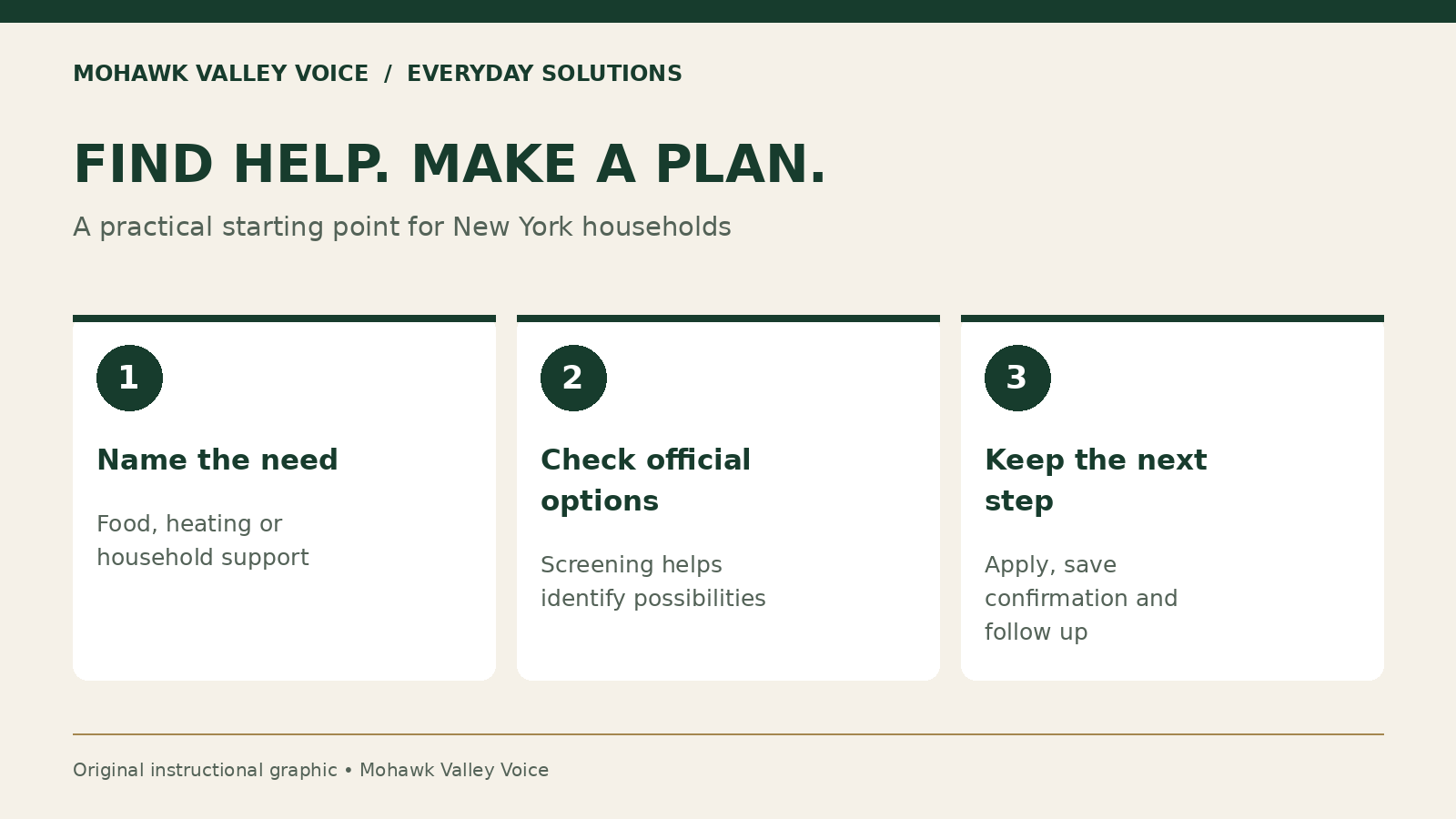
New York benefits can be easier to explore when you break the process into small steps. You do not have to understand every program before asking for help. Start with the problem you need to solve, gather a few household details and use an official resource to find the next action.
A family facing a high heating bill may also be worried about groceries. A worker whose hours were reduced may need help that differs from a retiree managing prescription expenses. Treat each need separately, then build one organized record of the calls, applications and notices involved. The goal is a clear plan, not a promise that every program will approve you.
Start with the need, not a program name
Take a blank sheet and make three columns: what is needed, how urgent it is and what you have already tried. Write specific items such as food for this week, a utility notice, questions about health coverage or help paying an upcoming bill. Include the actual deadline from any notice.
Put urgent needs at the top. When you contact an agency, explain that urgency first. Say, for example, that you have a shutoff notice dated for a particular day rather than simply saying money is tight. Ask whether there is a separate emergency process and what action you should take immediately. This is a suggested calling method, not a guarantee of emergency assistance.
Use the state screening tool as a starting point
New York’s official myBenefits screening tool asks about household members, income, housing costs and other bills. It can identify programs that may fit your situation, including food assistance, home energy assistance and several services for older adults.
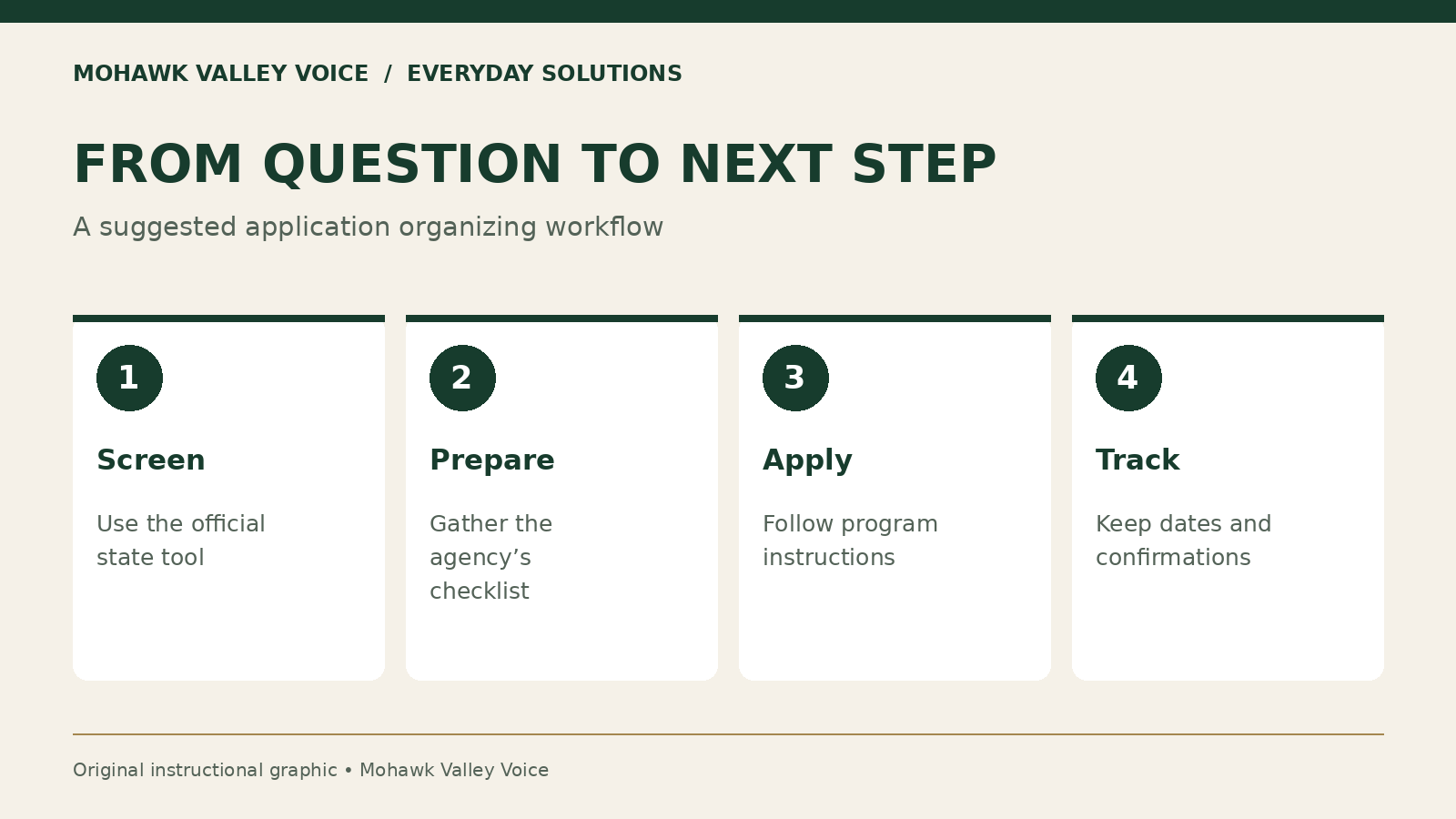
The state emphasizes that a screening result is not an approval. You must apply for a final decision, and incomplete answers can produce inaccurate results. Set aside uninterrupted time, read the instructions and use the buttons within the tool rather than your browser’s back button. Keep a private note of the programs the results suggest, along with the next steps shown. Do not treat the list as an application confirmation.
Make a reusable household information sheet
Before filling out a long form, assemble a working information sheet. Include household names, contact details, current sources of income, housing expenses and the problem you need help addressing. Use recent records to check amounts rather than relying on memory.
Build a folder for related documents. Depending on the program, an agency may request identity, income, residence or expense information. Ask for its actual checklist before assuming that every item in your folder is required. Label files clearly, such as Income-September or Utility-Notice-October. Avoid putting Social Security numbers in filenames. A simple index can tell you what you already have and what you still need to request.
Separate screening, applying and following up
Keep these three stages distinct. Screening helps identify possibilities. Applying puts your request into the program’s process. Following up helps you respond to questions and understand the outcome.
After an online application, save the receipt or confirmation if one is provided. For mailed or delivered material, keep a copy and a record of when and how it was sent. Ask the receiving office how to confirm receipt. Record any case number in a secure place, together with the program name. Avoid submitting repeated applications simply because you have not heard back; contact the agency and ask about the status and its preferred next step.
Find the right Oneida County contact
For Oneida County food assistance questions, the county’s official SNAP page lists 315-798-5502 and SNAP@oneidacountyny.gov. It says online applications are available and telephone interviews can be provided. The page also lists assistance with online applications through community organizations.
Call before traveling to verify the current location, hours, appointment needs and documents to bring. Keep your question narrow: Do I need an appointment? How do I submit a requested document? How can I confirm that my application was received? Residents of Herkimer, Madison or another county should contact their own county department rather than assume Oneida County handles their case. The state myBenefits website is a useful starting point across New York.
Treat heating assistance as a program with changing availability
Heating help deserves its own entry on your planning sheet. A winter bill and an immediate loss of heat may involve different questions, and program availability can change by season and funding.
The state’s OTDA application guidance directs residents outside New York City to myBenefits for a Regular HEAP application when that program is open. Check the current guidance before applying. Ask the local office which benefit or process fits your situation, whether applications are currently accepted and what deadlines apply. This guide does not state that a particular HEAP component is open today or that you qualify.
Use a call log to prevent the process from becoming a blur
Create a small log with the date, agency, person or unit reached, question asked and next action. At the end of each call, repeat the instructions back in your own words. Ask whether you understood the deadline correctly and which submission method the office wants you to use.
Here is a suggested example: October 12, food assistance office, asked about missing income proof, instructed to submit two recent pay records through the approved channel, follow up after submission. Use your real dates and instructions. Set a reminder for your next action. If you cannot reach someone, note the attempt and try the office’s published alternative contact rather than sending sensitive documents to a random address.
Protect your information while seeking help
Open official websites directly and check the full web address. Do not enter private details into a page merely because an unsolicited text says you must act quickly. If a message claims to come from an agency, verify it using the phone number or website you already trust.
Keep your working folder private. On a shared computer, sign out after use and avoid leaving downloaded identity documents behind. When someone helps you complete a form, stay involved and understand what is being submitted. If a form or instruction is confusing, ask the program about language help, accessibility assistance or another way to apply. Do not guess at a question that could change the information you report.
Begin with one manageable action
Choose one step today: complete a screening, call the correct county office or gather the document named in a notice. Then choose the next step only after you know what is needed.
Before putting the folder away, check that you have the program name, application or case reference if available, next deadline and a verified contact. These four details turn a stressful pile of papers into a working plan. Official program rules and agency decisions control eligibility; this article offers an organizing method to help you reach those decisions with better information and fewer avoidable gaps.
Source and contact information checked October 8, 2026. Recheck official pages before relying on hours, program openings or application instructions.

