
By David Laguerre
Baked sweet potatoes can anchor an ordinary dinner without a long ingredient list. Start with the potato, choose a topping your household already likes and decide what else belongs on the plate.
The useful part is flexibility. One person might want beans and salsa, while another prefers a little butter and a vegetable side. You can bake the base together and finish each serving at the table.
For a Mohawk Valley household planning around busy evenings, this is a meal to consider when there is time for the oven to work. Whole sweet potatoes are not an instant dinner. Read the method first and put the baking time on your plan.
Jump to Shopping · Equipment · Baking · Dinner toppings · Second meal · Storing extras · Reheating · Notes for next time
Buy for the meals you intend to make
Count tonight’s servings and decide whether you want any extra cooked portions. Buying a large bag makes sense only if you have uses for the rest.
Iowa State University Extension’s sweet-potato guide recommends firm, smooth potatoes and avoiding those with cracks, soft spots or sprouts. Choose pieces of similar size when possible so you can check the tray more easily.
Compare the price with the amount you expect to use, rather than assuming the larger package is the better household purchase. If this is a first attempt, a few individual potatoes let you try the meal without committing to a full bag.
Keep your planned toppings in mind while shopping. If beans, yogurt or a sauce are already at home, you may need only the potatoes and a side. Check those ingredients before adding duplicates to the cart.
Set out a small set of equipment
You need an oven, a baking sheet, a fork, a clean produce brush and oven mitts. Have serving plates and utensils ready before handling the hot tray.
Clear a suitable place for the baking sheet when it comes out. Keep the preparation area organized so you do not have to move a bag of groceries while carrying hot food.
Wash your hands and clean the work surface. FoodSafety.gov advises rinsing produce under running water without soap or bleach. Scrub the sweet potatoes with a clean produce brush, then dry them.
If other parts of dinner involve raw meat or poultry, use separate utensils and preparation areas. Keep raw juices away from the potatoes and the toppings you will serve without further cooking.
How to make baked sweet potatoes
Iowa State’s method uses a 400°F oven. Pierce each potato five or six times with a fork and set it on a foil-lined baking sheet. Bake for about 45 minutes to an hour, checking for tenderness.
That time is a guide, not a promise that every potato finishes together. Check each piece rather than judging the whole tray by the smallest one. Allow more time if the center is still firm.
Use oven mitts to remove the sheet. Open a potato carefully with a utensil, keeping hands clear of the hot flesh and escaping steam. Let it become comfortable to handle before scooping or mashing it.
There is no need to invent a long seasoning blend for this first tray. Taste a small portion once it is cool enough, then decide whether you want a savory topping or a simpler finish.
Turn baked sweet potatoes into dinner
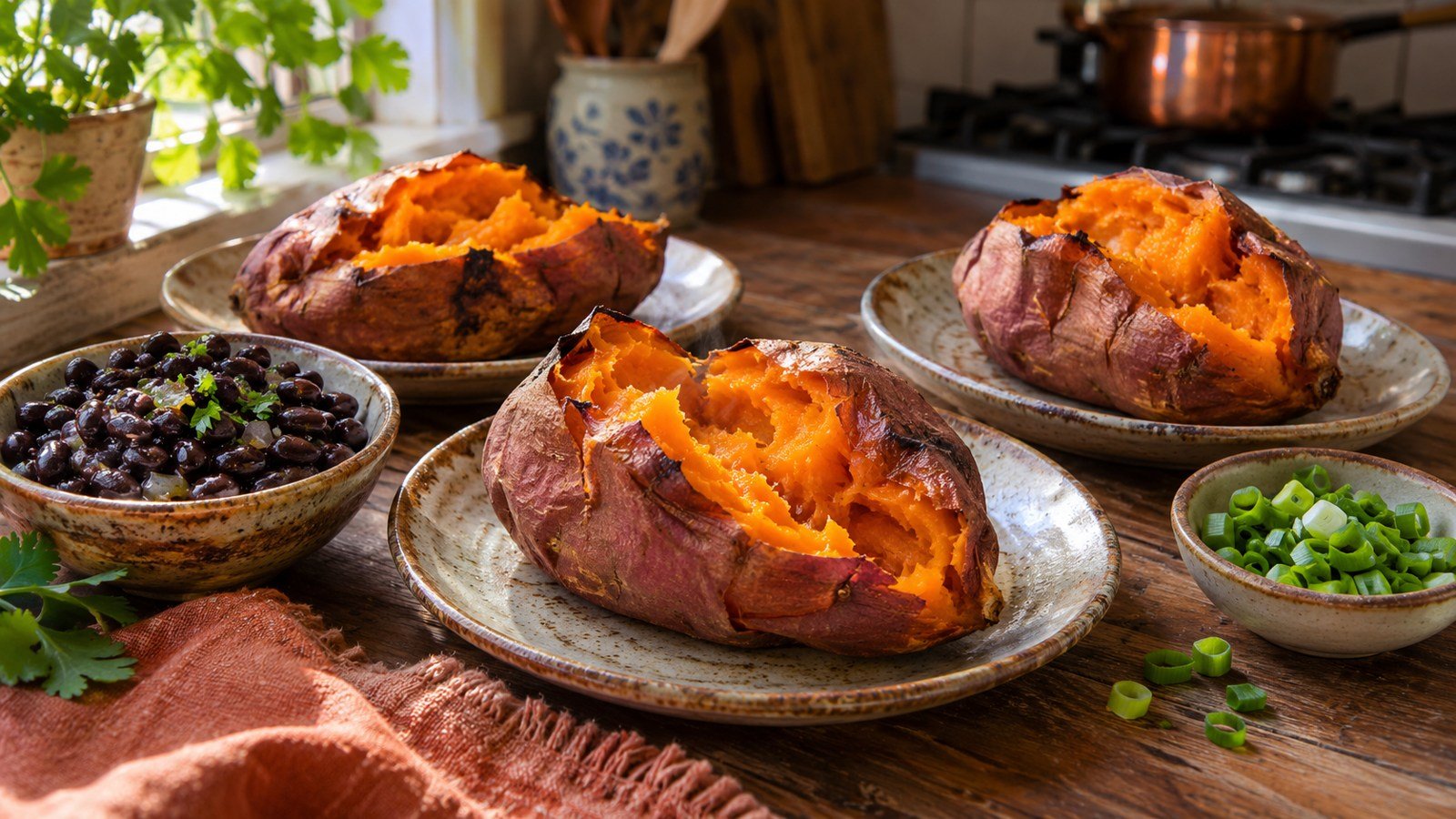
For one serving idea, add cooked black beans and a spoonful of salsa to an opened potato. Offer chopped scallions separately if your household enjoys them. Prepare beans according to their package or recipe directions.
For another approach, use a familiar cooked vegetable and a little shredded cheese. Keep toppings separate until serving so each person can choose the combination and amount they want.
Treat these as meal ideas, not a fixed recipe with a promised nutrition total. What you add changes the dish. Check ingredient labels when allergies, dietary restrictions or sodium limits matter.
Decide what else belongs with dinner. You might want a salad, a cooked vegetable or another food your household regularly serves. Start from the meal people will eat rather than buying several new toppings to imitate a photograph.
Plan a second meal with baked sweet potatoes
If you intentionally bake extra, choose tomorrow’s use now. A plain cooked portion is easier to finish differently than one already covered with several toppings.
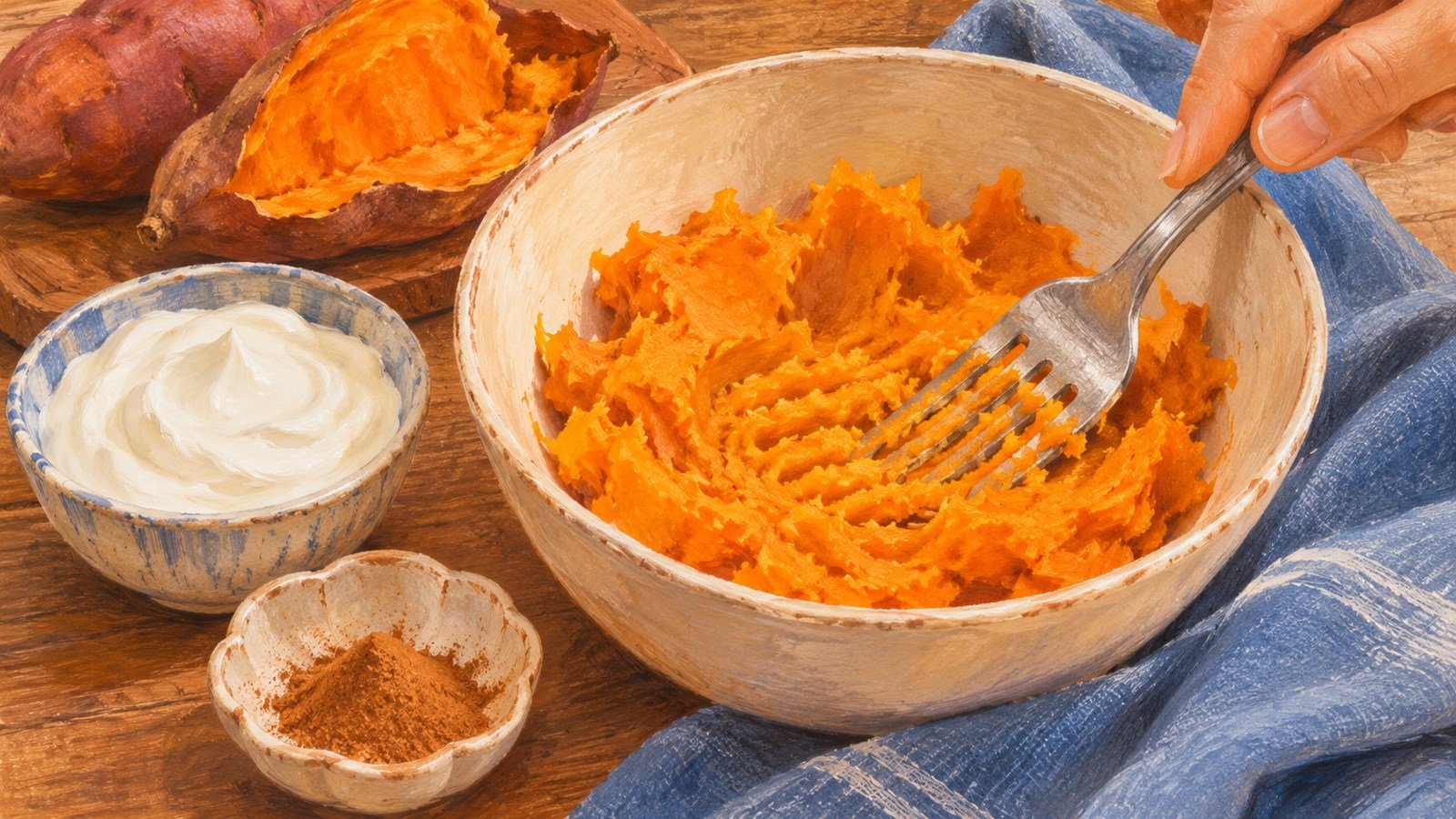
One option is to scoop and mash the cooked flesh for a side dish. The University of Maryland Extension’s mashed sweet-potato recipe offers a simple example using margarine and brown sugar. Use the linked recipe if you want its measured ingredients.
You can also keep your own finish simpler, such as a small amount of butter or plain yogurt added at serving. Taste before adding more. A different topping can make the second plate feel like a deliberate choice.
Write the intended use on your meal plan. “Sweet potato side with tomorrow’s dinner” is more useful than a vague hope that someone will find the container.
Put cooked extras away promptly
Do not leave the tray out while waiting for another family member to decide whether they want a serving. Portion the extras for storage.
FoodSafety.gov recommends refrigerating perishable food within two hours, or within one hour when exposed to temperatures above 90°F. Use shallow containers for prompt cooling, and keep the refrigerator at 40°F or below.
Label the cooked food with the date and keep toppings identifiable. A plain potato portion, a dairy topping and a prepared bean mixture may have different preparation dates. Do not lose those details by mixing everything into one unlabeled container.
USDA advises using refrigerated leftovers within three to four days or freezing them for longer storage. Freeze portions you do not expect to use within that window.
Reheat the portion you plan to serve
When reheating leftovers, USDA calls for at least 165°F, checked with a food thermometer. Follow the directions for your appliance and container.
Add cold finishing ingredients after reheating where appropriate. Keep the serving utensils clean, and return perishable toppings to refrigeration promptly.
If several people eat at different times, portion the food so each person can heat what they need. Label which ingredients belong together without requiring everyone to use the same topping.
For a packed lunch, plan how the food will stay safely cold before reheating. A convenient container is only one part of that plan.
Leave one note for the next tray
After dinner, record the size you bought, approximately how long the potatoes took and which toppings people actually used. Keep those notes as observations about your oven and that batch.
Next time, start with the same small plan and adjust what did not work. You might buy fewer potatoes, serve toppings separately or choose a night with more baking time.
A dependable household meal does not need a new recipe every week. A tender potato, familiar toppings and a clear plan for cooked extras can be enough to put this one into regular rotation.
For another flexible dinner side, see our guide to using frozen vegetables for easy dinners.

