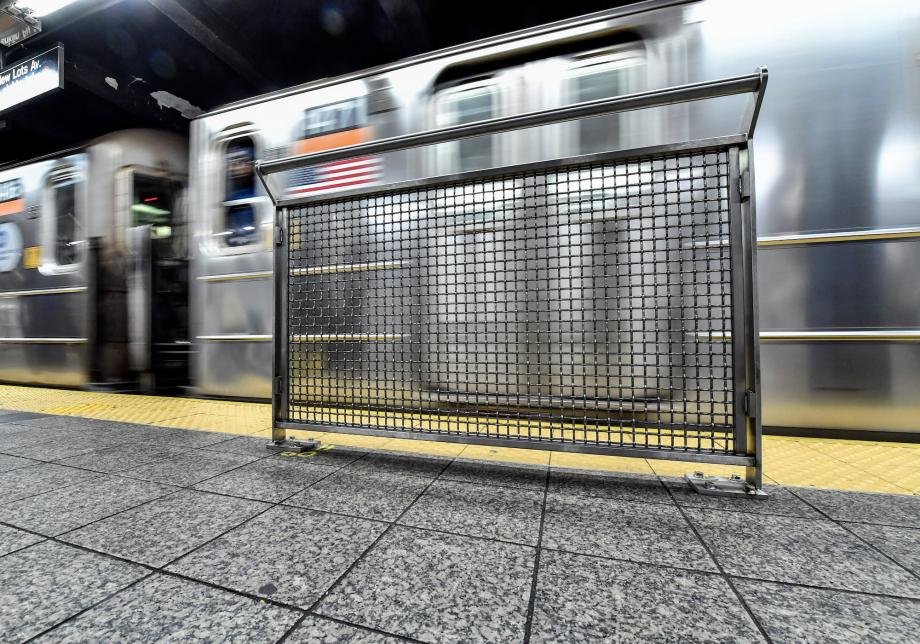
The latest railings went up at the 111 St stop on the 7 line in Queens. The project reaches parts of platforms, not every foot of the track edge.
NYC subway platform barriers are now in place at 200 stations, Gov. Kathy Hochul announced Thursday, Nov. 19. The Metropolitan Transportation Authority installed 18 railings at the 111 St station on the 7 line in Queens to reach the milestone.
The new count refers to stations equipped with railings, not the total number of railings. The same Queens stop also marked a separate milestone as the 200th station to get a refresh under an MTA program that includes cleaning, painting, lighting and smaller repairs.
What the barriers do and don’t do
The barriers are fixed railings that give people a place to wait farther from the tracks. The MTA’s station list and barrier guide explains that railings sit near the yellow safety strip, leaving room where passengers enter and exit trains.
They are not floor-to-ceiling platform doors. They do not close when a train pulls away, and a station on the list should not be read as having a continuous railing. A station name can also appear more than once in the MTA list, so match the route and borough when a name is shared. For example, this announcement concerns 111 St on the 7, not every stop named 111 St.
The MTA began installing the railings in January 2024. The governor’s release says New York City Transit fabricates them in its Bronx shop and uses its own crews to install them.
Two separate projects reached 200 at 111 St
The station refresh program predates the barrier rollout. It started in November 2022 and has averaged about 50 station upgrades a year, according to the governor’s office. The transit agency generally carries out that work while stations are already closed for other planned work.
At 111 St, the state says crews worked on stairs, the mezzanine roof and steel structures as part of a 7 line repair project. During that work, crews also painted more than 7,000 square feet of surfaces and installed about 900 feet of LED rope lighting. They replaced damaged flooring and cleaned or repaired other light fixtures. Those are distinct from the 18 platform-edge railings.
The announcement marks work already done, not a new funding measure. It does not establish that the station has step-free access. New lighting, a new railing and an accessible route are different things. Riders who need an elevator should check the MTA’s accessibility information for all stops and transfers on the trip.
What the rider survey tells us
The governor said satisfaction with subway safety rose by roughly 10 percentage points since the MTA began installing platform railings, citing the agency’s Customer Counts Survey. That measures how respondents say they feel. The release does not show that the railings caused the change, and it does not give incident data showing whether track falls or other incidents declined at those stations. Other upgrades happened during the same period.
Check stations and service before you travel
If you’re taking the subway after arriving in New York City, check the barrier list for your route and the MTA’s service information for the day you travel. A listing doesn’t tell you whether that station will be open during a temporary diversion. For a trip that depends on a step-free transfer, check current elevator and escalator status separately and plan an alternate transfer if necessary.
For more on station work, see our coverage of the Chambers Street subway rehab.