Mohawk Valley residents can follow Friday’s statewide meeting online. The New York reparations commission studies possible remedies; it does not issue reparations payments.
New York’s Community Commission on Reparations Remedies will hold a business meeting Friday, November 20, from 3 to 5 p.m. Eastern, with a virtual registration option for people who cannot attend its Rochester or New Rochelle locations.
This meeting of the New York reparations commission is crucial for understanding the future of reparations in the state.
For readers in Utica, Rome and the Mohawk Valley, that online option offers a way to follow a statewide process without traveling to either meeting site. The official meeting notice links to registration through Zoom.
How to follow the November 20 meeting
The state lists two in-person locations: Connected Communities’ Neighborhood Hub Auditorium, 616 N. Goodman St. in Rochester, and the Lincoln Park Conservancy’s History & Culture Center in New Rochelle. Check the official notice and confirm arrangements before traveling.
To join remotely, use the virtual meeting registration link provided by the state. This is a business meeting. The notice reviewed November 18 does not describe a public-comment period or specific votes, so registration should not be taken as a promise of speaking time.
Residents who want to submit information or ask about participation can use the contact options on the commission’s official website or call 518-473-3997. That page also offers an email-updates signup. Check it again before Friday for any schedule changes or additional materials.
What the commission is examining
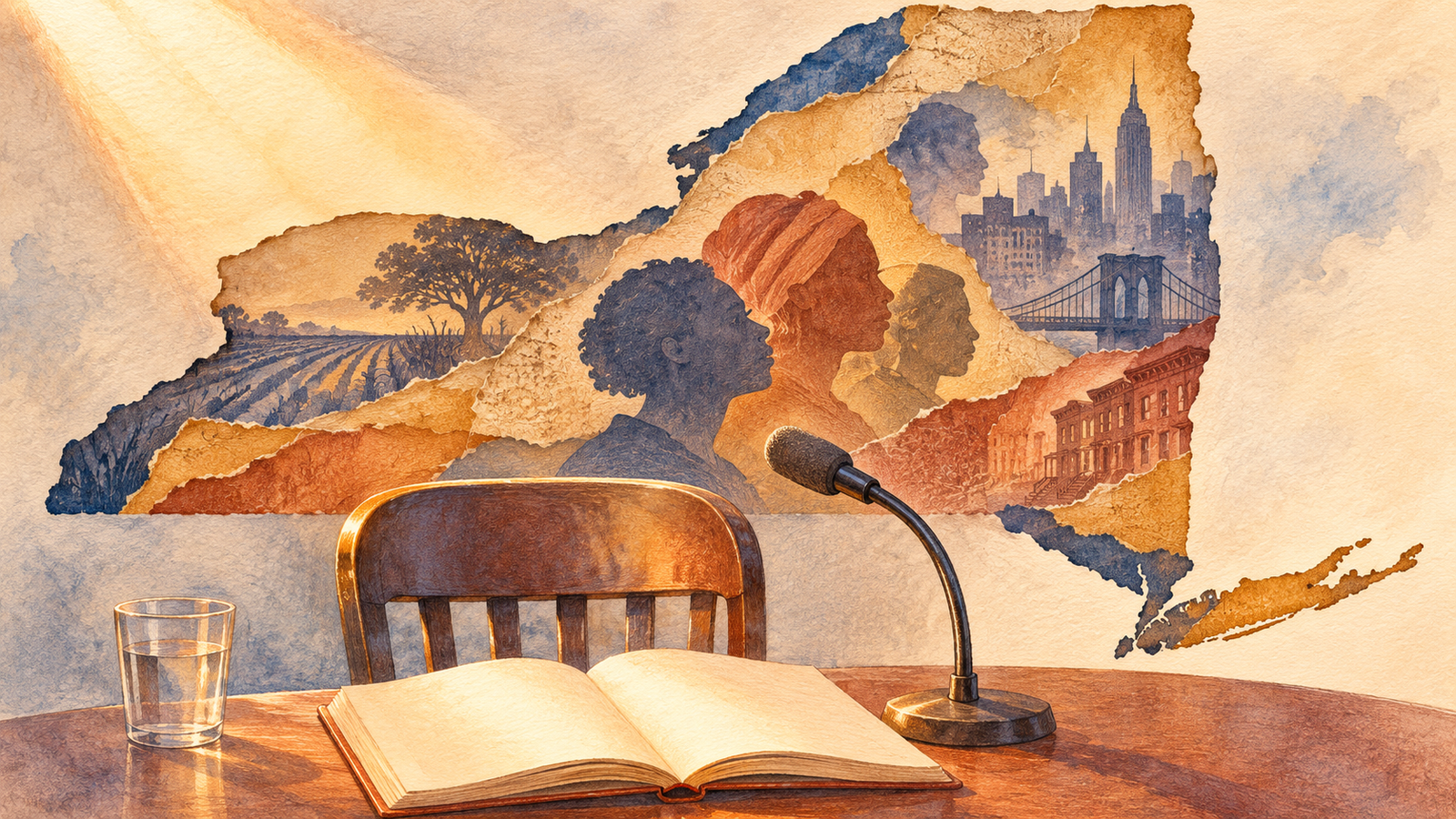
The state created the commission through legislation signed December 19, 2023. Its assignment is to study slavery in New York, discrimination against people of African descent after slavery, and the effects that continue today.
The establishing legislation calls for examining the involvement of government, economic relationships built around slavery, and later political, educational, economic and social discrimination. It also directs the commission to consider present-day conditions and ways to educate the public about its findings.
The law’s scope is statewide. A meeting outside the Mohawk Valley does not make the subject solely a Rochester, Westchester or New York City issue. The commission’s eventual recommendations are intended for state leaders.
A study and recommendations, not a payment application
The commission’s current FAQ says it cannot distribute financial payments. Its role is to produce findings and recommendations for the governor and Legislature. Decisions about remedies would belong to those elected branches.
The establishing legislation allows consideration of laws, policies, programs and other remedies, including possible compensation. Considering those options is not the same as adopting a program, setting individual eligibility or opening applications.
That distinction matters when sharing this notice: Friday’s event is a way to follow the commission’s work, not an announcement that checks are available.
Why following the process matters locally
For Mohawk Valley residents, the immediate opportunity is access to the discussion and its source documents. Readers can separate what commissioners are studying from what officials have actually decided, then return to the state’s record as recommendations develop.
For more reporting on Black communities, civil rights and opportunity, visit Mohawk Valley Voice’s Black Perspective coverage.