By David LaGuerre
Food date labels can be confusing when you are deciding what to use, what to keep and what to discard. A “best if used by” date is not the same thing as a complete safety assessment. Storage instructions, the time since opening and how the food was handled all belong in the decision.
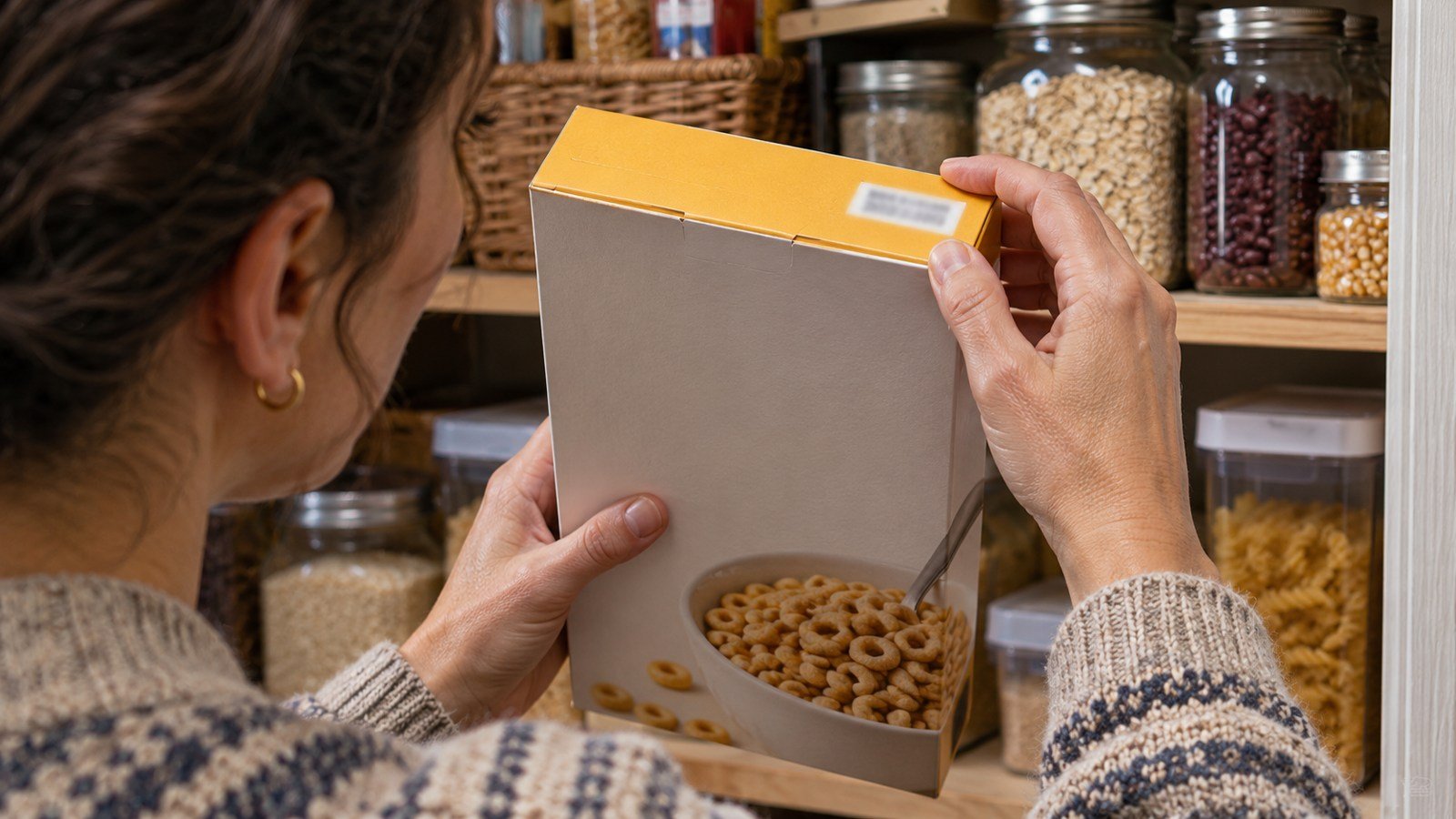
Start with one item rather than clearing a whole refrigerator at once. Read the exact words next to the date, then check the rest of the package. A habit of looking at those details can help you avoid treating every printed number as either a command to throw food away or a promise that it is safe.
Read the words beside the number
The FDA’s food-dating guidance explains that many voluntary product dates relate to quality rather than safety. Look for the phrase that gives the date its meaning, not just the month and day.
A “best if used by” date generally concerns best flavor or quality. FDA notes that there is no uniform set of descriptions used for open dating, so you may also see phrases such as “sell by,” “best by” or “expires on.” Read the manufacturer’s explanation and specific instructions rather than assuming every phrase has an identical meaning.
Do not assume that an unfamiliar code is a date meant for the shopper. Packages may also carry lot or production codes. If you cannot tell which number you are reading, use the manufacturer’s contact information rather than decoding it from an unrelated online post.
Keep infant formula separate from the general rule
The FDA’s infant-formula guidance says not to use formula after its “use by” date. That is a specific rule, not a place to apply a general tip about reducing food waste.
Read formula storage and preparation instructions carefully as well. A printed date does not replace the directions for an opened container or prepared formula. If the package is damaged or there is a concern about a product, seek advice through the appropriate official or manufacturer channel.
For other foods, follow any specific safety, storage or after-opening directions on the package. If those instructions leave you uncertain, ask the manufacturer or use official food-safety resources. The fact that one kind of date usually concerns quality does not make every product interchangeable.
Ask what happened after the food came home
A date cannot tell you whether a refrigerated item was left in a warm car or whether the refrigerator stayed cold. Think about the trip home, storage and any time the item was out. If that history is unknown, a reassuring-looking date does not fill in the missing information.
A package may also be within its printed date while the food has been open for longer than its instructions allow. Read the after-opening directions and mark the opening date if that helps your household track it. Keep that note separate from the manufacturer’s date so both remain clear.
The FDA’s food-storage guide recommends keeping the refrigerator at 40°F or below. Use an appliance thermometer and check the storage conditions instead of assuming the temperature setting proves the food stayed cold.
Make a small use-first plan
Look for foods you can use while following their storage and handling instructions. Put a note on your meal plan: the item, when it was opened and what you intend to make. A specific meal is easier to carry out than a vague promise to “use up the fridge.”
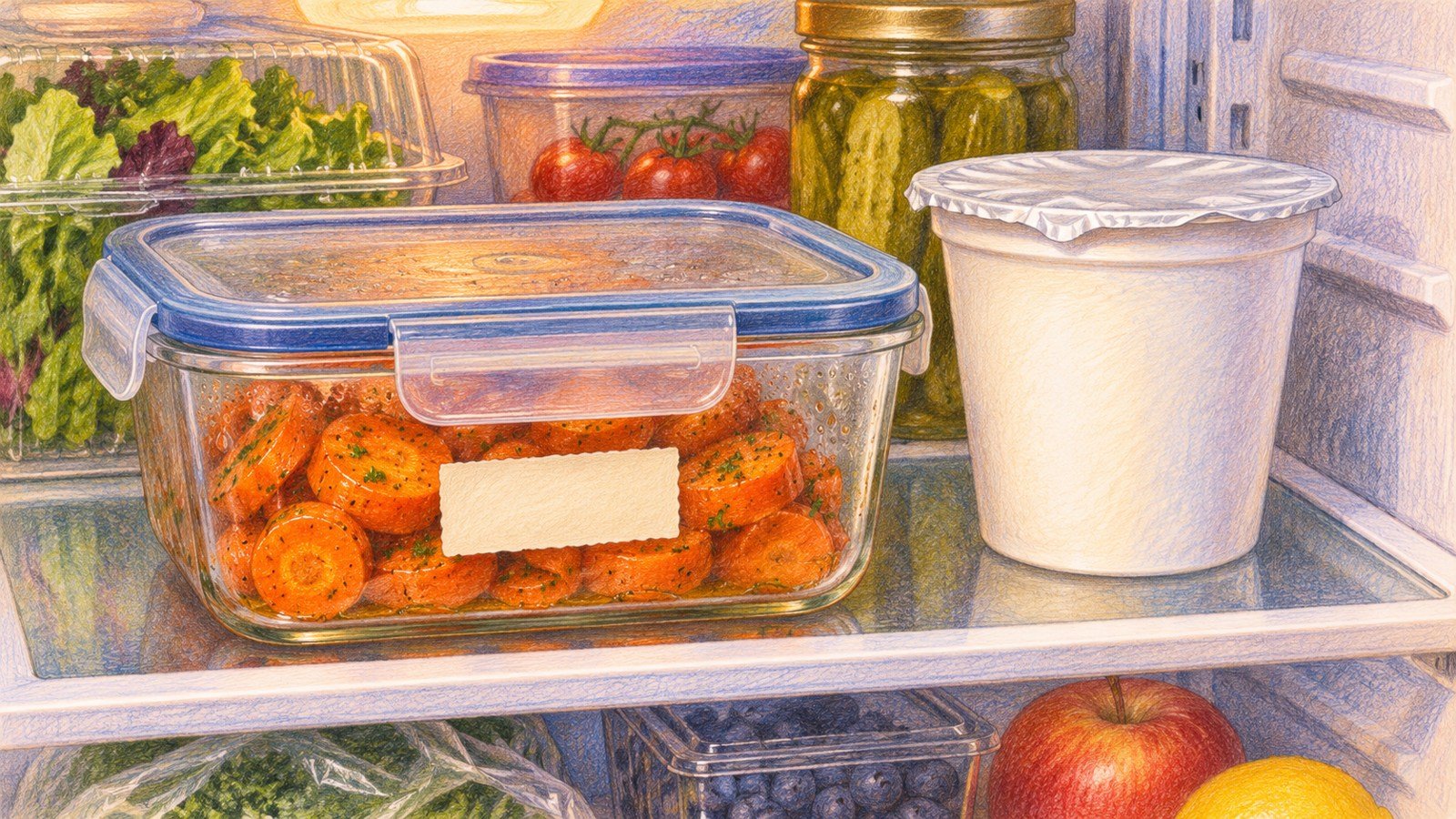
For example, if you have cooked carrots from a recent meal and an unopened product beside them, the unopened package’s date does not tell you how long the carrots have been stored. Track the prepared food separately. Use an appropriately dated label on the container so another person can understand the plan.
A use-first space can help, but it should not hide information. Keep the package instructions or transfer the essential details when moving food into another container. If different people shop and cook, agree on how opening and preparation dates are recorded.
Treat leftovers as their own task
Use USDA’s leftover-handling guidance for prepared food. It calls for refrigeration within two hours, or one hour above 90°F, and shallow containers for rapid cooling. Refrigerated leftovers should be used within three to four days or frozen.
That storage period does not restart just because you put the food in a new container. Label when it was prepared, and decide on a meal that fits the storage plan. If you cannot use it in time, consider freezing it while it is still being handled safely.
When reheating leftovers, follow USDA’s reheating instructions, including checking that they reach 165°F. Heating food is not a reason to ignore an unsafe storage history. Keep the decisions about storage and reheating connected.
Make the handoff clear when someone else cooks
If you shop and another person prepares dinner, share the opening or preparation date and where the instructions are kept. A message such as “the carrots were cooked Tuesday; please check the storage plan before using them” carries more useful information than “these are probably fine.” Keep uncertainty visible rather than passing along an unsupported assurance.
Use an official reference for a specific food
A general article cannot give one storage period for every product in a Mohawk Valley kitchen. The FoodKeeper resource provides food-storage information by product. Check the food and storage method that match what you have.
If you are checking several items, do one category at a time. Pantry packages, refrigerated food and cooked leftovers raise different questions. Keep the result simple: use according to instructions, store appropriately, or discard when the product or its handling does not support keeping it.
FoodSafety.gov advises against tasting food to determine safety. Appearance and smell can be clues that something is wrong, but they do not establish that food is safe. If you need help interpreting a product’s label or storage history, ask before serving it.
Our cook once, eat twice guide offers a broader meal-planning approach. For date labels, start with four questions: What does the phrase mean? How was the food stored? When was it opened or prepared? What specific instructions apply? The answer comes from those details together, not the printed date alone.