
By Dawn Michelle Laguerre
A first water exercise class starts before you step into the pool. You need to know what the session involves, whether its depth and pace fit your abilities and how you will get in and out. Ask those questions before buying equipment or committing to a long membership.
The CDC’s swimming overview describes physical and mental health benefits from water-based activity, while also noting the risks of illness and injury around water. A class can be one way to explore that activity. The word “water” does not, by itself, tell you how demanding or suitable a particular session will be.
Start with what you want to try
Decide what interests you: a guided group session, learning to move comfortably in water or finding an indoor activity during a Mohawk Valley winter. You do not need an ambitious goal for the first visit. “Understand the class and see whether it fits” is a useful starting point.
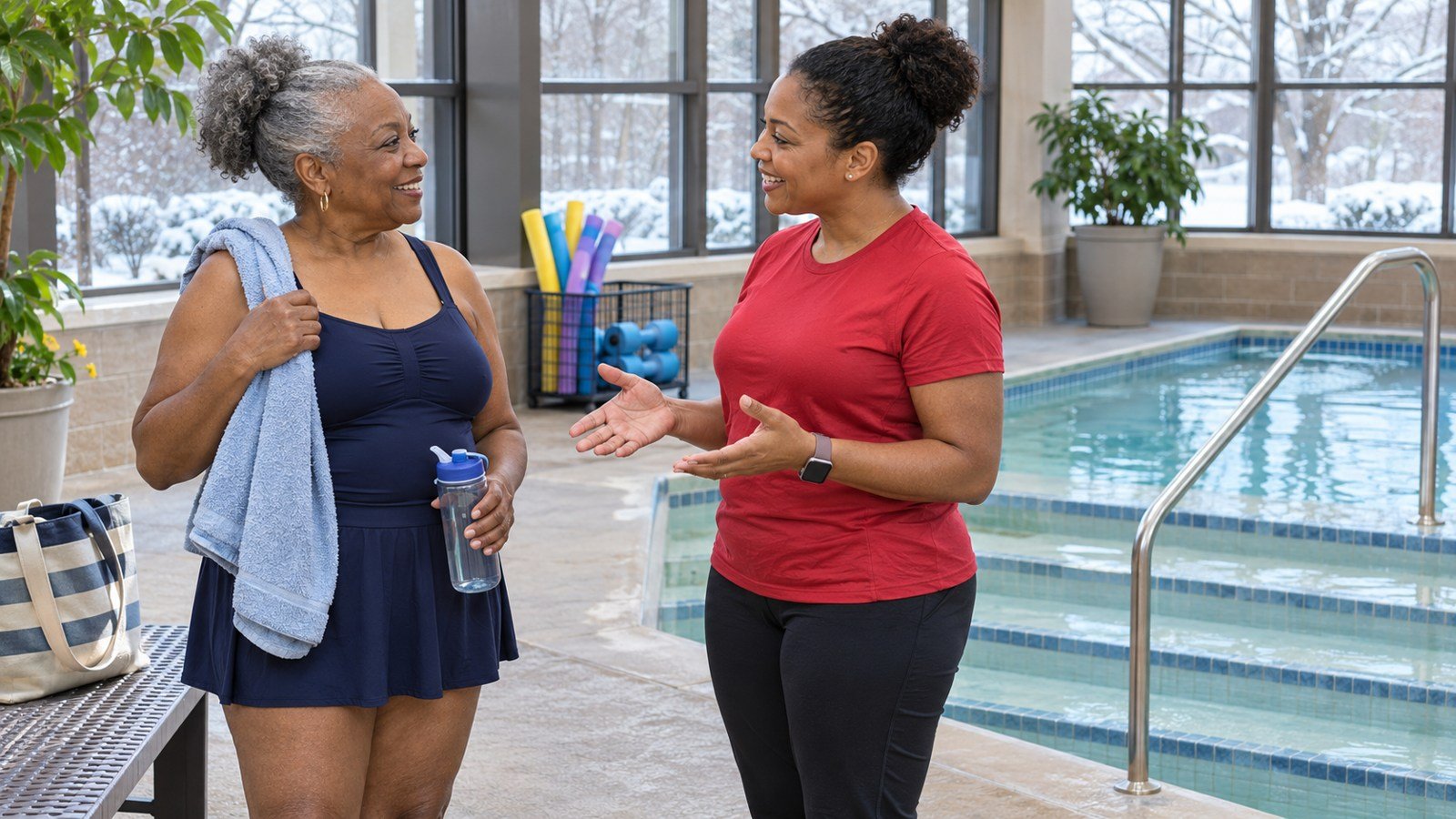
Read the description carefully. If terms such as shallow water, deep water or aquatic fitness are unfamiliar, write them down as questions. Do not assume a class is a swimming lesson, a rehabilitation appointment or an easy workout because the photograph shows people smiling in a pool.
If you have a chronic health condition or disability, the CDC recommends consulting a health care professional or activity specialist about appropriate kinds and amounts of activity. Describe the proposed class rather than asking only whether “exercise” is allowed. Bring any relevant limits to the instructor’s attention before taking part.
Ask about depth and swimming requirements
Contact the program and say you are considering your first class. Ask where participants exercise, how deep that area is and whether everyone must be able to swim. Ask whether the group changes areas during the session. A general pool description may not explain the route or depth used by one class.
If flotation equipment is used, ask what it is for and who supplies it. Do not treat an exercise belt or foam prop as proof that a class is suitable for a non-swimmer. Explain your actual comfort and skill level so the program can tell you whether its requirements match.
Ask who teaches the class, how beginners are introduced and how to request help. If the answers are unclear, request a conversation with the instructor before registering. A specific answer about the session is more useful than assuming all classes with the same name work alike.
Check the whole route into and out of the water
Ask about the entrance, changing area and pool access. If steps, a lift or another accommodation matter to you, confirm the actual arrangement and how to use it with staff assistance. Do not rely only on a picture or the broad word “accessible.”
Consider the return trip as well. You will need a place to change, collect your belongings and leave without rushing. If you use mobility equipment, ask where it can be kept and how the transition is handled. These are practical questions to settle before standing on the deck with a bag.
For a local winter visit, check parking, the building entrance and the program’s cancellation notices. Leave enough time to change without turning the trip into a race. A class that fits your schedule on paper may feel different once travel and changing time are included.

Confirm the price and registration rules
Ask whether a first visit requires registration, a membership, a separate class fee or both. Find out whether there is an introduction or observation option and what it permits. An opportunity to look around does not necessarily include joining the session.
Write down what the quoted price covers and whether there are additional requirements. If you are comparing programs, use the same questions for each one. A lower advertised rate may not describe the full arrangement you need, while a membership may include services you would not use.
Confirm the cancellation and refund policy before paying. If you are trying the activity for the first time, ask about the smallest available commitment. This article does not verify any local facility’s current prices, class openings or accommodation availability; get those details from the program itself.
Pack from the facility’s instructions
Ask what clothing, footwear, towels and storage arrangements the facility requires. Bring only the equipment it says you need for the first visit. There is little reason to buy a collection of exercise props before learning whether the class provides them or uses something different.
Keep dry clothes separate from wet items and choose a bag you can manage comfortably. If lockers require a particular lock or another arrangement, learn that in advance. Decide what you can leave at home rather than carrying valuables you will need to secure during the class.
A short packing note can include the confirmed class time, check-in location and contact number. Keep any private medical information separate from a visible bag tag. The purpose of the note is to reduce last-minute searching, not to display personal details in a shared space.
Follow healthy-swimming guidance
The CDC’s swimming-illness prevention guidance says to stay out of the water when you have diarrhea, shower before entering and avoid swallowing the water. It also addresses open cuts and wounds. Follow the current health guidance and the facility’s rules before joining a session.
For someone diagnosed with Cryptosporidium, CDC says to wait until two weeks after diarrhea has completely stopped before returning to the water. Do not substitute a class booking or a pool’s appearance for those precautions. Ask your health care professional about concerns specific to your health.
Use the first visit to make a decision
Arrive early enough to introduce yourself, confirm the class area and ask how to pause or leave if needed. Tell the instructor it is your first visit. Follow the program’s instructions rather than copying a participant whose abilities or experience may be different from yours.
Afterward, note what worked and what still needs an answer. Could you hear the instruction, manage the route and understand what was expected? You may choose another visit, ask about a different class or try a different activity. The useful result is a plan that fits your needs, not a promise to keep attending before you know the program.

