By David LaGuerre
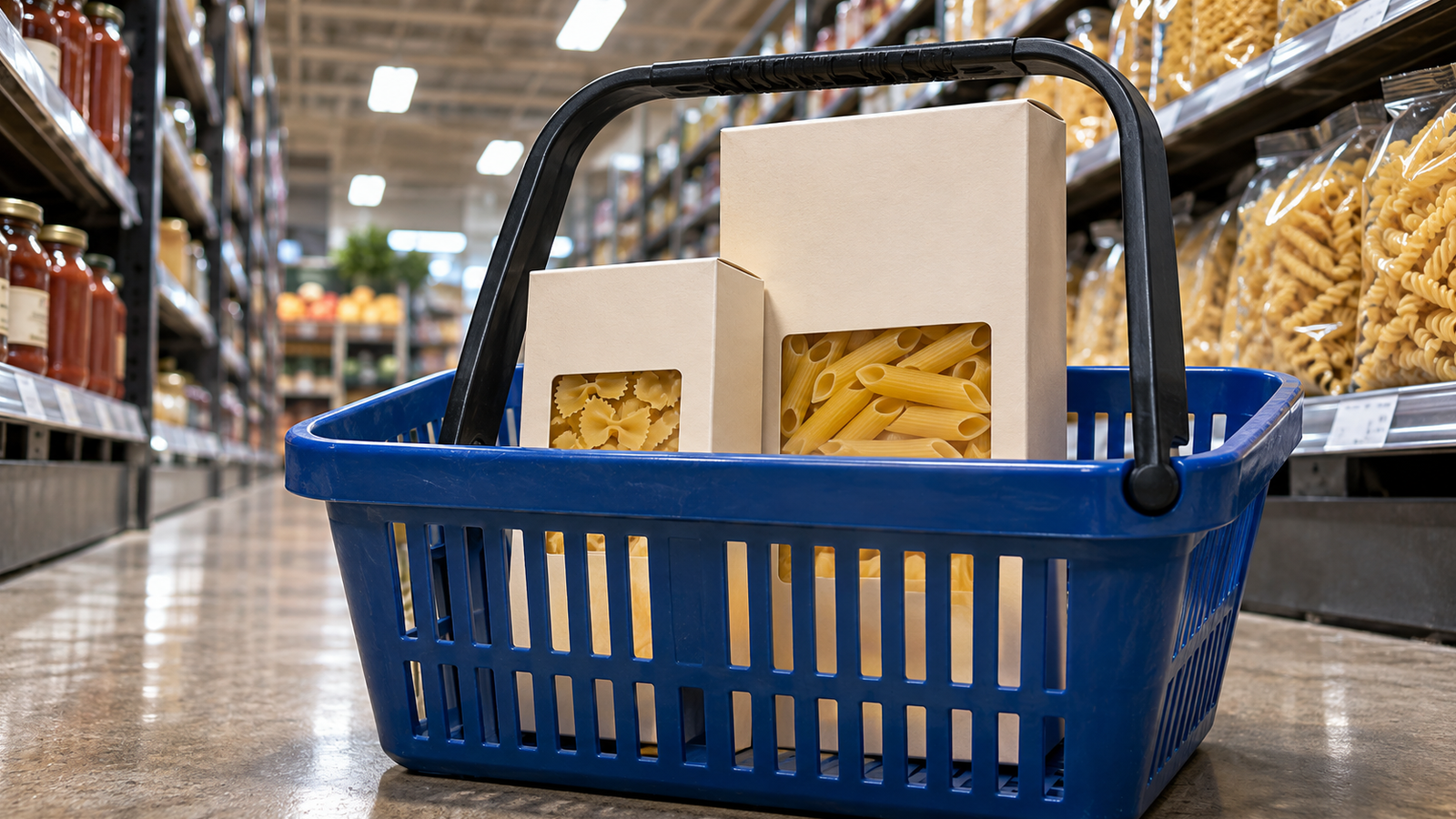
Two boxes of pasta sit side by side. One costs less at the register, while the other costs less for the same amount of food. Both facts can be true. The number that helps you compare them is the unit price: what you pay for a fixed amount, such as one ounce or one pound. Understanding grocery unit prices can help you make better purchasing decisions.
The National Institute of Standards and Technology explains that unit prices let shoppers compare differing package sizes. Use the number to narrow your choices, then decide how much to spend and how much of the product you will use.
By considering grocery unit prices, you can save money and avoid overpaying for larger packages that may not be the better deal.
Find the price that applies to the contents
Look on the shelf label or product page for both the sale price and a smaller figure with a unit next to it. A tag might show $2.40 for the box and 15 cents per ounce. The first figure is what you pay for the package before relevant taxes or discounts. The second tells you how much one ounce costs at that price. Check that the label is for the variety and size you have picked up.
New York’s unit pricing law covers certain products and sellers and sets out how to show unit prices. Do not assume that every item or every store will have a tag. If a label is missing or hard to read, use the package’s stated net quantity and the actual price you would pay.
Put both packages into the same unit
Divide the package price by the number of units. For a fictional example, a 16-ounce box at $2.40 is 15 cents per ounce. A 24-ounce box at $3.12 is 13 cents per ounce. The big box costs 72 cents more at checkout, but each ounce costs 2 cents less. The store prices in this example are made up to show the math.
If a store lists one product per pound and another per ounce, do not compare the printed numbers directly. Divide the per-pound price by 16 to get the price per ounce for items sold by weight. Keep weight and volume separate. A fluid ounce measures volume, so the number on a bottle is not a substitute for the weight on a box.
Count items only if each one is about the same size and serves the same purpose. A 12-pack of smaller cans may cost less per can than a six-pack of larger cans while costing more per fluid ounce. For a lunchbox, price per can might matter. For pouring the same amount into glasses at home, price per fluid ounce can tell you more.
Run the math again when a coupon changes the price
Use the price you can actually get. In the pasta example, imagine you have a 50-cent coupon that applies only to the small box. Its price becomes $1.90, or just under 12 cents per ounce. The small box now wins on both price per ounce and checkout cost. If the coupon requires a separate purchase or a minimum quantity, include that condition in your decision.
For a multi-buy offer, check whether the sign requires a certain number of packages or whether you get the same price on one. Look at the fine print or ask before adding another item. If you shop online, confirm the coupon is applied in the cart, then check whether a substitute changes the package size. The comparison is useful only when it reflects what you will receive.
Check whether you will use the difference
The bigger package makes sense when you expect to use it and have a place to store it. Think about a family with one pasta dinner planned, a crowded cupboard and a handful of dollars left for produce. The smaller box may help that family more this week, even if it costs more per ounce. A household that cooks pasta twice a week may come to a different answer.
For a perishable item, estimate how much you typically use before buying more. If you pay $4 for a 16-ounce pack and use only eight ounces, the portion you ate effectively cost 50 cents per ounce. A smaller package could be better even when its shelf unit price looks worse. For something you already use regularly, compare the bigger bag against the normal supply on hand rather than adding it automatically.
Leave room for the checkout total
Imagine you have $10 left for three items on your list. A larger package of one item might lower its unit price but take so much of the $10 that you cannot buy the other two. Compare the total for the whole short list before deciding. If the larger package makes sense next week, write down its usual size and check again then. You can also compare similar ingredients that can fill the same role at dinner, as long as you check the unit and consider what your household will eat. A unit price gives you one number for a decision that often involves several.
Use the comparison on a short list first
Try three items you already buy, such as pasta, a type of canned food and a snack. Write the package price and quantity on a scrap of paper or in a phone note. Compare two choices while the numbers are easy to see. If you are shopping at more than one Mohawk Valley store, record the same unit and the date. A sale you saw last Tuesday may no longer be available.
Check your receipt for offers you expected to receive. Keep the note only if it helps on a future trip. You do not need a permanent price book for everything in the cart. Learn the method on a few regular purchases, then pull it out when two packages look like a close call.
Before choosing the bigger size, ask three questions: What will I pay today, what does the same amount cost in each package, and how much will my household use? When the answers point in different directions, the right decision depends on which cost matters to your household right now.