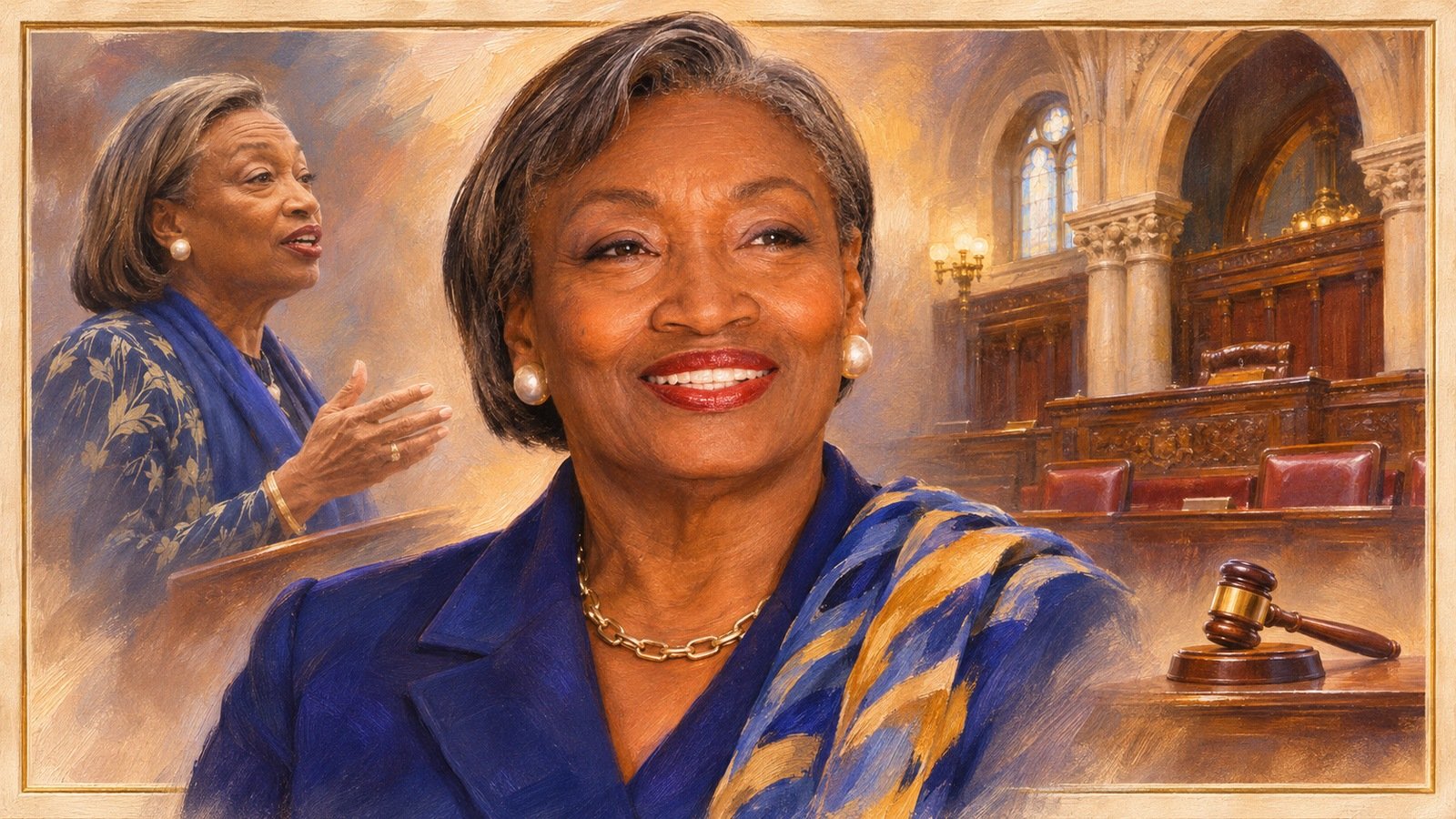
New York’s first Black woman Senate majority leader helped reshape state laws on housing and reproductive health. Her death leaves a Senate seat and a leadership role to fill.
By Dawn Michelle Laguerre
Andrea Stewart-Cousins, the first woman and first Black woman to lead the New York State Senate, has died at age 76. Her death was announced Friday, Nov. 27. Senate Democratic Majority communications director Mike Murphy confirmed her death in a statement reported by Bloomberg Government. Details about her cause of death were not immediately released.
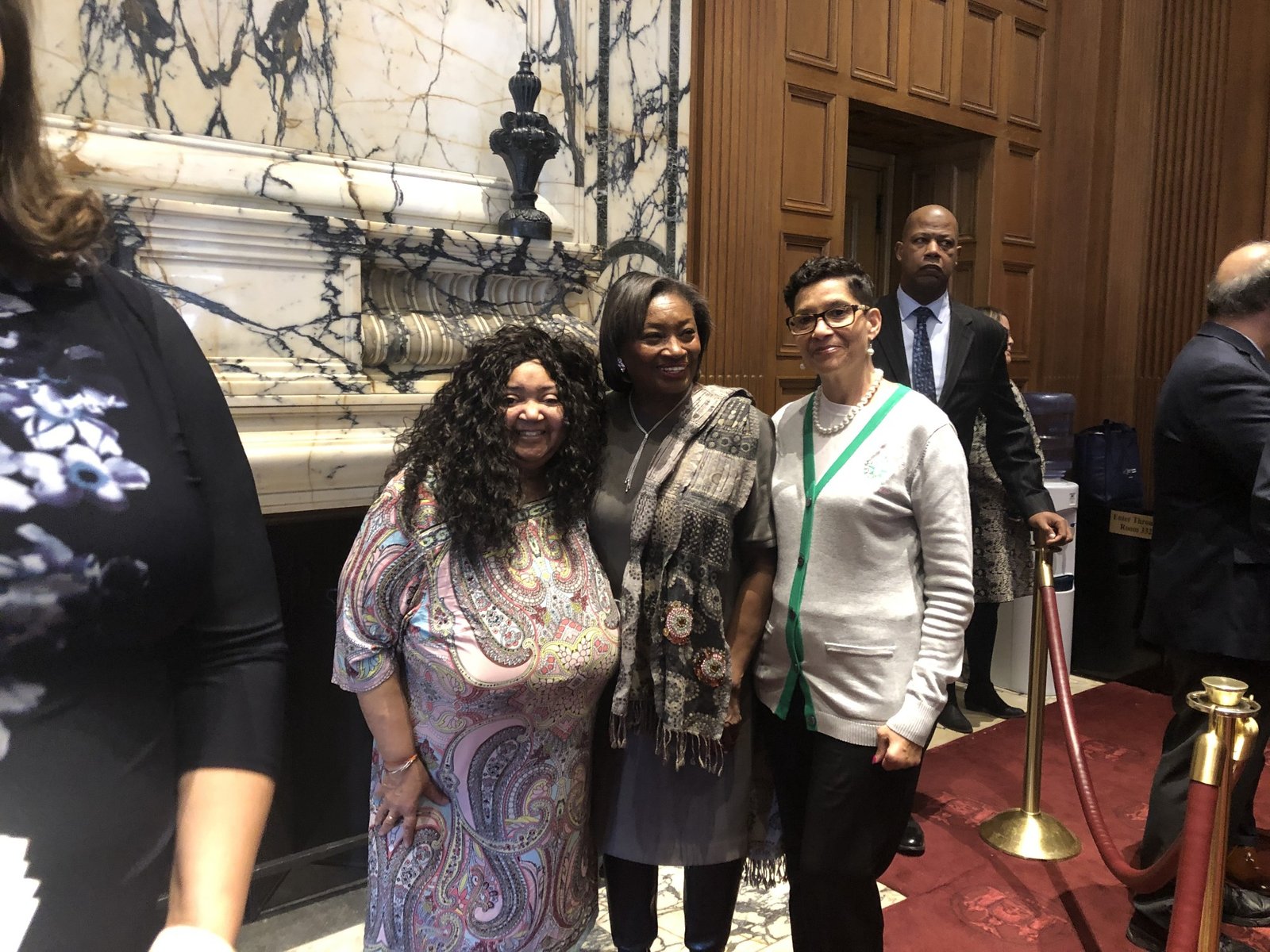
New York Attorney General Letitia James said in a statement released Friday that the two worked together on protections for tenants and homeowners, criminal justice changes and reproductive rights. “She was the first, and in everything she did, she made sure she would not be the last,” James said.
Flags at half-staff on state buildings
Gov. Kathy Hochul directed flags on state government buildings to fly at half-staff Friday and again on the day of Stewart-Cousins’ funeral. The governor’s flag notice listed Nov. 26 as the date of death, while her office said she died Friday, Nov. 27, the Associated Press reported. The accounts agree that her death was announced Friday.
From Yonkers to the New York State Senate
Stewart-Cousins worked in customer service, journalism and education before entering elected office, according to her official Senate biography. She earned a bachelor’s degree and a master’s degree in public administration from Pace University, as well as teaching credentials from Lehman College.
In 1992, Yonkers named her its first Black director of community affairs. She served in the Westchester County Legislature from 1996 to 2006. The Senate’s account of her 2016 induction into the Westchester Women’s Hall of Fame credits her with passing the county’s first human rights law and bringing a program for specially trained nurses to help care for sexual assault survivors. The program had been piloted in Yonkers.
Voters elected her to the state Senate in 2006. She went on to represent the 35th Senate District in Westchester, which includes parts of Yonkers, Greenburgh and Mount Pleasant. Her Democratic colleagues chose her to lead their conference in 2012, when Democrats did not control the chamber. On Jan. 9, 2019, she opened the session as the first woman and first Black woman to lead the Senate. Her official biography identifies her as the longest-serving Democratic majority leader in the chamber’s history.
What Andrea Stewart-Cousins helped change
Reproductive health. The Senate passed the Reproductive Health Act in its first month under her leadership, and the governor signed it on Jan. 22, 2019. The law updated New York’s abortion statutes, repealing specific abortion offenses in the Penal Law and setting out when an abortion may be performed in the Public Health Law.
Tenant protections. Stewart-Cousins sponsored the Housing Stability and Tenant Protection Act, which became law in June 2019. It made key rent stabilization rules permanent and changed parts of the eviction process. The legislation also made certain unlawful lockouts and other attempts to evict tenants without legal process a misdemeanor. The package was separate from the Good Cause Eviction law that later came before Utica’s Common Council.
Equal protection. In 2022, Stewart-Cousins sponsored a proposed change to the state Constitution. The proposal reached voters in 2024, and they approved it as Proposal 1. It added protections against discrimination based on characteristics including age, disability, national origin and sex. The amendment’s text spells out that sex includes sexual orientation, gender identity, pregnancy and reproductive health care, among other protections.
How the Senate chooses its leader
Stewart-Cousins held the formal title of temporary president. That term does not mean she was a substitute. The Senate’s description of its leadership explains that members choose one of their own as temporary president and majority leader. The 2025–26 Senate rules call for a resolution adopted by a majority of the elected senators. The lieutenant governor is the Senate’s president under the state Constitution, but that is a separate office.
The majority leader helps set the Senate’s agenda. The job also puts its holder at the table for negotiations with the governor and the Assembly speaker. The leader cannot pass a bill alone. What the leader can do is make a proposal a priority, negotiate changes and help assemble the votes it needs. That influence reaches well beyond the district the leader represents.

The leadership vote is separate from filling her seat
Stewart-Cousins’ Senate seat represents voters in District 35. The leadership job concerns the chamber as a whole. Choosing a new leader does not give that person the Westchester seat. Any election to fill the district vacancy follows a separate process under New York’s Public Officers Law. Murphy said details about succession and memorial services would follow, Spectrum News reported.
Why the change matters in the Mohawk Valley
State Sen. Joseph Griffo, whose district includes Oneida County, said in a Friday statement that he and Stewart-Cousins were elected to the Senate in the same year. He recalled building a good working relationship with her despite disagreements on policy. Stewart-Cousins thanked Griffo in her opening remarks as majority leader in 2019 and said she expected they would work well together.
School funding and housing rules are among the statewide issues Senate leaders negotiate. Utica’s recent 5–4 rejection of a local Good Cause Eviction proposal shows how an Albany policy and a local choice can intersect. A leadership change does not reverse that vote, enact a new law or change a tenant’s rights by itself. What local readers can watch for is which housing or school measures the next Senate leadership brings forward and how their own senators vote.
Readers can use the Senate’s district lookup to contact their senator. For a personal remembrance of Stewart-Cousins, see Dawn Michelle LaGuerre’s tribute in the Utica Phoenix.