

The state expects to finish Fulton Street demolition in summer 2027. Plans call for about 126 affordable apartments, a community center and a health clinic.
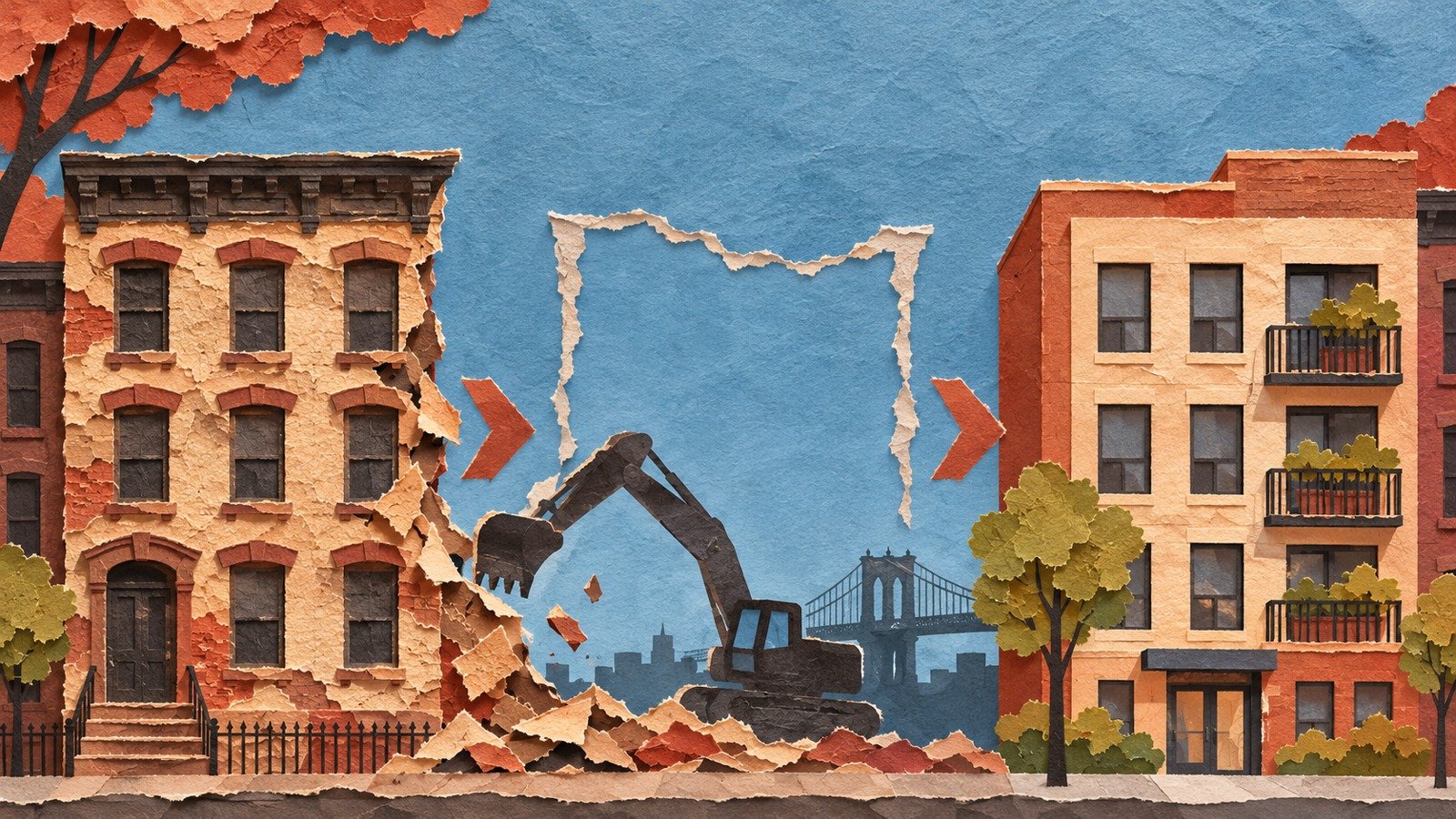
Fulton Street demolition is underway in Brooklyn, where New York State has begun taking down a long-vacant building at 1024 Fulton Street. Plans call for 126 permanently affordable apartments on the site. The Clinton Hill project would also bring a community center, a health clinic and a job and financial services hub under one roof.
Gov. Kathy Hochul announced the start of the work on Nov. 23. The state Office of General Services is leading the demolition and expects to finish in summer 2027. The governor’s office anticipates that construction of the new building will begin in early 2028. Those are projections, not opening dates. The announcement did not provide rents, a move-in date or a schedule for applications.
How the Fulton Street demolition will work
The state says the three-story structure has been unsafe since 1997. Because it is so close to neighboring buildings, crews will need to take it apart by hand. The Office of General Services is responsible for clearing the site. The nonprofit partners selected to develop the property would own the completed building.
New York chose those partners in February. That announcement described a 125-apartment proposal; the governor’s new demolition announcement lists about 126. The latest plan describes roughly 149,000 square feet in total. It calls for studios through three-bedroom apartments, allowing for households of different sizes. The state says the homes would serve households earning between 30% and 80% of area median income, a benchmark for what households in a region earn. Those percentages are not a rent schedule; applicants should look for the income and household-size rules in the final listing when one becomes available.
What the plan would add besides apartments
The biggest planned community space is a 27,000-square-foot center for older adults and young children. The proposal also includes a 2,000-square-foot hub for workforce and financial services and a 1,000-square-foot health clinic. State officials say the design calls for all-electric systems, a green roof and Passive House certification, an energy-efficiency standard. Those features are in the plans; the existing building does not offer those services.
Empire State Development led a community planning process before seeking proposals. Its report describes three workshops in fall 2024 with more than 150 different attendees. Residents discussed what housing and services they wanted on the site. The agency said it used those priorities to score developers’ proposals, rather than seeking only a bidder for the land.
The winning team is made up of three Brooklyn-based nonprofits: Fifth Avenue Committee, Bedford Stuyvesant Restoration Corporation and One Brooklyn Health. The state expects the project to create about 350 temporary construction jobs. The developers have also committed to more than 35% participation by minority- and women-owned businesses and 30% local hiring across the development. Those figures describe the development team’s commitments and the state’s forecasts, not jobs or contracts already awarded under those targets.
What to watch next
Clearing a state-owned property is one milestone. The next will be the start of construction after demolition. Renters should wait for an official announcement that lists the application process, rent levels and eligibility rather than assuming demolition means a housing lottery is open. NYC Housing Connect lists current city affordable housing opportunities; the Nov. 23 announcement did not say when or how the Fulton Street apartments would be offered.
This project is in Brooklyn, not the Mohawk Valley. But it shows how New York is putting surplus state property to work for housing and how long that can take, even after the state has selected a developer. For readers following similar proposals closer to home, the useful details to watch are who owns the site, who pays to clear it, what income levels the planned homes would serve and whether those commitments are written into the final project documents.

