By Dawn Michelle Laguerre
On a regular walk, you might pass a row of shrubs without giving it a second look. Stop for a minute and the shrubs may turn out to be full of small movements. A first bird walk is a chance to notice those movements. You can do it on a path you already know, and you do not need to bring home a long list of names.
The New York State Department of Environmental Conservation’s I BIRD NY program has a beginner booklet and other resources. Start with a short outing and one question: What can I notice if I slow down? Here is how to make that question into a plan you can actually follow.
Pick the shortest route you would enjoy repeating
Choose a familiar public path with an easy place to turn around. A route that passes trees, shrubs or open water gives you places to pause without needing to cover much ground. You can also start from a bench if walking any distance would make the outing harder. Pick a starting point you can describe clearly to anyone meeting you.
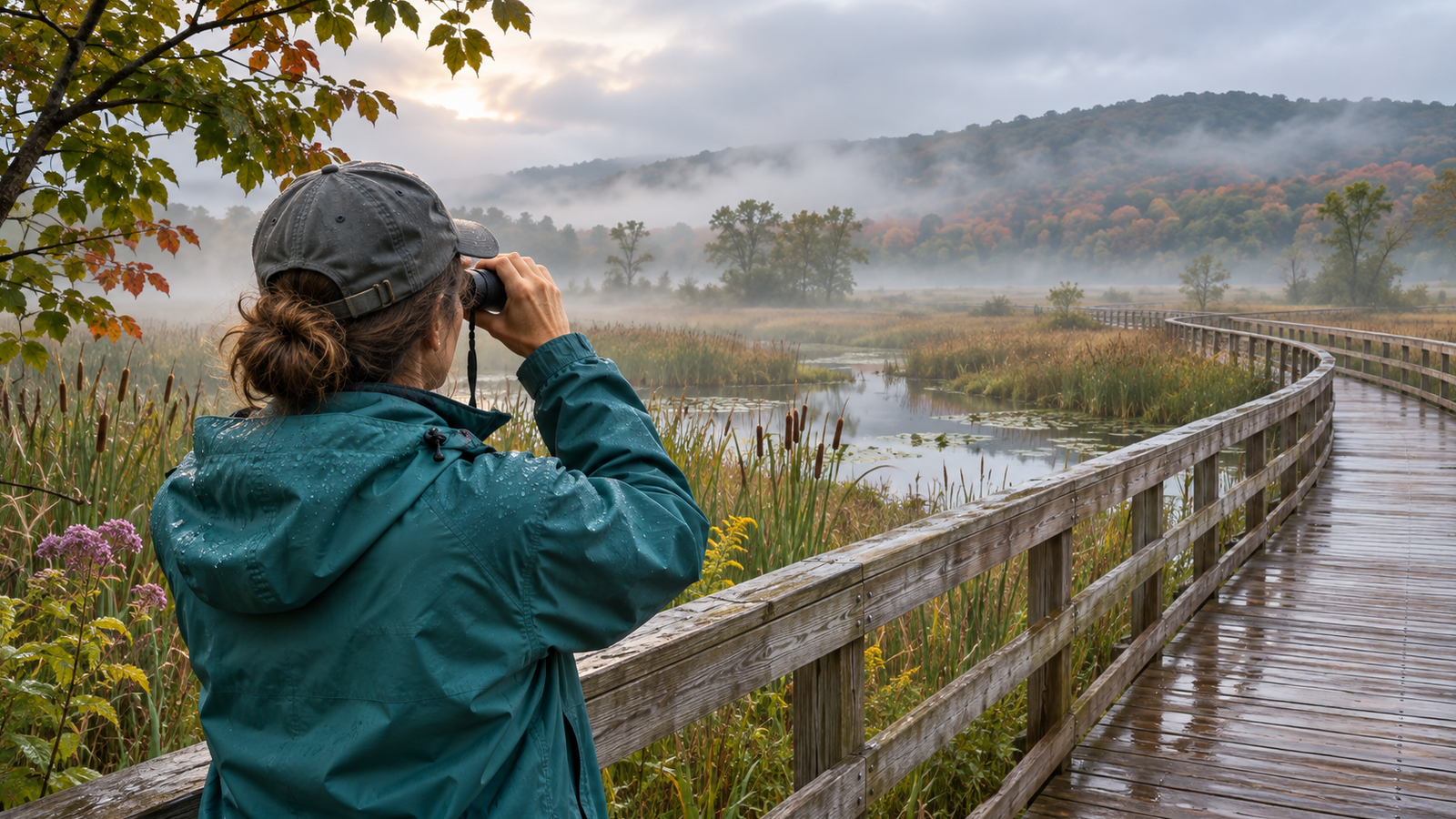
The DEC’s Utica Marsh page describes a mix of open water, wet meadows and cattails between the Mohawk River and the canal, on the border of Utica and Marcy. It lists access from the Canalway Trail. Check the agency’s directions and current notices instead of assuming that a road shown on an old map leads to an open parking spot or accessible entrance.
If you use a mobility aid or plan to bring a stroller, look for information about surfaces, slopes and places to rest. Call the land manager if you need details the map does not show. It is fine to choose a neighborhood route instead. An easy return matters more on a first outing than reaching a particular overlook.
Pack for the walk, then decide whether you need binoculars
Wear shoes and layers that suit the weather and the path. Take water and any items you would usually need on a walk of that length. A small notebook works well because you can jot down a few words without looking away for long. A phone note works too. Try leaving the screen off while you are moving and opening it once you stop.
Binoculars help bring distant details closer, but you can learn plenty without them. If you borrow a pair, practice on a stationary object before looking for a bird. Pick a branch, look straight at it, then lift the binoculars without shifting your eyes. If the branch disappears, lower the binoculars and try again. Keep the strap secure while walking.
Choose three stops and give each one a minute
At the first stop, listen before looking. A sound can tell you where to direct your attention. At the next stop, scan the edges of shrubs or the line where trees meet open ground. At the third, look at a different height, perhaps from the lower branches up to the open sky. These are places to look, not promises about where a particular species will be.
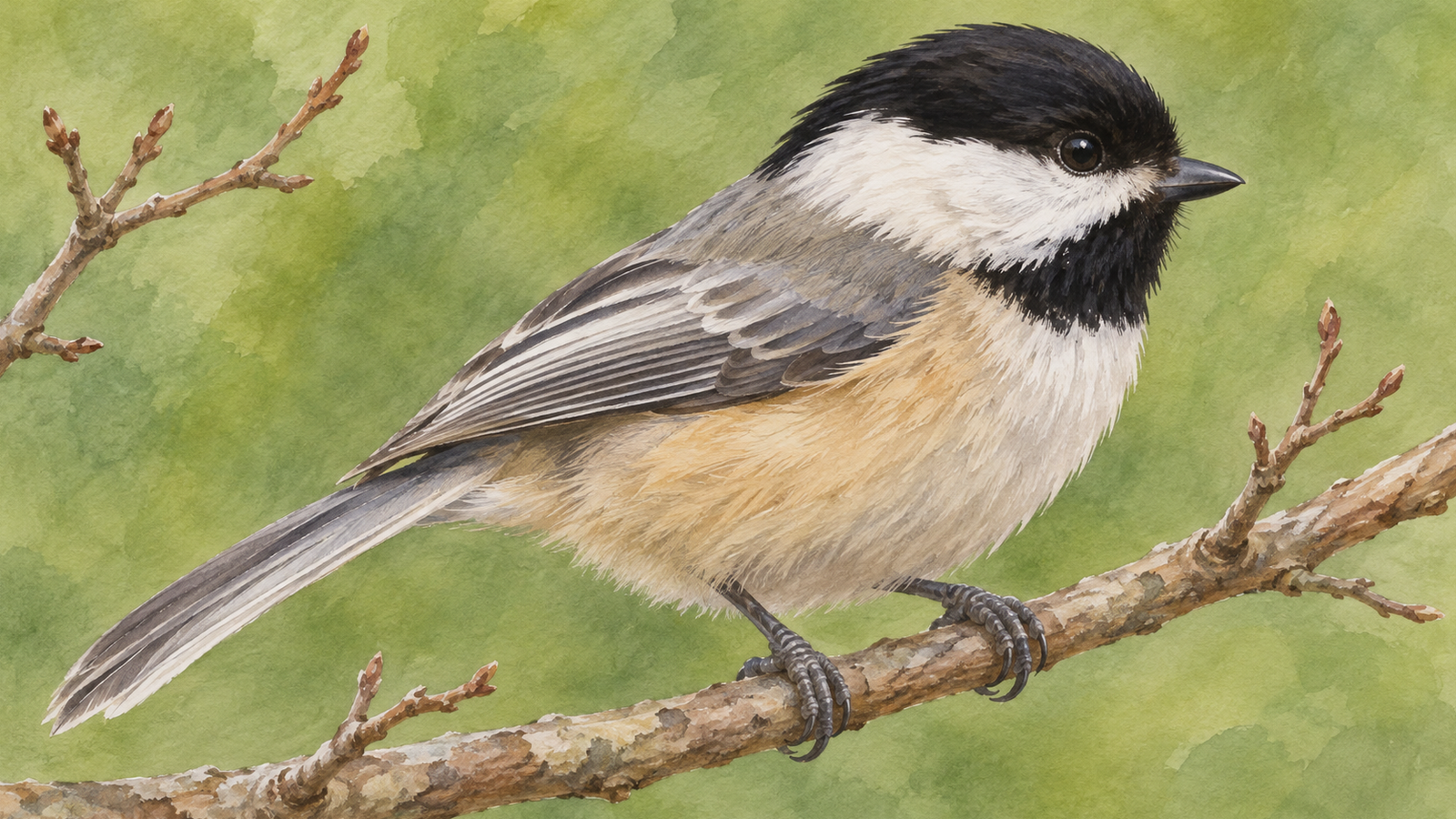
Imagine you see a small bird dart from a branch into tall grass. Write down what you saw: smaller than a robin, quick flight, brownish back, low to the ground. If you did not see the underside, leave it blank. Those notes are more useful later than a confident name based on one color or a blurry glimpse. If there is no bird at a stop, move on after a quiet minute.
Use an app as a second opinion
The DEC’s birding resource page points readers to Merlin Bird ID, an identification app from the Cornell Lab of Ornithology. Try it after making your own observations. Compare a suggestion with the size, shape or behavior you saw. If the suggestion does not fit, keep the bird unidentified. You can still write down when and where it appeared.
You do not have to record or share sightings. If you decide to use eBird, the Cornell Lab’s getting-started guide explains how to make a checklist. Read its guidance before posting an uncertain identification, and distinguish a short observation stop from a longer walk.
Give wildlife and other visitors room
Watch from a place where you can stand safely without blocking a path. If a bird moves away every time you get closer, stop advancing and watch from where you are. Skip any urge to leave the marked route for a better picture. On a busy shared path, step aside only where there is room and look both ways before returning to the trail.
Bring a companion if that makes the trip easier or more enjoyable. Agree on the length and how often you will pause. One person can listen while the other looks, then switch at the next stop. A child can help by choosing a feature to watch, such as tails, rather than trying to remember a list of names.
Try the same stop at a different hour
A familiar place can feel different before work and in the middle of the afternoon. Choose whichever time is safe and easy for you, then visit the same spot a second time. Note whether wind, traffic or other visitors made it easier or harder to listen. If you go with a friend, compare what you each noticed before looking up a name. One person may have seen movement the other missed. You can make a short walk feel fresh without adding miles or driving to a different site. If you saw nothing at the first stop, treat that as a reason to try a different view, not to rush past the rest.
End with one note you can use next time
Before you leave, record one thing that made the outing useful. Maybe the first bench had a clear view, or the exposed section was too windy to hear. Write down a time or route that might work better next time. Visit again and see what has changed. A familiar walk makes it easier to notice a new call, a different bird or a quiet spot you missed on the first visit.