
Featured image: AI-generated conceptual illustration by Mohawk Valley Voice. Not a photograph of an actual home.
A wet windowsill is worth attention before it becomes part of the morning routine. Start by drying the water, then look for a pattern: which window gets wet, when it happens and what was going on in the house.
Condensation forms when moist air meets a surface cold enough for water to collect. The Environmental Protection Agency explains that cooking, showers, leaks and seepage can all contribute moisture indoors. Cold glass can make that moisture visible. A wet window alone does not tell you which source is responsible.
Dry the surface and record what you see
Wipe the glass and sill with an absorbent cloth. Check nearby trim and the wall below without opening wall cavities or disturbing damaged material. EPA advises prompt drying and reducing the moisture source when condensation appears on windows, walls or pipes. Its home moisture guide also calls for fixing leaks promptly.
For a useful household record, note the room, date, outdoor conditions and whether the wetness followed cooking or a shower. A photograph before drying can help explain a recurring problem to a building manager or contractor. Compare the same spot the next morning rather than relying on memory.
Measure humidity without chasing one magic number
A humidity meter can help show what is happening in the room. EPA recommends keeping relative humidity below 60 percent, ideally between 30 and 50 percent when possible. Those are general guidelines, not a promise that every window will stay dry throughout winter.
University of Minnesota Extension explains that colder winter conditions can require lower humidity to prevent condensation. Its general seasonal guidance includes about 25 percent in winter. The building and weather matter, so do not treat the upper end of EPA’s range as a winter target for every home.
Write down the reading along with the wet-window observation. If the glass stays wet despite a lower reading, or several areas are affected, ask a qualified building professional to assess the moisture and ventilation problem rather than continually adjusting equipment without an explanation.
Look for moisture you can reduce at the source
Extension lists everyday bathing, cooking and dishwashing among moisture sources. Humidifiers, stored firewood, plumbing leaks and unvented appliances can add to the load. Review which of those apply before buying another appliance.
- Use the bathroom exhaust fan during showers and the kitchen exhaust system while cooking.
- Check whether exhaust fans actually work. Arrange repairs if they do not.
- Review any humidifier use when windows are repeatedly wet.
- Report or repair leaks rather than expecting ventilation alone to solve them.
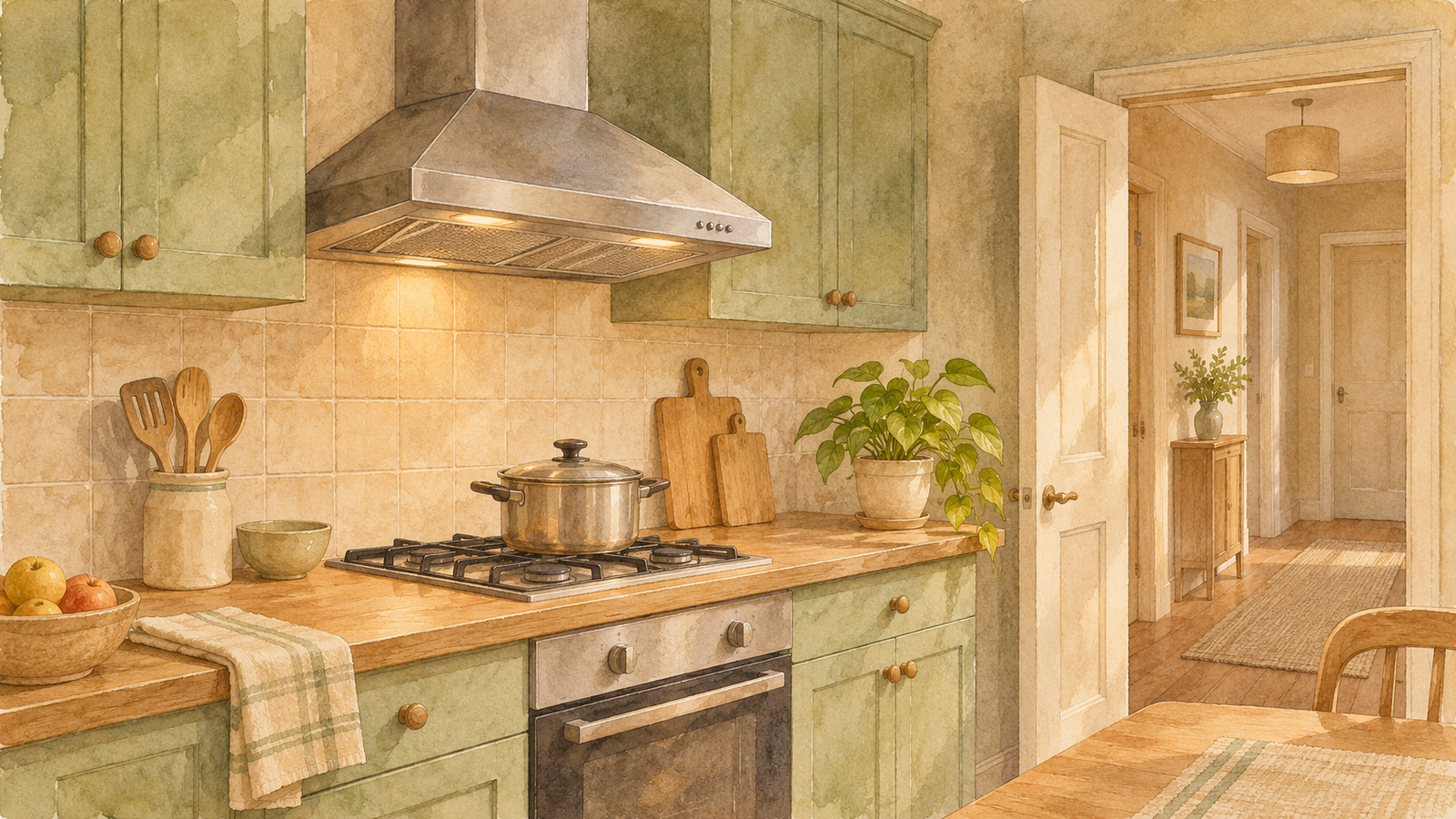
EPA’s moisture-control guidance recommends bathroom and kitchen fans that exhaust outdoors. A kitchen fan that only recirculates air is not the same as removing moist air from the building. Ask the owner or a qualified professional if you do not know where an exhaust system leads.
Opening a window may help when conditions allow, but it is not a substitute for repairing a persistent problem. EPA qualifies ventilation advice with practicality, and weather, safety and outdoor conditions should shape that choice. Do not block required ventilation or improvise changes to a combustion appliance.
Know when to move beyond a household check
Repeated wet trim, a musty smell, peeling finishes or a problem that returns after drying deserve follow-up. Extension identifies condensation, mold and damaged paint among signs of excess moisture. A record of where and when the problem occurs gives the next person something specific to investigate.
Renters should promptly report moisture problems and plumbing leaks to their owner, manager or superintendent, as EPA advises. This guide is a starting point for observing moisture, not instructions for mold removal or a diagnosis of a health problem. If mold or water damage is present, use EPA’s cleanup guidance and seek qualified help for the situation.
Finish with three clear notes: what got wet, what you changed and whether it returned. The goal is a dry surface and an identified cause, not simply a better-looking window for an hour.
Official guidance checked November 15, 2026.