
By Dawn Michelle Laguerre
Learning how to cook lentils starts with one small pot, without a long soak or a complicated recipe. For a first attempt, keep it simple: choose a variety, rinse it and simmer a small batch until tender. Then decide whether dinner will be a bowl with toppings or a softer soup.
Lentils don’t require the overnight soaking used for many dry beans. That makes them worth considering when you want to cook from the pantry without planning the night before. Start with a small pot so you can learn the texture your family likes before making a large batch.
Choose the texture before choosing the recipe
Brown lentils are a practical starting point for a bowl or side dish. Red lentils soften more readily and work well when you want a soup or sauce with a smoother texture. Some green varieties stay firmer and take longer. Check the package directions because varieties differ.
Oregon State University Extension’s Food Hero lentil guide explains the differences and provides basic cooking instructions. Use the type named in a recipe the first time. Swapping red lentils into a recipe meant to keep whole brown lentils may change the finished dish even if the flavor is good.
Before shopping, look at what you already have. An onion, a carrot, cooked vegetables or a spoonful of seasoning can help turn the pot into dinner. There’s no need to buy a long list of toppings just to see whether your household likes lentils.
Measure, sort and rinse
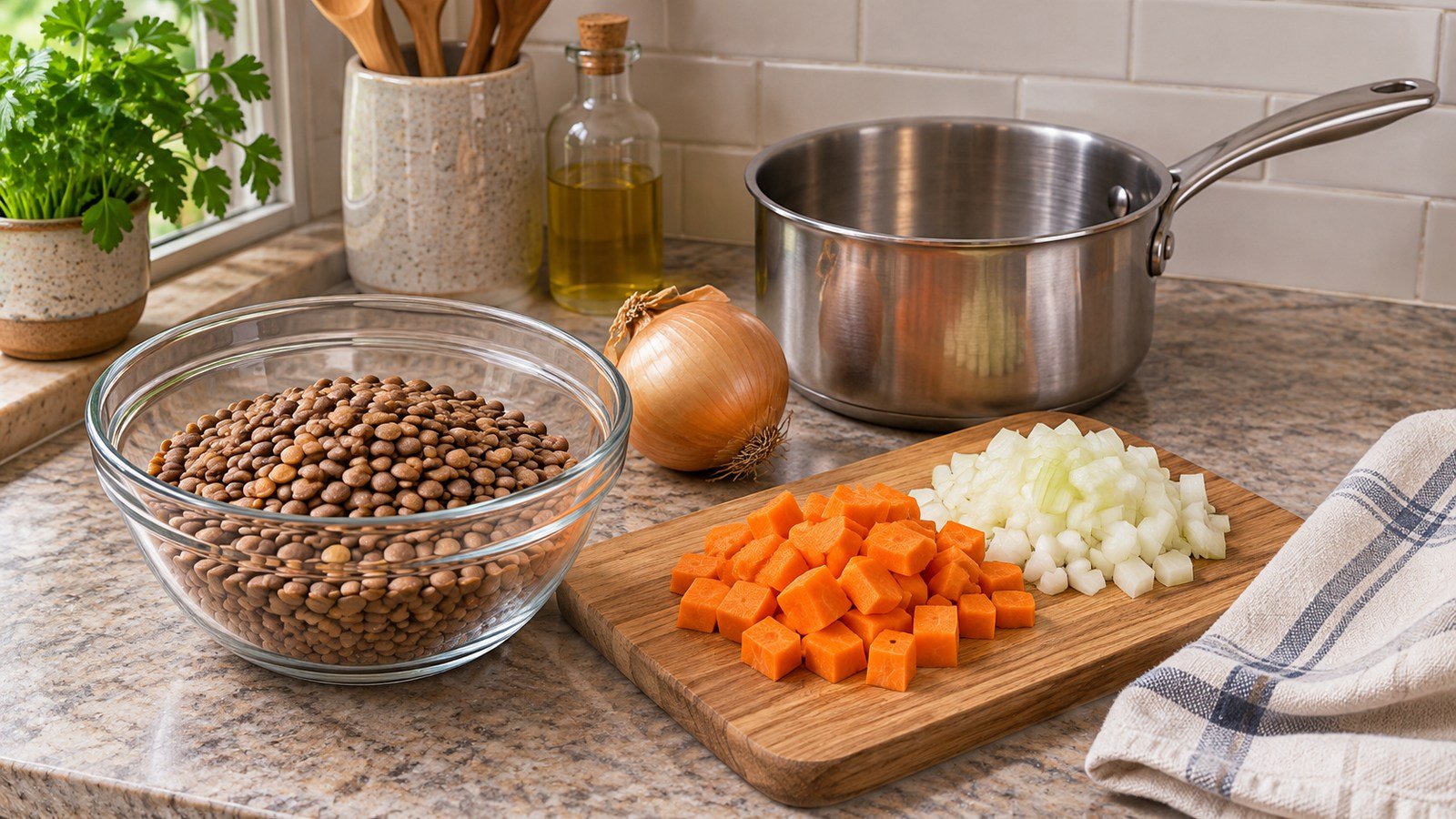
For a first pot, measure one cup of dry lentils, or halve the amount if you want a smaller trial. Spread them where you can see them and remove small stones or other debris. Rinse in a fine colander under running water. Use clean utensils and wash your hands before preparing food.
Food Hero’s basic method uses about two and a half to three cups of water or broth per cup of dry lentils. Bring the pot just to a boil, then lower it to a gentle simmer and cover. Brown lentils commonly need about 20 to 30 minutes; follow the package and test for tenderness rather than relying only on a timer. Add liquid as needed so the pot doesn’t dry out.
Keep a spoon nearby for checking. The first time you cook a new variety, taste a cooled sample near the early end of the package’s time range. If it’s still firm in the center, give it more time. If it’s tender but sitting in more liquid than you want, drain some carefully or decide to use the liquid as part of soup.
Build dinner around the first pot
Try a simple bowl before a more involved recipe. Spoon lentils alongside rice or another cooked grain, add cooked vegetables and offer a squeeze of lemon or a familiar sauce at the table. Keep toppings separate if family members prefer different flavors.
You can also stir a spoonful into a salad once safely cooled, or use well-drained cooked lentils in a wrap. Start with a small amount if the texture is new to your household. Ask whether people prefer the lentils firmer, softer or more seasoned; that answer will help more than guessing what to change next time.
If a household member has allergies or dietary restrictions, check every ingredient you add, including broth, spice blends and sauces. Lentils don’t make the other ingredients in a meal interchangeable for that person.

Try soup when you want a softer meal
For soup, choose a recipe with enough liquid for the result you want. Food Hero’s lentil soup recipe gives a tested starting point, including preparation steps and timing. Read the full ingredient list before you begin so you can decide whether its seasonings suit your family.
For your own small pot, build flavor with vegetables you already use in soup. A mild onion-and-carrot base can be easier to share than a strongly seasoned pot if children and adults prefer different levels of heat. Let people add their preferred finishing flavors at the table. If you make changes to an established recipe, expect the cooking time and texture to change too.
Put bread, a small salad or another familiar side on the table if that helps make soup a comfortable first try. You can serve a modest bowl and offer seconds rather than guessing everyone’s appetite. Keep a note of any change you make so a successful pot is easier to repeat.
Put extra portions away while dinner is still manageable
A second meal starts with prompt, safe storage. The USDA’s leftovers guidance says to refrigerate perishables within two hours, or one hour above 90°F, and use shallow containers to help food cool quickly. Don’t leave a big pot sitting out until bedtime.
Label the container with the date. USDA advises using refrigerated leftovers within three to four days or freezing them. Reheat leftovers to 165°F; when reheating soup, USDA also advises bringing it to a rolling boil. Use a food thermometer rather than assuming that steam from the top means every part has reached the right temperature.
For a small household, portion leftovers before freezing so you can take out only what you need. A container that holds one lunch is easier to use than a block containing the entire pot. Leave space for expansion as appropriate for the container and follow its freezer instructions.
Make the next batch easier to plan
Write a short note on the package or in your recipe folder: variety, amount of liquid, cooking time and what your family liked. If the first batch was too soft for bowls, save that method for soup and try a firmer variety next time. If the flavor was too mild, adjust a small serving before changing the whole pot.
Compare the price of the amount you use, not just the size of the bag. Lentils may be sold in small packages or larger bags, and the better purchase depends on your budget, storage space and how often you’ll cook them. Store dry lentils in a cool, dry place in a closed container and follow package advice.
For a broader plan, see our cook once, eat twice guide. Start with one meal you already understand: a bowl, a soup or a wrap. A small pot gives you enough practice to decide whether lentils deserve a regular spot on the family menu.

