
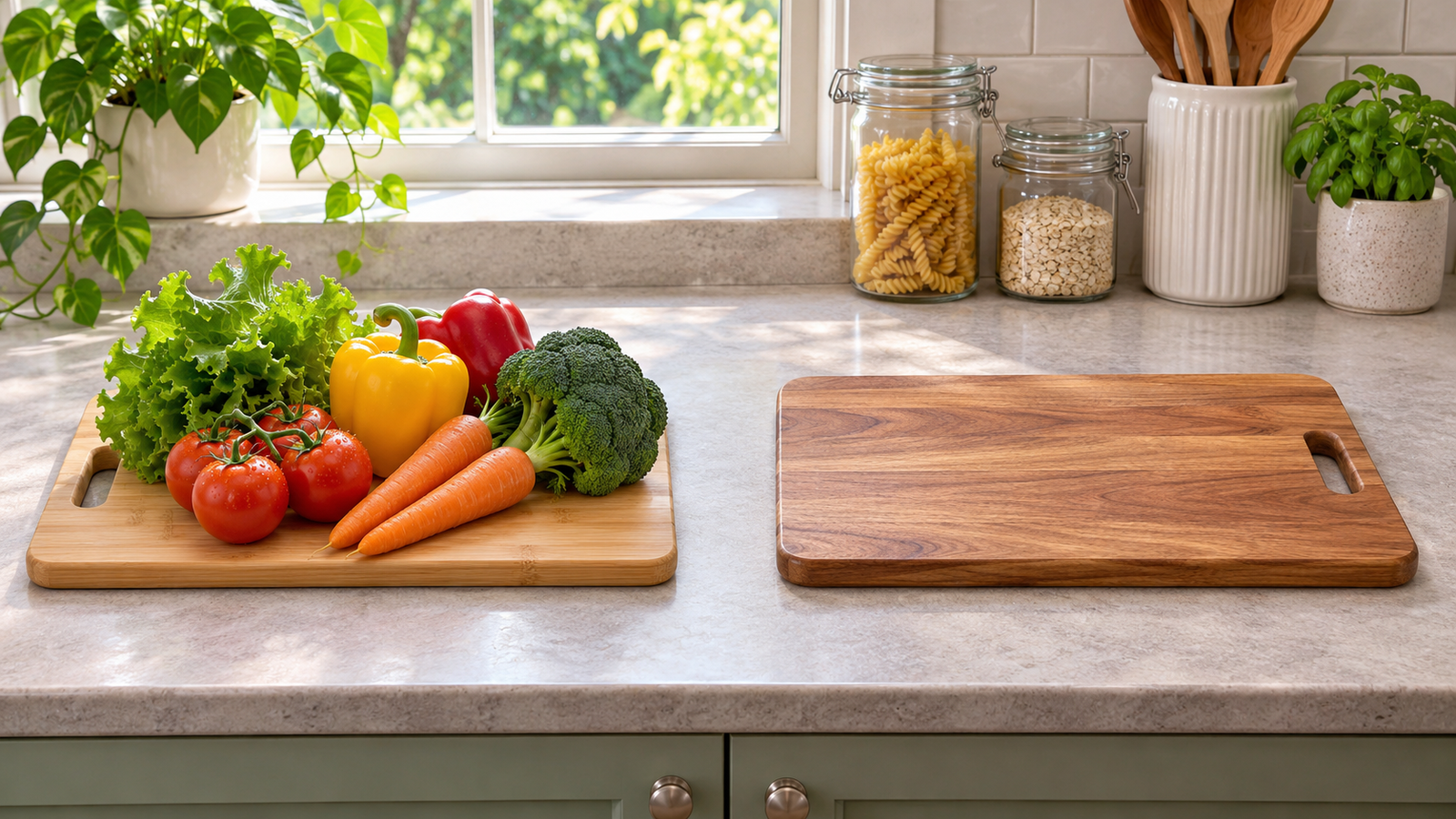
A cutting board needs a clear job, cleaning between foods and a condition check. Make those steps part of meal preparation before the first cut.
By David LaGuerre
Dinner preparation can move quickly from vegetables to raw chicken to a loaf of bread. The cutting board may stay on the counter through all three jobs. What matters is whether the food, tools and surfaces stay appropriately separated and cleaned.
The Centers for Disease Control and Prevention recommends separate boards for raw meat, poultry and seafood and for produce, bread and other foods that will not be cooked. It also advises washing boards, utensils and countertops with hot, soapy water after preparing each food item.
A useful household routine makes those instructions easy to follow. Assign the boards, plan the order of work and leave time for cleanup. A board that looks neat on the counter is not proof that it is ready for its next task.
Start by checking what you already own
Take out the boards used for everyday food preparation. Identify the material and find the manufacturer’s care instructions if available. Do not assume two boards that look alike tolerate the same dishwasher cycle or cleaning method.
Inspect the working surfaces and edges in good light. The USDA Food Safety and Inspection Service advises replacing excessively worn boards or boards with hard-to-clean grooves. A familiar board does not become easier to clean simply because the household has used it for years.
Set a questionable board aside from food preparation while deciding its replacement. Write the task on your household list rather than returning it to the usual storage place, where someone else may use it without knowing you found a problem.
Give boards clear jobs
Choose which board is used for raw meat, poultry or seafood and which is used for ready-to-eat food. Make the arrangement understandable to everyone who cooks. A private memory about the red board is not helpful if another person has never heard the plan.
You can use a simple storage arrangement or a note inside a cabinet. Avoid marking a food-contact surface with a product not intended for that purpose. If you use color as a reminder, explain what it means and remember that color itself does not clean the board.
Keep the system manageable. An elaborate set that nobody can remember may be less useful than two suitable boards with clear roles and a reliable cleaning routine. Check that the arrangement fits the way your household actually prepares meals.
Plan the food and the workspace together
Before opening raw meat or poultry, decide where each ingredient, board and utensil will go. Keep ready-to-eat food away from the raw preparation area. Have clean serving dishes available so finished food does not return to a used preparation surface.
Read the recipe far enough to understand the sequence. If you will prepare a salad and a raw protein, set up the separate equipment before beginning. Do not wait until both ingredients are open and competing for the same small space.
For a small Mohawk Valley apartment kitchen, fewer simultaneous tasks may be easier to manage. Clear unrelated mail, bags and dishes from the counter first. The aim is a workable sequence rather than using every available surface at once.
Treat the knife and your hands as part of the same system
A separate board does not solve the problem if the same unwashed knife moves from raw meat to ready-to-eat food. Include utensils, hands and nearby surfaces in the cleaning plan.
CDC recommends washing hands with soap and water for at least 20 seconds before, during and after food preparation as appropriate, including after handling raw meat, poultry, seafood or eggs. Its guidance also addresses cleaning utensils and surfaces between foods.
Pause when the task changes. Put used tools in the designated place for washing and use clean tools for the next food. Do not leave another cook to guess whether a knife beside the sink is clean or waiting to be washed.
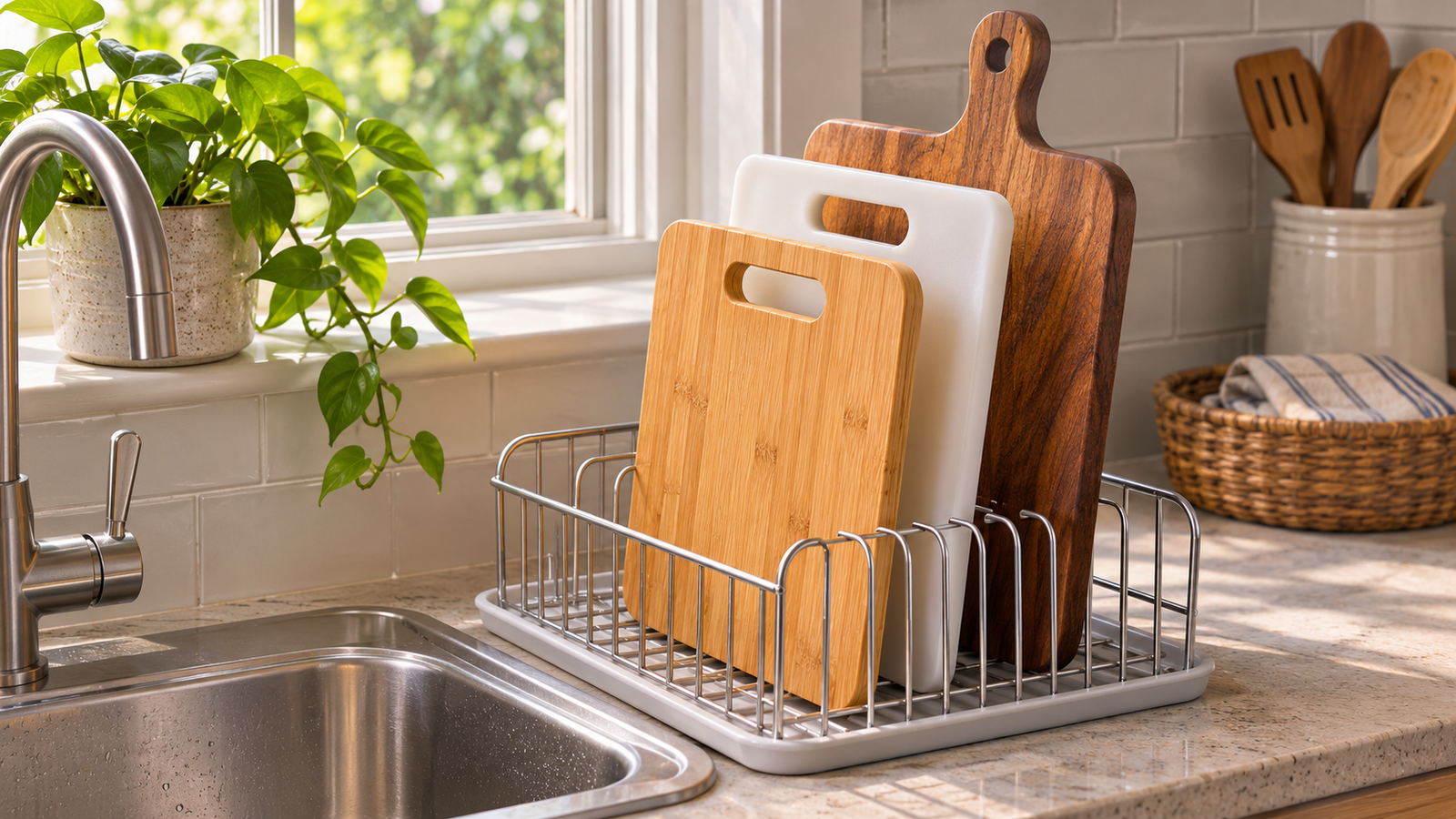
Wash between foods, not only after dinner
USDA’s cutting-board guidance says to start with a clean board and wash boards, dishes and countertops with hot, soapy water after each food item and before the next. A quick dry wipe is not the cleaning procedure that guidance describes.
Follow the board’s instructions for washing and rinsing. If using a dishwasher, confirm that the particular board is suitable. USDA distinguishes solid hardwood from wood laminates in its dishwasher guidance, so the word wood alone does not answer the question.
Make space for the board to dry according to its care instructions before storage. Keep clean boards separate from used tools and spills. Do not immediately return a washed board to the same unclean area it just left.
Understand where sanitizing fits
Cleaning and sanitizing are different steps. The FDA Food Code explains that surfaces need to be clean before sanitizing can be effective. USDA’s consumer guidance also describes sanitizing after thorough washing.
Use a method appropriate for the board and the product. If using a sanitizer, read its directions for food-contact surfaces, including dilution if required, contact time, rinsing and drying. A bathroom spray or another household product is not automatically suitable for a cutting board.
The Environmental Protection Agency emphasizes following label directions and contact time. Do not shorten a required wet time because a surface looks clean. Follow the board manufacturer’s restrictions as well as the product instructions.
If you cannot determine whether a product or method is suitable, resolve that question before using it. Keep cleaning products away from food and follow their storage and safety instructions.
Make a reset obvious to the next cook
Agree on a simple rule for the end of preparation: used boards go to the washing area, and clean, dry boards return to their assigned place. Avoid leaving a board flat on the counter with no indication of its status.
If someone takes over halfway through a recipe, explain which foods and tools have already been handled. A brief handoff is more useful than saying everything is probably fine. Point out anything still awaiting washing or sanitizing.
For a family, give children a clear role appropriate to their abilities and supervision. Do not ask a child to determine whether an unknown cleaning chemical is suitable or to handle a sharp tool as part of an unsupervised cleanup job.
Check condition again when the routine changes
Review the boards when deep wear becomes visible, after damage or when care instructions can no longer be followed reliably. Do not rely on a fixed number of years for every board. Condition and cleanability matter.
When buying a replacement, consider its intended use, size, storage and cleaning requirements. Keep the care information where the household can find it. A board that fits your actual cleaning routine is easier to maintain than one whose instructions nobody has read.
Remember that board care is one part of food safety. Proper cooking and refrigeration still matter. Start the next meal with a clean surface, keep raw and ready-to-eat food separate and finish with equipment ready for the next person.
Official CDC, USDA, FDA and EPA guidance checked November 6, 2026. Household organizing examples are practical suggestions. Follow current product and board instructions. Images are AI-generated editorial illustrations.

