By David Laguerre
A lamp has moved across the room. A small project needs power beyond the nearest outlet. Before reaching for the cord in the junk drawer, pause long enough to check whether it belongs in that setup.
Extension cord safety starts with three questions: Is this temporary? Is the cord suitable for the equipment and location? Can it run without being covered, pinched or damaged? You do not need to open an outlet or repair wiring to do this first check.
The Consumer Product Safety Commission’s household cord guide warns that damaged or overloaded cords can overheat and cause fires. It recommends temporary use only. A cord that stays behind the sofa all year deserves a different plan.
Extension cord safety starts with the job
Write down the item you want to power and where you want to use it. Find its instructions before shopping or borrowing equipment. Look for any restriction on extension-cord use. A convenient location does not override the equipment maker’s directions.
Consider a reading corner. Before adding a cord, could you move the lamp, shift the chair or choose a different outlet? Draw a quick room sketch with furniture and outlets marked. Often the useful question is where the activity belongs, rather than how to stretch power across the room.
For a recurring need, add the location to a list for a qualified electrician. If you rent, send the property owner a clear description of the outlet problem or daily need. Explain the intended use rather than requesting an improvised workaround.
Examine the whole cord while it is unplugged
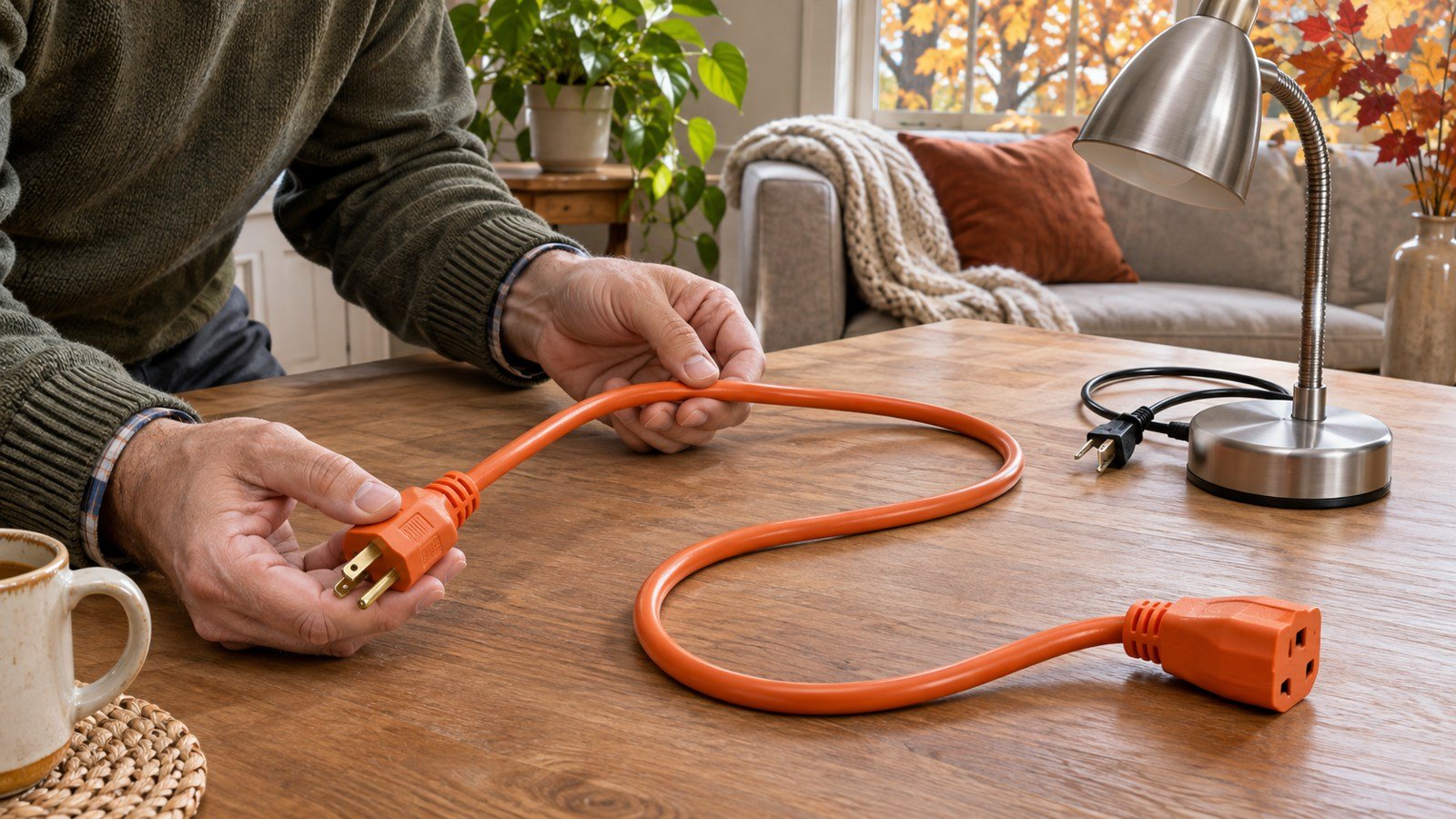
Clear a table or other suitable surface and disconnect the cord before inspecting it. Do not leave a plugged-in cord in place simply because most of its length is hidden and awkward to reach.
Follow it from one end to the other. Look at the plug, socket and covering. The CPSC advises replacing damaged cords, not patching damaged insulation with tape or altering plug blades. Set a questionable cord apart from usable equipment so another person does not grab it during the next project.
Make extension cord safety a shared household habit. A plain note on the storage bin can remind everyone to check the cord before taking it out. Keep product packaging or an instruction photo where you keep other household equipment information.
Checking does not mean proving a cord safe by appearance alone. A clean-looking cord still has to match the job, and its instructions still matter. If identification or ratings are unreadable, choose equipment you can identify rather than guessing.
Read the rating and the intended location
Find the cord’s rating on its label or packaging and compare it with the equipment instructions. Do not use color, thickness or the number of available sockets as a substitute for the rating.
The CPSC says a cord used outdoors must be marked for outdoor use. It also advises checking for a listing by a recognized testing laboratory, such as UL, ETL or CSA, in its extension-cord safety notice. An unfamiliar bargain needs the same scrutiny as equipment already in the garage.
For a project-shopping note, record the device, intended location, required cord specifications and length needed. Take the device instructions with you if you want help choosing. Ask the seller to show you the relevant product label. If the answer is only that a cord is “heavy duty,” keep asking.
Walk the route before plugging anything in
Look at the full path between the outlet and the work area. Think about what happens when someone opens a door, slides a chair back or walks through with a laundry basket.
CPSC guidance says not to place extension cords beneath carpeting, through doorways or under furniture. A route that depends on hiding the cord under a rug is a reason to rethink the setup. Include a route check in your extension cord safety routine before moving heavy furniture into place.
For a temporary activity, decide where household members will walk and where the equipment will sit. If there is no practical route that follows the product instructions and avoids damage, move the activity or stop the plan.
Mohawk Valley households may bring out different equipment as seasons change. Treat a garage cleanup, porch task or indoor furniture rearrangement as a new setup. Last season’s arrangement is not a substitute for looking at today’s room and equipment.
Keep major appliances and heaters out of the plan
The U.S. Fire Administration’s electrical guidance says major appliances, including refrigerators, washers and dryers, belong directly in wall outlets. It also says not to overload outlets or power strips, and to use strips with internal overload protection.
An extra row of sockets does not make an appliance’s instructions disappear. Keep the appliance manual as the starting point. Do not turn a temporary-cord shopping trip into a plan for adding several appliances to one location.
Portable heaters need particular care. The fire administration’s heating guidance says to plug them directly into wall outlets, never extension cords or power strips. If the heater cannot reach an appropriate outlet where it can otherwise be used safely, choose another heating plan.
Know what makes you stop
A hot extension cord is a warning, according to the CPSC. Do not treat it as a normal feature or keep adding equipment while deciding what to do. Stop using the setup and address the problem before returning it to service.
Loose-fitting plugs and damaged equipment also need attention. The fire administration recommends qualified electrical work rather than household improvisation. Do not shave a plug, defeat a grounding prong or try to fix a wall outlet as part of this cord check.
For a nonemergency concern, make a short record for the property owner or electrician: which outlet, which equipment, when the problem appeared and what you noticed. Describe observations without trying to diagnose hidden wiring.
Finish the project by putting the cord away
The CPSC recommends unplugging extension cords when they are not in use. Make that the last step in your extension cord safety checklist.
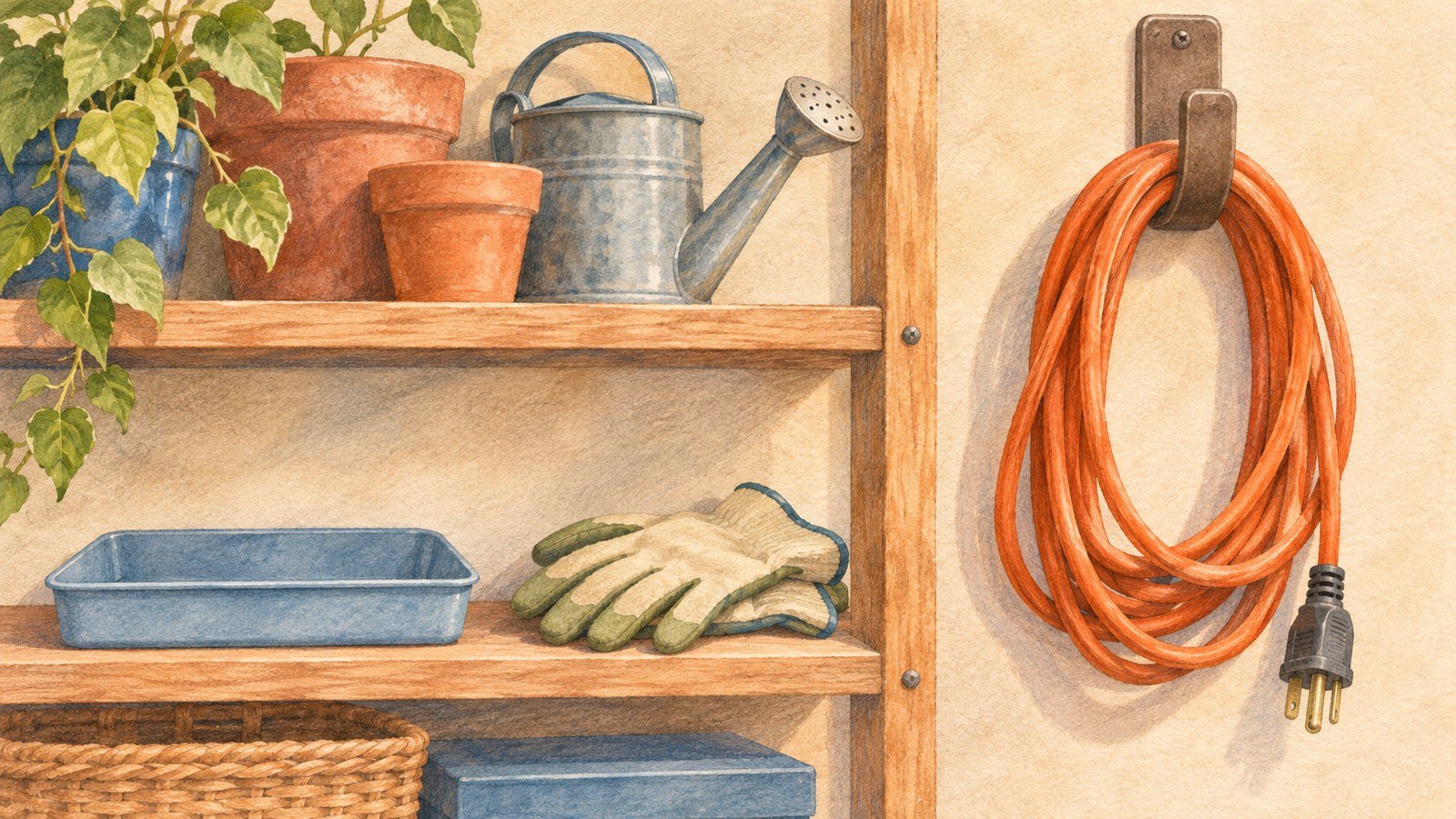
Before storing, check the manufacturer’s directions and return usable cords to a dry, organized place away from children. Keep questionable equipment out of the ready-to-use bin. Save the label information so you will not have to guess at the next project.
A useful household standard is simple: every temporary setup has a beginning, an inspection and an end. If the same cord keeps coming back for a daily need, move that need onto the permanent-solution list.
For more ways to prepare at home, read VoiceMV’s guide to making a household fire escape plan.