
By Dawn Michelle Laguerre
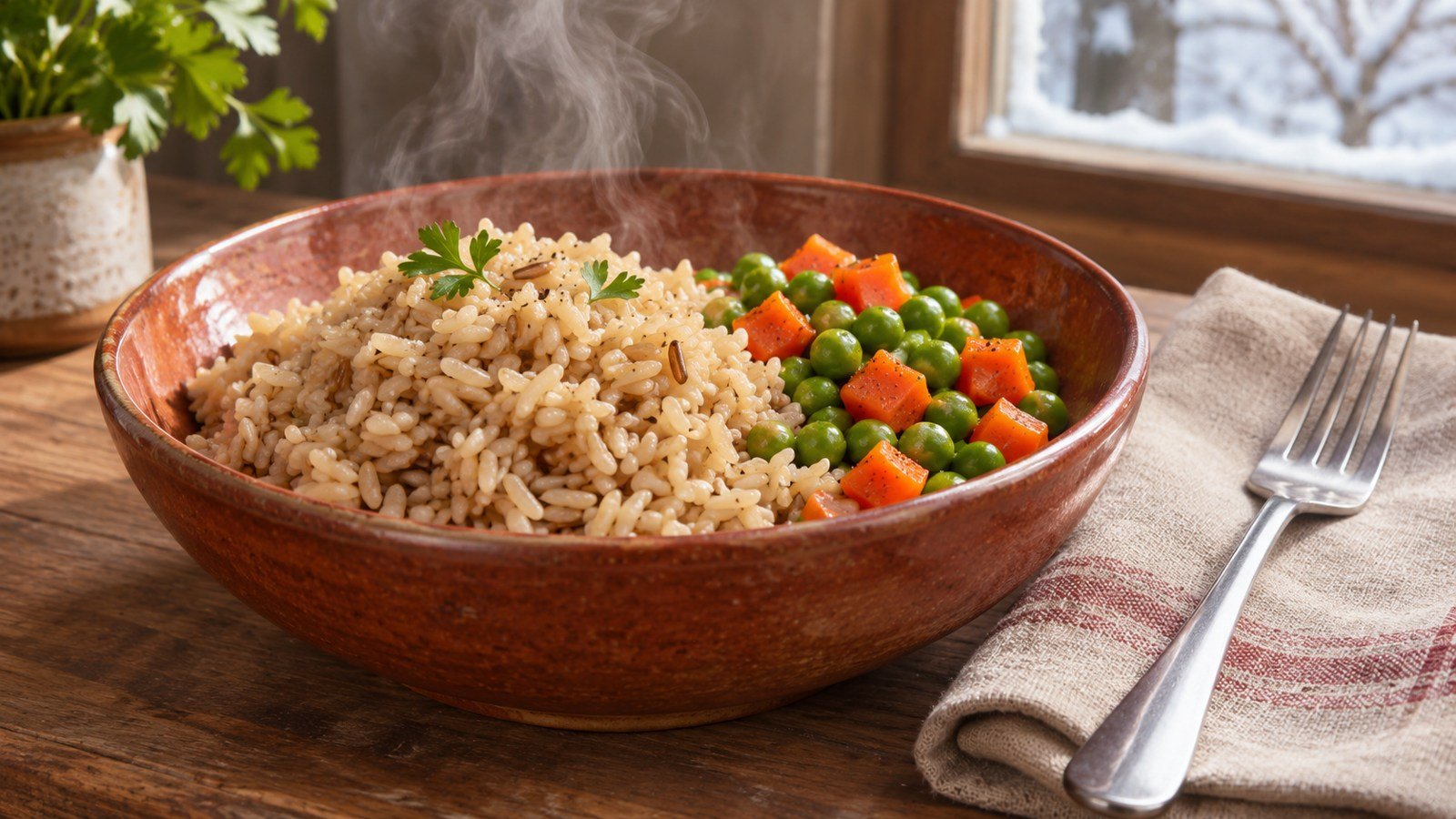
Featured image: AI-generated conceptual illustration. Credit: OpenAI / Mohawk Valley Voice.
Learning to cook brown rice is easier when you plan more than the pot. Decide what you will serve with it, how much cooked rice you expect to use and where the remaining food will go after the meal. One measured batch can give you a clear starting point without filling the refrigerator with food you have not planned to eat.
Begin with the package in your own kitchen. Different products may have different directions, including quick-cooking versions. The stovetop example below comes from Oregon State University Extension’s Food Hero brown-rice recipe. Follow product-specific directions when they differ.
Set up a small first batch
The Food Hero recipe uses one cup of dry brown rice and two and one-quarter cups of water, and lists a yield of about three cups cooked. That gives you an amount to plan around. It is not a required serving size for every person or a promise that your own product will produce an identical volume.
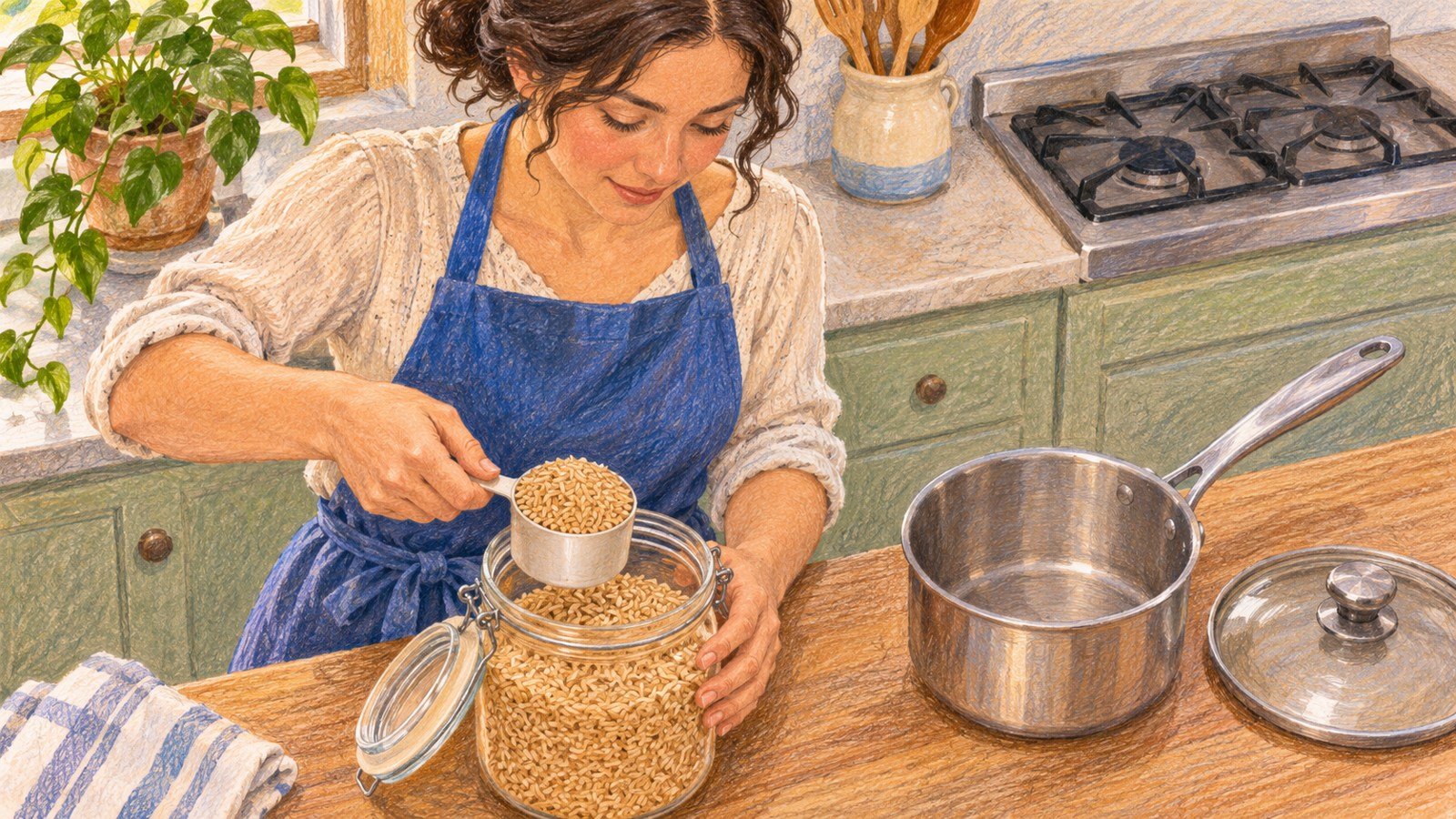
Set out a saucepan, its lid and the tools needed to measure both ingredients. Read the full method before starting so you know when the heat changes and when the rice rests. Keep the lid within reach rather than searching a cabinet while the water is boiling.
Choose a time when you can attend to the cooking. A first attempt is not the best moment to rush several unfamiliar dishes at once. If the rest of dinner is simple, you can focus on learning how your rice and pan behave.
Use one method consistently
For the Food Hero method, bring the measured water to a boil, add the rice, then reduce the heat to low. Cover the pan and simmer for 35 to 40 minutes. Turn off the heat and allow five to ten minutes of standing time before serving.
Keep the source or your package directions handy. If you are using another type of rice, do not borrow the liquid amount from this example while taking the cooking time from an unrelated recipe. Following one appropriate method gives you a clearer result to evaluate.
Use ordinary kitchen precautions around hot water, the pan and steam from the lid. Keep children away from the hot cooking area. They can help plan the meal or measure ingredients before cooking, while an adult handles the stove and hot food.
Decide on the first meal before the rice is ready
Choose a familiar dish that works with a plain rice base. One option is to serve it beside a stew or chili you already know how to prepare. Keep the seasoning decisions in that dish rather than adding several unfamiliar flavors to the rice on your first attempt.
Another option is a bowl with cooked vegetables and a cooked protein you already use. Prepare each ingredient according to its own recipe or package instructions. Combining foods in one bowl does not replace the cooking or handling steps required for the individual parts.
For a Mohawk Valley household on a busy evening, the practical advantage is flexibility, not a claim that one meal fits every nutritional need. Look at what is already available and choose a combination people will eat. You do not need to buy ingredients for several possible dinners at once.
Give the second meal a specific place in the plan
Before serving, decide whether you expect to have rice left and when you intend to use it. A note such as “rice with vegetables tomorrow evening” is more useful than “use leftovers sometime.” Keep the second meal simple enough that it remains realistic after a workday.
For example, tonight’s rice can accompany a stew, while a later safely stored portion can go with vegetables prepared according to their instructions. These are meal ideas, not a tested recipe for an unspecified mixture. Adjust the combinations to the food and portion needs of your household.
If the next few days are already crowded with other meals, make a smaller future batch or plan to freeze an appropriate portion while it is being handled safely. Do not create extra cooked food merely because a large container happens to be available.
Refrigerate promptly in shallow containers
Use the USDA’s leftover-handling guidance for the cooked food. It calls for prompt refrigeration at 40°F or below and shallow containers that help food cool quickly and evenly. Do not leave the rice sitting on the stove for the rest of the evening.
USDA says not to leave leftovers out for more than two hours, or one hour when the temperature is above 90°F. Divide and refrigerate the portions you are keeping rather than waiting for a large pot to reach room temperature on the counter.
Label when the rice was cooked and keep the record with the container. If another person puts dinner away, explain the plan. A clear preparation date helps the next cook distinguish this batch from an older container without guessing from its appearance.
Match the next meal to the storage window
USDA advises using refrigerated leftovers within three to four days or freezing them for longer storage. Put the intended meal within that window. Moving food into a different container does not create a new preparation date, so keep the original date visible.
Check how the rest of the planned meal was stored, too. Rice does not extend the storage period of another ingredient mixed into it. If you cannot establish that a food was handled safely, do not treat adding it to a fresh-looking bowl as a solution.
When reheating, follow USDA’s reheating guidance, including checking several places with a food thermometer to make sure leftovers reach 165°F throughout. Reheating is a separate step from safe cooling and storage; it is not a reason to ignore a poor storage history.
Record what worked for your next batch
After the meal, write a short note with the product, method and result. Did the amount fit dinner? Was the texture what you wanted? Did you use the planned second portion? Those answers can help you decide whether to repeat the batch or change the amount next time.
Keep the note practical instead of treating one dinner as a test you must pass. If your rice needs a different method, return to the product directions or an appropriate tested recipe. If the second meal never happened, revise the meal plan before automatically cooking extra again.
The useful finish is simple: a measured method you understand, a first meal ready to serve and a safe plan for any food you keep. Brown rice can be a flexible part of that routine when cooking, storage and the next meal are planned together.

