Eight lawmakers are urging a faster candle duty review for certain petroleum wax candles imported from China. The federal trade commission will decide whether to keep the duty.
Rep. John W. Mannion and seven other members of Congress asked the U.S. International Trade Commission on Nov. 19 to move quickly on its review of an antidumping duty on certain petroleum wax candles imported from China. Mannion cited a Syracuse manufacturer as an example of a business that says the duty helps keep production and jobs in Central New York.
The bipartisan letter to commission Chair Brett Doyle argues that revoking the duty could harm domestic candle makers. The commission, not the lawmakers, will weigh the record and decide whether ending the duty would likely lead to renewed harm to the U.S. industry. The letter itself does not create a new tariff or change the duty.

Why the candle duty review matters to Syracuse
Cathedral Candle Company started making candles in Syracuse in 1897. The company says its Kirkpatrick Street factory is still at the heart of its manufacturing operation. It makes candles for churches, and its president, Mark Steigerwald, said in Mannion’s release that the company employs more than 90 union workers in Syracuse.
Steigerwald said the antidumping duty helps the company compete. The lawmakers also argued that the outcome matters to U.S. suppliers of wax, fragrance and other materials. Those are arguments in support of keeping the duty, not findings that the commission has adopted in this review. The company’s employment figure does not represent a commission estimate of jobs that would be lost if the order ended.
Mannion represents New York’s 22nd Congressional District, which includes both Syracuse and Utica. The factory discussed in his release is in Syracuse, not in the Mohawk Valley, but the case gives readers across the district a look at how a federal trade decision could affect a regional manufacturer.
How a five-year trade review works
An antidumping duty is an additional charge on covered imports. In these cases, the U.S. Commerce Department looks at whether the imports are sold in the United States at less than fair value. The International Trade Commission examines injury to the domestic industry. In a five-year review like this candle duty review, the agencies ask whether the dumping and injury are likely to continue or return if the order ends.
The commission’s September notice says that this is the sixth review of the order. Commerce issued the original order in 1986, and it was continued after each of the five prior reviews. In the 2021 review, the commission found that ending the duty would likely lead to renewed or continued material injury. That determination applies to the previous review, not to the one now underway.
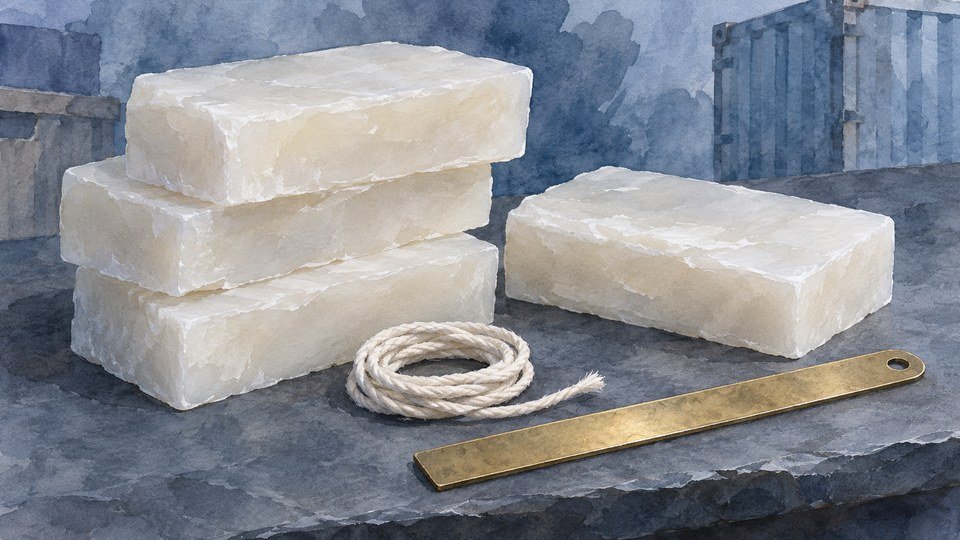
The order is narrower than a tariff on all imported candles. As defined in the notice, it covers certain candles made with petroleum wax and fiber- or paper-cored wicks, in specified shapes. The commission’s review addresses the covered product and country, not all candles or all exporters. The lawmakers’ concerns about pricing should therefore not be read as a finding about every imported candle.
What happens next in the candle duty review
The notice set Nov. 16 as the deadline to comment on whether the responses were adequate. The commissioners may choose an expedited review if responses are inadequate, unless other circumstances warrant a full review. Mannion’s letter asks for an expedited review; it does not show that the commission has agreed to one.
The other signers were Reps. Lloyd Smucker, Brian Fitzpatrick, Dave Min, Thomas Kean Jr., Jefferson Shreve, Marcy Kaptur and Bryan Steil. Readers can track the proceeding through the commission’s public docket using investigation number 731-TA-282. Neither Mannion’s letter nor the notice establishes how the eventual decision would change retail prices.
Related coverage: John Mannion elected regional whip for the 120th Congress.