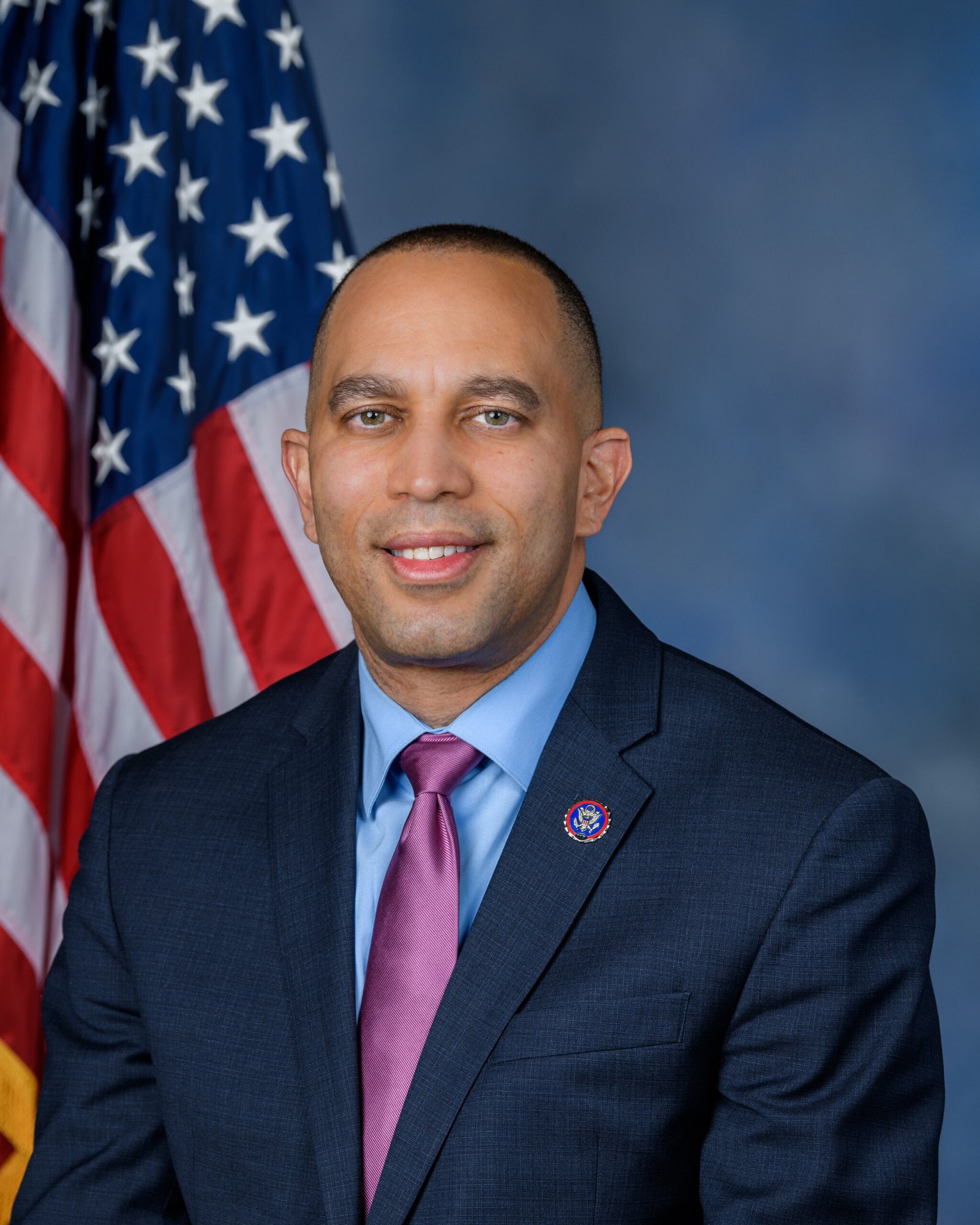
House Democrats chose the New York lawmaker as their nominee in a reported 251–11 vote. The full House must still elect its speaker in January.
By David Laguerre | Mohawk Valley Voice
Hakeem Jeffries moved closer to a historic first on Wednesday, Nov. 18, when House Democrats nominated him to become speaker. But the distinction matters: Democrats selected their candidate, not the leader of the entire House. Jeffries must win a separate floor vote when the new Congress convenes in January.
If elected by the chamber, the New York Democrat would become the first Black speaker of the U.S. House of Representatives. That would place him at the head of one of the country’s two lawmaking chambers, with influence over legislation, negotiations and congressional oversight.
How many votes did Hakeem Jeffries receive?
Reuters reported that Jeffries received 251 votes, with 11 Democrats opposing him. The Philadelphia Inquirer also reported two abstentions, citing a person who attended the confidential session and described the result anonymously.
These are reported results from a closed-door party meeting, not a public House Clerk roll call. Readers should not interpret the 251–11 tally as the final constitutional election for speaker or as a public list identifying every member’s vote.
The opposition was small compared with his support, but the vote was not unanimous. Reuters described pressure from some incoming progressives who wanted leadership committed to the ambitious policies they had campaigned on. That disagreement points to a challenge for any speaker: keeping members with different districts and priorities together when difficult votes arrive.
A vote against the nomination also does not, by itself, establish how a member will vote on the House floor in January. The two decisions take place at different times and under different procedures.
Why today’s nomination is not the final election
The Congressional Research Service’s explanation of speaker elections describes the process: party groups select candidates, then the House elects its speaker through a roll-call vote. The expected next step for Jeffries is that full-House vote on Jan. 3, 2027, when the 120th Congress begins.
A candidate ordinarily needs a majority of votes cast for a named person, with a quorum present. The familiar figure of 218 assumes all 435 members vote for someone. Absences, vacancies and members answering “present” can change the number required. If nobody wins a majority, voting continues; a nomination alone does not end the process.
For comparison, the House Clerk’s official record of Jan. 3, 2025 shows Mike Johnson winning 218 votes and Jeffries receiving 215. That was an actual election by the House. It is a different event, in a different Congress, from Wednesday’s Democratic nomination.
The House historian’s list of speakers records Johnson’s election for the current, 119th Congress. Wednesday’s party decision did not remove the sitting speaker or immediately transfer the gavel.
The historic meaning of a first Black speaker
The House began choosing speakers in 1789. A Jeffries victory in January would break a racial barrier in an office that has existed for more than two centuries. It would also carry meaning beyond the ceremony: the position combines institutional authority with the practical power to lead a legislative majority.
That prospect belongs in the longer history of Black political representation. According to the House historian, Joseph Rainey of South Carolina became the first Black American to serve in the House when he took his seat on Dec. 12, 1870. Rainey had been born enslaved. His arrival during Reconstruction opened a path that later generations of Black lawmakers expanded despite discrimination and barriers to voting.
Becoming a member and becoming speaker are different milestones. The first secures a voice and vote for one district. The second brings responsibility for helping lead the whole chamber. Jeffries would retain his own constituents while taking on an office with national reach.
History does not guarantee policy success. A first can be both deeply significant and subject to the same scrutiny as every other leader: what gets passed, whose concerns receive attention and whether promises become results.
Who is Hakeem Jeffries?
Jeffries represents New York’s Eighth Congressional District. His official biography identifies him as the House Democratic leader and notes that colleagues elected him to that role in 2022 and again in 2024. He previously chaired the House Democratic Caucus and served as whip of the Congressional Black Caucus.
Those jobs involve building support inside a party, not simply speaking on television. Members look to leaders to organize strategy, negotiate disagreements and decide where to focus political effort. Wednesday’s result reflects support for Jeffries to carry that work into the next Congress, while leaving the formal speakership decision unfinished.
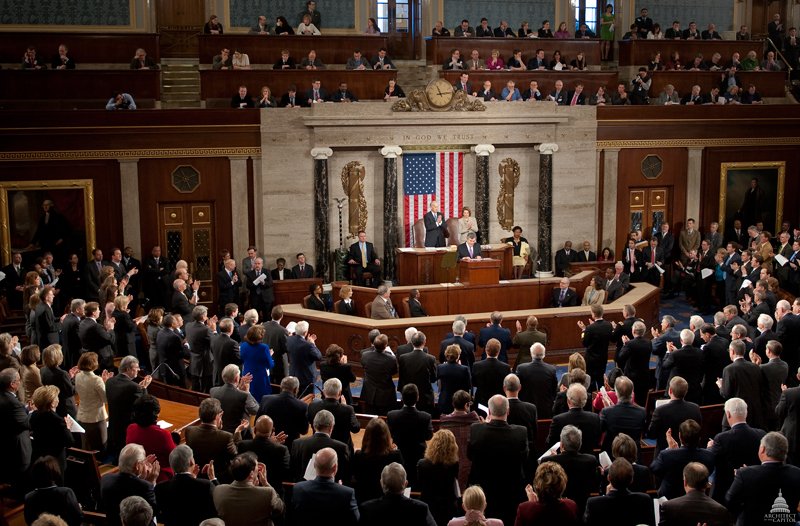
What does the speaker actually do?
The title can sound ceremonial. It is not. The House’s official history overview describes the speaker as the chamber’s presiding officer, administrative head and party leader.
In everyday terms, the speaker helps organize the House’s work and leads the majority’s effort to turn priorities into votes. The office plays a central role in negotiations with other congressional leaders and the president. Getting a majority to agree is essential: the speaker cannot simply announce that a bill has passed.
The office also carries constitutional importance outside routine lawmaking. Under the presidential succession order, the speaker follows the vice president in the line of succession, subject to the law’s requirements. That position does not make the speaker part of the president’s Cabinet or give the speaker presidential powers during ordinary service.
What a speaker cannot promise
Even a large House majority is not a blank check. As the House’s legislative-process guide explains, legislation must move through both chambers before reaching the president. The House and Senate must agree on the same text. A president can veto a bill; overriding that veto requires two-thirds support in each chamber.
That is why changing House leadership does not automatically change someone’s insurance coverage, tax bill or benefit payment. Proposals still need legislative action. Hearings and investigations can bring information into public view, but they are not the same as enacted laws or court judgments.
Why Mohawk Valley readers should pay attention
In his Nov. 4 letter seeking the speakership, Jeffries identified affordability, accountability and American values as priorities. He listed housing, healthcare, groceries, energy costs and caregiving among the issues Democrats should address. Those are his stated goals, not benefits already delivered by Wednesday’s vote.
For families in Utica, Rome and surrounding communities, the useful question is what happens next. Does a proposal become a bill? Does it clear both chambers? When would it take effect, and who would qualify? Those details matter more to a household budget than a leadership title alone.
Wednesday was a major step toward a possible historic speakership. The next decisive milestone remains the House floor election. Until that vote is held and recorded, the accurate description is straightforward: Hakeem Jeffries is the Democratic nominee for speaker, not yet the newly elected speaker of the House.
Featured image: Archival official portrait of Hakeem Jeffries (2021), not a photograph of the November 2026 nomination. Photo: Franmarie Metzler / House Creative Services, Office of Rep. Hakeem Jeffries (public domain). Source and rights.