By David LaGuerre
The reusable shopping bag that carried chicken on Saturday might be the one you reach for to carry apples on Wednesday. It’s hard to remember once the bags look alike and are folded together. A simple fix is to sort bags by job, unpack the raw items first and clean reusable grocery bags before they disappear into the trunk.
Choose a bag you can recognize without looking inside
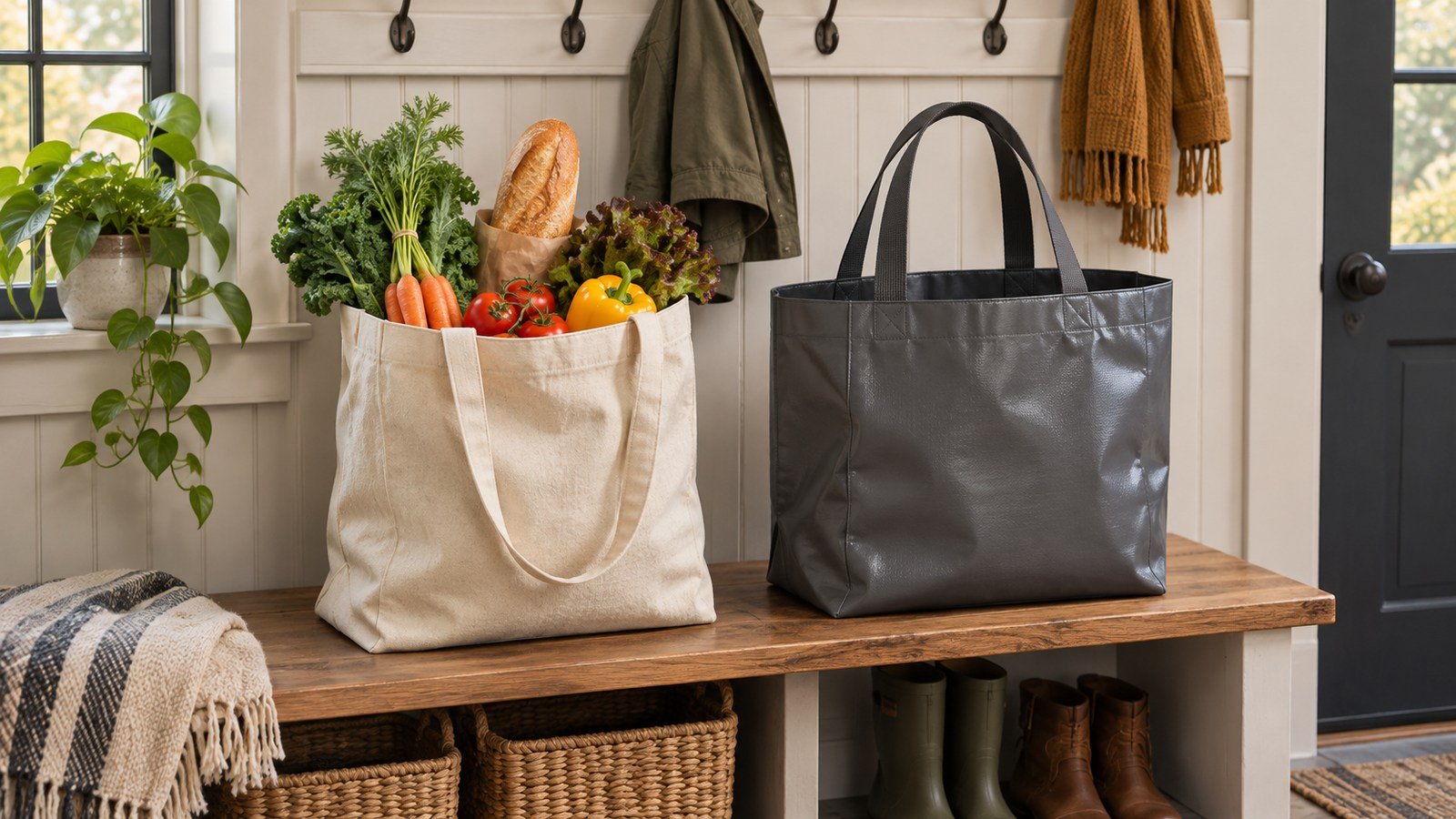
The New York State Department of Health’s reusable grocery bag guide recommends keeping raw meat, fish and poultry away from foods you’ll eat without cooking, such as fresh produce or bread. The state recommends three jobs: a bag for raw meat, fish or poultry, one for produce and one for other ready-to-eat food. Use a dark lined bag for raw items, a canvas bag for produce and a third bag for bread or deli food. If every bag looks the same, mark the handles.
The separation starts in the cart and continues at checkout. Keep raw packages apart from the bread and vegetables rather than waiting to sort the order at home. USDA’s grocery shopping food safety guidance recommends containing raw packages in a bag to catch leaking juices. Put the raw package in a disposable plastic bag before it goes into the dedicated reusable tote. Throw the disposable bag away after use. If someone is helping you pack, hand them that tote and say what it is for.
An insulated bag or cooler can help on a longer trip, especially if you go from a farm stand to another errand before heading home. It still needs to be kept clean, and it doesn’t make separation optional. FDA food handling guidance says to refrigerate perishables within two hours, or within one hour when it’s above 90°F. Take that into account on warm Mohawk Valley market days or when a car has been sitting in the sun.
Unpack in an order that makes spills easier to catch
Put raw packages away promptly and keep them separate from ready-to-eat foods. Take one look at the bottom and seams of the tote when it is empty. If you notice a leak, set the bag aside to clean before the next trip. Avoid leaving it on the counter beside food you are about to serve. Wash your hands and clean any surface the leak touched using the FDA’s guidance.
This is a good time to check other bags too. Crumbs, dirt from a produce sack and spills from a drink are easier to handle now than after the bags have been bundled together. If a reusable grocery bag gets pressed into service at a sports game or as a place for muddy gear, put it in the wash or give it a different job. Having a bag set aside for groceries makes that decision easier.
Wash by material and let the bag dry
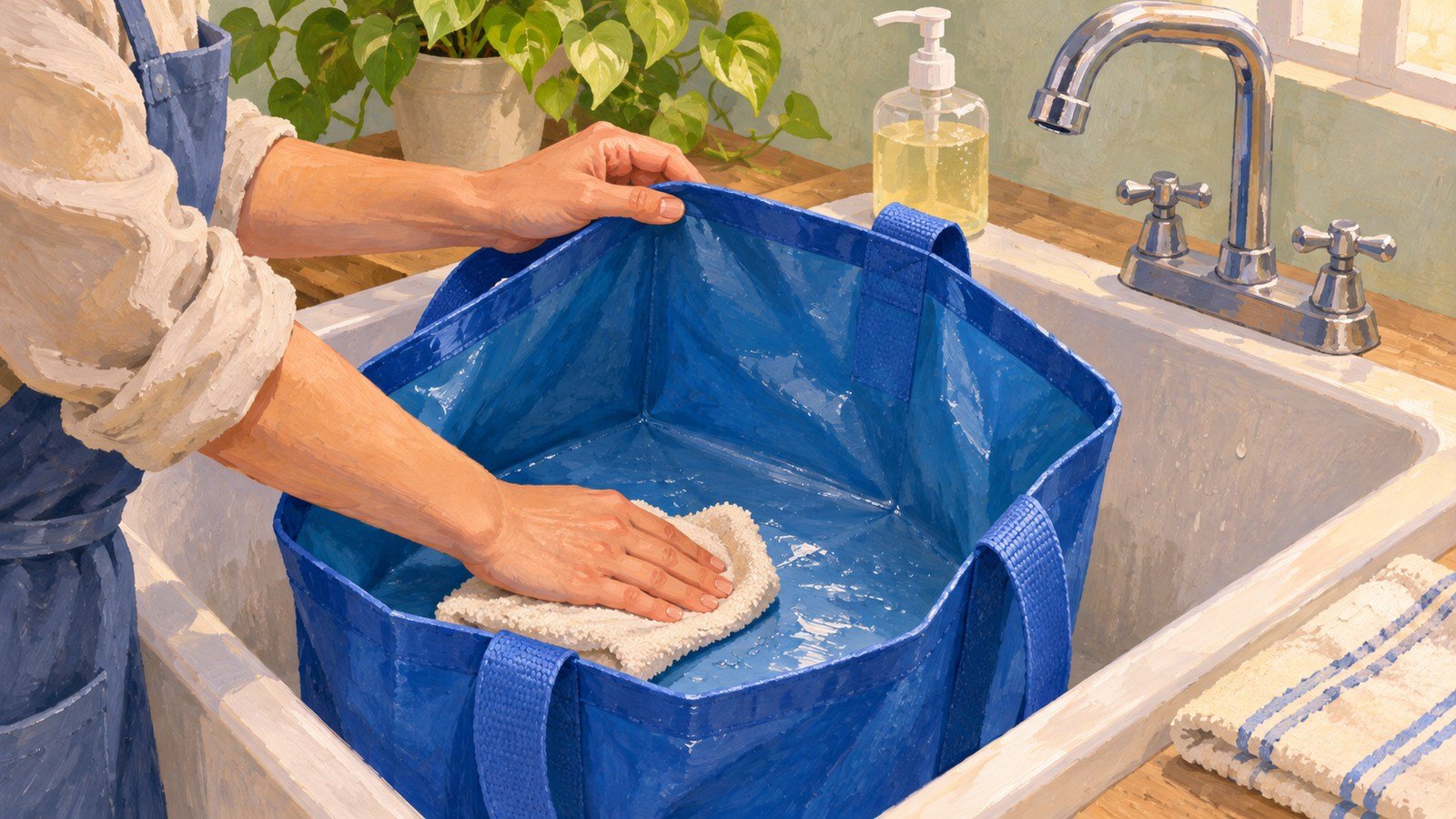
Read the care label first. New York’s health department recommends washing cloth bags with laundry detergent and using hot water and soap on plastic-lined bags. Follow the manufacturer’s directions for a bag with insulation, a stiff base or coated material. Open it fully so you can reach the corners, and let it dry completely before storing it in a stack.
A bag that folds up neatly when dry can still be damp in the seams. Set it open somewhere with air circulation. If there’s a removable bottom insert, check its directions before putting it into water. When a bag has a torn liner or a seam you can’t clean, move it away from grocery duty or replace it. You only need a system you can maintain with the bags you actually use.
Reset the bags before you forget
Pick a clean, dry spot for the bags after unpacking. If they usually ride in the car, bring them indoors for cleaning and keep them inside once dry; the state also cautions against storing bags in a hot car trunk. A hook near your shoes or a clean bin by the door works if it makes the bags easier to grab. Keep the raw-food bag in its own spot so it is easy to identify.
On a quick trip, grab the bags that match your list and add the raw-food tote if meat or fish is on it. On a larger trip, add a cooler or another clean bag before you leave. If the right bag is still drying, swap in a clean one. The next time you unpack, take a few seconds to empty, check and separate the bags. That’s what makes this work when the groceries, keys and mail all arrive at once.