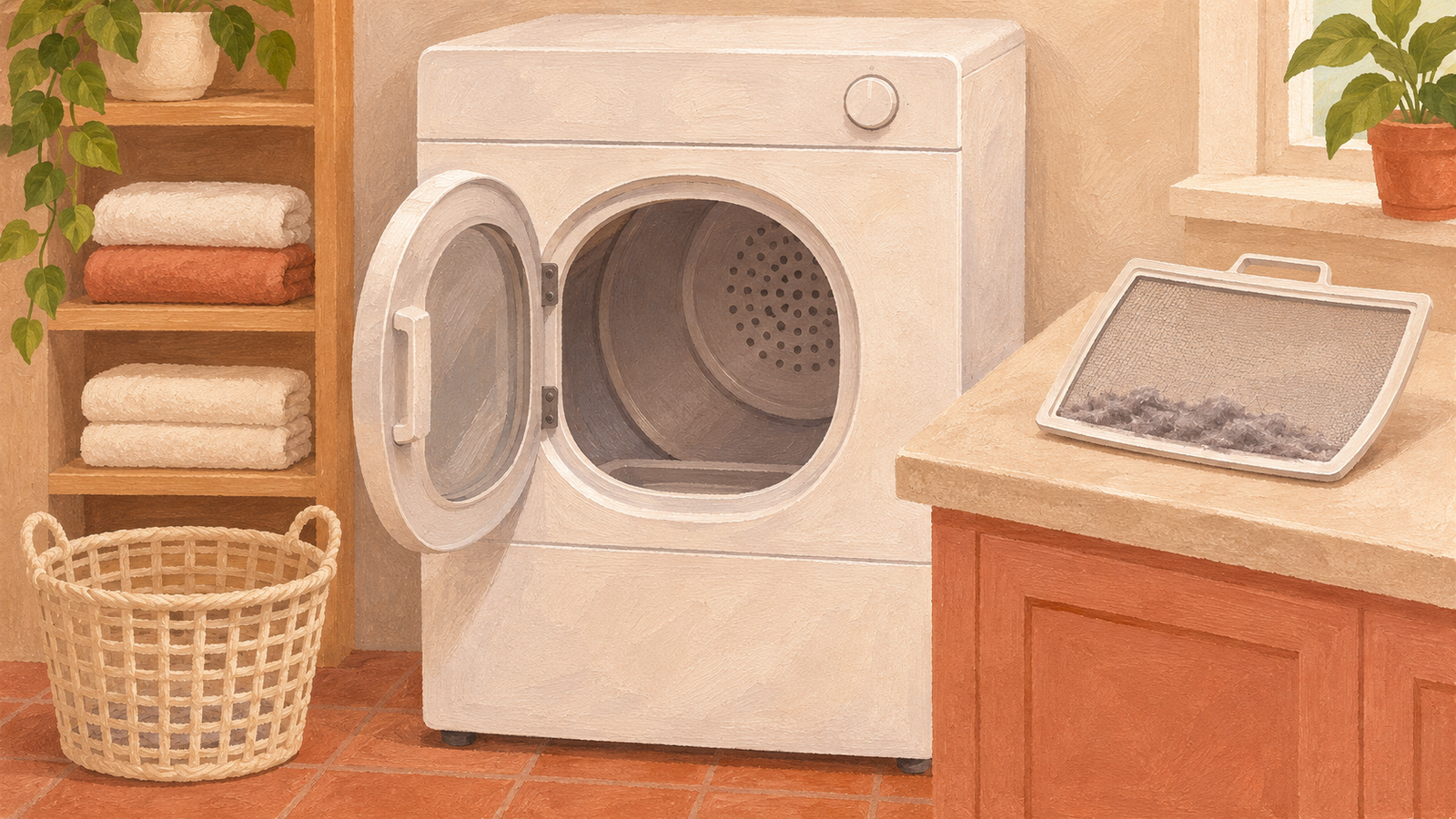
Featured image: AI-generated conceptual illustration by Mohawk Valley Voice. Not a servicing demonstration; follow the instructions for your appliance.
A load that suddenly needs another cycle is a reason to check the dryer, not just add more time. A clean lint screen helps, but the airflow path continues through the exhaust system and out of the house.
The Consumer Product Safety Commission warns that lint in a dryer or its exhaust duct can restrict airflow and allow heat to build up. Clothes remaining damp after a normal cycle, or taking longer than usual to dry, may indicate a blocked screen or duct. Those signs do not identify the cause by themselves.
This guide covers a simple routine for a conventional vented clothes dryer. Use the manual for your actual model. If you have a ventless appliance, do not look for an outside exhaust it was never designed to use; its filters and maintenance requirements need its own instructions.
Make the filter check part of every load
The U.S. Fire Administration recommends cleaning the lint filter before and after each cycle and never running a dryer without the filter. Follow the manufacturer’s instructions for removing, cleaning and replacing the screen.
Give that task a fixed place in the routine. Before starting, check the screen and return it properly to its holder. After removing the laundry, clean it again. If several people share the machine, agree on the same routine so nobody has to guess whether the previous person did it.
A damaged or poorly fitting screen calls for the correct replacement or service advice. Do not improvise a substitute. Keep the model information and manual in a place where the people doing laundry can find them.
Keep the surrounding space clear
CPSC advises keeping the dryer area free of clutter and cleaning behind it where lint can collect. It calls for a qualified service person to clean inside the dryer chassis periodically. The cabinet’s interior is not part of an ordinary lint-screen cleanup.
Look at what can be seen safely without moving the appliance or reaching near connections. If cleaning requires pulling the dryer out, disconnecting ducting, opening the cabinet or disturbing a gas or electrical connection, arrange qualified help. A tight laundry closet is a reason to get assistance, not to force the appliance aside.
Know where the vent ends
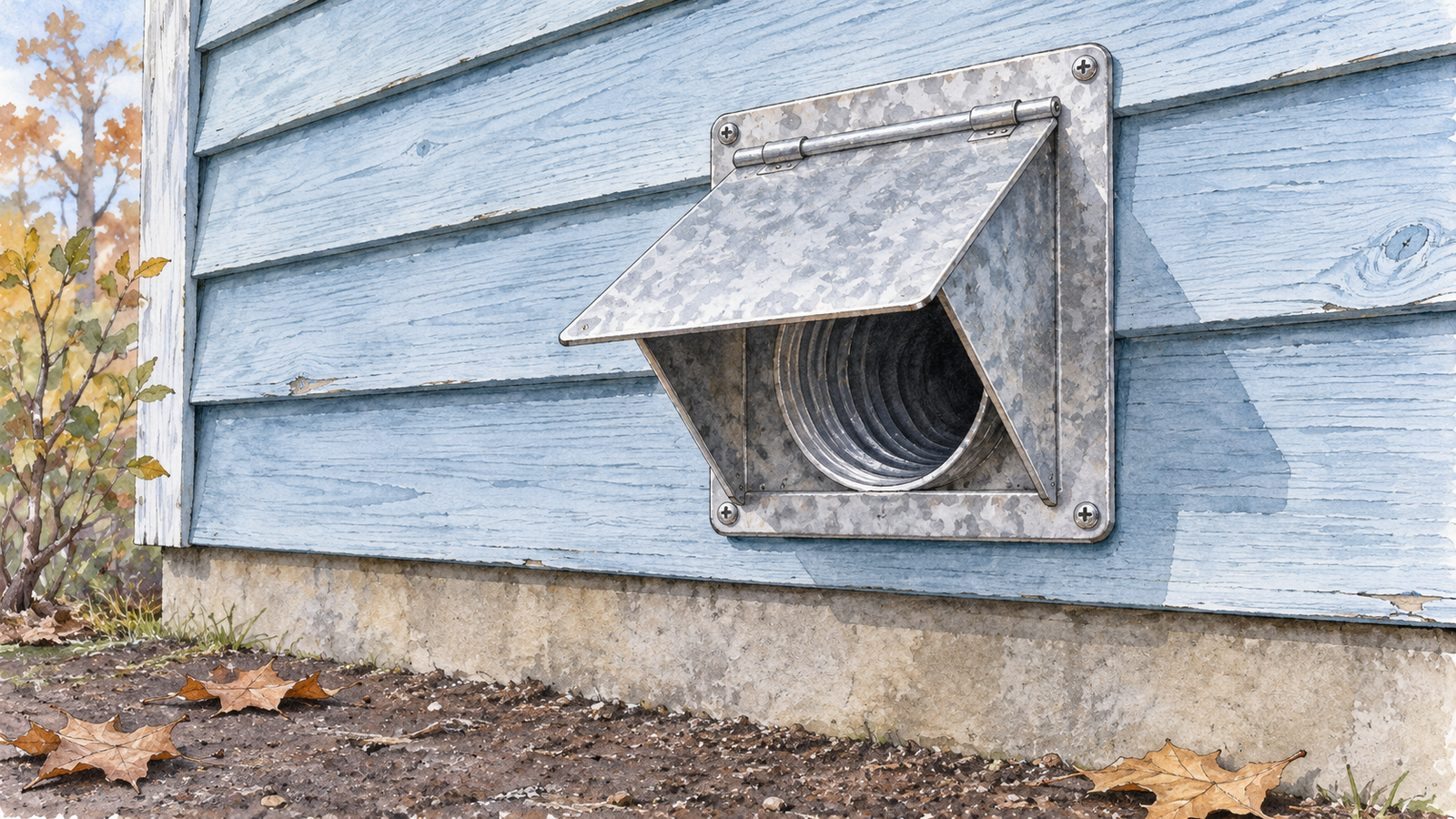
USFA advises checking that venting behind the dryer is not damaged, crushed or restricted and that the outdoor vent covering opens during operation. CPSC also recommends checking that exhaust air is escaping at the outside outlet.
For a safely reachable outlet, an observation from ground level can be part of your routine. Do not climb or reach into a moving vent. If an outlet cannot be checked safely, include it in a service visit. An open flap is a useful observation, not a complete inspection of the duct.
If airflow seems absent or the covering is stuck, stop using the dryer until the problem has been checked. Do not keep restarting it to see whether a blockage clears. Ask the person doing the work to assess the full exhaust path, including areas you cannot see.
Plan service around the actual installation
CPSC calls for periodic vent and exhaust-duct cleaning, and USFA recommends professional installation and servicing. Neither of these short federal guides supplies one cleaning interval that fits every household. Use the manufacturer’s requirements and qualified service advice for your installation and amount of laundry.
When arranging service, describe what changed: the usual cycle, how long drying now takes, whether the screen is clean and what you observed at the outdoor outlet. Ask what was inspected, what was cleaned and when the next check is recommended. Keep the date with the manual rather than trying to remember it next season.
For a rented home or shared laundry room, report a suspected vent problem to the owner or responsible manager. Do not alter a shared system or remove equipment that belongs to someone else.
End with a routine everyone understands
The everyday job is short: check the filter, keep the area clear and notice changes in performance. The service job is broader: examine the exhaust route and address problems inside or behind the equipment safely.
Make those responsibilities explicit. Knowing who cleans the screen and who arranges service is more useful than a reminder that simply says to clean the dryer.
Official guidance checked November 15, 2026.