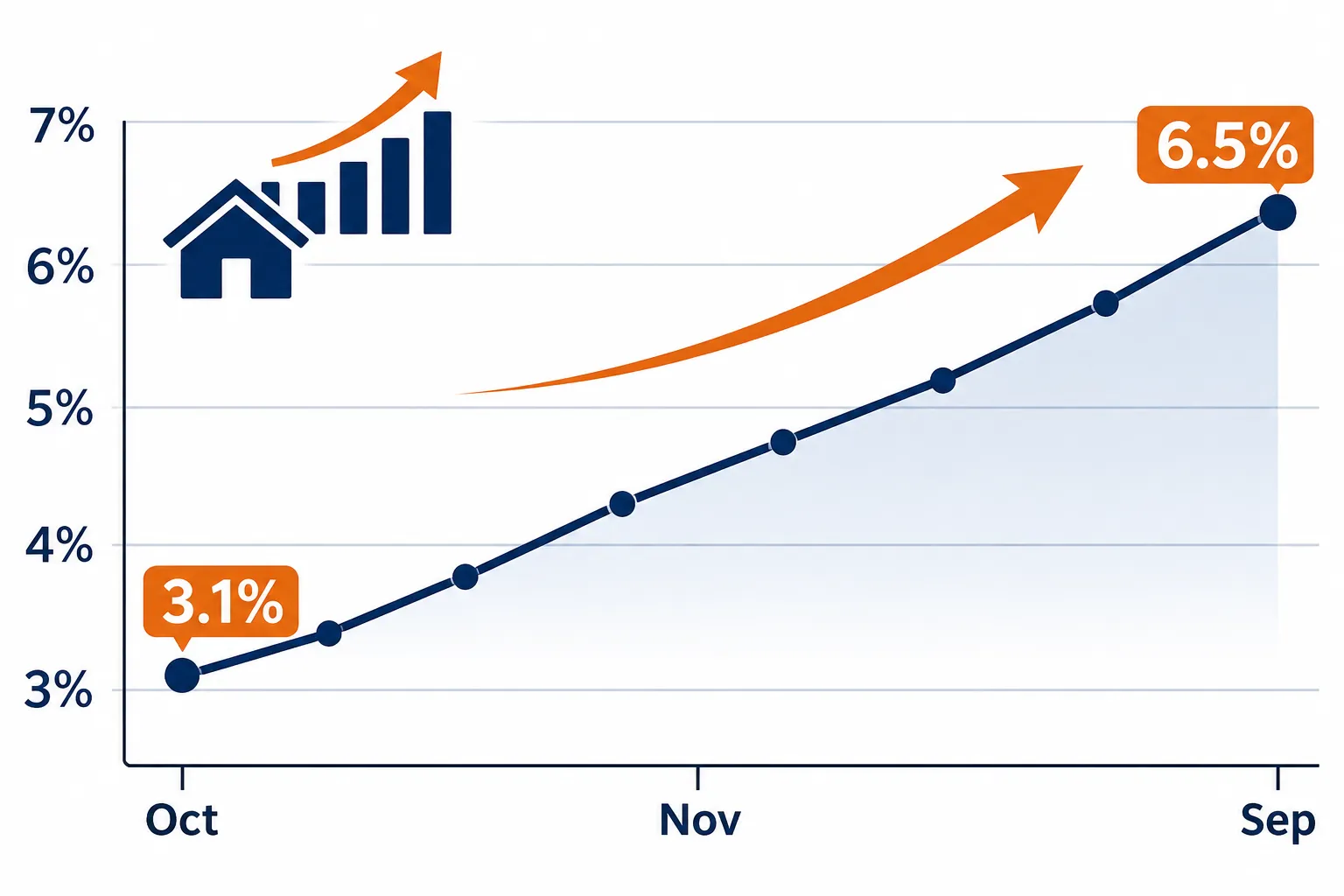
The U.S. Bureau of Labor Statistics reported that wholesale prices rose 0.3% in October, putting the annual rate at 6.5%, the highest in nearly four years. That’s up sharply from roughly 3.1% a year earlier and marks the largest 12-month jump in the Producer Price Index since 7.4% in November 2022. Both goods and services contributed, with energy and fuel playing an outsized role.
What Does Rising Wholesale Prices Mean for My Grocery Bill
Rising wholesale prices do not hit grocery shelves overnight, but they usually show up within weeks to a few months as retailers adjust pricing to protect margins. When producers pay more for raw materials, packaging, or transportation, those costs eventually pass through the supply chain to the checkout counter.
Grocery categories most exposed to wholesale pressure include:
- Packaged and processed foods tied to energy-intensive production
- Items shipped long distances, since fuel costs factor into freight
- Products using commodity inputs like grains, oils, or metals for packaging
Shoppers won’t see every wholesale increase reflected dollar-for-dollar at retail, since stores sometimes absorb part of the cost temporarily. But sustained increases, like the 6.5% annual rate seen in October, tend to eventually flow through. Walmart has already warned of higher prices tied to tariff pressures, illustrating how retailers respond when input costs climb.
Why Did Wholesale Prices Jump to the Highest in 4 Years
Wholesale prices jumped because of a combination of rising energy costs, persistent supply chain pressures, and higher input costs across both goods and services categories. The BLS data release shows final demand goods rose 0.5% in October, with energy-related categories among the larger movers.
Key contributing factors:
- Fuel and energy price volatility, which ripples into transportation and manufacturing costs
- Elevated input costs that businesses have been passing along gradually
- A base effect: last year’s comparison point was unusually low at around 3.1%, making this year’s 6.5% look steeper by contrast
Choose to watch this number if: your business depends on raw materials, imported goods, or fuel-sensitive logistics. These are the categories most sensitive to the kind of acceleration seen in October.
How Is Wholesale Inflation Different From Regular Inflation
Wholesale inflation, measured by the PPI, tracks price changes that producers receive for their goods and services, while regular inflation, measured by the Consumer Price Index (CPI), tracks what households actually pay at the register. The two move together over time but rarely in lockstep.
MeasureWhat it tracksWho feels it firstPPI (wholesale)Prices producers/sellers receiveBusinesses, manufacturersCPI (consumer)Prices households payShoppers at checkout
Common mistake: assuming a 6.5% wholesale rate means consumer prices will rise exactly 6.5% too. That’s not how it works. Businesses absorb some costs, cut margins, or pass through only a portion, so CPI increases are typically smaller and slower to appear.
Which Products Will Get More Expensive First
Products tied closely to energy, fuel, and transportation costs tend to see price increases first, since those inputs affect nearly every stage of production and delivery. Durable goods and items with long supply chains often lag behind.
Early movers typically include:
- Fuel and energy-adjacent goods
- Packaged foods and beverages with high transport costs
- Building materials and industrial supplies
- Imported consumer goods affected by tariffs, as seen in reporting on how Trump-era tariffs now touch nearly all U.S. exports
Edge case: some retailers with locked-in contracts or large inventory buffers may delay passing on costs for a quarter or more.
When Will These Wholesale Price Increases Show Up in Stores
Most wholesale price increases take anywhere from one to six months to show up in retail prices, depending on contract cycles, inventory levels, and competitive pressure. Fast-moving goods like fresh food react quicker; durable goods and electronics often lag.
Typical timeline:
- 2-4 weeks: fuel and perishable goods
- 1-3 months: packaged consumer goods
- 3-6 months: durable goods, appliances, furniture
“PPI is widely viewed as a bellwether for future consumer prices because it captures inflation pressures before they reach consumers,” according to BLS commentary on producer price trends.
Do Small Businesses Get Hurt More by Rising Wholesale Costs
Yes, small businesses generally absorb rising wholesale costs harder than large retailers because they lack the bulk purchasing power, long-term supplier contracts, and pricing flexibility that bigger chains use to cushion the blow.
Small business vulnerabilities:
- Limited bargaining leverage with suppliers
- Thinner cash reserves to absorb short-term cost spikes
- Fewer options to diversify sourcing quickly
Choose to raise prices gradually if you’re a small retailer facing supplier hikes; abrupt jumps risk losing price-sensitive customers. Local entrepreneurs navigating cost pressures were recently highlighted during Small Business Week recognition efforts, underscoring how community businesses manage these squeezes.
What Causes Wholesale Prices to Spike
Wholesale prices spike when input costs rise faster than producers can offset them through efficiency gains, usually driven by energy price swings, supply chain disruptions, tariffs, or sudden demand shifts. October’s 0.3% increase followed a much sharper 1.4% rise in September, showing how volatile these monthly swings can be.
Primary spike drivers:
- Energy and fuel cost increases
- Tariff-related import cost increases
- Raw material shortages or bottlenecks
- Labor cost pressures in production and logistics
How Long Does It Usually Take for Wholesale Price Increases to Hit Consumers
On average, wholesale price increases take one to three months to meaningfully affect consumer prices, though this varies widely by product category and market competition. Highly competitive retail categories delay price hikes longer than markets with fewer suppliers.
Quick example: if fuel costs jump in October, trucking and shipping costs rise almost immediately, but it may take until January for that to show up in the price of a packaged grocery item that traveled through multiple distribution points.
Can Businesses Lock in Supplier Prices to Avoid These Increases
Yes, many businesses use fixed-price contracts, forward purchasing agreements, or bulk buying to lock in supplier costs and shield themselves from short-term wholesale price swings. This works best when a business has cash flow to commit to larger orders in advance.
Options businesses use:
- Long-term supply contracts with fixed pricing
- Hedging strategies for commodity-dependent inputs
- Early bulk purchasing before anticipated price hikes
- Diversifying suppliers to reduce dependency on one cost-sensitive source
Choose fixed contracts if you have predictable demand and stable cash flow; choose flexible, short-term sourcing if your business needs to react quickly to price drops.
Does This Mean the Fed Will Raise Interest Rates Again
Not necessarily, but it reduces the odds of near-term rate cuts. The 6.5% wholesale inflation rate sits well above the Federal Reserve’s 2% target for consumer inflation, and analysts following the October PPI release note the Fed is unlikely to declare victory on inflation anytime soon.
What to watch:
- Whether core PPI (near 5% annually) stays elevated in coming months
- How CPI responds in the following reporting cycle
- Fed commentary following the next policy meeting
Which Industries Are Most Affected by Wholesale Price Increases
Energy-intensive and transportation-dependent industries face the sharpest impact from wholesale price increases, since fuel and raw material costs are a larger share of their total expenses compared to service-based industries.
Most exposed industries:
- Manufacturing and industrial goods
- Food production and packaging
- Freight, logistics, and trucking
- Construction and building materials
- Pharmaceuticals, where drug pricing pressures are already under policy scrutiny
Less exposed: professional services and digital-only businesses, which saw the smaller 0.2% rise in final demand services compared to goods.
Should I Buy Certain Products Now Before Prices Go Up
Buying now can make sense for big-ticket or bulk items you already planned to purchase, especially fuel-sensitive or imported goods likely to see near-term increases. It doesn’t make sense to stockpile everyday perishables or items with stable domestic supply chains.
Decision rule: buy now if the item is durable, non-perishable, and tied to categories flagged as early movers (fuel, imported goods, building materials). Wait if the item is perishable or subject to frequent retail discounting.
Does This Include Food and Energy Prices
Yes, food and energy are part of the headline PPI figure, and energy in particular was a significant driver of October’s increase. The core PPI, which strips out food and energy, still rose 0.3% monthly with an annual rate near 5%, showing that price pressure extends beyond volatile categories.
This matters because:
- Headline PPI (6.5%) reflects total price pressure including volatile swings
- Core PPI (near 5%) reflects more persistent, underlying inflation
- Both numbers matter for understanding whether price pressure is temporary or sticky
How Does October’s Wholesale Price Increase Compare to Last Year
October’s 6.5% annual wholesale inflation rate is more than double what it was a year earlier, when the rate stood at roughly 3.1%. This represents the sharpest year-over-year acceleration since late 2022, when annual PPI peaked at 7.4% in November.
PeriodAnnual PPI rateNovember 20227.4%October 2025 (approx.)3.1%October 20266.5%
This comparison shows inflation at the wholesale level isn’t a steady climb; it moves in waves tied to energy cycles, trade policy, and supply chain conditions.
FAQ
What is the Producer Price Index (PPI)?
The PPI measures average changes in prices that domestic producers receive for their goods and services, serving as an early indicator of inflation pressure before it reaches consumers.
Why did wholesale prices rise 0.3% in October?
Energy costs, input cost pressures, and ongoing supply chain adjustments drove the 0.3% monthly increase, following larger jumps of 1.4% in September and 0.4% in August.
Is 6.5% wholesale inflation high?
Yes, it’s the highest annual rate in nearly four years and well above the Fed’s 2% target for consumer inflation.
Will this cause grocery prices to rise immediately?
Not immediately. Most price pass-through takes weeks to months, depending on the product category.
Does PPI predict CPI exactly?
No. PPI is a leading signal, not a direct predictor, since businesses absorb some costs before passing them to consumers.
Are small businesses more vulnerable to wholesale price spikes?
Yes, due to limited bargaining power and thinner cash reserves compared to large retailers.
Should consumers expect higher prices across all products?
No, energy-intensive and transportation-dependent goods are more exposed than services or domestically stable supply chains.
Conclusion
October’s wholesale price report sends a clear signal: wholesale prices rose 0.3% in October, putting the annual rate at 6.5%, the highest in nearly four years, and that pressure is broad enough to touch energy, goods, and underlying core categories alike. For consumers, this means staying alert to price changes in fuel-sensitive and imported goods over the next few months. For small business owners, locking in supplier pricing or diversifying sourcing now can reduce exposure before increases compound further. Keep an eye on the next CPI report to see how much of this wholesale pressure actually reaches the checkout line.