
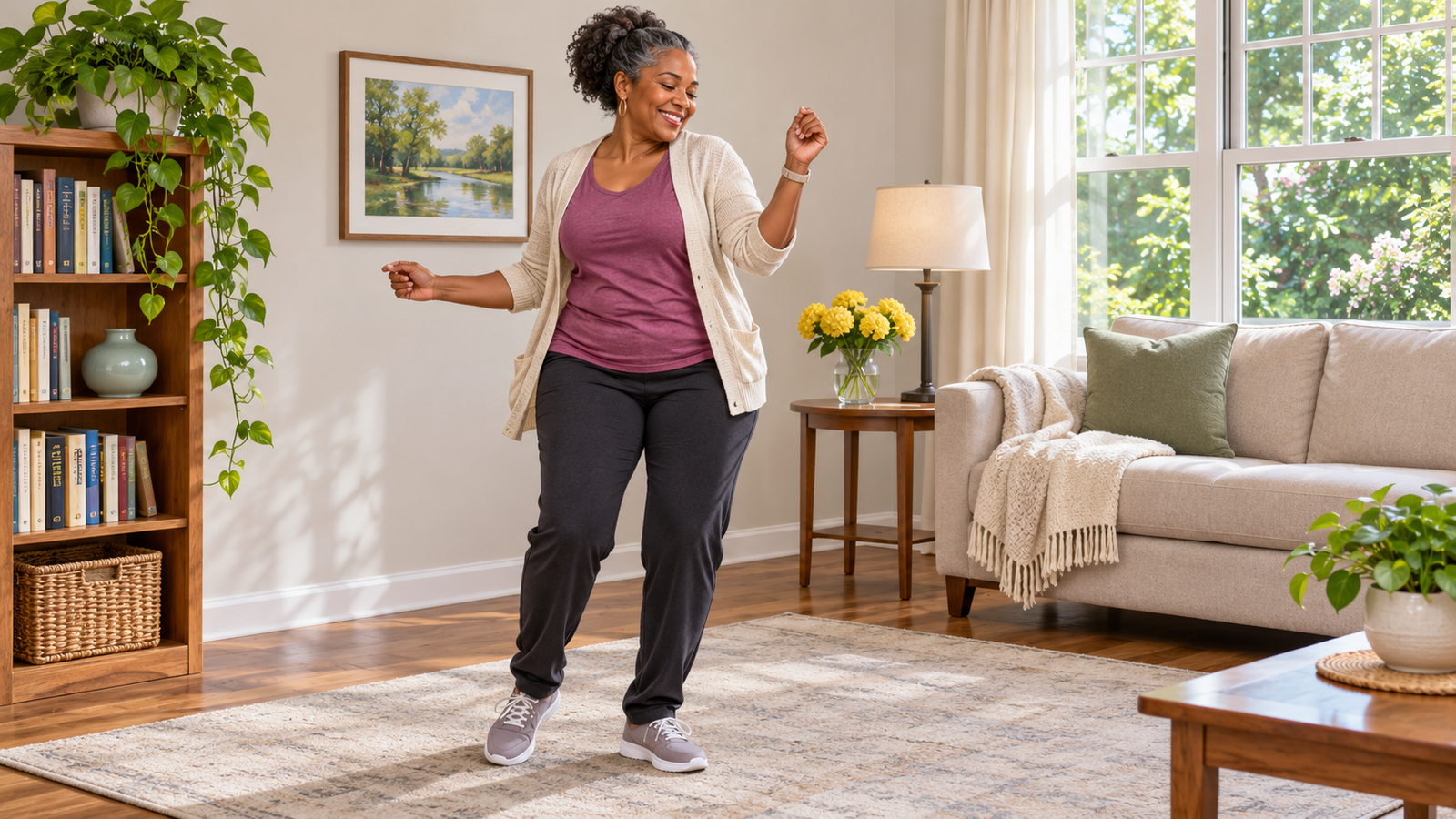
You do not need a performance or a complicated routine to move to music. Start with a suitable space, a manageable plan and room to learn.
By David LaGuerre
A favorite song can give an ordinary afternoon a different rhythm. For someone looking for an indoor way to be active, moving to music may be more inviting than another piece of exercise equipment.
The National Institute of Diabetes and Digestive and Kidney Diseases includes dancing at home among ways to be physically active. Its guidance encourages choosing enjoyable activities and starting slowly after inactivity.
A useful first attempt is a small experiment. Choose a suitable space, decide how you will use the music and leave yourself time to learn. This guide offers planning steps, not a prescribed workout or treatment for a medical condition.
Decide what you want from the session
Start with one purpose: trying a different indoor activity, enjoying familiar music or learning whether a beginner lesson appeals to you. Avoid making the first session a test of weight loss, coordination or endurance.
Write the purpose in a sentence. For example, you might want to see whether you enjoy moving to music before dinner. That question can be answered without mastering a routine or buying a subscription.
Give yourself permission to choose another activity if this one is not enjoyable. A useful experiment tells you something about your preferences. It does not require proving that dancing is the perfect exercise for everyone.
Match the activity to your current abilities
Think about the movement you can comfortably manage now, not what you did years ago or what a performer does on screen. Talk with your health care professional if a health condition, injury or limitation raises questions about a suitable activity.
The National Institute on Aging advises people with chronic conditions to discuss exercise with their doctor and to be active as their abilities and conditions allow. It also recommends gradual increases in activity.
If you need an adapted or seated approach, ask a qualified professional or instructor for guidance that fits your needs. Do not assume sitting down makes every online routine appropriate. Choose instruction designed for the way you will participate.
Prepare the space before playing the music
Look at the actual floor area. Move loose objects and cords out of the way. Keep pets and other people from unexpectedly crossing the space. Set the music controls somewhere you can reach without stepping over furniture.
Do not use an area that requires dancing around a hot stove, a swinging door or a crowded hallway. If the available space cannot support the activity you planned, choose a smaller, appropriate activity or a different location.
NIA recommends shoes and clothes that are comfortable and safe for the planned movement. Check the floor and footwear together rather than choosing solely by appearance. Clothing should allow you to move without getting in the way.
For a Mohawk Valley household planning an indoor option during cold or wet weather, include the entryway in the check. Keep outdoor gear and wet footwear away from the activity area. An indoor plan still needs a suitable surface.
Choose music without letting it set the workload
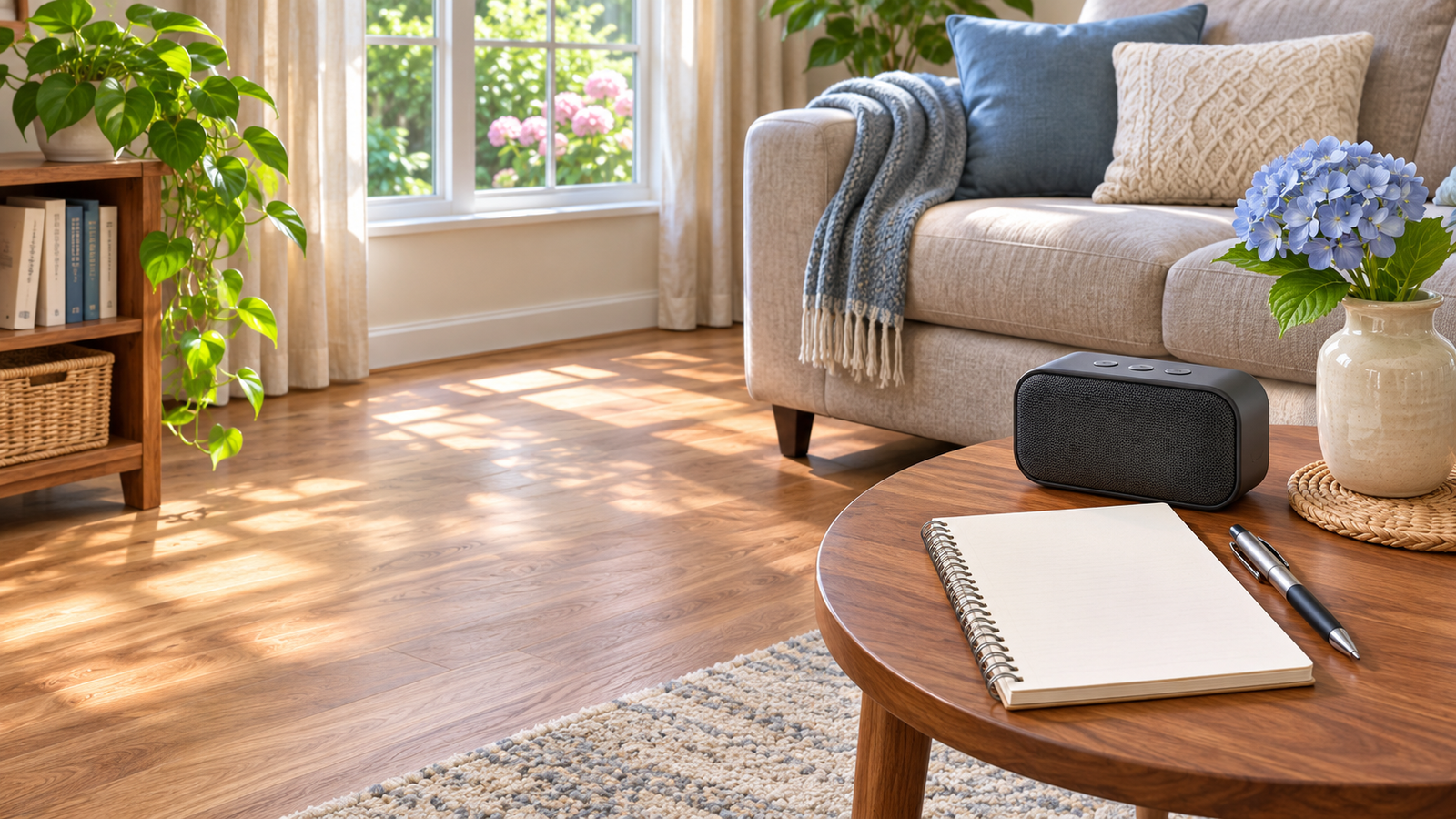
Make a short list of songs you enjoy. Familiar music may be enough; you do not need a playlist marketed as a workout. Put the controls within easy reach so you can pause whenever needed.
A song’s ending is a convenient stopping point, not a requirement to continue until then. You can stop sooner. Avoid choosing a whole album and treating finishing it as the definition of success.
If several people share the home, agree on a volume and time that work for everyone. Headphones are not necessary for this project. Choose a setup that lets you remain aware of the space and anyone entering it.
Choose instruction before trying choreography
If you want a follow-along lesson, preview it while seated or standing still first. Look for an explanation of the intended audience, pace and movements. Check whether the teacher shows alternatives and allows time to learn.
A routine labeled beginner may still move too quickly for your first attempt. You can choose another lesson. Skip demonstrations involving jumps, fast turns, lifts or other movements you have not learned to perform safely.
Do not try to watch a small screen placed behind you while moving. Arrange the screen before starting, and pause the lesson when you need to look closely. Learning the sequence and keeping up with it are separate tasks.
If a movement is unclear, seek qualified instruction instead of repeating a guess. Your goal is a manageable activity, not matching an edited video on its first viewing.
Keep effort within a manageable range
The CDC lists ballroom or line dancing among moderate-intensity examples and vigorous dancing among vigorous examples. The effort depends on the activity and the person. Music alone does not determine the intensity.
CDC’s talk test describes moderate effort as being able to talk but not sing. Vigorous effort makes saying more than a few words difficult without pausing for breath. Use this as context, not a reason to chase a harder level during a first attempt.
NIA recommends a little light activity before and after aerobic activity to warm up and cool down. Build that transition into your plan rather than starting abruptly and stopping only when exhausted.
MedlinePlus advises stopping exercise and seeking help right away if you have pain, extreme shortness of breath, dizziness or do not feel right. Do not turn warning symptoms into a challenge to finish the song.
Make a shared session cooperative
If a partner or family member joins, agree that either person can pause, shorten the session or choose a different movement. Do not copy a faster person’s effort just to stay together.
Decide whether the aim is conversation, learning a lesson or simply enjoying music. One person may want quiet concentration while another wants to joke through the routine. A quick discussion can prevent an enjoyable idea from becoming frustrating.
Ask before recording or posting anyone’s movements. A home activity does not need an audience. Keep encouragement focused on participation and comfort rather than comments about bodies or athletic ability.
Use a brief review to plan the next attempt
Afterward, record the music or lesson, the setting and one thing you would change. Perhaps the speaker was difficult to reach, the video moved too quickly or a different time would be less distracting.
Choose one adjustment before adding more. You might prepare the space earlier, select a clearer lesson or leave a larger gap before your next obligation. Do not automatically increase duration and difficulty together.
Put another session on the calendar only if the activity fits your needs. Keep other forms of movement in your routine as appropriate. An enjoyable music session can be one option among several, rather than a replacement for every type of activity.
The useful result is a repeatable setup: music you like, suitable instruction if needed, a clear space and permission to work at your own level. Start there and let the next step follow what you learn.
Official NIH, NIA, CDC and MedlinePlus guidance checked November 6, 2026. Setup and scheduling examples are practical suggestions. Images are AI-generated editorial illustrations.