


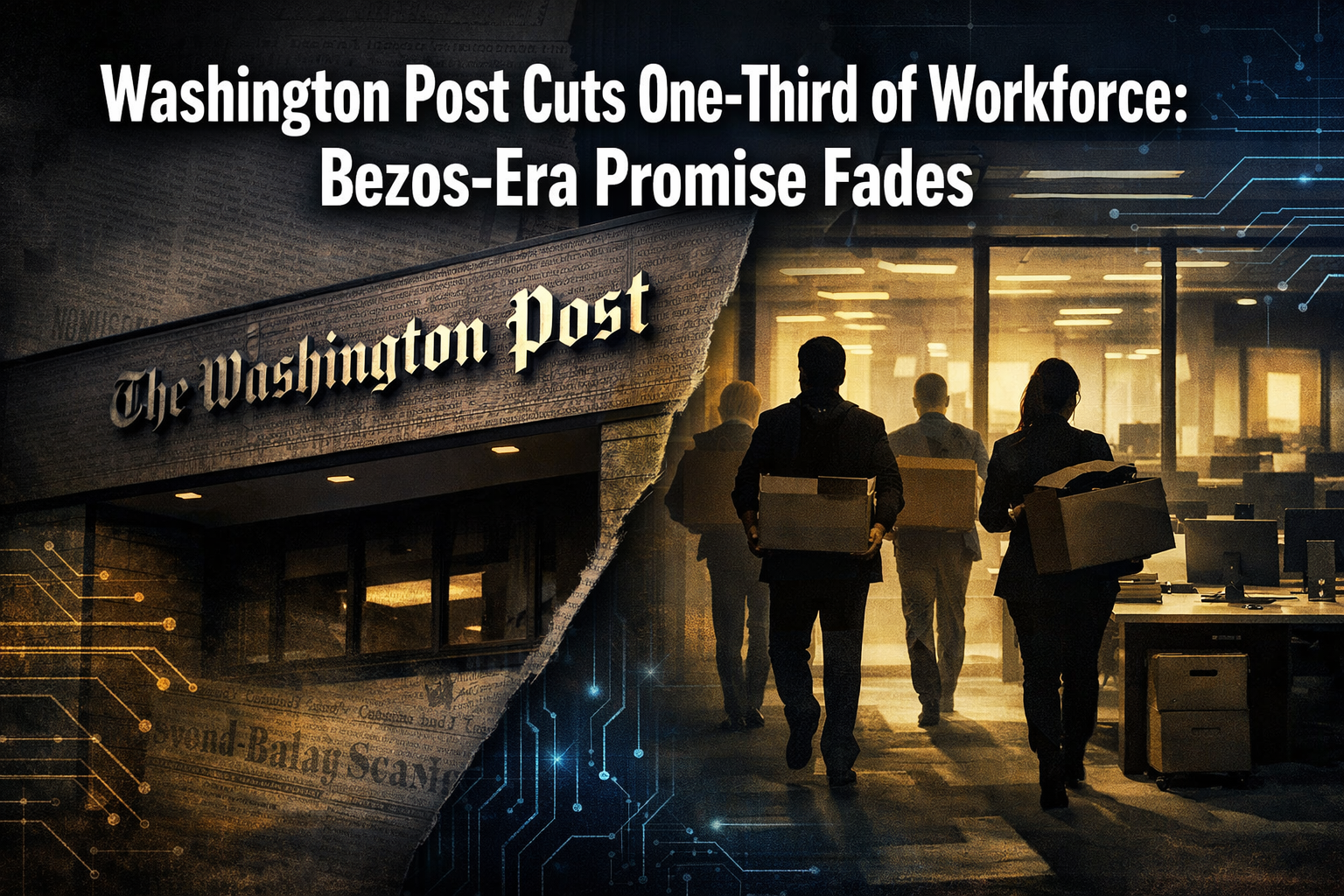
The Washington Post moved Wednesday at the behest of owner Jeff Bezos to cut a third of its entire workforce. The layoffs affect every corner of the newsroom. In a newsroom Zoom call, Executive Editor Matt Murray called the move “a strategic reset” it needs to compete in the era of artificial intelligence. The paper had not evolved with the times, he said, and the changes were overdue in light of “difficult and even disappointing realities.” With the job cuts, the storied newspaper narrows the scope of its ambitions for the foreseeable future. It is a remarkable reversal for a vital pillar of American journalism that had looked to Bezos — one of the wealthiest people on Earth — as a champion and a financial savior.
When one of America’s most prestigious newspapers announces it’s cutting a third of its staff, it’s not just a business story. It’s a warning sign about the future of journalism itself—and what happens when billionaire promises meet brutal economic reality.
Key Takeaways
- Massive job cuts: The Washington Post is eliminating approximately one-third of its entire workforce in sweeping layoffs that touch every department
- AI justification: Leadership frames the cuts as necessary to compete in an artificial intelligence-driven media landscape
- Broken promises: The move represents a dramatic reversal from Jeff Bezos’s 2013 positioning as journalism’s deep-pocketed savior
- Industry implications: The cuts signal broader challenges facing legacy media organizations struggling with digital transformation
- Democracy concerns: Reduced newsroom capacity raises questions about accountability journalism and local government transparency at a critical time
The Scope of Devastation: One-Third of Jobs Gone
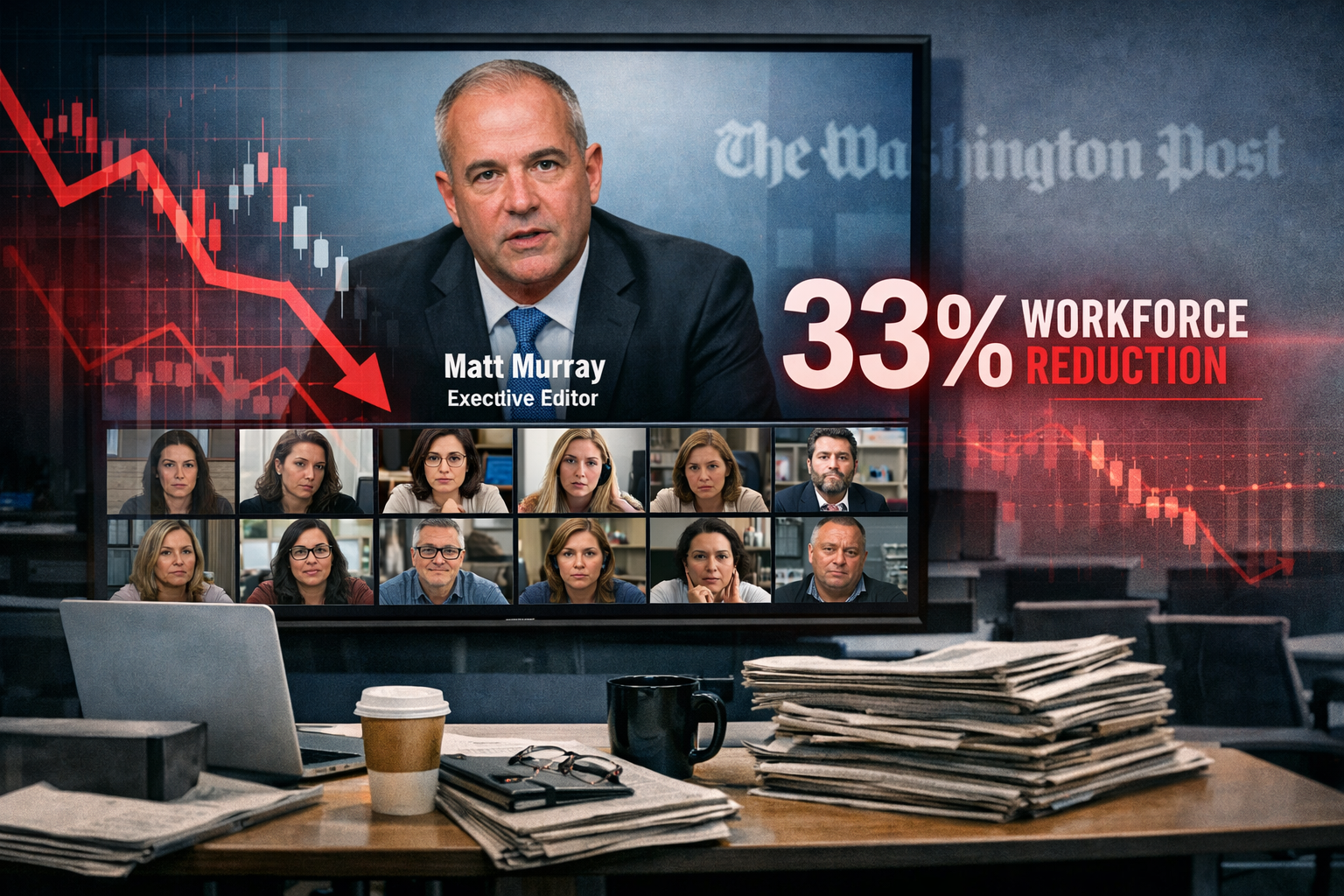
The numbers tell a stark story. When The Washington Post announced Wednesday’s layoffs, the scale shocked even industry veterans who’ve witnessed decades of media contraction. Approximately one-third of the workforce—journalists, editors, photographers, support staff—will lose their jobs in what amounts to one of the most significant downsizings in the paper’s 147-year history.
This isn’t surgical trimming. Every corner of the newsroom faces cuts. Political reporters who’ve covered presidential campaigns. Investigative journalists who’ve broken major corruption stories. Local reporters who attend town hall meetings and school board decisions. The layoffs don’t discriminate by beat, seniority, or acclaim.
For context, imagine if Utica’s largest employer suddenly announced it was cutting a third of its staff. The ripple effects would devastate families, strain social services, and fundamentally reshape the local economy. That’s what’s happening at The Post—except the product being reduced isn’t widgets or services, but the journalism that holds power accountable.
The timing couldn’t be worse. As we head deeper into 2026, with critical elections looming and government transparency more important than ever, one of America’s premier watchdog institutions is dramatically scaling back its capacity to investigate, report, and inform citizens.
“Strategic Reset” or Strategic Retreat? Murray’s Difficult Message
In the Zoom call that delivered the devastating news, Executive Editor Matt Murray reached for corporate euphemisms to soften the blow. He called the mass layoffs “a strategic reset” necessary to compete in the era of artificial intelligence. The paper had not evolved with the times, Murray acknowledged, and these changes were overdue given “difficult and even disappointing realities.”
Let’s translate that corporate speak into plain English: The Washington Post is admitting it failed to adapt to digital disruption, and workers are paying the price.
Murray’s framing raises uncomfortable questions. If the paper truly hadn’t evolved with the times, whose responsibility was that? Certainly not the reporters covering their beats or the editors managing daily operations. Strategic direction comes from the top—from leadership and ownership.
The AI justification deserves particular scrutiny. Yes, artificial intelligence is transforming media, just as it’s reshaping manufacturing jobs, healthcare access, and countless other sectors. But AI doesn’t write investigative exposés. It doesn’t cultivate sources who risk their careers to expose corruption. It doesn’t attend city council meetings in small towns across upstate New York to ensure local government accountability.
“The paper had not evolved with the times, and the changes were overdue in light of ‘difficult and even disappointing realities.'” — Executive Editor Matt Murray
The phrase “disappointing realities” does heavy lifting here. Disappointing to whom? Not to readers who depend on quality journalism. Not to democracy, which requires an informed citizenry. The disappointment Murray references is financial—the reality that despite Bezos’s billions, The Post has hemorrhaged hundreds of millions of dollars in recent years [1].
From Savior to Slasher: The Bezos Reversal
Remember 2013? Jeff Bezos, fresh off building Amazon into a retail colossus, purchased The Washington Post for $250 million. The journalism world exhaled with relief. Finally, a billionaire who understood digital transformation would save a vital pillar of American journalism from the slow death afflicting newspapers nationwide.
Bezos positioned himself as different from other wealthy media owners. He wouldn’t meddle in editorial decisions. He’d provide the financial runway needed to experiment, innovate, and build a sustainable digital model. The Post could focus on journalism while Amazon’s founder worked his technological magic on the business side.
For a while, it worked—or seemed to. The Post invested in digital infrastructure, hired talented journalists, and expanded coverage. The Trump presidency drove subscription growth as readers hungry for accountability journalism flocked to quality news sources. The future looked bright.
But that was then. This is now.
With the job cuts, the storied newspaper narrows the scope of its ambitions for the foreseeable future. It is a remarkable reversal for a vital pillar of American journalism that had looked to Bezos — one of the wealthiest people on Earth — as a champion and a financial savior.
The reversal stings particularly because of Bezos’s wealth. We’re not talking about a struggling local newspaper owner making impossible choices with limited resources. Jeff Bezos could personally fund The Washington Post’s losses indefinitely without meaningfully impacting his lifestyle. His net worth fluctuates by more than The Post’s annual losses on any given day based on Amazon stock movements.
This raises a fundamental question about billionaire ownership of media institutions: If one of the wealthiest people on Earth won’t sustain a premier news organization through difficult transitions, who will?
What This Means for Democracy and Local Journalism
The Washington Post’s cuts don’t just affect D.C. They signal broader threats to journalism everywhere—including here in the Mohawk Valley and across upstate New York.
When flagship institutions like The Post scale back, the entire journalism ecosystem suffers. Regional papers lose the model they aspired to follow. Talented journalists question whether the profession offers sustainable careers. And most critically, the watchdog function of the press—essential for government transparency and corporate accountability—weakens precisely when we need it most.
Consider what robust journalism provides:
📰 Investigative reporting that exposes corruption and holds power accountable
📰 Local coverage of school board decisions, municipal budgets, and town hall meetings
📰 Fact-checking that counters misinformation and propaganda
📰 Context and analysis that helps citizens make informed voting decisions
📰 Community storytelling that reflects diverse voices and experiences
Every one of these functions requires experienced journalists with institutional knowledge, cultivated sources, and time to dig deep. AI can’t replicate that, no matter what Silicon Valley promises.
The cuts at The Post also reflect economic inequality in stark terms. While Bezos’s wealth continues growing, workers lose their livelihoods. It’s the same pattern we see in manufacturing jobs, workforce development, and economic opportunity across the Rust Belt and rural America. The people who create value get squeezed while ownership reaps rewards.
The AI Excuse: Innovation or Elimination?
Murray’s emphasis on artificial intelligence as justification for cuts deserves deeper examination. AI represents genuine transformation in media—but not necessarily the kind leadership suggests.
Yes, AI can help with certain journalism tasks: transcribing interviews, analyzing datasets, identifying patterns in public records, even drafting routine stories about earnings reports or sports scores. These tools can make journalists more efficient, freeing them for higher-value work.
But here’s what AI can’t do:
❌ Build trust with sources over years of relationship-building
❌ Ask the unexpected follow-up question that cracks open a story
❌ Recognize when official explanations don’t add up
❌ Navigate the ethical complexities of reporting on vulnerable communities
❌ Provide the local knowledge that distinguishes meaningful stories from noise
The “AI transformation” framing often serves as cover for cost-cutting that would happen regardless. It’s the 2026 version of previous waves of automation that promised efficiency but delivered unemployment.
Moreover, the AI pivot raises questions about editorial judgment. Who decides what stories matter? What perspectives get amplified? How do we ensure algorithmic news selection doesn’t simply reinforce existing biases or chase clicks over civic importance?
These aren’t abstract concerns. They directly impact government transparency, election integrity, and civic participation—issues that matter enormously to progressive journalism and informed citizenship.
Financial Realities Behind the Cuts
While leadership frames the layoffs as strategic positioning for the future, the underlying driver is simpler: money.
The Washington Post has reportedly lost hundreds of millions of dollars in recent years [1]. Subscription growth that surged during the Trump administration has plateaued. Digital advertising revenue hasn’t replaced print losses. The business model that sustained newspapers for generations has collapsed, and no one—not even Jeff Bezos—has found a fully sustainable replacement.
These financial pressures are real. But the response to them reveals values and priorities.
Compare two possible approaches:
Option A: Maintain journalistic capacity while experimenting with new revenue models, accepting losses as investment in democracy’s infrastructure, using ownership wealth to sustain the transition.
Option B: Slash workforce by a third, narrow ambitions, prioritize profitability over public service, frame cuts as inevitable technological evolution.
The Post chose Option B. That choice reflects a particular worldview about media’s role in society—one where journalism is primarily a business rather than a public good.
This matters for how we think about supporting quality journalism everywhere. If market forces alone determine what news gets covered, entire communities become “unprofitable” and lose coverage. Rural areas, low-income neighborhoods, marginalized populations—all face information deserts because serving them doesn’t generate sufficient returns.
That’s why public investment in journalism, nonprofit news models, and community-supported media matter. The market alone won’t sustain the journalism democracy requires.
Lessons for the Mohawk Valley and Beyond

What happens at The Washington Post might seem distant from daily life in Utica, Rome, or New Hartford. But the implications reach right into our communities.
Local journalism faces identical pressures. The same economic forces squeezing The Post threaten regional papers and local news outlets across upstate New York. When these institutions weaken, who covers county planning decisions? Who investigates municipal budgets? Who ensures school board accountability?
The erosion of local journalism has direct consequences:
🔍 Reduced government transparency as officials face less scrutiny
🔍 Lower civic participation when residents lack information about community issues
🔍 Increased corruption in environments with minimal oversight
🔍 Weaker democracy as informed citizenship becomes harder to sustain
Supporting local journalism isn’t charity—it’s investing in community health and democratic function. That means:
✅ Subscribing to local news sources, even when content is sometimes free
✅ Engaging with journalism by sharing stories, attending events, providing feedback
✅ Advocating for policies that support news organizations and press freedom
✅ Participating in community journalism through letters, tips, and story ideas
The Washington Post’s struggles also highlight the need for diverse ownership models. Billionaire saviors clearly aren’t the answer. We need nonprofit news organizations, community-supported journalism, cooperative ownership structures, and public investment in local reporting.
What Readers Can Do
The crisis in journalism requires response from citizens who value accountability, transparency, and informed democracy. Here’s how to take action:
Support Quality Journalism Financially
Subscribe to news organizations doing important work, both national and local. If you can afford streaming services, you can afford journalism subscriptions. Consider them civic investments, not mere consumer purchases.
Donate to nonprofit news organizations filling gaps left by commercial media. Many do excellent investigative reporting and community coverage.
Attend fundraising events for local journalism organizations. These build community while supporting vital institutions.
Engage and Amplify
Share quality journalism on social media instead of just consuming it. Help good reporting reach wider audiences.
Write letters to the editor and op-eds supporting journalism’s role in democracy. Public expressions of value matter.
Participate in community journalism by providing story tips, attending town halls, and helping reporters understand local issues.
Advocate for Systemic Change
Support policies that sustain journalism: tax credits for news subscriptions, public funding for local reporting, antitrust enforcement against tech platforms that profit from news content without compensating creators.
Contact representatives about journalism’s role in democracy and the need for structural support.
Push for transparency in government at all levels, making journalism’s watchdog role easier and more effective.
Build Media Literacy
Learn to distinguish quality journalism from propaganda, clickbait, and misinformation. Support fact-checking initiatives.
Teach others—especially young people—about journalism’s democratic function and how to evaluate sources.
Demand accountability from news organizations while also defending their legitimate role in society.
The Bigger Picture: Journalism and Democracy
The Washington Post’s workforce cuts represent more than one newspaper’s struggles. They’re a symptom of broader challenges facing democracy in the digital age.
Quality journalism costs money. It requires paying skilled professionals to do time-intensive work that often doesn’t generate immediate returns. Investigative projects might take months or years before publication. Beat reporting builds expertise slowly through relationship-building and accumulated knowledge.
None of this fits neatly into algorithmic content farms or AI-generated copy. Real journalism requires human judgment, ethical reasoning, and commitment to truth over profit.
When we lose that capacity—whether at The Washington Post or small-town papers across the Mohawk Valley—democracy itself weakens. Informed citizenship becomes harder. Government accountability suffers. Corporate power faces less scrutiny. Marginalized voices lose platforms.
The question facing us in 2026 isn’t whether journalism will survive. Some form of news and information will always exist. The question is whether we’ll sustain the kind of journalism democracy requires: independent, thorough, ethical, and accountable to communities rather than just shareholders.
That answer depends partly on choices billionaire owners like Jeff Bezos make—but mostly on choices we make as citizens.
Conclusion: From Disappointment to Action
The Washington Post moved Wednesday at the behest of owner Jeff Bezos to cut a third of its entire workforce, affecting every corner of the newsroom. Executive Editor Matt Murray’s characterization of this as “a strategic reset” for the AI era barely conceals the disappointing reality: even one of the wealthiest people on Earth won’t sustain a premier news organization through difficult transitions.
This remarkable reversal from Bezos’s promised salvation to mass layoffs should anger us. But anger alone accomplishes nothing.
Instead, channel that frustration into action. Support journalism financially. Engage with quality reporting. Advocate for policies that sustain news organizations. Build media literacy in your communities. Participate in local journalism by attending meetings, sharing tips, and amplifying important coverage.
The crisis in journalism is also an opportunity—to reimagine how we support the information infrastructure democracy requires. We can’t rely on billionaire saviors. We need community investment, public support, diverse ownership models, and citizen engagement.
Here in the Mohawk Valley and across upstate New York, we have a choice. We can watch journalism continue eroding, accepting information deserts and weakened accountability as inevitable. Or we can build sustainable models that serve communities rather than just shareholders.
The Washington Post’s cuts remind us what’s at stake. Now it’s up to us to respond—not with resignation, but with determination to sustain the journalism democracy demands.
Your next steps:
- Subscribe to at least one quality news source this week
- Share this article and other important journalism with your networks
- Contact your representatives about supporting journalism through policy
- Attend a local government meeting and see democracy in action
- Engage with local journalists by providing story tips and feedback
The future of journalism—and democracy—depends on what we do next.
References
[1] Washington Post Plans Layoffs To Stem Losses Of Hundreds Of Millions Of Dollars In Recent Years – https://capitolcommunicator.com/washington-post-plans-layoffs-to-stem-losses-of-hundreds-of-millions-of-dollars-in-recent-years/


