


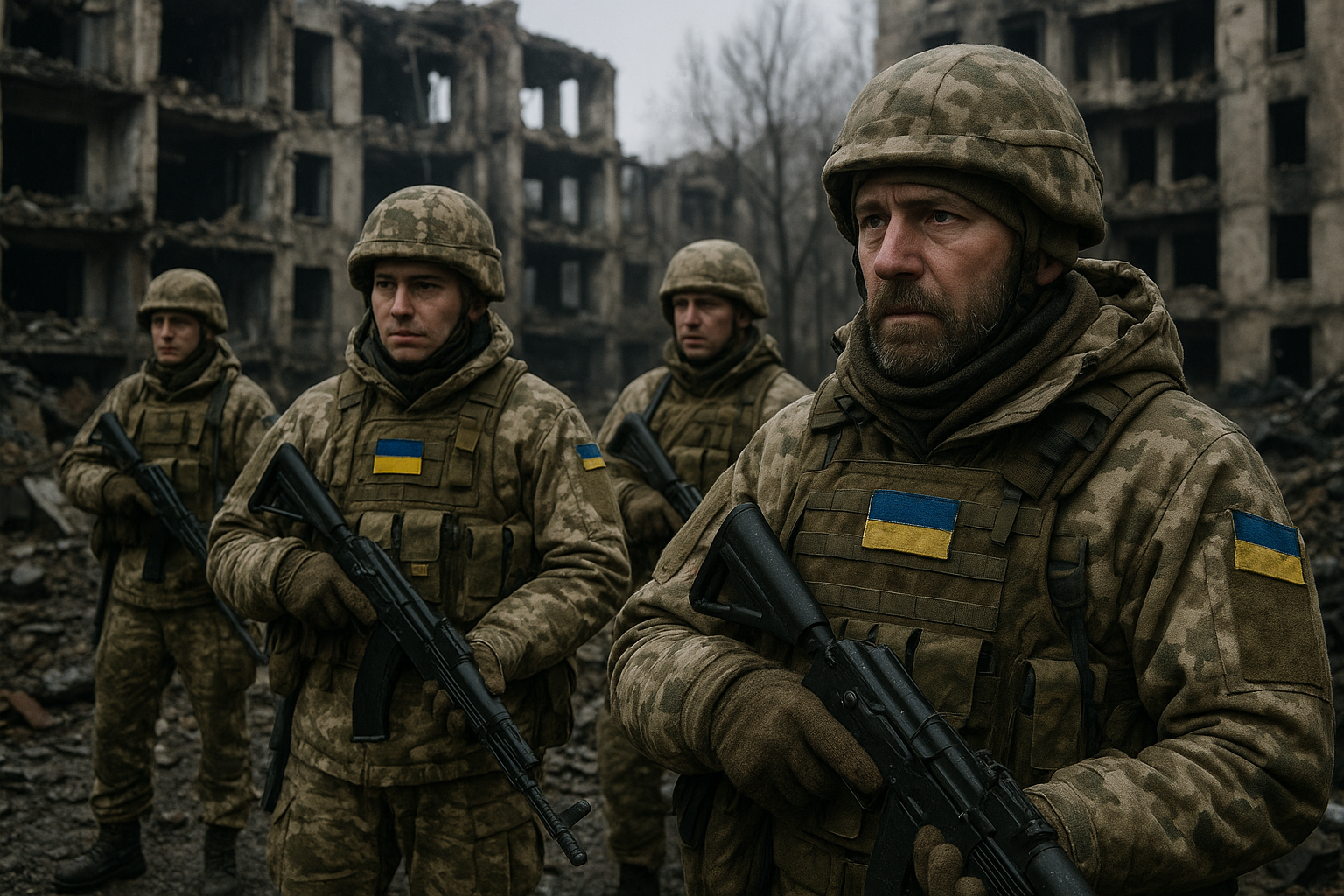
Trump Lets Ukraine, Russia ‘Fight for a While’ as German Leader Pushes for Peace
Trump’s Controversial Approach to Ukraine War Divides International Allies
President Donald Trump said Thursday that it might be better to let Ukraine and Russia “fight for a while” before pulling them apart and pursuing peace, likening the war in Ukraine to a fight between two young children who hated each other and are fighting. This stunning admission came during an Oval Office meeting with German Chancellor Friedrich Merz, revealing a stark contrast in approaches to ending Europe’s largest conflict since World War II. Trump’s comments suggest a significant shift from his campaign promises to end the war within 24 hours of taking office.
The meeting exposed deep tensions between America’s commitment to Ukrainian sovereignty and Trump’s apparent willingness to let the conflict continue. While Merz positioned Trump as “the key person” who can pressure Russia to end the conflict, the president’s response indicated growing frustration with his peace efforts and a troubling comparison of international warfare to playground disputes.
The Children Fighting Analogy: A Diplomatic Misstep
Trump’s decision to compare the Ukraine war to children fighting represents one of his most controversial foreign policy statements since returning to office. Trump likened the war to a fight between two young children who hated each other, adding that “sometimes you’re better off letting them fight for a while” before intervening.
This analogy trivializes a conflict that has claimed hundreds of thousands of lives and displaced millions of civilians. The comparison reduces complex geopolitical realities involving territorial sovereignty, international law, and democratic values to a simple schoolyard dispute. Foreign policy experts worry this framing could embolden Putin while demoralizing Ukrainian forces and their supporters.
Trump says he shared his comparison of the conflict to a fight between young children in his call with Putin. This revelation raises serious questions about diplomatic protocol and whether such casual analogies undermine America’s credibility in international negotiations.
Merz’s Urgent Appeal for American Leadership
German Chancellor Friedrich Merz took a markedly different approach during the White House meeting, emphasizing America’s unique position to influence the conflict’s outcome. Germany’s new chancellor appealed to him as the “key person in the world” who could halt the bloodshed by pressuring Russia to negotiate.
Merz’s strategy focused on positioning Trump as the decisive leader capable of ending the war through American strength and influence. The German leader understood that appealing to Trump’s ego and desire to be seen as a dealmaker might motivate more aggressive action against Russian aggression.
However, Trump’s response revealed growing uncertainty about his ability to deliver on campaign promises. The comments were Trump’s clearest indication to date that he was unsure he would be able to quell Russia’s 2022 full-scale invasion of Ukraine.
The Reality of Failed Peace Promises
Trump’s admission contrasts sharply with his confident campaign rhetoric about ending the Ukraine war quickly. During the 2024 election cycle, he repeatedly claimed he could resolve the conflict within days of taking office through his personal relationship with Putin and superior negotiating skills.
Russia has proposed another attempt at peace negotiations with Ukraine on Monday in Istanbul, but both sides remain firmly entrenched in positions likely to prolong the war. These failed diplomatic efforts highlight the complexity of the conflict that Trump’s simplistic analogies fail to capture.
The president’s apparent retreat from his peace promises raises concerns about American credibility and commitment to Ukrainian defense. European allies who have invested heavily in supporting Ukraine may question whether America will maintain its leadership role in the conflict.
International Reactions and Diplomatic Implications
Trump is trying to broker peace between Russia and Ukraine, but has grown increasingly frustrated with the lack of progress. This frustration appears to be driving his willingness to step back and allow the conflict to continue without active American mediation.
The international community has responded with concern to Trump’s comments. Allied nations that have coordinated closely with the United States on Ukraine policy worry about mixed messages from American leadership. The children fighting analogy has been particularly criticized for its insensitivity to Ukrainian suffering.
European leaders like Merz are trying to maintain pressure on Trump to remain engaged, recognizing that American leadership is crucial for any sustainable peace agreement. Without consistent U.S. involvement, the conflict could drag on indefinitely.
NATO and Defense Spending Discussions
Beyond Ukraine, the Trump-Merz meeting addressed broader alliance issues including NATO spending commitments. He said US troops would remain in Germany and said it was positive that Berlin was spending more money on defence. This represents a more positive development in U.S.-German relations compared to Trump’s previous criticisms of German defense spending.
The president’s acknowledgment of German defense improvements suggests some progress in alliance relationships, even as disagreements persist over Ukraine policy. Maintaining strong NATO unity remains crucial for deterring further Russian aggression in Europe.
The Path Forward: Diplomatic Challenges Ahead
Trump’s comments reveal the fundamental challenges facing his administration’s foreign policy approach. The Ukraine conflict cannot be resolved through simple analogies or stepping back from active engagement. Successful diplomacy requires sustained commitment, clear messaging, and coordination with allies.
The president’s apparent willingness to let Ukraine and Russia “fight for a while” could have dangerous consequences. Without American pressure on Russia, Putin may feel emboldened to escalate military operations or reject reasonable compromise proposals.
European allies like Germany will likely increase pressure on the Trump administration to maintain active involvement in peace efforts. The alternative could be a prolonged conflict that destabilizes the entire region and undermines democratic values globally.
What This Means for American Foreign Policy
Trump’s Ukraine comments signal a potential shift toward a more isolationist foreign policy approach. Rather than leading international efforts to resolve conflicts, the administration may prefer to step back and allow events to unfold without American intervention.
This approach contradicts decades of American leadership in international crisis resolution and could damage U.S. credibility worldwide. Allies who depend on American support may begin seeking alternative partnerships or taking unilateral action.
The Ukraine situation will serve as a test case for Trump’s foreign policy philosophy. Success in brokering peace would validate his unconventional approach, while failure could embolden adversaries and alienate allies.
Final Thoughts: The Stakes Couldn’t Be Higher
The Trump-Merz meeting highlighted fundamental differences in how America and its allies view international conflict resolution. While European leaders seek active American engagement, Trump appears increasingly willing to adopt a hands-off approach that could have devastating consequences.
The Ukraine war represents more than a regional conflict; it’s a test of democratic values and international law. Trump’s children fighting analogy oversimplifies these crucial principles and risks undermining global stability.
As the conflict continues, American leadership remains essential for achieving sustainable peace. The international community will be watching closely to see whether Trump’s administration can move beyond simplistic analogies toward effective diplomatic action.
The stakes are too high for America to step back now. Ukrainian lives, European security, and democratic values worldwide depend on sustained American engagement and leadership in resolving this crisis.
What do you think about Trump’s approach to the Ukraine conflict? Share your thoughts in the comments below and help spread awareness by sharing this article with friends and family who care about international peace and security.


