


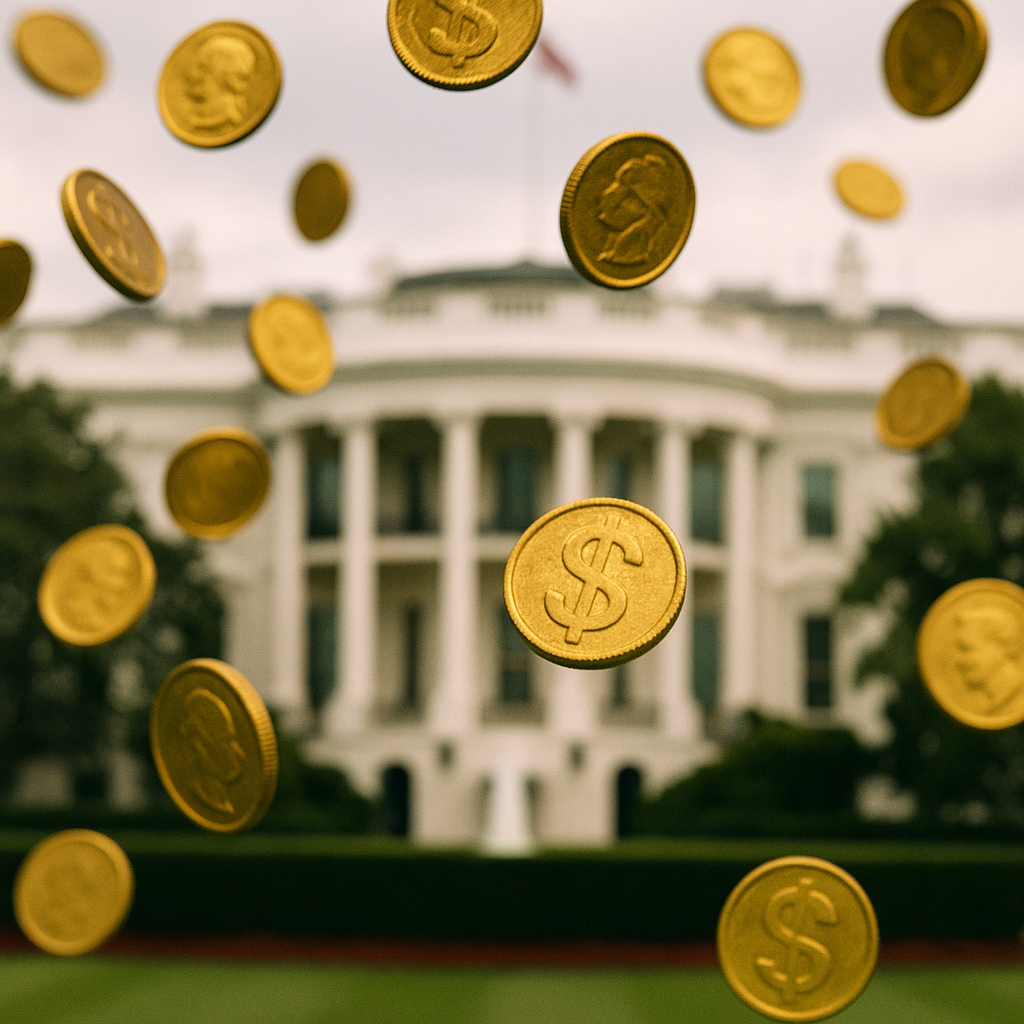
The Price of Access? When Inaugural Donors Reap Early Rewards
By David LaGuerre –
It’s a question that gnaws at the heart of our democracy: when big money flows into the coffers of a new administration, and then, almost like clockwork, those same donors see favorable government actions, what are we to make of it? Inaugurations are meant to be celebrations of a peaceful transfer of power, a fresh start. But when the price tag for that celebration reaches record heights, fueled by corporations and wealthy individuals with clear interests before the government, a sense of unease is not just understandable, it’s necessary. This isn’t just about a party; it’s about the potential for influence, the appearance of favoritism, and whether the government’s decisions are truly being made for the many, or for the few who can afford a hefty entry fee.
A Golden Welcome: Trump’s Unprecedented Inaugural Coffers
The sheer amount of money raised for the most recent presidential inauguration is a story in itself. It sets a new benchmark, and when we look at who contributed, the questions about access and influence become even more pointed.
More Than Just a Party: The Scale of the Fundraising
The Trump-Vance Inaugural Committee pulled in a truly staggering sum for the January 2025 festivities. Federal Election Commission (FEC) filings show a figure around $239 million , with some direct FEC data suggesting it might have been as high as $245.2 million in total donations accepted before refunds . To put that in perspective, it’s more than double the previous record of $107 million, also set by a Trump inauguration in 2017, and nearly four times the $62 million raised by Joe Biden for his 2021 inauguration during the pandemic .
What makes inaugural fundraising particularly noteworthy is the regulatory landscape. Unlike contributions to presidential campaigns, there are no legal limits on how much individuals or corporations can donate to an inaugural committee, though foreign nationals are barred from donating directly (their American subsidiaries, however, can) . This absence of caps creates a golden opportunity for those wishing to make a significant financial statement to an incoming administration.
While some past presidents, like Barack Obama who capped individual donations at $50,000 in 2009, or George W. Bush who set a $250,000 limit, chose to impose their own restrictions, the 2025 Trump inaugural committee did not follow suit . Instead, the event was reportedly marketed with exclusive perks, such as a “candlelight dinner” for those donating a million dollars or more . This combination of record-breaking sums and a lack of self-imposed limits suggests that the fundraising effort was perhaps about more than just covering the costs of parades and balls. It points towards an environment where substantial donations might be seen as a way to secure a higher level of attention or access from the new administration.
Who Opened Their Wallets? A Look at the Top Donors
So, who were these generous benefactors? The list of top donors is illuminating. The single largest contribution came from the poultry behemoth Pilgrim’s Pride, which gave a cool $5 million . Not far behind was the cryptocurrency company Ripple Labs, with a donation of nearly $4.9 million, while the trading app Robinhood chipped in $2 million .
The connections between donations and potential rewards become starker when we see individuals like investment banking billionaire Warren Stephens. He contributed $4 million and, on the very same day, was nominated to be the ambassador to the United Kingdom . This kind of direct temporal link inevitably fuels concerns about “pay-to-play” scenarios.
Beyond these, major technology companies also featured prominently, with Meta (Facebook’s parent company), Amazon, and Google each donating $1 million . The list also includes a roster of energy companies like Chevron and ExxonMobil, as well as other players in the artificial intelligence and cryptocurrency spaces, such as Solana Labs, OpenAI CEO Sam Altman, and Coinbase . It’s a veritable who’s who of industries with significant regulatory and policy interests before the federal government.
Adding another layer, several individuals who were later tapped for significant government positions were also among the major donors. For instance, Jared Isaacman, nominated to lead NASA, gave $2 million, as did Melissa Argyros, Trump’s pick for ambassador to Latvia . The concentration of donors from heavily regulated sectors like agriculture, technology, finance, cryptocurrency, and energy suggests that these contributions may well have been strategic calculations by entities hoping for a favorable regulatory climate or specific policy outcomes in the years ahead.
The Givers and Their Gains: Early Boons for Big Donors
If the fundraising was unprecedented, the question then becomes: did these large contributions translate into tangible benefits for the donors? A closer look at some of the early actions of the new administration suggests that for several major givers, the answer appears to be yes.
Pilgrim’s Pride: A $5 Million Donation and Swift Regulatory Relief
Pilgrim’s Pride, the top donor with its $5 million contribution , didn’t have to wait long to see actions that could benefit its bottom line. In March 2025, just a couple of months after the inauguration, the Department of Agriculture (USDA) granted a waiver allowing the company to maintain higher speeds on its poultry production lines. While this can increase output and profits, it’s a move that often raises concerns about worker safety.
This wasn’t an isolated incident. The USDA also decided to waive certain administrative requirements for poultry and pork producers and, crucially, to stop collecting some worker safety data related to these industries. Such changes directly benefit large producers like Pilgrim’s Pride by reducing compliance burdens and potentially scrutiny.
Then, in April 2025, an even bigger prize: Pilgrim’s Pride’s parent company, the global meatpacking giant JBS, received approval from the Securities and Exchange Commission (SEC) to list its shares on the New York Stock Exchange. This was a long-sought goal for JBS, one they had pursued unsuccessfully for years. The timing, so soon after its subsidiary’s massive inaugural donation, is striking.
These developments prompted Senator Elizabeth Warren to voice serious concerns. She suggested that Pilgrim’s Pride’s hefty donation was an attempt to “curry favor” with the administration, especially given the company’s history of accusations related to antitrust violations, animal welfare issues, and harm to workers. Senator Warren went so far as to question whether there was a “potential quid-pro-quo arrangement” at play. Adding to these concerns, reports indicated that the Department of Justice (DOJ) had suspended enforcement of the Foreign Corrupt Practices Act (FCPA), a law JBS had previously been found to have violated. The convergence of multiple favorable actions from different federal agencies—USDA, SEC, and potentially the DOJ through non-enforcement of the FCPA—for the inauguration’s top donor, a company with a complex regulatory history, makes it difficult to dismiss the idea that the $5 million contribution may have helped smooth the path for these outcomes.
Ripple’s Fortunes Turn: Crypto Giant Sees Legal Woes Ease After Contribution
The cryptocurrency industry, facing intense regulatory scrutiny, also appears to have found a more welcoming environment. Ripple Labs, the company behind the XRP cryptocurrency, donated nearly $4.9 million to the inaugural fund. Soon after, positive news flowed Ripple’s way. Federal regulators decided to drop their appeal in a long-running lawsuit that the SEC had initiated against Ripple Labs back in 2020. Courts had already issued rulings that were largely favorable to Ripple in that case.
In the final settlement with the SEC, Ripple’s fine was significantly reduced. While an initial fine was $125 million, and the SEC had reportedly sought penalties as high as $2 billion in its appeal, the agreed-upon amount in the settlement was $50 million, with both parties agreeing to drop their appeals. This resolution came as the new Trump administration signaled a generally “more relaxed regulatory environment for cryptocurrencies”. President Trump even ordered the establishment of a strategic government reserve for Bitcoin and other digital assets. Notably, an initial social media post from Trump controversially included XRP in this reserve, a post allegedly influenced by a lobbyist working for Ripple, though it reportedly caused some internal White House displeasure when the connection was revealed.
The Campaign Legal Center has pointed out that the cryptocurrency industry as a whole contributed nearly $16 million to the inauguration. In what could be seen as a return on this collective investment, President Trump appointed an industry-friendly “crypto czar,” rolled back a Biden-era executive order that the industry disliked, and the administration appeared to ease up on enforcing securities laws against some crypto firms. For an industry like cryptocurrency, where regulatory uncertainty can stifle growth and innovation, a multi-million dollar donation followed by the favorable conclusion of a major lawsuit, a significantly reduced fine, and a more accommodating regulatory stance from the new administration looks like a very tangible benefit. The lobbyist incident, even if it backfired slightly, underscores the direct channels of communication that large donors can sometimes activate.
A Pattern of Favor? Other Benefactors of the New Administration
The cases of Pilgrim’s Pride and Ripple are high-profile, but they may be part of a broader pattern. The watchdog group Public Citizen conducted an analysis and found that 58 corporations that were facing federal investigations or enforcement lawsuits collectively donated $50 million to Trump’s inauguration. What happened next is telling: according to Public Citizen, cases against at least 11 of these corporations have since been dismissed or withdrawn, and active enforcement has been halted in six other instances.
Consider these examples:
- Coinbase, a cryptocurrency exchange, donated $1 million. Subsequently, the SEC reportedly dropped a major lawsuit against the company.
- Google, which also contributed $1 million, saw the Trump Justice Department scrap part of a proposed breakup plan in an ongoing antitrust case.
- Bank of America donated $500,000. Later, the Trump Consumer Financial Protection Bureau (CFPB) filed to dismiss a case involving Zelle Network banks, of which Bank of America is a part.
- Capital One gave $1 million. The Trump CFPB also moved to dismiss a case related to one of the company’s high-interest savings account products.
- DuPont, after a $250,000 donation, saw the Trump DOJ dismiss a case concerning chloroprene emissions, with the dismissal citing an anti-DEI (Diversity, Equity, and Inclusion) executive order.
- Meta (Facebook), a $1 million donor, potentially benefited when the Trump administration ordered a freeze on CFPB investigations and cases and announced a deprioritization of enforcement against nonbanks. Meta was facing a CFPB civil investigation at the time.
- An executive order halting the enforcement of the Foreign Corrupt Practices Act (FCPA) stood to benefit several donors, including Ericsson, Pfizer, and Toyota, all of whom were reportedly facing FCPA-related investigations.
To illustrate this pattern, here’s a look at some major donors and the favorable actions that followed their contributions:
| Donor Name | Donation Amount (Inaugural) | Relevant Govt Agency/Body | Favorable Action/Policy Change | Date of Action (approx.) | Source(s) |
|---|---|---|---|---|---|
| Pilgrim’s Pride | $5,000,000 | USDA | Waiver for higher production line speeds | March 2025 | |
| JBS (parent of Pilgrim’s) | (via Pilgrim’s Pride) | SEC | Approval for NYSE listing | April 2025 | |
| Ripple Labs | $4,889,345 | SEC | Appeal dropped in lawsuit, fine reduced in settlement | Early 2025 | |
| Coinbase | $1,000,000 | SEC | Major lawsuit dismissed | Early 2025 | |
| $1,000,000 | DOJ | Part of antitrust breakup plan scrapped | Early 2025 | ||
| Warren Stephens | $4,000,000 | White House/State Dept | Nominated Ambassador to UK (same day as donation) | Jan 2025 | |
| Bank of America | $500,000 | CFPB | Filed to dismiss Zelle Network case | Early 2025 | |
| Capital One | $1,000,000 | CFPB | Filed to dismiss case re: high-interest savings account product | Early 2025 |
The sheer number of companies involved—58 identified by Public Citizen—and the wide range of favorable actions, from dismissed lawsuits and halted investigations to general regulatory leniency, across numerous powerful agencies like the DOJ, SEC, CFPB, and EPA, strongly suggest that these are not just a series of unrelated coincidences. It paints a picture where substantial inaugural donations from corporations already under federal scrutiny might be perceived, as Public Citizen researcher Rick Claypool put it, as “down payments for pardons or decisions to drop enforcement actions”.
Why This Stinks: The Corrosion of Trust and Fair Governance
This pattern of large donations followed by favorable government actions raises profound questions about fairness, ethics, and the very health of our democratic system. It’s a situation that should make every citizen uncomfortable.
Walking a Fine Line: Donations, Access, and the Specter of Quid Pro Quo
Legally speaking, proving outright bribery—a direct, explicit exchange of money for a specific official act—is notoriously difficult. Campaign finance laws are on the books to regulate contributions and, ideally, to prevent actual corruption or even the appearance of it. However, the line between a legal donation that simply buys “access” to policymakers and an illegal gratuity (a gift given because of an official act) or a tacit “quid pro quo” understanding can be incredibly blurry.
From an ethical standpoint, the concern is fundamental: large donations from entities with significant vested interests create an inherently uneven playing field. The principle of democracy suggests that every voice should carry equal weight, but when big money enters the equation, that ideal is threatened. The wealthy should not be able to purchase greater access or more favorable treatment from their government than any other citizen. When substantial contributions appear to be quickly followed by specific, beneficial government actions for the donors, it fosters a strong suspicion that money, rather than merit or the public interest, is driving those decisions.
Discussions from institutions like the Brookings Institution have long highlighted the dangers of a loosely regulated campaign finance system. There’s a real fear that an informal “pay to play” culture can flourish, where, as one Brookings scholar put it, “campaign money becomes even more the coin of the realm” in Washington. Even if these actions don’t meet the high legal threshold for criminal bribery, the appearance of a quid pro quo, fueled by the timing and specificity of benefits flowing to major donors, is deeply damaging to public trust. It erodes the core democratic principle that everyone should receive equal access and fair treatment under the law.
When Money Shouts, Are Everyday Voices Silenced?
If corporations and wealthy individuals can indeed secure favorable government actions through their financial largesse, it carries a deeply troubling implication: the concerns and needs of ordinary Americans, who cannot write multi-million dollar checks, risk being drowned out and marginalized.
This dynamic doesn’t just exist in theory; it can lead to tangible policy outcomes that benefit a select few, often at the expense of the broader public good. Think about it: weaker worker safety regulations could mean more injuries on the job. Less stringent environmental protections can lead to more pollution in our communities. Leniency in antitrust enforcement can harm consumers through higher prices and stifle competition that drives innovation.
The Campaign Legal Center puts it bluntly, noting that presidential inaugurations, with their unique allowance for unlimited corporate money, represent a “unique opportunity for big donors to buy access and influence, ultimately drowning out the voices of everyday Americans”. This issue, therefore, transcends mere procedural ethics. It directly impacts the kinds of policies our government enacts and the fundamental fairness of our democratic system. It fosters a government that may become more responsive to its high-dollar donors than to the citizens it is meant to serve.
A Disturbing Trend: Should We Sound the Alarm?
The evidence strongly suggests a disturbing pattern, but it’s fair to ask: Is this truly a cause for alarm, or could there be other explanations? And if it is a problem, what should be done?
The Other Side of the Coin: Acknowledging Counterarguments
It’s important to acknowledge that those involved might offer different perspectives. Some could argue that the government actions taken were entirely merited on their own, irrespective of any donations. They might contend that contributions are a protected form of free speech and association, and that simply because a donation was made and a favorable action followed (correlation) does not automatically prove that one caused the other (causation). For instance, the SEC itself, when settling with Ripple, noted that its decision did not necessarily reflect on the merits of claims in other cases.
However, these counterarguments begin to fray when confronted with the sheer weight of the evidence. The massive sums donated, the significant number of donors who were already under federal scrutiny and then received favorable actions, the often remarkably swift timing of these benefits, and an administration that openly embraced large, unlimited contributions make it increasingly difficult to dismiss these patterns as mere coincidence.
The “it’s just a coincidence” argument becomes particularly strained when we see examples like an ambassadorship nomination occurring on the very same day as a $4 million donation. Or when a company like JBS, after years of unsuccessful attempts, suddenly gains SEC approval for a major stock exchange listing shortly after its subsidiary makes a $5 million inaugural donation. Furthermore, the Trump administration’s own history with its previous inaugural committee, which settled a case brought by the D.C. attorney general alleging that the committee overpaid Trump-owned properties, effectively enriching the Trump family, coupled with ongoing concerns about the transparency and sources of Trump’s campaign fundraising more broadly, adds to the prevailing skepticism. While any single instance might be explained away in isolation, the cumulative effect of so many examples—the scale of the donations, the timing of the benefits, and the breadth of favorable outcomes for major donors—creates a compelling prima facie case for serious concern that goes well beyond happenstance.
The Path Forward: Demanding Transparency and Accountability
This recurring pattern of behavior raises significant and deeply troubling questions about the integrity of governmental decision making. It suggests a trend where financial power can seemingly bend policy and regulatory actions to suit private interests. This isn’t just about one particular administration; it’s about an ongoing vulnerability in our democratic processes to the influence of concentrated wealth.
The problem is compounded by the involvement of “dark money” groups—often 501(c)(4) organizations that are not required to disclose their donors—and apparent shell companies in inaugural funding. This opacity makes it even more challenging to trace who is attempting to buy influence and to hold them, and the officials they may be influencing, fully accountable.
What is clear is that further investigation is warranted. Congressional bodies, independent ethics watchdogs, and investigative journalists all have a crucial role to play in digging deeper to understand the full extent of these relationships and to determine whether any laws were broken. The public deserves to know how these decisions are being made and whose interests are truly being served.
Ultimately, this situation underscores a persistent and urgent need for comprehensive campaign finance reform. This should include much stricter rules governing inaugural committees, perhaps including contribution limits and enhanced transparency requirements, to ensure that our government serves all its citizens, not just the wealthy and the well-connected. This is more than a series of isolated incidents; it points to a systemic vulnerability. If a “pay to play” culture is allowed to take root and flourish, it normalizes a transactional form of politics that inevitably erodes public faith and distorts democratic outcomes. Vigilance and a commitment to systemic reforms are essential.
The picture that emerges from the early days of this administration is, frankly, disheartening. The record-breaking inaugural fundraising, followed so closely by a series of eyebrow-raising benefits flowing to major donors like Pilgrim’s Pride and Ripple Labs, and the broader pattern of favorable actions for companies that were under federal scrutiny, all point to a system where access and influence might be available to the highest bidders.
This matters profoundly. It matters for basic fairness. It matters for public trust in government. And it matters for the long-term health of our democracy. We have to ask ourselves what kind of government we want: one that is responsive to the needs of all its people, or one that seems to reserve its most favorable decisions for those who can write the biggest checks? The answer to that question will define the character of our nation.
What are your thoughts on this? Does this pattern concern you? Share this article and let’s continue the conversation.


