


When Chiquitta Fields walked into that Belzoni, Mississippi hotel room two weeks ago, she thought it would be for a night or two. Now, $700 poorer and still unable to work, she’s watching her children fall further behind in school while wondering when life will return to normal. Her story isn’t unique—it’s playing out across the entire Southeast right now.
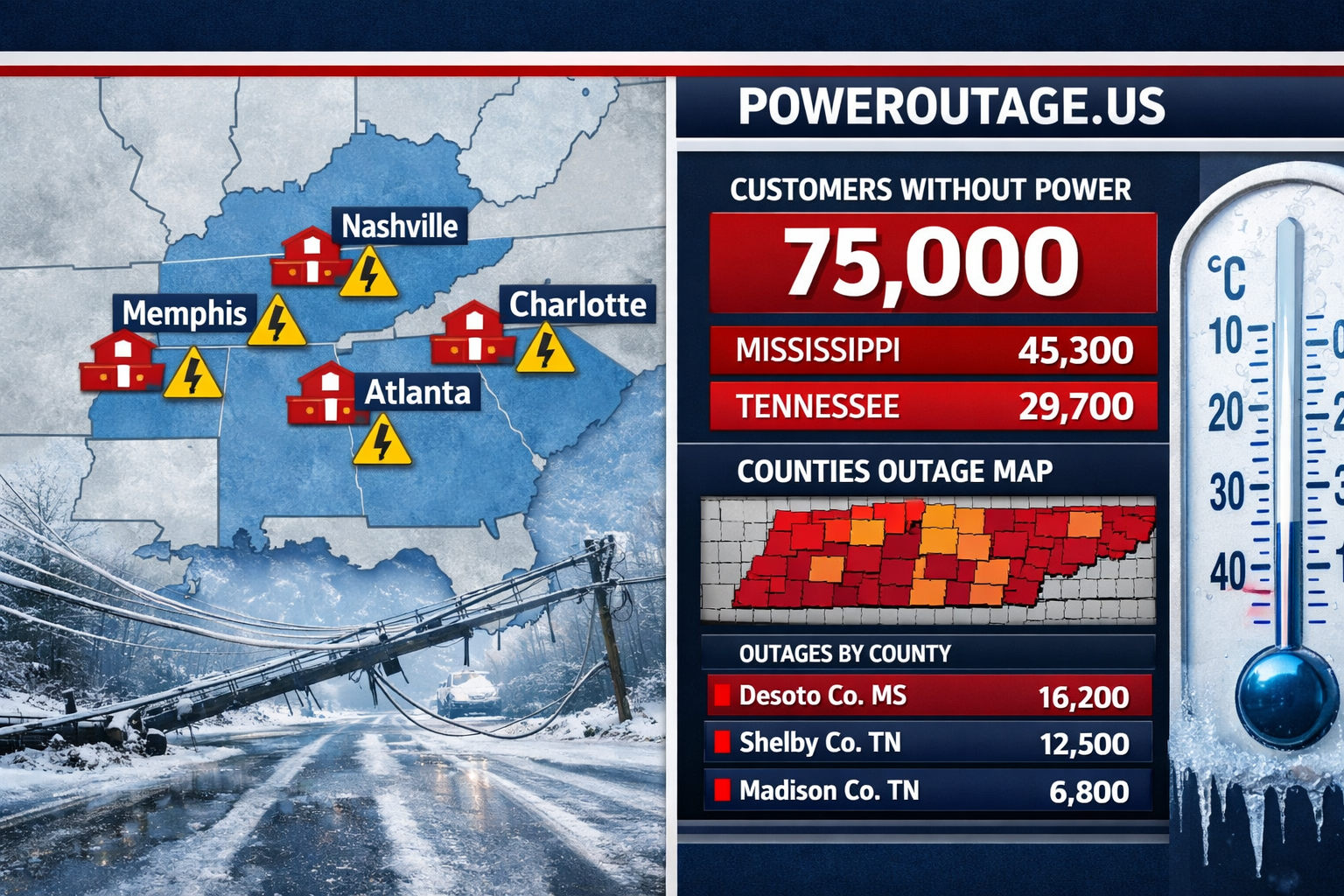
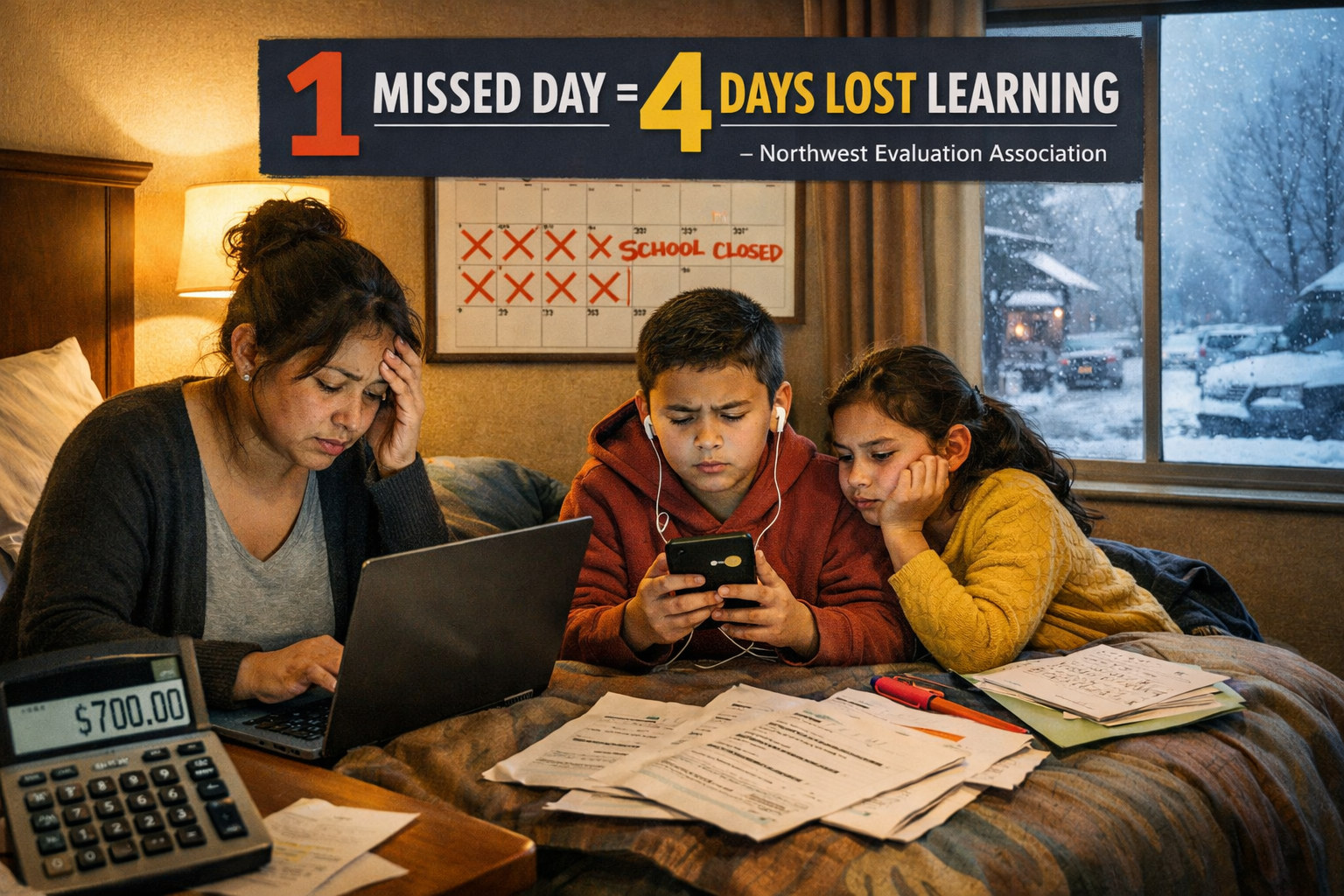
This past week, public school systems across the Southeast remained closed for a second straight week, affecting districts in Atlanta, Charlotte, Memphis and Raleigh and prompting campus closures at several universities through Monday. A series of winter storms brought frigid temperatures and icy roads from Mississippi to Maryland, while some cities, including Nashville, Tennessee, still had unresolved outages from an earlier storm. The outage tracker poweroutage.us showed nearly 75,000 customers without power in Mississippi and Tennessee as of Monday afternoon, while Metro Nashville Public Schools reported 71 schools had power restored by then. Families report housing disruptions and mental-health challenges amid prolonged closures, with Chiquitta Fields, Belzoni, Mississippi resident, spending about $700 on a hotel while unable to work. The Northwest Evaluation Association found a missed school day equals almost four days of lost learning time. Many districts are weighing make-up days and Metro Nashville Public Schools plans to convert a Presidents Day professional-development day to a regular school day, while remote learning was limited by power outages.
The cascading impact of these closures reveals uncomfortable truths about infrastructure vulnerability, educational equity, and how quickly working families can find themselves in crisis when weather disasters strike.
Key Takeaways
- Two full weeks of school closures have affected major districts across Atlanta, Charlotte, Memphis, Nashville, and Raleigh, with some rural districts extending closures even longer
- 75,000 customers remained without power in Mississippi and Tennessee as of Monday afternoon, making remote learning impossible for thousands of students
- Each missed school day equals nearly four days of lost learning, according to research from the Northwest Evaluation Association
- Families face severe financial strain, with parents unable to work while paying for emergency housing, childcare, and additional expenses
- Mental health challenges are mounting as prolonged isolation, uncertainty, and disrupted routines take their toll on students and families
The Scope of Closures Across the Southeast
The breadth of school closures this past week painted a stark picture of winter’s grip on the Southeast. In Tennessee alone, the list of affected districts read like a regional roll call: Cannon County, Cheatham County, Dickson County, Maury County, Metro Nashville Public Schools, Robertson County, Sumner County, Williamson County, and Wilson County all remained shuttered on Monday, February 2[1][2].
But Middle Tennessee wasn’t the only region struggling. West Tennessee faced even more extended disruptions, with eighteen separate districts—including Alamo City, Bells Elementary, Bradford Special, Carroll County, Chester County, Crockett County, Decatur County, Gibson County Special, Haywood County, Hardeman County, Henderson County, Henry County, Humboldt City, Jackson-Madison County, Lexington City, Milan Special, Paris Special, and Trenton Special—closing for both February 2 and 3[3]. McNairy County Schools extended closures through February 4, while Hardin County Schools announced they would remain closed through the entire week, from February 2-6[3].
Universities Join the Shutdown
Higher education wasn’t immune to the disruption. Bethel University, the University of Memphis, and UT Martin regional centers all shifted to remote operations or modified schedules on February 2[3]. The irony? Many students couldn’t actually access those remote learning options due to widespread power and internet outages.
The pattern reveals a critical infrastructure weakness: when severe weather strikes, our educational systems lack the resilience to maintain continuity. This isn’t just about inconvenience—it’s about equity and access.
Why Schools Couldn’t Reopen: The Infrastructure Crisis
Even after the snow and ice stopped falling, schools couldn’t simply flip a switch and reopen. The reasons tell a sobering story about infrastructure vulnerability in 2026.
Despite the winter precipitation ending days earlier, secondary roads remained dangerously unsafe. Downed trees blocked routes to schools. Power lines draped across roadways created hazards. Traffic lights sat dark at critical intersections[1][3]. School administrators faced an impossible choice: risk student and staff safety by reopening prematurely, or extend closures and deal with the educational and economic fallout.
Cheatham County officials reported that many families and students remained without power and internet access, effectively eliminating virtual learning as a viable alternative[1]. This digital divide—already a concern in rural and economically disadvantaged communities—became a chasm during the crisis.
The Power Outage Crisis Continues
The numbers from poweroutage.us painted a grim picture on Monday afternoon: nearly 75,000 customers across Mississippi and Tennessee still sat in the dark, many for the second consecutive week. Metro Nashville Public Schools reported some progress, with 71 schools having power restored by Monday[4]. But that meant dozens more still lacked electricity, heat, and the basic infrastructure needed to safely house students and staff.
For families like Chiquitta Fields’, the power outages created a cascade of impossible choices. Stay in a freezing home? Pay for a hotel while missing work? Try to find childcare when schools are closed and you can’t afford not to work? Each option came with costs that working families simply couldn’t absorb.
“When you’re spending $700 on a hotel and can’t work because your kids are out of school, you’re not thinking about learning loss—you’re thinking about how to pay next month’s rent.” – Reality for thousands of Southeast families
The Hidden Cost: Learning Loss and Educational Equity
Here’s where the crisis moves from inconvenient to genuinely alarming. Research from the Northwest Evaluation Association reveals that a single missed school day translates to almost four days of lost learning time. Let that sink in for a moment.
Two weeks of school closures—ten instructional days—equals roughly 40 days of lost learning. That’s two full months of educational progress, vanished. For students already struggling, for those in under-resourced districts, for children with learning differences or those learning English as a second language, this loss can be catastrophic.
Who Bears the Burden?
Educational disruption doesn’t affect all students equally. Consider the disparities:
- Affluent families can hire tutors, purchase educational materials, and create structured learning environments at home
- Working-class families like Chiquitta Fields’ are focused on survival: finding shelter, keeping the lights on, scraping together money for emergency expenses
- Students with disabilities who rely on specialized services, therapies, and structured support lose access to critical interventions
- English language learners miss daily immersion and targeted instruction that can’t be replicated at home
The achievement gap—already a persistent challenge in American education—widens with every day schools remain closed. This isn’t just about missing lessons; it’s about compounding disadvantage for the students who can least afford it.
The Mental Health Toll Nobody’s Talking About
While administrators debate make-up days and learning loss statistics, families are experiencing a different kind of crisis: the mental and emotional toll of prolonged disruption, isolation, and uncertainty.
Housing instability creates trauma. Children displaced to hotels, shelters, or relatives’ homes lose their sense of security and routine. Parents stressed about money, work, and basic survival struggle to provide the emotional support their children need.
Social isolation compounds the problem. School isn’t just about academics—it’s where children build friendships, develop social skills, and find community. Two weeks away from peers, especially following previous disruptions, affects mental health and emotional development.
Uncertainty breeds anxiety. When will school reopen? Will we have power tomorrow? Can mom and dad afford this? Children absorb these stresses, even when parents try to shield them.
Mental health services—already stretched thin in many communities—face surging demand precisely when access is most limited. Counselors can’t see students when schools are closed. Telehealth requires internet access that many families lack. The support systems children need are offline just when they need them most.
How Districts Are Responding: Make-Up Days and Modified Calendars
School administrators across the Southeast are now grappling with how to recover lost instructional time without creating additional hardship for families and staff.
Metro Nashville Public Schools announced plans to convert a Presidents Day professional-development day into a regular school day, clawing back one of the ten lost days[4]. It’s a start, but it barely makes a dent in the learning loss equation.
Many districts are considering several options:
- Extending the school year into June, which creates complications for families with summer plans, camps, and childcare arrangements
- Adding instructional minutes to existing school days, though research shows diminishing returns from longer school days
- Eliminating remaining professional development days, which shortchanges teacher training and planning time
- Hybrid approaches combining several strategies to minimize disruption
None of these solutions are perfect. Each comes with trade-offs that affect students, families, and educators differently.
The Remote Learning Mirage
In theory, remote learning should have provided continuity during closures. In practice, widespread power outages rendered it largely useless. This reveals a fundamental flaw in emergency planning: virtual learning requires infrastructure that fails during the very emergencies when it’s most needed.
Districts that invested heavily in one-to-one device programs and learning management systems discovered those investments meant little when students had no electricity to charge devices or internet access to connect. The digital divide isn’t just about who has devices—it’s about reliable power, broadband access, and home environments conducive to learning.
Lessons for Upstate New York and the Mohawk Valley
While this crisis unfolded in the Southeast, communities in upstate New York should pay close attention. Winter weather isn’t new to the Mohawk Valley, but climate change is making extreme weather events more frequent and unpredictable across all regions.
What can Utica, Rome, New Hartford, and surrounding communities learn?
Infrastructure Investment Isn’t Optional
The Southeast’s infrastructure proved inadequate for extended winter weather. Power grids failed. Roads became impassable. Communication systems went dark. Upstate New York communities must prioritize infrastructure resilience—hardening power systems, improving road maintenance capabilities, and ensuring emergency communication networks can function when traditional systems fail.
This requires municipal budget commitments and state legislature support for infrastructure investment. It means viewing weatherization and grid improvements not as luxury items but as essential public services.
Emergency Planning Must Center Equity
Emergency plans that assume families can simply “work from home” or “do remote learning” ignore the reality of working families, those in poverty, and communities with limited broadband access. The Mohawk Valley’s rural areas face similar connectivity challenges as rural Tennessee and Mississippi.
Effective emergency planning requires:
- Identifying vulnerable populations before disasters strike
- Establishing warming centers with internet access and charging stations
- Creating emergency childcare options for essential workers
- Ensuring food security when schools (often major food providers) close
- Coordinating mental health support that doesn’t rely solely on internet access
The True Cost of Austerity
When communities cut “non-essential” services, reduce infrastructure maintenance budgets, or defer upgrades, they’re making a calculated bet that disasters won’t strike. The Southeast is now paying the price for those calculations.
Upstate New York communities facing budget pressures must resist the temptation to defer infrastructure investment. The cost of prevention is always less than the cost of recovery—not just in dollars, but in learning loss, mental health impacts, and community resilience.
What Families and Communities Can Do Right Now
For families currently affected by closures, and for communities preparing for future disruptions, here are concrete actions that can help:
For Affected Families
📋 Document everything: Keep receipts for emergency expenses, missed work, hotel costs. Many disaster assistance programs require documentation.
🤝 Connect with mutual aid networks: Community organizations often coordinate support more quickly than official channels. Don’t be afraid to ask for help.
📚 Focus on basics, not perfection: During crisis, keeping children safe, fed, and emotionally supported matters more than maintaining academic schedules.
🗣️ Communicate with teachers: Let schools know about your situation. Many districts have emergency assistance funds or can connect families with resources.
💚 Prioritize mental health: Watch for signs of stress in children and yourself. Free crisis counseling is available through SAMHSA’s Disaster Distress Helpline: 1-800-985-5990.
For Community Members
Even if you’re not directly affected, you can support your neighbors:
- Donate to local mutual aid organizations providing emergency assistance
- Offer practical help: childcare for essential workers, rides to warming centers, hot meals
- Attend school board meetings and advocate for better emergency planning
- Contact state representatives about infrastructure investment and emergency assistance funding
- Support local journalism covering these issues—information is a public service during emergencies
For Policymakers and School Leaders
🏛️ Invest in infrastructure resilience before the next crisis, not after
📊 Conduct equity audits of emergency plans to identify who gets left behind
💻 Develop offline learning options that don’t assume internet access
🤝 Partner with community organizations that have relationships with vulnerable populations
📈 Create dedicated emergency funds for family assistance during prolonged closures
The Broader Context: Climate Change and Educational Disruption
This crisis didn’t happen in a vacuum. Climate scientists have warned for years that extreme weather events would become more frequent and severe. The Southeast’s winter storm disruptions are part of a pattern that includes:
- More intense hurricanes disrupting Gulf Coast schools for months
- Wildfire smoke forcing closures across the West
- Extreme heat making schools without air conditioning unusable
- Flooding from severe storms rendering buildings unsafe
Education systems designed for 20th-century climate patterns are failing in 21st-century reality. This requires rethinking everything from building design to calendar structures to emergency protocols.
The Mohawk Valley and upstate New York aren’t immune to these trends. Climate action isn’t just about environmental justice—it’s about educational equity, economic stability, and community resilience.
Conclusion: Building Resilience for the Next Crisis
The Southeast’s two-week school closure crisis offers painful but valuable lessons. Infrastructure matters. Equity matters. Planning matters. And when systems fail, working families and vulnerable children pay the highest price.
For communities like those in the Mohawk Valley, the question isn’t whether similar disruptions will occur—it’s when, and whether we’ll be prepared.
Building resilience requires action on multiple fronts:
✅ Infrastructure investment to prevent failures before they cascade into crises
✅ Equity-centered planning that identifies and protects vulnerable populations
✅ Community networks that can mobilize support when official systems lag
✅ Educational flexibility that doesn’t assume one-size-fits-all solutions
✅ Mental health resources integrated into emergency response
✅ Climate action to reduce the frequency and severity of extreme weather events
The families in Atlanta, Charlotte, Memphis, Nashville, and Raleigh dealing with this crisis right now deserve our attention and support. But they also deserve something more: the commitment that we’ll learn from their experience and build systems that don’t fail the next time disaster strikes.
Because there will be a next time. The only question is whether we’ll be ready.
Take Action Today
- Contact your local school board and ask about emergency preparedness plans
- Reach out to state representatives about infrastructure funding
- Support organizations providing emergency assistance to affected families
- Attend town hall meetings to discuss community resilience
- Get involved in climate action efforts in your community
- Share this article to raise awareness about educational equity during emergencies
The crisis in the Southeast is a warning. How we respond will determine whether we heed it or ignore it until the next disaster strikes closer to home.
References
[1] School Closures For February 2 2026 – https://rutherfordsource.com/school-closures-for-february-2-2026/
[2] School Closures For February 2 2026 – https://williamsonsource.com/school-closures-for-february-2-2026/
[3] School Closings Additional Delays Announced After Winter Storm – https://www.wbbjtv.com/2026/01/30/school-closings-additional-delays-announced-after-winter-storm/
[4] Schools Closed For 8th Day In Multiple States As Cold Weather Persists – https://signalscv.com/2026/02/schools-closed-for-8th-day-in-multiple-states-as-cold-weather-persists/


