


Federal directive strips rainbow flag from birthplace of LGBTQ+ rights movement, sparking outrage across New York
Federal directive strips rainbow flag from birthplace of LGBTQ+ rights movement, sparking outrage across New York
A large rainbow Pride flag has been removed from the Stonewall National Monument in Greenwich Village, marking another chapter in the Trump administration’s ongoing efforts to erase LGBTQ+ visibility from federal landmarks. The National Park Service confirmed on February 10, 2026, that volunteer caretakers discovered the flag missing on Monday, February 9, following federal guidance restricting which flags can be displayed at national parks and monuments.
The removal has ignited fierce criticism from New York leaders and national advocacy groups, who view the action as a deliberate attack on LGBTQ+ history at the very site where the modern gay rights movement was born.
What Happened at Stonewall National Monument?
According to the National Park Service, the Pride flag was removed under “government-wide guidance, including General Services Administration policy and Department of the Interior direction.” The agency stated that “only the U.S. flag and other congressionally or departmentally authorized flags are flown on NPS-managed flagpoles, with limited exceptions.”
The directive stems from a January 21, 2026 memo from the Department of the Interior that restricts flag displays across the National Park System. The memo specifies that flagpoles under federal jurisdiction “are not intended to serve as a forum for free expression by the public.”
Steven Love Menendez, a volunteer caretaker who has maintained the flags at the park, told Gay City News he was surprised by the timing. “I didn’t anticipate this happening at this very moment,” Menendez said. “I was just in the park three days ago,” ensuring the flags were secure.
Why Stonewall Matters
The Stonewall National Monument holds sacred ground in American civil rights history. Designated as a national monument by President Barack Obama in 2016, the 7.7-acre site encompasses the Stonewall Inn, Christopher Park, and surrounding streets where the modern LGBTQ+ rights movement was born.
On June 28, 1969, a police raid at the Stonewall Inn sparked six days of protests and riots that transformed the fight for LGBTQ+ equality. Transgender women of color, including Marsha P. Johnson and Sylvia Rivera, played central roles in the uprising—a fact the Trump administration has worked to erase from the monument’s official history.
Key facts about Stonewall:
- First national monument dedicated to LGBTQ+ rights and history
- Commemorates the June 1969 uprising that lasted six days
- Designated by President Obama on June 24, 2016
- Located in Greenwich Village, Manhattan
- Includes the Stonewall Inn, Christopher Park, and nearby streets
Political Leaders Respond With Outrage
The flag removal drew immediate and fierce condemnation from New York’s political establishment.
City Council Speaker Julie Menin called the removal “a deliberate and cowardly attempt to erase that history.” She added: “This is an attack on LGBTQ+ New Yorkers, and we will not stand for it. Our history will not be rewritten, and our rights will not be rolled back.”
Senate Minority Leader Chuck Schumer issued a strongly worded statement: “The removal of the Pride Rainbow Flag from the Stonewall National Monument is a deeply outrageous action that must be reversed right now.”
Manhattan Borough President Brad Hoylman-Sigal, who is gay, told the New York Daily News: “It’s an outrage that really strikes at the heart of the LGBTQ community’s human rights movement. Stonewall is the birthplace of the contemporary human rights movement and to have the federal administration, Donald Trump, remove the pride flag that has been there proudly for decades is an affront to New Yorkers and all Americans who care about human rights.”
In a joint statement, Hoylman-Sigal, State Senator Erik Bottcher, and former Assemblymember Deborah Glick—all openly LGBTQ+ leaders—declared: “This is a deliberate act of erasure. The Pride Flag is history, resistance, and Pride born at Stonewall itself.”
A Pattern of Erasure
The Pride flag removal represents just the latest action in a systematic campaign to diminish LGBTQ+ visibility at federal sites.
Timeline of erasure:
February 2025: The Trump administration removed references to transgender and bisexual people from the Stonewall National Monument’s website, citing an executive order defining sex as only male or female.
September 2025: Three organizations were denied more than $1.25 million in National Park Service grants for LGBTQ+ historic preservation projects, including documentation of Bayard Rustin’s residence.
January 2026: Department of the Interior issues new flag guidance restricting displays at national parks.
February 2026: Transgender flags removed from Stonewall, followed by the Pride flag.
According to Axios, “Across the country, the administration has altered historic monuments under a mandate to eradicate what it calls a ‘corrosive ideology.'”
What the Federal Policy Actually Says
The Department of the Interior’s January 21 directive lists specific exemptions for non-agency flags, including:
- Flags providing historical context (such as earlier versions of the U.S. flag at historic forts)
- Flags used in historic reenactments or living history programs
- Current military branch flags
- Flags of federally recognized tribal nations affiliated with a park
- Flags at sites co-managed with federal, state, or municipal partners
- Flags required for international park designations
- Flags displayed for naturalization ceremonies
Critics argue the Pride flag should qualify under the “historical context” exemption, given Stonewall’s significance to LGBTQ+ history.
Community Vows Resistance
National LGBTQ+ advocacy groups have condemned the action as an attack on sacred ground.
Cathy Renna, spokeswoman for the National LGBTQ Task Force, warned that the administration “targets sacred ground” with its actions.
Brandon Wolf, national press secretary for the Human Rights Campaign, issued a defiant statement: “Bad news for the Trump administration: these colors don’t run. The Stonewall Inn & Visitors Centers are still privately owned, their flags are still flying high, and that community is still just as queer today as it was yesterday.”
Wolf continued: “For over a year, they’ve been on a witch hunt, targeting rainbow crosswalks, pride flags, Black Lives Matter murals, and throwing a tantrum about a Super Bowl performance they couldn’t control. But they will fail.”
Chester Streeper, a bartender and manager at the Stonewall Inn across from the monument, told The New York Times he noticed the missing flag Monday morning. “It’s ridiculous, as usual,” he said.
Plans to Restore the Flag
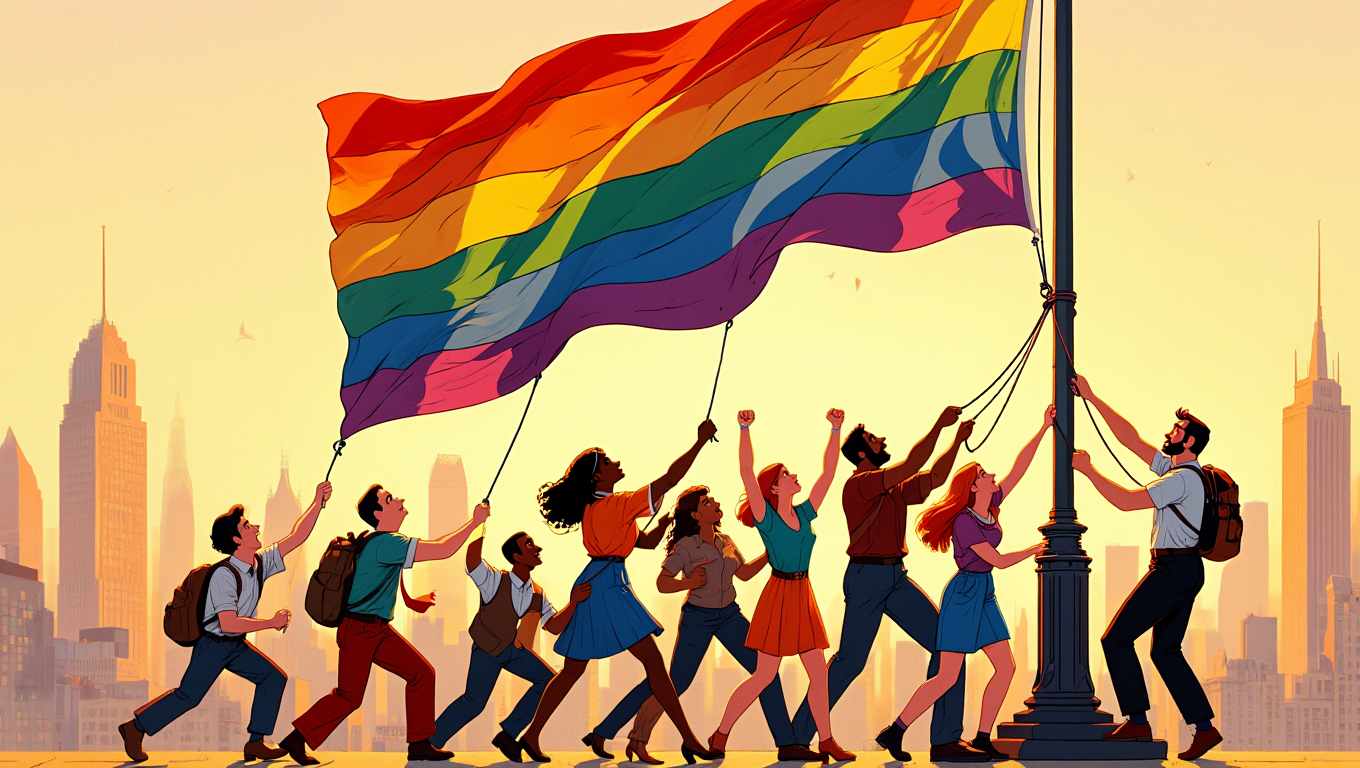
Local officials are not backing down. Hoylman-Sigal announced plans to raise the Pride flag again at the monument on Thursday, February 13.
“We may be prevented from doing so,” he acknowledged. “But if we don’t seize this moment, and this outrage, I think we’ll let down generations of queer activists.”
State Senator Erik Bottcher vowed in a statement: “We will not be erased, we will not be silenced, and the Pride flag will fly again at the birthplace of our movement.”
The confrontation sets up a potential showdown between local and federal authorities over who controls the narrative at one of America’s most important civil rights landmarks.
Why This Matters Beyond New York
The Stonewall flag removal carries implications far beyond Greenwich Village. It represents a broader effort to redefine which American stories deserve federal recognition and protection.
Consider these questions:
- If the Pride flag doesn’t belong at Stonewall, where does it belong?
- What message does this send to LGBTQ+ youth about their place in American history?
- How do we preserve civil rights history when the government actively works to erase it?
The original Pride flag debuted in 1978, according to the National Park Service’s own website, with each of its eight colors symbolizing an aspect of the LGBTQ+ community’s experience. That flag emerged directly from the activism sparked at Stonewall.
Removing it from the monument is like removing the American flag from Independence Hall—it erases the very symbol of the movement the site commemorates.
The Bigger Picture
This controversy unfolds against a backdrop of escalating attacks on LGBTQ+ rights nationwide. The Trump administration has:
- Defined sex as strictly male or female in federal policy
- Removed transgender protections across government agencies
- Eliminated diversity, equity, and inclusion programs
- Restricted which flags can fly at U.S. embassies worldwide
The Stonewall flag removal may seem symbolic, but symbols matter. They tell us whose stories count, whose struggles deserve recognition, and whose humanity the government acknowledges.
As volunteer caretaker Steven Love Menendez told Gay City News: “I think all of their actions are going to backfire.”
What You Can Do
The fight for LGBTQ+ visibility and rights continues. Here’s how you can take action:
Support local LGBTQ+ organizations working to preserve community history and fight discrimination.
Contact your representatives and demand they protect LGBTQ+ historic sites and federal recognition.
Visit the Stonewall Inn and Visitor Center, which remain privately owned and continue flying Pride flags.
Share this story to raise awareness about ongoing efforts to erase LGBTQ+ history.
Show up when local leaders attempt to restore the Pride flag on Thursday.
The removal of the Pride flag from Stonewall National Monument isn’t just about a piece of fabric on a flagpole. It’s about whether America will honor the full truth of its civil rights history—including the transgender women of color who threw the first bricks at Stonewall, the activists who fought for decades to secure basic rights, and the ongoing struggle for equality that continues today.
As Senate Minority Leader Schumer predicted: “That flag will return. New Yorkers will see to it.”
The question is not whether the Pride flag belongs at Stonewall. The question is whether we’ll stand up for truth when powerful forces try to rewrite history.
What do you think about the Pride flag removal from Stonewall National Monument? Share your thoughts in the comments below and let’s keep this conversation going.


