


Food Insecurity in the Mohawk Valley Drops as Regional Food Banks Expand Services
New funding, partnerships, and expanded distribution hours help families meet rising food costs across Central New York.
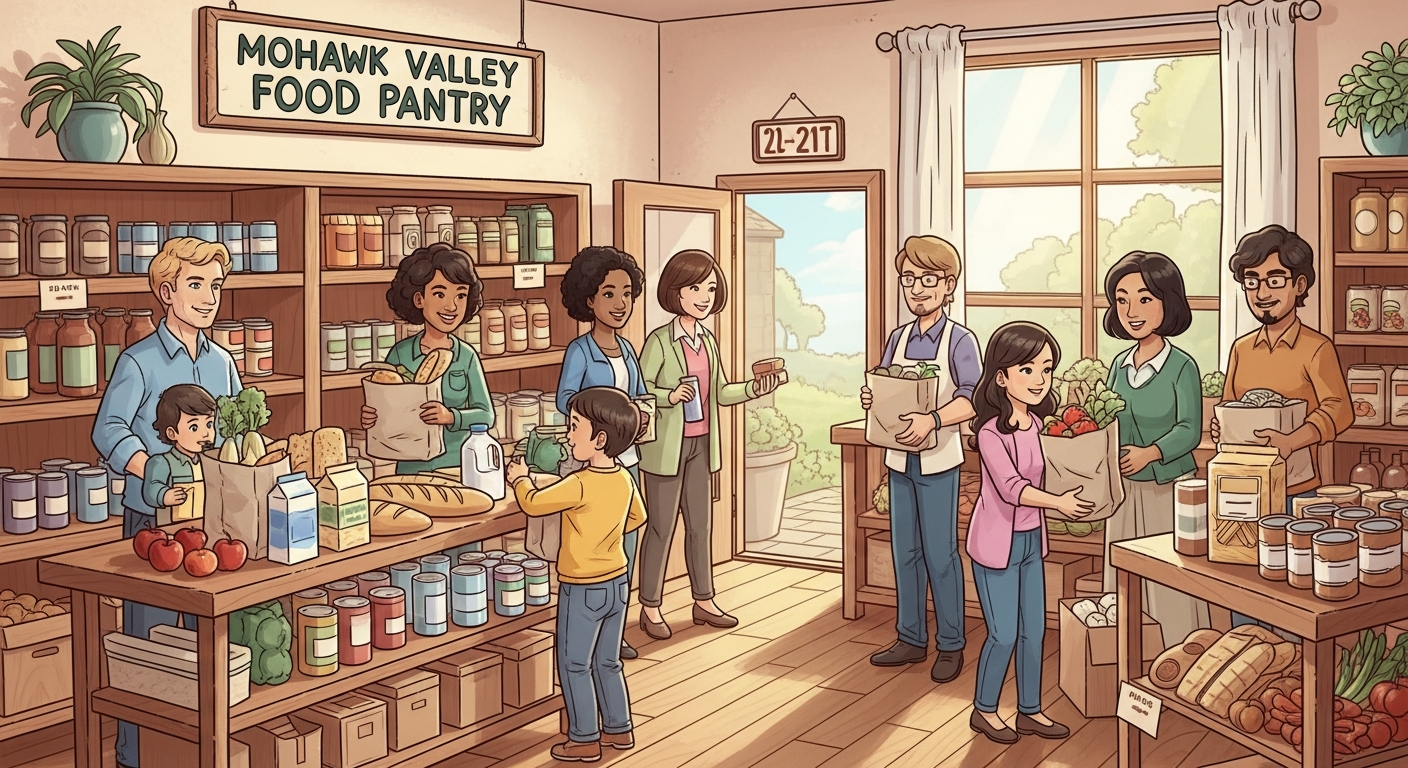
Food insecurity in the Mohawk Valley is easing slightly—but only because local food banks are stepping up in big ways. As grocery prices remain stubbornly high, regional food pantries and nonprofit partners are expanding hours, opening new distribution points, and reaching deeper into rural communities to ensure families do not fall through the cracks.
The expansion comes at a critical moment, offering relief to working families, seniors, and children who continue to feel the strain of inflation and housing costs.
Understanding Food Insecurity in the Mohawk Valley
A Persistent Regional Challenge
Food insecurity remains a serious issue across Oneida, Herkimer, Madison, Otsego, and Montgomery counties, where thousands of households rely on food pantries at least once a month.
Local nonprofit leaders report that:
-
Many clients are employed but underpaid
-
Seniors on fixed incomes are visiting pantries more frequently
-
Families with children face rising grocery and utility costs simultaneously
According to regional nonprofit data, food pantry visits increased sharply in late 2024 and have remained elevated throughout 2025.
Food Banks Respond with Expanded Services
Longer Hours and New Distribution Sites
Several Mohawk Valley food banks have responded by:
-
Extending evening and weekend hours
-
Opening mobile pantry locations in rural towns
-
Increasing partnerships with schools, churches, and community centers
These changes are designed to reach residents who cannot access traditional weekday pantry hours due to work or transportation barriers.
A regional food bank coordinator explained,
“We’re seeing more first-time visitors—people who never imagined needing help. Our goal is dignity, access, and consistency.”
Strengthening Partnerships Across the Valley
Food banks are also collaborating with:
-
Local farms and growers to source fresh produce
-
Healthcare providers to address nutrition-related health issues
-
School districts to supplement weekend and holiday meals
These partnerships help ensure that food assistance includes nutritious options, not just shelf-stable items.
Who Is Being Helped—and Why It Matters
Working Families and Seniors Most Impacted
The fastest-growing group seeking food assistance includes:
-
Families with one or two working adults
-
Seniors facing rising prescription and heating costs
-
Caregivers supporting multigenerational households
Food bank leaders stress that hunger is often invisible until it reaches a breaking point.
Health and Economic Impacts
Food insecurity is closely linked to:
-
Poor health outcomes
-
Increased stress and anxiety
-
Lower academic performance among children
By expanding access, food banks help reduce long-term healthcare costs and strengthen community stability.
Addressing the Counterarguments
Some critics argue that food bank reliance reflects deeper policy failures rather than long-term solutions. Nonprofit leaders agree—but emphasize urgency.
As one local advocate put it:
“We shouldn’t have to exist at this scale. But until wages and housing costs align with reality, we’ll keep showing up.”
Food banks view their role as both immediate relief providers and advocates for broader economic reforms.
What Comes Next
Looking Toward Sustainability
Many Mohawk Valley food banks are now focusing on:
-
Securing long-term funding
-
Expanding nutrition education programs
-
Advocating for stronger SNAP and school meal protections
Leaders say community support—both financial and volunteer—is critical heading into 2026.
The expansion of food bank services across the Mohawk Valley reflects both a challenge and a strength: while food insecurity remains real, community-driven solutions are making a measurable difference.
Call to Action:
Residents who can help are encouraged to donate, volunteer, or advocate for policies that strengthen food access across Central New York. Those in need should know: help is available, and asking is not a failure—it’s a step forward.


