


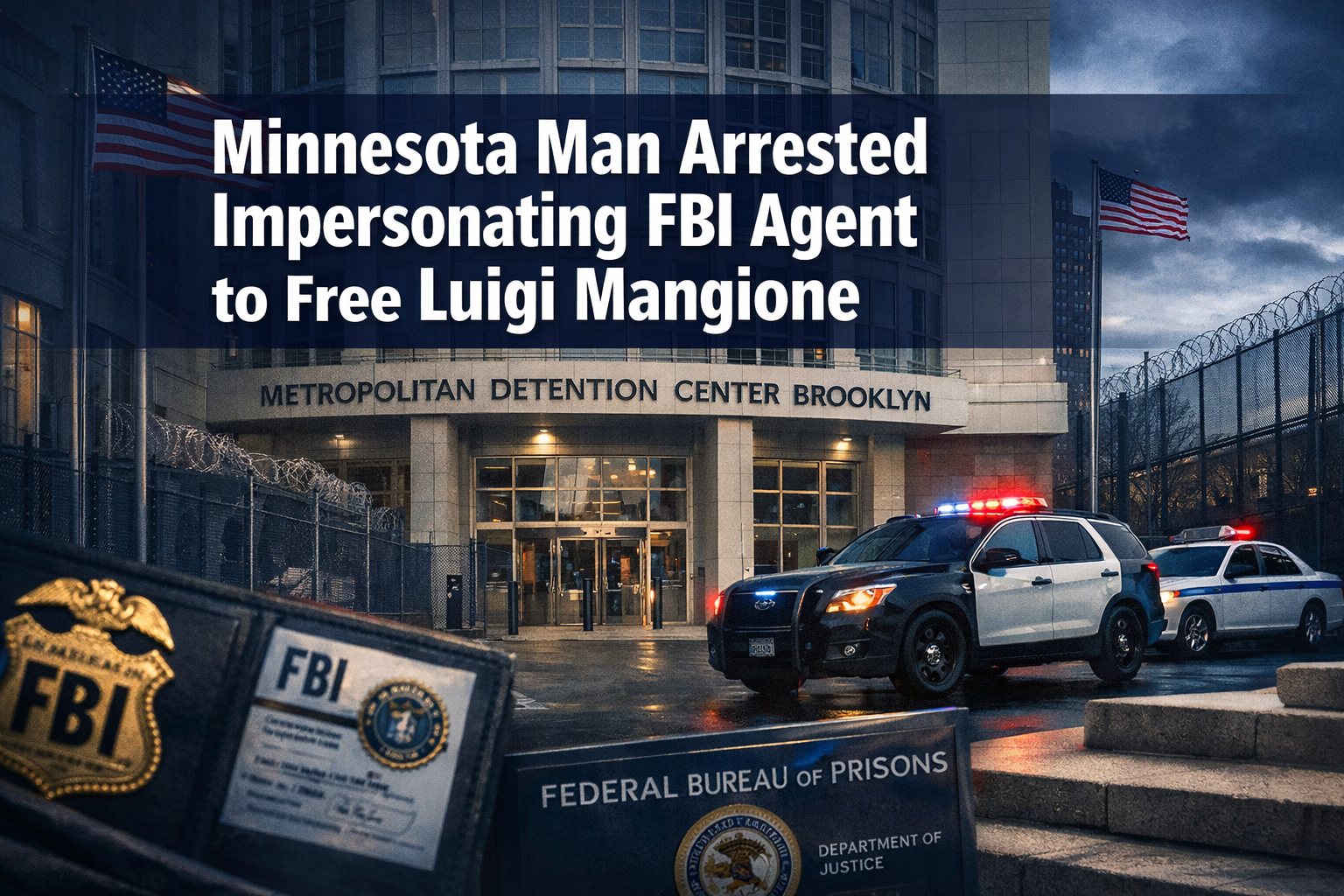
A Minnesota man named Anderson, 36, was arrested for allegedly impersonating an FBI agent to release Luigi Mangione from jail. Anderson presented a Minnesota driver’s license when questioned by Bureau of Prisons personnel at the Metropolitan Detention Center in Brooklyn. Inside Anderson’s bag, officials found a barbecue fork and a circular steel blade resembling a pizza cutter. He is scheduled to appear in court following his arrest for the attempted impersonation and breach of security. This bizarre incident raises serious questions about federal detention security protocols, the motivations behind such a brazen attempt, and the broader implications for criminal justice reform and government transparency.
The arrest highlights vulnerabilities in our detention systems while also demonstrating that security measures ultimately worked as designed. For residents of upstate New York and communities across the nation, this case serves as a stark reminder of how high-profile criminal cases can inspire desperate—and illegal—actions from members of the public.
Key Takeaways
- A 36-year-old Minnesota man was arrested at Brooklyn’s Metropolitan Detention Center for allegedly attempting to impersonate an FBI agent to secure Luigi Mangione’s release
- Bureau of Prisons personnel discovered unusual items in Anderson’s possession, including a barbecue fork and a circular steel blade resembling a pizza cutter
- The incident exposes potential security vulnerabilities at federal detention facilities while demonstrating that existing protocols can successfully identify threats
- Federal impersonation charges carry serious penalties, including up to three years in prison and significant fines
- The case reflects broader public fascination with high-profile criminal defendants and raises questions about radicalization and copycat behavior
Understanding the Alleged Impersonation Attempt at Brooklyn’s Metropolitan Detention Center
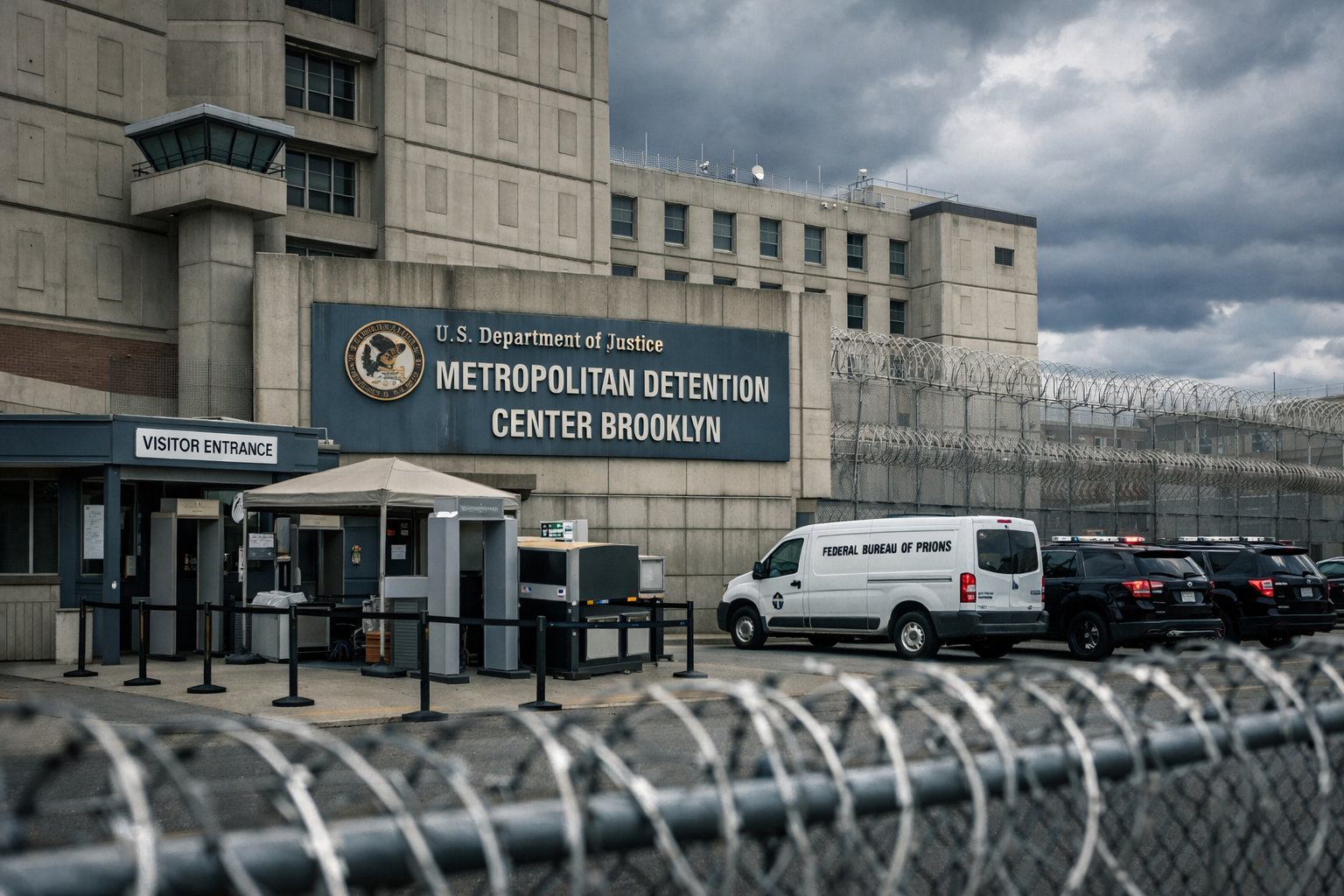
The Metropolitan Detention Center in Brooklyn has housed numerous high-profile defendants, making it a focal point for both legitimate legal proceedings and, apparently, misguided rescue attempts. When Anderson allegedly approached Bureau of Prisons personnel with claims of FBI authority, he triggered a series of security protocols designed to verify credentials and protect the integrity of federal detention operations.
What makes this case particularly unusual is the combination of audacity and apparent lack of preparation. Federal law enforcement impersonation is a serious federal crime, yet Anderson’s alleged attempt appears to have been poorly planned from the start.
The Security Screening Process
Bureau of Prisons facilities employ multiple layers of security verification:
- Credential authentication systems that verify federal law enforcement identification
- Background database checks that confirm agent identity and authorization
- Physical security screenings including bag searches and metal detection
- Personnel training to identify suspicious behavior and fraudulent credentials
- Communication protocols with actual FBI field offices to verify agent assignments
When Anderson presented his Minnesota driver’s license instead of proper FBI credentials, it immediately raised red flags among trained security personnel. This represents the system working as intended—detention facility staff are specifically trained to identify impersonation attempts and security threats.
The Bizarre Evidence: Barbecue Fork and Pizza Cutter Blade
Perhaps the most perplexing aspect of this case involves the items discovered in Anderson’s possession. Inside his bag, officials found a barbecue fork and a circular steel blade resembling a pizza cutter. These unusual items raise several questions:
Why would someone attempting to impersonate a federal agent carry such items? The presence of these objects suggests either:
- A lack of understanding about security screening procedures
- Potential weapons disguised as ordinary kitchen implements
- Items intended for use after a hypothetical successful release
- Evidence of mental health concerns or impaired judgment
Federal prosecutors will likely present these items as evidence of intent—demonstrating that Anderson came prepared with tools that could potentially be used as weapons, even if they appear innocuous at first glance.
Who Is Luigi Mangione and Why Would Someone Risk Federal Charges to Free Him?
To understand Anderson’s alleged motivation, we need context about Luigi Mangione and why he’s being held at the Metropolitan Detention Center. High-profile defendants often attract supporters, conspiracy theorists, and individuals who become fixated on their cases through media coverage and online communities.
The Psychology of Fixation on Criminal Defendants
Social psychologists have documented a phenomenon where certain individuals develop intense identification with criminal defendants, particularly those involved in cases that receive extensive media attention. This can manifest in several ways:
- Parasocial relationships where individuals feel personal connections to people they’ve never met
- Conspiracy theories that paint defendants as victims of government persecution
- Radicalization through online communities that reinforce extreme viewpoints
- Savior complexes where individuals believe they alone can rescue someone from injustice
For communities in the Mohawk Valley and across upstate New York, this case serves as a reminder that online radicalization isn’t limited to traditional extremist movements. Obsession with criminal cases can drive otherwise ordinary citizens to commit serious federal crimes.
The Federal Crime of Impersonating a Law Enforcement Officer
Anderson faces serious federal charges that carry substantial penalties. Under 18 U.S.C. § 912, anyone who falsely assumes or pretends to be an officer or employee acting under the authority of the United States commits a federal offense punishable by:
- Up to three years in federal prison
- Substantial fines that can reach tens of thousands of dollars
- A permanent federal criminal record that impacts employment, housing, and civil rights
- Potential additional charges for attempted jailbreak, conspiracy, or possession of weapons
If prosecutors can demonstrate that Anderson intended to use the barbecue fork or pizza cutter blade as weapons, additional charges related to bringing dangerous instruments into a federal facility could apply, significantly increasing potential penalties.
Security Implications for Federal Detention Facilities Nationwide
This incident at the Metropolitan Detention Center raises important questions about security protocols at federal detention facilities across the country. While the system ultimately worked—Anderson was identified and arrested—the attempt itself reveals that determined individuals are willing to try brazen schemes to breach federal security.
Lessons for Criminal Justice Reform and Government Accountability
From a progressive perspective focused on criminal justice reform and government transparency, this case presents several important considerations:
Security measures must balance effectiveness with civil liberties. Detention facilities need robust security protocols, but these systems should be implemented with oversight and accountability to prevent abuse.
Mental health screening and intervention matter. Anderson’s alleged actions suggest possible mental health concerns or radicalization that might have been addressed through better community mental health services and intervention programs.
Public access to information prevents conspiracy theories. When government operations are transparent and the public has access to accurate information about criminal cases, it reduces the likelihood that individuals will develop dangerous fixations based on misinformation.
For voters and community members in Oneida County and throughout the Mohawk Valley, this case underscores the importance of supporting:
- Adequate funding for mental health services that can identify and assist individuals before they commit crimes
- Media literacy programs that help citizens evaluate information critically
- Government transparency initiatives that provide accurate public information about criminal proceedings
- Community engagement programs that channel civic passion into productive activism rather than illegal actions
What Happens Next: Anderson’s Court Appearance and Legal Process
Anderson is scheduled to appear in federal court following his arrest for the attempted impersonation and breach of security. The legal process for federal criminal charges follows a specific sequence that ensures due process while protecting public safety.
The Federal Criminal Justice Timeline
Here’s what Anderson and the public can expect in the coming weeks and months:
| Stage | Timeline | What Happens |
|---|---|---|
| Initial Appearance | Within 48 hours of arrest | Defendant informed of charges, bail determination made |
| Preliminary Hearing | Within 14 days | Prosecution presents evidence that probable cause exists |
| Grand Jury Indictment | Within 30 days | Grand jury determines if charges should proceed to trial |
| Arraignment | Within 10 days of indictment | Defendant enters formal plea (guilty, not guilty, no contest) |
| Pre-Trial Motions | 2-6 months | Defense and prosecution file motions, negotiate possible plea deals |
| Trial or Plea | 6-12 months | Case resolved through trial verdict or negotiated plea agreement |
Bail considerations in this case will likely focus on whether Anderson poses a flight risk or danger to the community. Given the nature of the charges—impersonating a federal agent and attempting to breach detention center security—prosecutors may argue for detention pending trial.
Potential Defenses and Legal Strategies
While the evidence appears substantial, Anderson’s defense attorney will explore several possible strategies:
- Mental health defenses arguing diminished capacity or inability to form criminal intent
- Challenging the evidence regarding what Anderson actually said or intended
- Negotiating a plea agreement that might reduce charges in exchange for cooperation or acceptance of responsibility
- Arguing for leniency based on lack of criminal history or mitigating circumstances
From a perspective focused on criminal justice reform, it’s important that Anderson receives competent legal representation and that the court considers mental health factors that may have contributed to his alleged actions. Justice should be both firm and fair, punishing criminal behavior while addressing underlying causes.
Broader Implications for Public Safety and Community Engagement

This incident connects to larger conversations happening in communities across upstate New York and nationwide about public safety, government accountability, and civic participation.
The Right Way to Engage with the Justice System
For citizens concerned about criminal justice issues, police reform, or specific cases, there are legitimate and effective ways to make your voice heard:
✅ Contact elected representatives about criminal justice reform legislation
✅ Attend town hall meetings and public forums on policing and justice issues
✅ Support organizations working on bail reform, sentencing reform, and rehabilitation programs
✅ Participate in peaceful protests and advocacy campaigns
✅ Engage in voter registration and get-out-the-vote efforts
✅ Volunteer with legal aid organizations and prisoner support services
✅ Educate yourself through credible journalism and fact-checking
❌ Never impersonate law enforcement officers
❌ Never attempt to breach security at government facilities
❌ Never take illegal action based on beliefs about a criminal case
The difference between civic engagement and criminal activity is clear. Our democracy provides numerous channels for citizens to advocate for change, challenge injustice, and support causes they believe in—all without breaking the law.
Supporting Mental Health and Preventing Radicalization
Communities in the Mohawk Valley can take proactive steps to prevent incidents like Anderson’s alleged impersonation attempt:
Invest in accessible mental health services. Many individuals who commit bizarre or desperate acts are struggling with untreated mental health conditions. Expanding access to affordable mental health care, particularly in rural and underserved areas of upstate New York, can identify and assist people before they harm themselves or others.
Promote media literacy and critical thinking. In an era of misinformation and online echo chambers, teaching citizens—especially young people—to evaluate sources, identify conspiracy theories, and think critically about information they encounter online is essential.
Build strong community connections. Isolation and alienation often precede radicalization. Communities that foster connection, belonging, and productive civic engagement provide alternatives to the online extremism that can drive illegal behavior.
Support evidence-based criminal justice reform. When citizens see the justice system as fair, transparent, and accountable, they’re less likely to view defendants as victims requiring rescue and more likely to trust legal processes to deliver justice.
What This Means for Federal Security and Detention Reform
While Anderson’s arrest demonstrates that security protocols at the Metropolitan Detention Center successfully identified and stopped a potential threat, the incident also highlights ongoing debates about conditions at federal detention facilities and the need for reform.
Balancing Security with Humane Treatment
Progressive advocates for criminal justice reform have long argued that federal detention facilities must balance security needs with constitutional requirements for humane treatment. The Metropolitan Detention Center in Brooklyn has faced criticism in recent years for:
- Inadequate heating and power during winter months
- Limited access to legal counsel for some detainees
- Concerns about medical care and mental health services
- Prolonged solitary confinement practices
These conditions don’t justify illegal rescue attempts, but they do underscore the importance of ensuring that detention facilities meet basic standards of decency and constitutional requirements. When facilities operate transparently and humanely, public trust increases and the likelihood of misguided interventions decreases.
The Role of Oversight and Accountability
Federal detention facilities operate under the Bureau of Prisons, which falls under the Department of Justice. Effective oversight requires:
- Regular inspections by independent monitors and advocacy organizations
- Public reporting on conditions, incidents, and compliance with standards
- Congressional oversight through hearings and investigations
- Access for journalists to document conditions and hold officials accountable
- Grievance procedures that allow detainees to report problems without retaliation
For voters in upstate New York and across the country, supporting candidates who prioritize criminal justice reform and government accountability helps ensure that detention facilities operate fairly and transparently.
Conclusion: Justice, Security, and the Path Forward
The arrest of Anderson for allegedly impersonating an FBI agent to release Luigi Mangione from the Metropolitan Detention Center represents a convergence of several important issues: federal security protocols, public fixation on high-profile criminal cases, mental health concerns, and the broader need for criminal justice reform.
While this incident may seem bizarre or even darkly comedic—the barbecue fork and pizza cutter blade certainly add surreal elements—it carries serious implications. Anderson faces substantial federal charges that could result in years in prison. The security breach attempt, though unsuccessful, demonstrates that federal facilities must remain vigilant against both sophisticated and seemingly absurd threats.
For communities throughout the Mohawk Valley and across the nation, this case offers several important lessons:
First, civic engagement must remain within legal bounds. No matter how strongly you feel about a criminal case or justice issue, impersonating federal agents and attempting to breach detention facilities is never acceptable. Democracy provides legitimate channels for advocacy and change.
Second, mental health resources matter. Communities that invest in accessible, affordable mental health services can identify and assist individuals before they commit desperate or dangerous acts.
Third, government transparency builds public trust. When criminal justice systems operate openly and accountably, citizens are less likely to develop conspiracy theories or view defendants as victims requiring rescue.
Fourth, security and humanity aren’t mutually exclusive. Federal detention facilities can maintain robust security protocols while also treating detainees humanely and respecting constitutional rights.
Take Action in Your Community
If you’re concerned about criminal justice reform, government accountability, or public safety in upstate New York:
🗳️ Vote in local and federal elections for candidates who support criminal justice reform and government transparency
📞 Contact your representatives about funding for mental health services and detention facility oversight
🤝 Support organizations working on bail reform, sentencing reform, and prisoner rights
📚 Educate yourself about the criminal justice system through credible journalism and fact-checking
👥 Engage with your community through town halls, civic organizations, and peaceful advocacy
The path to a more just, accountable, and humane criminal justice system runs through informed civic participation—not through impersonating federal agents or attempting jailbreaks with barbecue forks.
As Anderson’s case proceeds through the federal court system, it will serve as a reminder that our justice system, while imperfect, provides due process and legal protections for both defendants and those who allegedly commit crimes against them. The solution to injustice is reform, not lawlessness. The answer to government overreach is accountability, not impersonation. And the response to concerns about detention conditions is advocacy, not attempted jailbreaks.
For the Mohawk Valley and communities nationwide, let this unusual case inspire us to channel our passion for justice into productive civic engagement that makes our democracy stronger, our communities safer, and our justice system more fair.


