


Federal Court Delivers Major Setback to Trump’s Use of State Troops
U.S. District Judge Charles Breyer ruled Wednesday that the Trump administration must stop deploying the California National Guard in Los Angeles and return control of the troops to Governor Gavin Newsom. This California National Guard deployment has been contested since June when President Trump federalized thousands of state troops without the governor’s approval, marking an unprecedented use of military force in a Democratic-controlled city.
The ruling addresses a fundamental question about presidential power: Can a sitting president take control of a state’s National Guard indefinitely and use those troops as a federal police force? Judge Breyer answered with a resounding no.
“The Founders designed our government to be a system of checks and balances,” Breyer wrote in his 35-page order. “Defendants, however, make clear that the only check they want is a blank one.”
What Led to This California National Guard Deployment
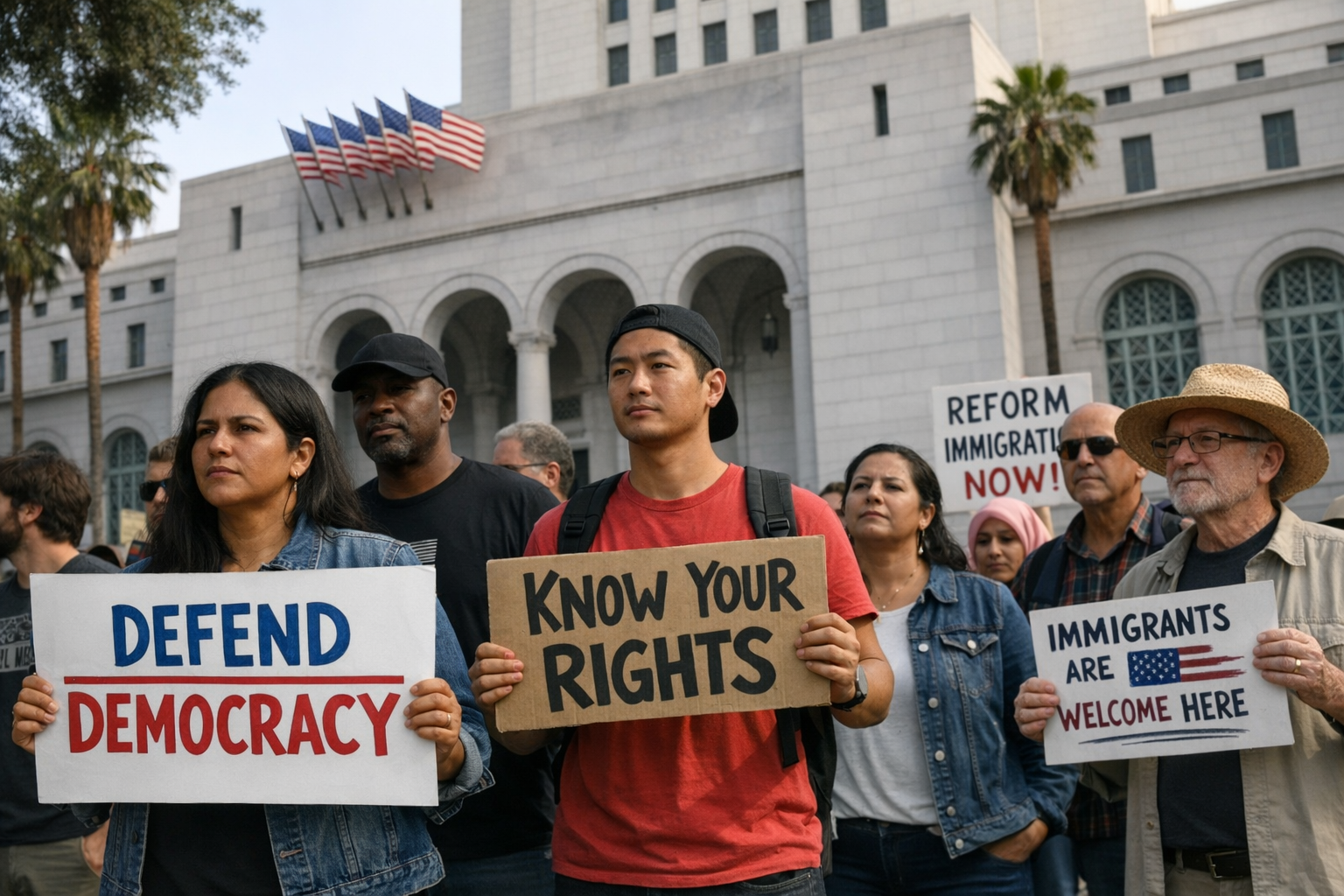
In June 2025, President Trump invoked 10 U.S.C. Section 12406 to federalize California’s National Guard. He claimed that protests over federal immigration raids in Los Angeles amounted to a “rebellion” that prevented federal law enforcement from doing their jobs.
At its peak, the deployment included approximately 5,000 troops:
- 4,000 federalized California National Guard members
- 700 U.S. Marines
- Roughly 300 Guardsmen still under federal control as of December 2025
This marked the first time in decades that a state’s National Guard was activated without a governor’s request. The troops were initially stationed outside a federal detention center in downtown Los Angeles where protesters had gathered. Later, they were deployed to the streets to protect immigration officers during arrests.
Judge Breyer’s Constitutional Concerns
Judge Breyer rejected the Trump administration’s legal arguments on multiple fronts. The administration claimed courts could not review presidential decisions to extend Guard deployments and that the troops were still needed to carry out federal law.
Breyer called the first claim “shocking” and said the second bordered on “misrepresentation.”
The judge warned that accepting the administration’s position could allow any president to create a “perpetual federalized state troop police force.” This raised serious concerns about checks and balances in our democratic system.
According to Reuters, Breyer noted that the Trump administration was “effectively creating a national police force made up of state troops” by attempting to send California’s Guard members to Portland, Oregon and Illinois as well.
California’s Legal Challenge to Federal Control
Governor Newsom immediately sued after Trump federalized the state’s Guard in June. California argued that the president was using Guard members as his personal police force, violating the Posse Comitatus Act. This law limits the use of military forces in domestic affairs.
California’s legal team made several key arguments:
- Conditions in Los Angeles had changed significantly since June
- The protests had largely subsided
- No evidence showed that federal law enforcement was currently impeded
- The deployment violated state sovereignty
The administration countered that immigration agents in Los Angeles were still being targeted and federal personnel needed protection. However, U.S. Northern Command reported that about 100 Guard members remained in the Los Angeles area as of Friday, with none actively on the streets.
The Back and Forth in Federal Courts
This ruling represents the second time Judge Breyer has ruled against Trump’s National Guard deployment. In June, he issued a temporary restraining order requiring the administration to return control of Guard members to California. However, the 9th Circuit U.S. Court of Appeals quickly stayed that decision, allowing Trump to proceed with the deployment.
After a trial in September, Breyer ruled that the deployment violated federal law. Now, his latest preliminary injunction orders the administration to end the deployment entirely.
The judge stayed his order until December 15, giving the Trump administration time to appeal to a higher court. White House spokeswoman Abigail Jackson indicated an appeal is likely, stating in a Fox News report: “We look forward to ultimate victory on the issue.”
What This Means for Presidential Power
This case has significant implications for executive authority and federalism. The president has broad powers during genuine emergencies. But those powers are not unlimited, and they require real justification, not just political disagreements.
Judge Breyer emphasized that Section 12406 requires actual conditions that prevent the execution of federal law. Simply disagreeing with how a state handles protests does not meet that threshold.
The ruling also addresses attempts to use California’s National Guard in other states. The administration tried to send California Guard members to Portland and Illinois, further blurring the lines between state and federal military forces.
Political Reactions to the Ruling
Governor Newsom has consistently criticized the deployment as both unprecedented and illegal. The Democratic governor has made defending California’s sovereignty a central part of his opposition to Trump administration policies.
White House officials, meanwhile, framed the issue as necessary to combat what they called violent riots and protect federal officers. Jackson’s statement referred to Governor Newsom as “Newscum,” using Trump’s pejorative nickname for the California leader.
This deployment sparked fierce backlash from officials in California and other Democratic-led states where Trump launched similar efforts. Judges have also blocked attempts to deploy National Guard troops to Portland and Chicago.
The Bigger Picture: Federal Troops in American Cities
Trump’s use of National Guard troops in Democratic-controlled cities represents a significant escalation in federal-state tensions. The deployment touched on fundamental questions about military force in civilian spaces and the balance of power between federal and state governments.
Some key facts to consider:
- All 50 states have their own National Guard units
- Governors typically control their state’s Guard
- The president can federalize Guard units during genuine emergencies
- The Posse Comitatus Act restricts military involvement in domestic law enforcement
The Trump administration argued the deployment was necessary to support immigration enforcement and protect federal assets. Critics, however, saw it as an attempt to intimidate protesters and override state authority.
What Happens Next
Judge Breyer’s order does not take effect until December 15. The Trump administration has already suggested it will appeal to a higher court, likely the 9th Circuit Court of Appeals again.
If the administration appeals, the case could eventually reach the Supreme Court. Such a ruling would provide clearer guidance on presidential power to federalize state National Guard units over gubernatorial objections.
For now, the approximately 300 California National Guard members still under federal control will remain in that status until the appeal process plays out or the December 15 deadline arrives.
Why This Ruling Matters to You
This case goes beyond California and immigration policy. It speaks to fundamental principles about who controls military force in America and under what circumstances.
When the president can take control of state troops without genuine justification, the balance of power shifts dramatically. States lose their ability to control their own resources and protect their citizens’ interests.
We need to pay attention when courts push back against executive overreach, regardless of which party holds the White House. Today it’s California’s National Guard. Tomorrow it could be your state’s law enforcement or emergency resources.
Conclusion: Standing Up for Constitutional Balance
Judge Breyer’s ruling reminds us that no president is above the law or beyond judicial review. The Founders created a system of checks and balances precisely to prevent one branch of government from accumulating too much power.
The California National Guard deployment tested the limits of presidential authority. Judge Breyer found those limits exceeded. As he noted, the administration wanted a blank check, but our Constitution does not work that way.
This battle is not over. The Trump administration will appeal, and the legal fight will continue. But for now, the rule of law has prevailed over executive overreach.
We encourage you to stay informed about this case and share this story with others who care about constitutional governance. Understanding these issues helps us be better citizens and more effective advocates for democracy.
What do you think about this ruling? Do you believe the president should have more authority to deploy National Guard troops, or should governors maintain control? Share your thoughts in the comments below.
Thank you for reading this Deep Dive from the Mohawk Valley Voice. We appreciate producer David LaGear for bringing you this important story. Come back soon for more in-depth coverage of the issues that matter most.


