


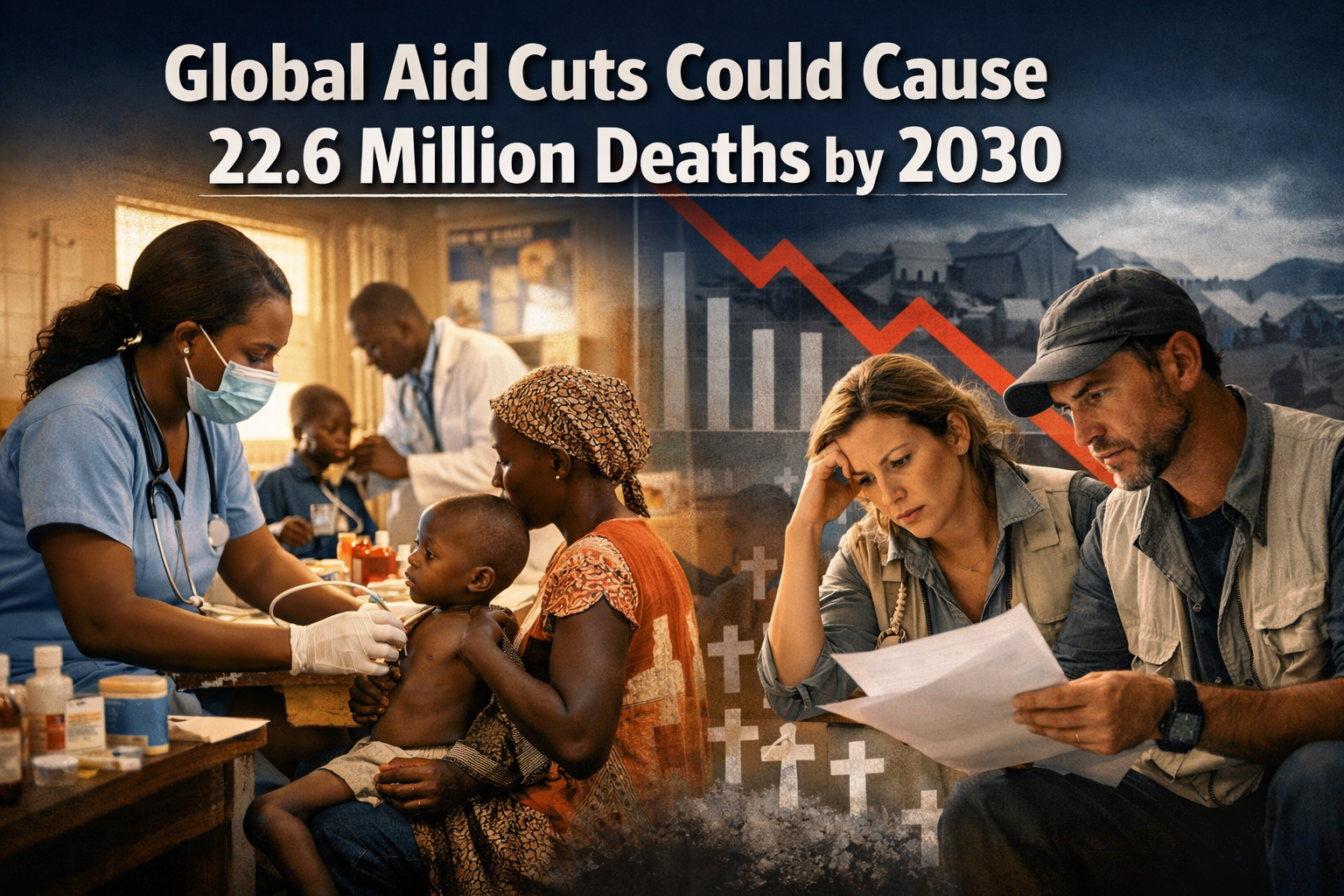
The numbers are staggering, and they demand our immediate attention. A comprehensive study by the Barcelona Institute for Global Health warns that a drop in global aid could lead to 22.6 million additional deaths by 2030 across 93 low- and middle-income countries, including 5.4 million children under five. The analysis reveals that over 2002-2021, aid helped reduce child mortality by 39%, prevented HIV/AIDS deaths by 70%, and reduced deaths from malaria and nutritional deficiencies by 56% in these 93 countries. Now, as wealthy nations slash their development budgets, the Rockefeller Foundation is working to identify solutions to maximize remaining aid and stimulate new investments, especially in Sub-Saharan Africa, which is particularly at risk according to the study.[1][2]
This isn’t just about statistics on a page. These are real children, mothers, fathers, and communities whose survival hangs in the balance as political decisions in Washington, London, Paris, and Berlin reshape the landscape of international development assistance.
Key Takeaways
- 22.6 million additional preventable deaths could occur by 2030 if severe aid cuts continue, with 5.4 million being children under five[2]
- International aid has saved 91 million lives between 2001 and 2021 in countries supported by USAID programs alone[4]
- Global aid declined for the first time in six years in 2024, with projections showing an 18% reduction between 2024 and 2025[1]
- Sub-Saharan Africa faces the greatest risk, with 38 of the 93 analyzed countries located in this region[1]
- The Rockefeller Foundation is leading efforts to identify solutions for maximizing remaining aid and stimulating new investments[5]
The Life-Saving Impact of International Aid: Two Decades of Progress at Risk
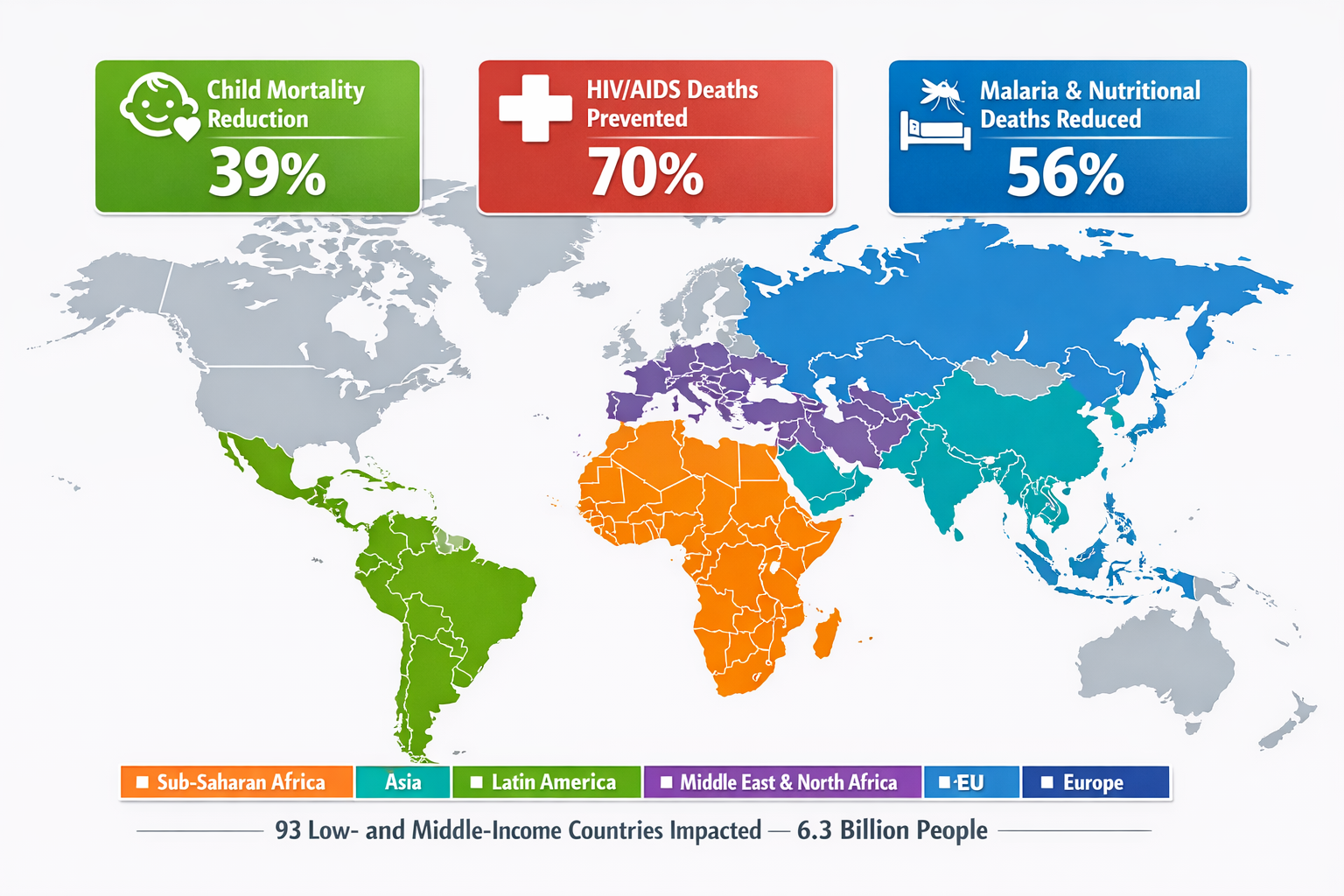
For twenty years, international development assistance has been quietly saving millions of lives across the globe. The Barcelona Institute for Global Health study examined 93 low- and middle-income countries—representing an astounding 6.3 billion people—and found that aid programs achieved remarkable health outcomes that few Americans fully understand.[1]
Child mortality dropped by 39% in these nations between 2002 and 2021, meaning millions of children who would have died before their fifth birthday instead lived to attend school, play with friends, and grow into adults. HIV/AIDS, once a death sentence in many parts of the developing world, saw its mortality rate plummet by 70% thanks to antiretroviral programs funded by international donors.[1]
Malaria and nutritional deficiencies—preventable conditions that disproportionately kill the world’s poorest children—saw death rates reduced by 56% through coordinated aid efforts that provided mosquito nets, nutritional supplements, and basic healthcare infrastructure.[1]
The Numbers Behind the Success
Between 2001 and 2021, 91 million deaths were prevented in low- and middle-income countries directly supported by USAID programs alone.[4] That’s more than the entire population of Germany saved through strategic investments in health systems, disease prevention, and maternal and child health programs.
The 93 countries analyzed in the Barcelona study span five regions:
- 38 countries in Sub-Saharan Africa 🌍
- 21 countries in Asia 🌏
- 12 countries in Latin America 🌎
- 12 countries in the Middle East and North Africa 🕌
- 10 countries in Europe 🇪🇺
These aren’t abstract places on a map. They’re nations where American aid dollars have built clinics, trained healthcare workers, distributed vaccines, and created the infrastructure that keeps communities healthy and economies growing.
Aid Cuts Accelerate: How We Got Here and What It Means
The first decline in global aid in six years occurred in 2024, signaling a troubling shift in wealthy nations’ commitment to international development.[1] But the real shock came in 2025, when the Trump administration dismantled USAID mid-program, leaving critical health initiatives incomplete and communities vulnerable.[1][4]
The Organization for Economic Cooperation and Development (OECD) projects an 18% reduction in aid between 2024 and 2025—a cut so severe that researchers compare its potential death toll to the COVID-19 pandemic.[1][2]
Major Donors Step Back
Four major donor countries have led the retreat from international development assistance:
- United States: The closure of USAID and withdrawal from WHO funding represents the most dramatic shift. The U.S. historically provided over 40% of global humanitarian funding, and its contributions to WHO ranged between $163 million to $816 million annually.[2][4]
- United Kingdom: Once committed to spending 0.7% of gross national income on aid, the UK has slashed its development budget significantly.
- France: Announced substantial reductions to its bilateral aid programs.
- Germany: Implemented cuts despite being Europe’s largest economy.
Bilateral aid for health could decline by up to one-third compared to 2023 levels, with the poorest countries—those least able to absorb the shock—facing the largest reductions.[2]
The Human Cost: Understanding the Death Toll Projections
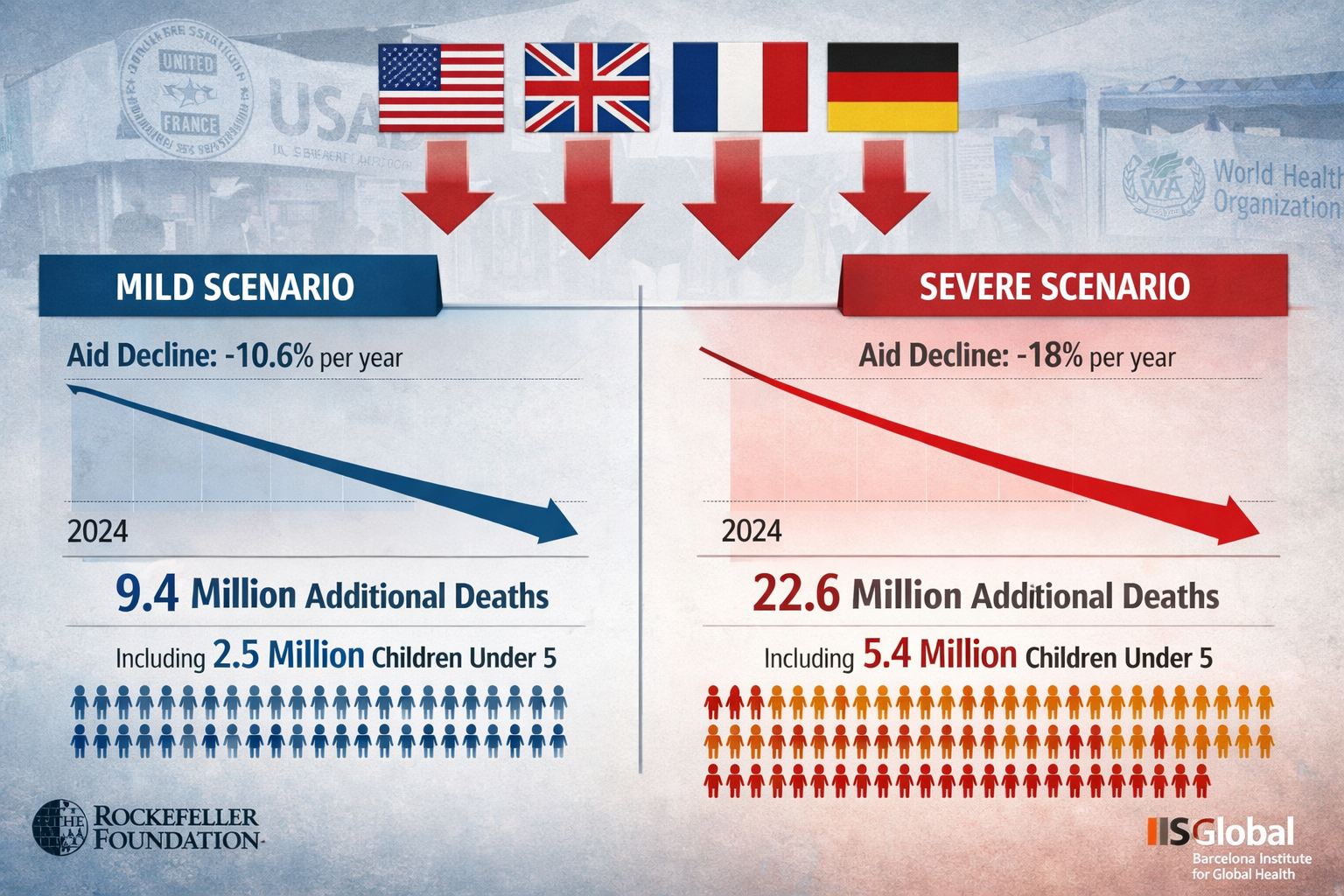
The Barcelona Institute for Global Health study models two scenarios, both deeply troubling but varying in severity.[2][3]
Mild Cutback Scenario
If aid declines by 10.6% annually, the study projects:
- 9.4 million additional preventable deaths by 2030
- 2.5 million children under five among the casualties
- Significant setbacks in HIV/AIDS, malaria, and tuberculosis control
- Weakened health systems unable to respond to disease outbreaks
Severe Cutback Scenario
If current trends continue with an 18% reduction, the consequences escalate dramatically:
- 22.6 million additional preventable deaths by 2030
- 5.4 million children under five losing their lives to preventable diseases
- A death toll comparable to the COVID-19 pandemic[2][3]
- Potential collapse of health infrastructure in the most vulnerable nations
“The scale of preventable deaths we’re projecting isn’t just a humanitarian catastrophe—it’s a policy choice with generational consequences.” — Barcelona Institute for Global Health researchers
Why Children Bear the Heaviest Burden
Children under five represent the most vulnerable population in any health crisis. Their immune systems are still developing, they’re more susceptible to infectious diseases, and they depend entirely on functioning health systems that aid programs support.[2]
When aid dries up, the first casualties are often:
- Vaccination programs that prevent measles, polio, and other deadly childhood diseases
- Nutritional support that prevents stunting and wasting
- Maternal health services that ensure safe births and healthy newborns
- Clean water initiatives that prevent diarrheal diseases—a leading child killer
Sub-Saharan Africa: The Region Most at Risk
The Barcelona study identifies Sub-Saharan Africa as particularly vulnerable to aid reductions, with 38 of the 93 analyzed countries located in this region.[1] This isn’t coincidental—it reflects the region’s heavy dependence on international assistance for basic health infrastructure.
Why Africa Is Most Vulnerable
Sub-Saharan Africa faces unique challenges that make aid cuts especially devastating:
- Weakest health infrastructure: Many countries lack the hospitals, clinics, and trained personnel to deliver basic care without international support
- Highest disease burden: The region carries disproportionate rates of HIV/AIDS, malaria, tuberculosis, and neglected tropical diseases
- Youngest population: With median ages in the teens and twenties, the region has massive child health needs
- Climate vulnerability: Drought, flooding, and climate change compound health challenges
- Economic constraints: Low GDP per capita means governments can’t quickly replace lost aid funding
The consequences extend beyond health. When children die or become chronically ill, families lose income, communities lose future workers, and entire nations see their development prospects diminish.
The Rockefeller Foundation’s Response: Finding Solutions in Crisis
Recognizing the urgency of the situation, the Rockefeller Foundation is working to identify solutions to maximize remaining aid and stimulate new investments in global health.[5] This isn’t about replacing the billions in lost government funding—that’s impossible for any single foundation—but about strategic interventions that can preserve the most critical programs and attract new funding sources.
Key Strategies Being Explored
Maximizing Aid Efficiency: Identifying which programs deliver the greatest health impact per dollar invested, ensuring remaining funds go where they’ll save the most lives.
Innovative Financing Mechanisms: Exploring social impact bonds, public-private partnerships, and blended finance models that leverage private capital for public health goals.
Domestic Resource Mobilization: Supporting low- and middle-income countries in strengthening their own health financing systems so they’re less dependent on foreign aid.
South-South Cooperation: Facilitating partnerships between developing countries that have successfully built health systems and those still struggling.
Technology and Innovation: Investing in digital health tools, telemedicine, and other innovations that can deliver care more cost-effectively.
Why This Matters to Mohawk Valley Residents
You might wonder what aid cuts in Sub-Saharan Africa have to do with Utica, New Hartford, or Rome. The connections are more direct than you’d think.
Global health security: Diseases don’t respect borders. Weakened health systems abroad increase the risk of pandemic threats reaching American communities, as COVID-19 demonstrated.
Refugee and migration pressures: Health crises and collapsing systems drive displacement, creating humanitarian emergencies that eventually require American responses.
Economic impacts: Instability in developing nations disrupts global supply chains, affects commodity prices, and can impact local businesses in upstate New York.
Moral leadership: How America treats the world’s most vulnerable reflects our values and influences how other nations view us—affecting everything from trade relationships to national security.
What Comes Next: The Path Forward
The Barcelona Institute for Global Health study isn’t just a warning—it’s a call to action for policymakers, philanthropists, and engaged citizens.[1][2][3]
For Federal Policymakers
Congress must recognize that international development assistance isn’t charity—it’s a strategic investment in global stability, health security, and American values. The bipartisan tradition of supporting global health programs saved 91 million lives and prevented countless threats from reaching our shores.[4]
Restore USAID funding and reverse the dismantling of proven programs. The agency’s work represents some of the best returns on investment in the entire federal budget.
Maintain WHO contributions that support disease surveillance, outbreak response, and health system strengthening worldwide.
Protect bilateral health aid that builds relationships, strengthens allies, and creates goodwill that benefits American interests.
For Philanthropic Organizations
The Rockefeller Foundation’s leadership shows what’s possible when major philanthropies step up.[5] Other foundations should:
- Coordinate efforts to avoid duplication and maximize impact
- Support innovative financing that can multiply the effect of philanthropic dollars
- Invest in advocacy that makes the case for sustained government funding
- Partner with affected countries to build sustainable domestic health financing
For Everyday Citizens
Democracy works when informed citizens make their voices heard. Residents of the Mohawk Valley and communities across America can:
📞 Contact your representatives: Tell Congressman Brandon Williams and Senators Schumer and Gillibrand that global health funding matters to you.
📚 Educate yourself and others: Share accurate information about what international aid actually accomplishes.
🗳️ Vote for global health champions: Support candidates who understand that America’s security depends on global health security.
💰 Support effective organizations: Donate to groups like Partners In Health, Doctors Without Borders, and others doing critical work.
Conclusion: A Preventable Catastrophe Requires Urgent Action
The Barcelona Institute for Global Health study presents us with a stark choice. We can continue down the current path and watch 22.6 million people—including 5.4 million children—die from preventable causes by 2030. Or we can recognize that the two decades of progress from 2002 to 2021 weren’t accidents—they were the result of sustained commitment and strategic investment.[1][2]
The 39% reduction in child mortality, the 70% decrease in HIV/AIDS deaths, and the 56% drop in malaria and nutritional deficiency deaths didn’t happen by themselves. They happened because wealthy nations invested in health systems, disease prevention, and the basic infrastructure that keeps communities alive and thriving.[1]
The Rockefeller Foundation’s work to identify solutions and maximize remaining aid offers hope, but it can’t replace the scale of government funding that’s being withdrawn.[5] Only a renewed commitment from major donor nations—especially the United States—can prevent the catastrophic death toll that researchers project.
For Mohawk Valley residents and Americans everywhere, this is a moment to reflect on what kind of country we want to be. Do we abandon proven programs that save millions of lives because of short-term political calculations? Or do we recognize that global health security, moral leadership, and strategic interests all point in the same direction—toward sustained investment in international development assistance?
The answer will determine whether 22.6 million people live or die by 2030. That’s not hyperbole. That’s what the evidence tells us.
The time to act is now. Contact your elected representatives. Support organizations doing this critical work. Vote for leaders who understand that America’s strength includes our commitment to saving lives around the world. The children of Sub-Saharan Africa and 92 other countries are counting on us—even if they don’t know our names.
References
[1] Trump Deaths Us Aid Uk Africa B2912347 – https://www.the-independent.com/news/world/americas/us-politics/trump-deaths-us-aid-uk-africa-b2912347.html
[2] theprint.in – https://theprint.in/health/as-rich-nations-cut-aid-lancet-study-warns-of-22-million-preventable-deaths-by-2030/2844723/
[3] Aid Cuts Could Lead To Millions Of Deaths By Decade S End New Study Finds 111801 – https://www.devex.com/news/aid-cuts-could-lead-to-millions-of-deaths-by-decade-s-end-new-study-finds-111801
[4] Research Finds More 14 Million Preventable Deaths 2030 If Usaid Defunding – https://ph.ucla.edu/news-events/news/research-finds-more-14-million-preventable-deaths-2030-if-usaid-defunding
[5] The Cost Of International Development Aid Cuts 22 6 Million Deaths Expected By 2030 Study Finds – https://www.rockefellerfoundation.org/news/the-cost-of-international-development-aid-cuts-22-6-million-deaths-expected-by-2030-study-finds/


