


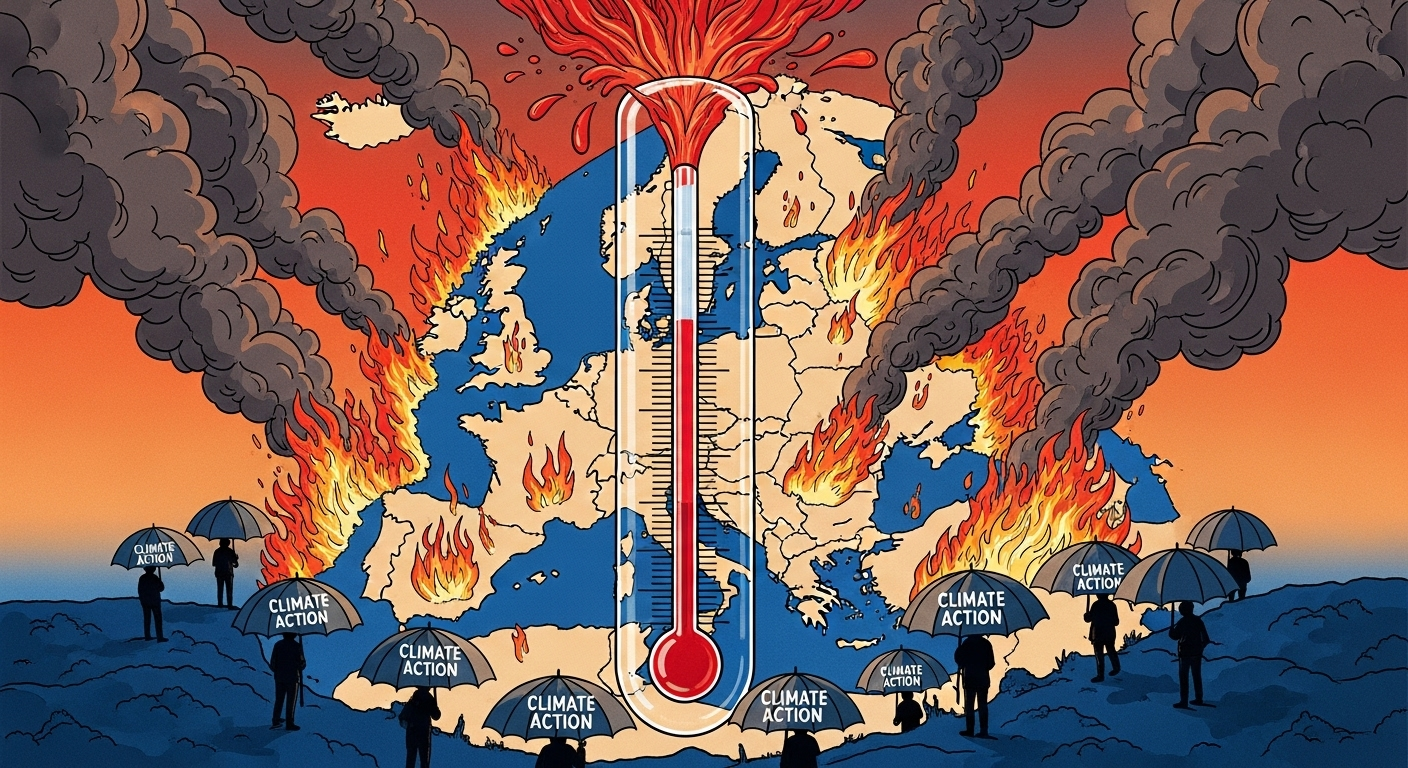
Europe Burns as Climate Crisis Fuels Record-Breaking Heatwave
Climate crisis intensifies as temperatures soar 12°C above normal, displacing thousands across southern Europe
Europe is experiencing its most severe heatwave in decades, with temperatures reaching 12°C above normal and wildfire destruction increasing 87% compared to long-term averages. France and Croatia shattered temperature records on August 13, 2025, while nearly 440,000 hectares have burned across the European Union this year. This unprecedented crisis highlights the accelerating impact of climate change on public health, infrastructure, and ecosystems.
Temperature Records Fall Across the Continent
The August 2025 heatwave has rewritten meteorological history across Europe. France experienced “remarkable, even unprecedented” maximum temperatures on August 12, with southwestern regions reaching 12°C above the 1979-2000 average. Météo-France issued red alerts for multiple departments as temperatures exceeded 40°C in cities like Bordeaux and Angoulême.
Croatia set new air temperature records on August 12, with Šibenik reaching 39.5°C and Dubrovnik hitting 38.9°C. Hungary broke its daily maximum temperature record the same day, with Körösladány recording 39.9°C and Budapest reaching 38.7°C. These extreme temperatures reflect the eastward expansion of a persistent “heat dome” trapping warm air across the continent.
Spain and Portugal continued to endure severe heat stress, with temperatures consistently in the low 40s°C. Italy issued red alerts for 16 major cities as temperatures reached 40°C in the Po Valley and Tuscany. The widespread nature of these records demonstrates the unprecedented scale of the current heatwave.
Wildfire Destruction Reaches Crisis Levels
The extreme heat has fueled a dramatic surge in wildfire activity across Europe. According to the EU’s European Forest Fire Information System, 439,568 hectares have burned in 2025, more than double the area affected during the same period in 2024 and representing an 87% increase over the 19-year average.
France is battling its largest wildfire in at least 50 years, with over 16,000 hectares ravaged in the Aude region. The blaze has resulted in one death, multiple injuries to residents and firefighters, and the displacement of thousands of people. Spain has seen nearly 6,000 evacuations, with fires in regions like Castile and Leon causing severe burns and at least one fatality.
Greece is confronting intense blazes near Patras, with 15 firefighters injured and widespread evacuations compounded by high temperatures and strong winds. Portugal has mobilized over 2,100 firefighters to combat fires in areas like Trancoso, where residents described feeling “cooked alive” amid temperatures exceeding 40°C.
Public Health Emergency Unfolds
The heatwave has created a public health crisis across Europe, with heat-related deaths surging dramatically. Between 2022 and 2023, over 100,000 people in the WHO European Region died from heat-related causes, with 2025 figures expected to exceed these totals significantly.
Heat stress exacerbates chronic conditions such as cardiovascular diseases, hypertension, and stroke, increasing hospitalization rates and straining healthcare resources. In Italy, a four-year-old child died from heatstroke, underscoring the vulnerability of young populations to extreme temperatures.
Vulnerable groups including the elderly, children, pregnant women, and those with chronic illnesses face heightened risks. High humidity compounds the heat index, making conditions feel like 50°C in some areas and creating dangerous conditions for outdoor workers and those without adequate cooling systems.
Climate Change Accelerates Crisis
Europe is warming faster than any other continent, at twice the global average rate, making extreme weather events more frequent and severe. The current heatwave exemplifies how climate change is amplifying natural weather patterns, creating unprecedented conditions that strain human and natural systems.
The persistent “heat dome” pattern, characterized by sinking air masses that compress and heat the lower atmosphere, has been linked to altered jet stream patterns associated with global warming. These changes create more stable, long-lasting extreme weather events that can persist for weeks.
Carbon dioxide emissions from wildfires have surged to 14.11 million metric tons in 2025 versus 9.59 million metric tons in 2024, creating dangerous feedback loops that accelerate climate change. This demonstrates how extreme weather events both result from and contribute to the climate crisis.
Economic and Infrastructure Impacts
The heatwave has strained electricity grids across Europe, with demand spiking by up to 14% in some countries due to air conditioning use. This coincided with outages in thermal power plants, including nuclear facilities in France where up to 15% of capacity was reduced due to cooling water temperature limits.
Economic losses from climate extremes between 1980 and 2023 totaled €738 billion in the EU, with €162 billion occurring between 2021 and 2023 alone. The current heatwave is expected to add significantly to these costs through healthcare expenses, agricultural losses, and infrastructure damage.
Drought conditions have worsened across southern Europe, impacting agriculture and water resources. Food insecurity has increased, with nearly 60 million people experiencing serious food insecurity in Europe in 2021, with 11.9 million cases attributable to climate change.
Adaptation and Response Efforts
European governments have implemented emergency measures including work stoppages in Greece, water consumption limits in Bosnia, and enhanced early warning systems. The WHO’s Pan-European Commission on Climate and Health, established in June 2025, aims to provide actionable recommendations for building climate-resilient health systems.
The EU’s Adaptation Strategy identifies 36 major climate risks, with eight deemed urgent, including protecting against heat, floods, wildfires, and ecosystem loss. However, experts warn of policy gaps and call for a dedicated EU climate and health strategy to integrate health considerations into all policies.
Nature-based solutions and urban planning initiatives are being implemented to enhance resilience, but scaling these efforts remains critical. Cities are developing cooling centers, green spaces, and heat-resistant infrastructure to protect vulnerable populations.
Future Projections and Urgency
Climate models project that heat-related mortality could triple by the end of the century under high-emission scenarios, with disease spread accelerating and extreme weather becoming more frequent. The Lancet Countdown on Climate Change and Health shows that nearly every climate-health indicator is deteriorating in Europe.
The current crisis underscores the urgent need for ambitious emissions reductions across all sectors, transparent governance, and inclusive policies that protect vulnerable populations. Investing in adaptation measures like early-warning systems and sustainable infrastructure can reduce vulnerabilities while delivering co-benefits like improved air quality.
The 2025 European heatwave represents a stark warning about the accelerating pace of climate change and its devastating impacts on human health, ecosystems, and society. With temperature records falling and wildfire destruction reaching unprecedented levels, Europe faces a climate emergency that demands immediate, comprehensive action.
The crisis highlights the interconnected nature of climate impacts, from extreme heat and wildfires to public health emergencies and economic disruption. As the continent burns and temperatures soar, the window for preventing even more catastrophic outcomes continues to narrow.
European leaders must treat this crisis with the urgency it demands, implementing ambitious climate policies while protecting vulnerable populations from immediate threats. The future of European civilization depends on our collective response to this defining challenge of our time.


