


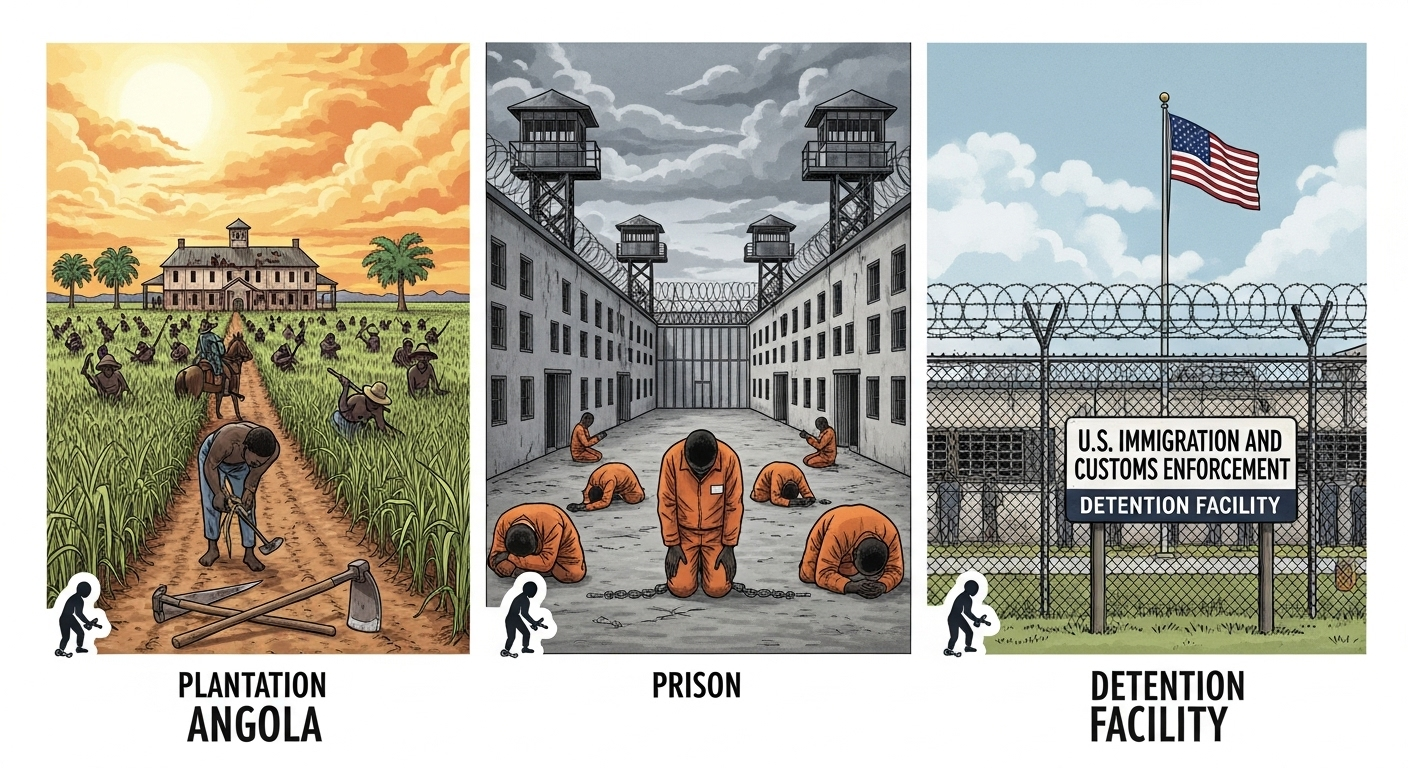
Historic Maximum-Security Facility Now Houses Immigration Detainees
Louisiana’s notorious Angola State Penitentiary is expanding its role in federal law enforcement by housing ICE detainees in a new facility dubbed “Camp 47,” marking a controversial merger of immigration detention with the nation’s largest maximum-security prison. The move reflects the Trump administration’s massive expansion of immigration detention capacity across conservative states willing to partner with federal enforcement efforts.
Governor Jeff Landry and Trump administration officials announced plans on September 3, 2025, to house approximately 400 detainees described as the “worst of the worst” criminal undocumented immigrants in an unused section of the sprawling prison complex.
From Plantation to Federal Detention
Angola’s transformation into an ICE facility adds another chapter to its complex history. The prison emerged in the late 1800s from four consolidated plantations where prisoners performed work once done by enslaved people. Scholarly research housed in the Department of Justice’s virtual library refers to Angola as a “prison plantation.”
Today, the 18,000-acre facility houses over 4,200 inmates, with more than half serving life sentences. The addition of Camp 47 makes Louisiana the nation’s tenth ICE detention site, further cementing the state’s role as a key partner in federal immigration enforcement.
Massive Federal Investment
The detention expansion is funded by Congress’s allocation of $45 billion to ICE this summer — “a war chest three times greater than what the agency previously had for detention,” according to the American Immigration Council. This funding enables ICE to secure 80,000 new detention beds beyond its existing 41,500-bed capacity.
ICE is currently holding a record 61,226 people in immigration detention at more than 190 facilities nationwide, representing the largest immigration detention operation in U.S. history.
High-Profile Political Support
The Angola announcement featured Homeland Security Secretary Kristi Noem, Attorney General Pam Bondi, and Governor Landry, demonstrating the political importance the Trump administration places on state partnerships for immigration enforcement.
Landry declared the facility would house “the worst of the worst criminal illegal aliens arrested by ICE” and proclaimed his administration would take “President Trump’s help from New Orleans to Shreveport.”
Human Rights Concerns
Critics raise serious concerns about housing immigration detainees alongside violent criminals. Nearly half (45%) of people in ICE detention have no criminal record or pending charges, yet they would be detained in a maximum-security environment designed for the most dangerous offenders.
“They are promoting cruel and unusual and harsh punishment on immigrants that have never been convicted of a single crime,” argued immigration attorney Glen Wasserstein. He called the move another attempt to “frighten immigrants into self-deporting.”
ACLU of Louisiana Legal Director Nora Ahmed told USA TODAY that using a maximum-security prison “promotes the administration’s big lie that people in immigration detention are ‘criminals.'” She noted that many detained immigrants “try to follow the legal pathways we have put in place, but still end up in detention.”
Angola’s Troubled History
The choice of Angola raises additional concerns given the facility’s problematic record. Prisoners sued the Louisiana prison system in 2023 over conditions on the “farm line” where inmates work fields under armed guard supervision.
A federal judge ordered improvements in 2024 to protect prisoners from extreme heat conditions. The facility’s reputation for harsh conditions has earned it recognition as one of America’s most notorious prisons.
State-Federal Partnership Model
Louisiana’s ICE partnership mirrors similar arrangements across Republican-led states. Florida previously operated “Alligator Alcatraz” in the Everglades — a facility that housed hundreds without criminal charges despite claims it would only hold those accused of serious crimes.
Detainees reported worm-infested food and malfunctioning toilets that flooded floors with waste. A federal judge recently ordered the facility closed after environmental groups and the Miccosukee Tribe sued over wetlands threats.
Indiana is opening 1,000 detention beds in what the administration calls the “Speedway Slammer,” demonstrating the nationwide scope of detention expansion.
Local Law Enforcement Support
Local officials have embraced the federal partnership. Kenner Police Chief Keith Conley, who serves on Governor Landry’s Operation Geaux task force, praised the governor’s efforts targeting undocumented immigrants.
“I applaud the governor for this,” Conley said, noting local encounters with MS-13 gang members and murder suspects from Honduras. He expressed gratitude for state accommodation of federal partners in local law enforcement efforts.
Economic and Political Implications
The detention expansion represents significant economic benefits for Louisiana through federal contracts and job creation. However, it also positions the state as increasingly central to Trump’s immigration enforcement strategy, potentially affecting its national political standing.
State police recently entered partnership agreements giving them enhanced power to enforce immigration laws, with Landry urging local agencies to follow suit. This comprehensive approach makes Louisiana a model for other Republican states considering similar partnerships.
Operational Challenges Ahead
Camp 47 reportedly has 400 beds and is already housing 51 detainees, according to Department of Homeland Security data. Managing the integration of immigration detainees with convicted criminals presents logistical and safety challenges unlike traditional detention facilities.
ICE standards require detention to be “non-punitive” since detainees face civil rather than criminal violations. Maintaining this standard within a maximum-security environment designed for violent offenders will require careful operational planning and oversight.
Call to Action: Monitoring Detention Conditions
The expansion of immigration detention into maximum-security prisons raises fundamental questions about human rights, due process, and the treatment of vulnerable populations. Citizens should demand transparency in detention operations and accountability for conditions.
Contact your representatives to ensure proper oversight of detention facilities and protection of basic human rights regardless of immigration status. Monitor local immigration policies and support organizations providing legal assistance to detainees.


