


When billions of taxpayer dollars disappear into fraudulent claims, who steps in to recover them? That question is about to get a dramatic answer as the Trump administration prepares to launch an unprecedented federal crackdown on fraud in government assistance programs. President Trump intends to sign an executive order naming Vice President JD Vance as chairman of a new anti-fraud task force targeting California, according to CBS News. The task force will focus on clamping down on fraud in taxpayer-funded programs, as California auditors have discovered billions in fraud in unemployment claims, pandemic assistance, and healthcare. Andrew Ferguson, chairman of the Federal Trade Commission, will be vice chairman and manage the task force’s daily activities.
This isn’t just another Washington announcement destined to fade into bureaucratic obscurity. The creation of this task force represents a significant shift in how the federal government addresses fraud in social safety net programs—with implications that reach far beyond California’s borders to communities like those here in the Mohawk Valley and across upstate New York.
Key Takeaways
- New federal task force will be led by VP JD Vance with FTC Chairman Andrew Ferguson managing daily operations to combat fraud in taxpayer-funded programs
- California faces scrutiny after state auditors uncovered billions in fraudulent unemployment, pandemic assistance, and healthcare claims
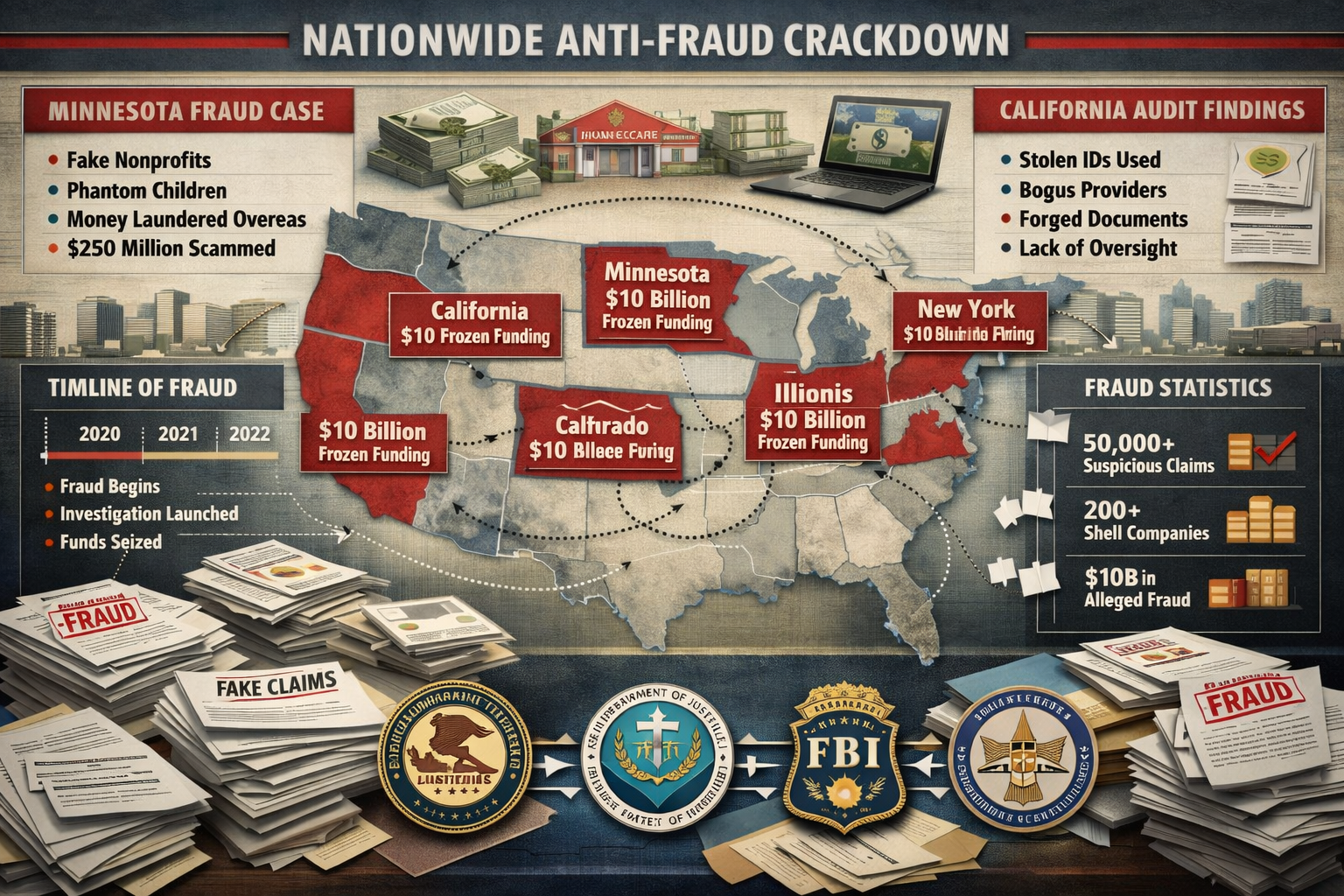
- Five states affected by $10 billion in frozen social service and childcare funding: California, Colorado, Minnesota, New York, and Illinois
- Unprecedented structure includes a new assistant attorney general reporting directly to the president, bypassing traditional DOJ hierarchy
- Nationwide expansion planned after initial focus on Minnesota fraud case involving deceptive childcare benefit claims
Understanding the Anti-Fraud Task Force Structure
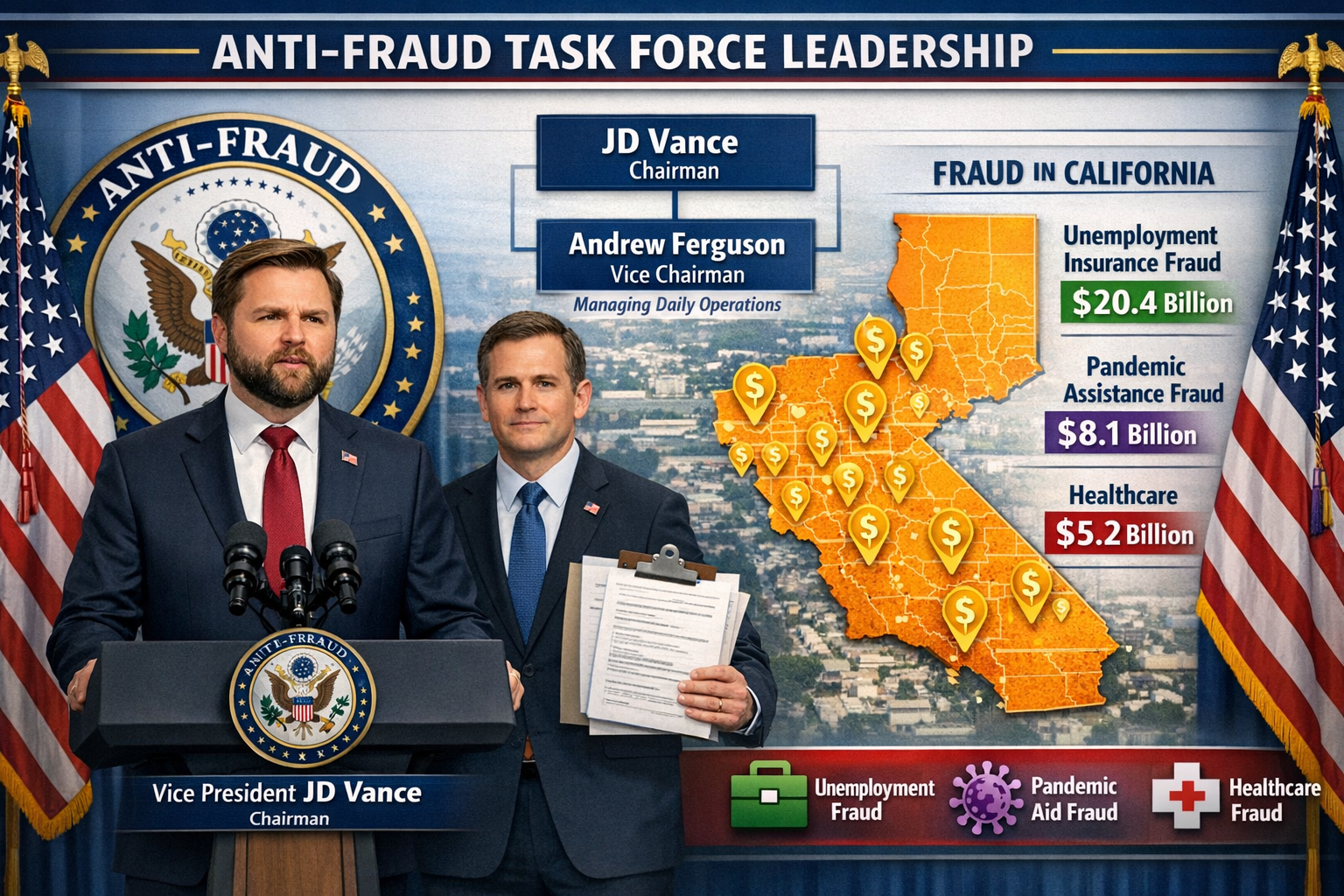
Vice President Vance announced the formation of this federal task force with a clear mission: root out fraud wherever it exists in taxpayer-funded programs[1]. But what makes this initiative different from previous fraud prevention efforts?
The leadership structure breaks from conventional government organization. Andrew Ferguson, chairman of the Federal Trade Commission, will serve as vice chairman and handle the task force’s day-to-day management[1]. This partnership between the Vice President’s office and the FTC signals a coordinated approach that combines political authority with regulatory expertise.
Even more striking is the plan to appoint a new assistant attorney general who will answer directly to the president or Vice President Vance, effectively bypassing the traditional Department of Justice hierarchy[1]. This reporting structure raises important questions about government transparency and the independence of fraud investigations—concerns that progressive advocates and government accountability watchdogs are already examining closely.
What This Means for Federal Oversight
The creation of this task force reflects a broader debate about how government should balance program access with fraud prevention. On one hand, protecting taxpayer dollars from fraudulent claims is a legitimate government responsibility that citizens across the political spectrum support. On the other hand, aggressive fraud investigations can create barriers that prevent eligible families from accessing critical benefits they desperately need.
For working families in places like Utica and Oneida County, this balance matters enormously. When fraud prevention becomes overly aggressive, it can delay or deny legitimate claims for unemployment benefits, healthcare assistance, or childcare support—the very programs that help middle-class and working families weather economic hardship.
California Auditors Discover Billions in Fraudulent Claims
California has become ground zero for this anti-fraud initiative because state auditors have uncovered staggering amounts of fraud across multiple programs. Billions of dollars in fraudulent claims have been identified in unemployment insurance, pandemic assistance programs, and healthcare systems.
The scale of fraud discovered in California is genuinely alarming. During the pandemic, when emergency assistance programs were rapidly deployed to help struggling families and businesses, fraudsters exploited weaknesses in verification systems. Unemployment claims, in particular, became targets for sophisticated fraud rings that filed thousands of fake claims using stolen identities.
The Human Cost of Fraud
It’s easy to see fraud as a victimless crime—just numbers on a government ledger. But that perspective misses the real impact on communities. When fraudsters drain billions from assistance programs, that money isn’t available for:
- Legitimate unemployment benefits for workers who lost jobs through no fault of their own
- Healthcare assistance for families struggling with medical costs
- Small business support for Main Street entrepreneurs trying to keep their doors open
- Childcare subsidies for working parents who need affordable care
Every dollar stolen through fraud is a dollar that could have supported a family in crisis, helped a small business survive, or funded community services that residents depend on.
Frozen Funding Affects Five States Including New York
The task force’s reach extends well beyond California. $10 billion in social service and childcare funding has been frozen across five states: California, Colorado, Minnesota, New York, and Illinois[1]. This funding freeze directly impacts programs that Mohawk Valley families rely on.
For New York residents, this development demands attention. The frozen funding affects:
- Childcare assistance programs that help working parents afford quality care
- Social services that support vulnerable populations
- Developmental disability services that families depend on
- Community-based support programs that strengthen local safety nets
The administration’s rationale for freezing these funds centers on fraud concerns, but progressive advocates worry about the immediate impact on families who depend on these services. When funding freezes, it’s not the fraudsters who suffer—it’s the eligible families who suddenly can’t access benefits they legitimately qualify for.
The Minnesota Case That Sparked National Action
The task force’s initial focus on Minnesota stems from a massive fraud case involving individuals who deceptively claimed federal childcare benefits for children with developmental disabilities[1]. This case revealed how fraudsters can exploit programs designed to help vulnerable populations.
Vice President Vance explicitly mentioned ongoing fraud investigations in Ohio, California, and Minneapolis, stating that fraud is occurring across multiple states, not isolated to Minnesota[1]. This justification for nationwide expansion raises important questions: Are these investigations based on solid evidence of widespread fraud, or do they risk painting legitimate benefit recipients with an unfairly broad brush?
What the Interagency Task Force Will Actually Do
An “Interagency task force” has been activated to investigate and address fraud patterns across state lines[1]. But what does this mean in practical terms?
The task force will likely:
- Coordinate federal and state investigations to identify fraud patterns
- Share data across agencies to detect suspicious claim patterns
- Implement stricter verification requirements for benefit applications
- Prosecute large-scale fraud operations that cross state boundaries
- Recover fraudulently obtained funds through civil and criminal proceedings
Balancing Fraud Prevention with Program Access
Here’s where progressive values and practical governance intersect. Everyone agrees that fraud is wrong and should be prosecuted. But the methods matter enormously.
Overly aggressive fraud prevention can create barriers that harm legitimate beneficiaries:
- Excessive documentation requirements that working families struggle to provide
- Long verification delays that leave families without income for weeks or months
- Automated fraud detection systems that flag legitimate claims as suspicious
- Intimidating investigation processes that discourage eligible people from applying
Effective fraud prevention should target actual fraudsters while protecting program access:
- Risk-based screening that focuses resources on genuinely suspicious claims
- Quick resolution processes for flagged claims that turn out to be legitimate
- Clear communication with applicants about what’s needed and why
- Regular audits of fraud detection systems to identify and fix false positives
The question isn’t whether to fight fraud—it’s how to fight fraud without harming the people these programs exist to help.
Implications for Government Transparency and Accountability
The task force’s unusual reporting structure—with a new assistant attorney general answering directly to the president or vice president—raises significant concerns about government transparency and the independence of investigations[1].
Traditionally, the Department of Justice maintains independence from direct presidential control to ensure that investigations and prosecutions are based on evidence and law, not political considerations. When that independence is compromised, several risks emerge:
- Selective enforcement that targets political opponents or disfavored states
- Politically motivated investigations that prioritize headlines over actual fraud recovery
- Erosion of public trust in the fairness of federal law enforcement
- Chilling effects on legitimate benefit claims in states perceived as political targets
It’s notable that all five states with frozen funding—California, Colorado, Minnesota, New York, and Illinois—are traditionally Democratic-leaning states. This pattern raises legitimate questions about whether fraud concerns are driving policy, or whether political considerations are playing a role.
What Mohawk Valley Residents Should Know
How does a federal anti-fraud task force targeting California affect families in Utica, Rome, and surrounding communities? More than you might think.
Direct Impacts on New York Programs
With New York included in the $10 billion funding freeze, local programs could face disruptions:
- Childcare subsidies that help working parents in Oneida County afford quality care
- Social service programs administered through local county offices
- Healthcare assistance for families who don’t qualify for Medicaid but can’t afford private insurance
- Unemployment benefits that support workers between jobs
If you or someone you know relies on these programs, stay informed about potential changes to eligibility verification, application processes, or benefit timing.
Broader Implications for Social Safety Net Programs
This task force represents a broader approach to social safety net programs that prioritizes fraud prevention—sometimes at the expense of program access. For progressive advocates who believe government should make it easier, not harder, for eligible families to access benefits, this shift is concerning.
The underlying question is one of values: Do we design systems that assume applicants are honest until proven otherwise, or systems that assume fraud until applicants prove their eligibility? The answer shapes how accessible these programs are to the working families who need them.
Taking Action: What You Can Do
Understanding this issue is the first step. Here’s how Mohawk Valley residents can engage:
Stay Informed
- Monitor local news about changes to benefit programs in New York
- Follow government transparency organizations that track federal task force activities
- Subscribe to updates from organizations that advocate for benefit access and workers’ rights
Protect Your Benefits
- Keep thorough documentation if you receive any taxpayer-funded benefits
- Respond promptly to any verification requests from benefit administrators
- Know your rights if your claim is flagged for fraud investigation
- Seek help from legal aid organizations if you face benefit denials you believe are unfair
Advocate for Balance
- Contact your representatives in Congress to express concerns about balancing fraud prevention with program access
- Support organizations that advocate for working families and benefit access
- Participate in town hall meetings where these issues are discussed
- Share accurate information with neighbors and community members who might be affected
Support Local Journalism
Stories like this require resources to investigate and report. Support local journalism that holds government accountable and keeps communities informed. The Mohawk Valley Voice exists to provide the factual, progressive analysis that helps citizens understand complex issues and take informed action.
Conclusion: Fraud Prevention Must Protect, Not Punish, Legitimate Beneficiaries
President Trump’s planned executive order creating an anti-fraud task force led by Vice President JD Vance addresses a real problem: billions of dollars in fraudulent claims that drain taxpayer-funded programs. California auditors have indeed discovered massive fraud in unemployment, pandemic assistance, and healthcare programs. Andrew Ferguson’s role as vice chairman managing daily operations brings regulatory expertise to the effort.
But the details matter enormously. The unusual reporting structure, the $10 billion funding freeze affecting five Democratic-leaning states, and the potential for aggressive enforcement that creates barriers for legitimate beneficiaries all raise important concerns that deserve scrutiny.
Effective fraud prevention protects program integrity while ensuring eligible families can access benefits. The challenge is designing systems that catch fraudsters without punishing honest applicants. As this task force begins its work, progressive advocates must hold it accountable to that standard.
For Mohawk Valley residents, this isn’t just a California issue or a national political story. It’s about the programs that support working families, the values that guide government policy, and the balance between protecting taxpayer dollars and protecting vulnerable communities.
Stay informed. Stay engaged. And demand that fraud prevention efforts protect the people these programs exist to serve.
References
[1] Vice President Announces New Doj Task Force To Address Fraud – https://www.presidentialprayerteam.org/2026/01/14/vice-president-announces-new-doj-task-force-to-address-fraud/
[2] Could Trump Really Take Over The – https://robertreich.substack.com/p/could-trump-really-take-over-the
[3] Trump Anti Fraud Task Force 163852875 – https://www.aol.com/articles/trump-anti-fraud-task-force-163852875.html


