


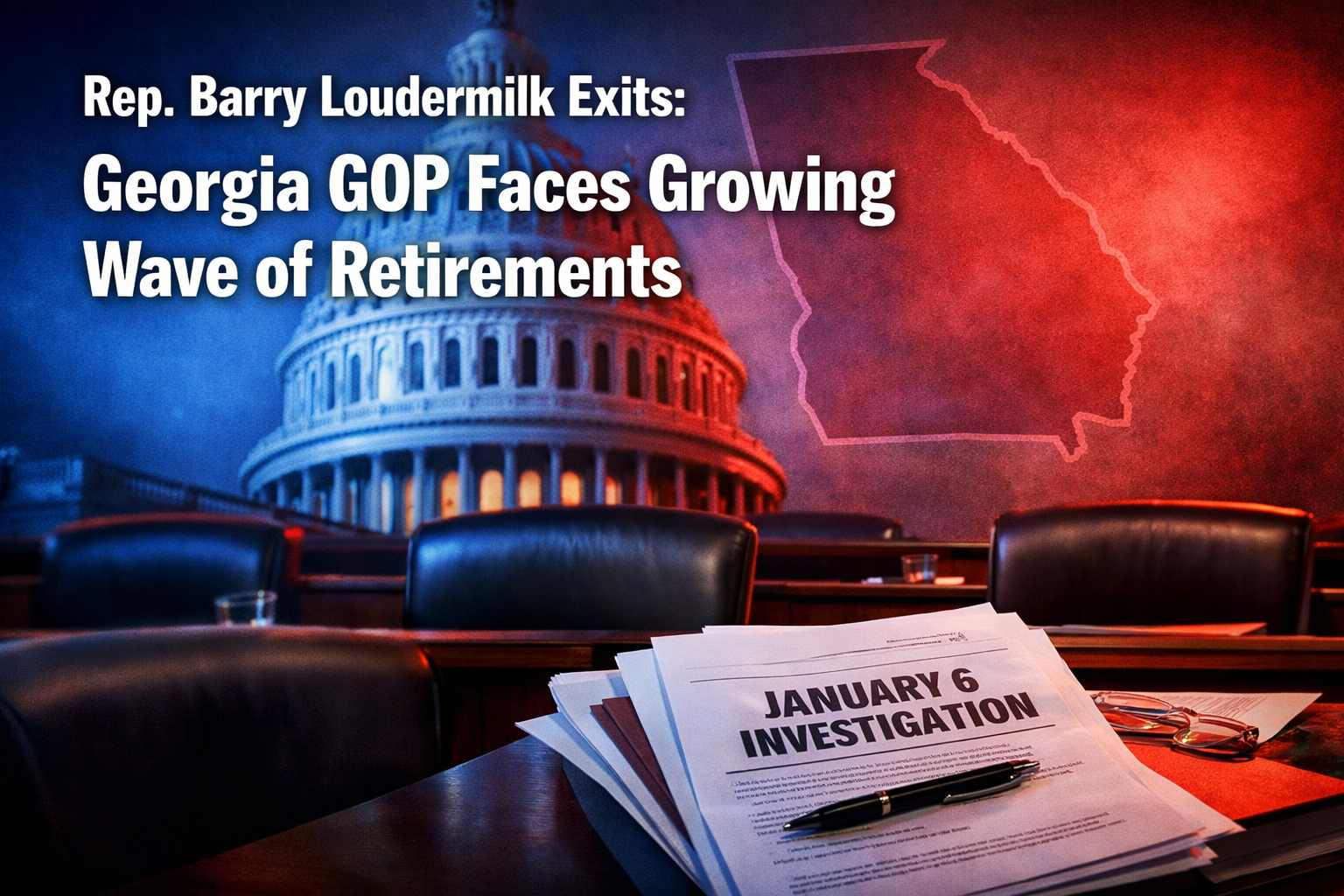
The exodus continues. Wednesday, Rep. Barry Loudermilk announced he will not seek reelection, citing a desire to spend more time with his family. Loudermilk said “I believe it is time to contribute to my community, state, and nation in other ways” and cited more dedicated family time during his congressional service since 2015. He led GOP subcommittees reinvestigating Jan. 6 and was scrutinized for a Jan. 5, 2021 Capitol tour that U.S. Capitol Police found not suspicious; Loudermilk called it a “smear campaign.” Adding to exits, Loudermilk’s move creates another open seat as four Republican-held congressional seats in Georgia will change hands this year amid fifty Republicans leaving the House. Analysts say experts anticipate a strong Democratic showing this year, and the Cook Political Report finds 18 out of 435 races are toss-ups.[1][2][3]
The announcement marks a significant moment in what’s becoming an undeniable pattern: serving in Congress under the current Republican leadership has become increasingly toxic, prompting seasoned lawmakers to head for the exits rather than face another brutal election cycle in Donald Trump’s shadow.
Key Takeaways
- 🏛️ Rep. Barry Loudermilk (R-GA) announced he won’t seek a seventh term, becoming the 29th Republican to exit the House this cycle
- 📊 Four Georgia GOP seats are now changing hands, creating unprecedented opportunities for Democratic challengers in traditionally red districts
- 🔄 50 total Republicans are leaving the House, compared to 21 Democrats—a disparity that signals deep dissatisfaction within GOP ranks
- 🗳️ 18 out of 435 races are rated as toss-ups by the Cook Political Report, with Democrats positioned for potential gains
- 👨👩👧 Loudermilk cited family time as his primary reason, reflecting broader concerns about the personal toll of serving in today’s hyper-partisan Congress
Loudermilk’s Departure: Family First or Political Escape?
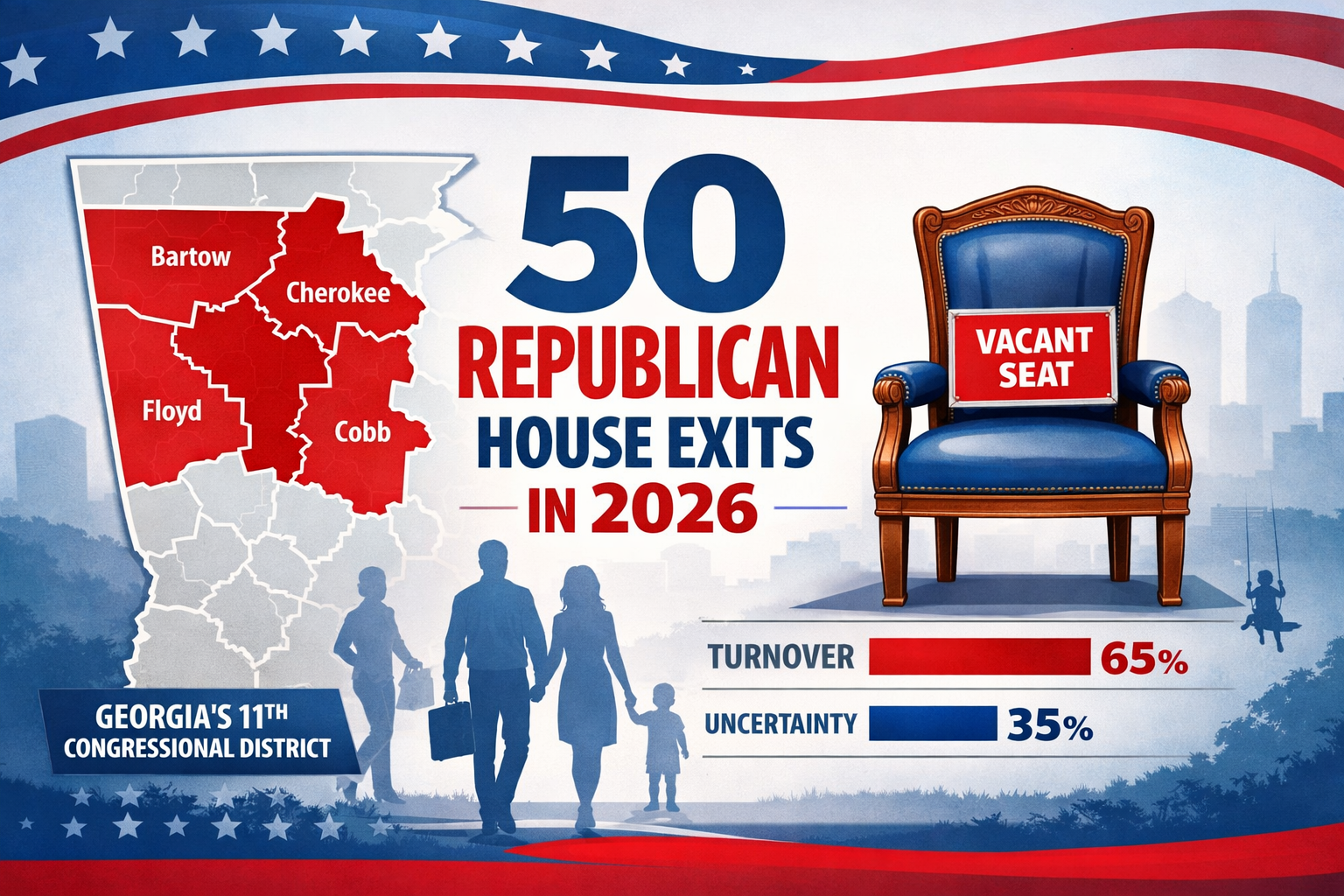
Rep. Barry Loudermilk has represented Georgia’s 11th Congressional District since 2015, consistently winning reelection in the northwest Georgia region with comfortable margins.[2][4] In his most recent 2024 victory, he captured approximately 65.6% of the vote—hardly the numbers of a vulnerable incumbent.[3]
Yet despite this “strong support from the people of the Eleventh Congressional District,” Loudermilk is walking away.[3]
His official statement emphasized family considerations. “I believe it is time to contribute to my community, state, and nation in other ways,” Loudermilk said, adding that he wants to “spend more dedicated time with my family.”[2][4] It’s the kind of language that sounds reasonable on the surface—who could argue against prioritizing family?
But context matters. Loudermilk’s tenure in Congress became increasingly controversial, particularly regarding his role in the January 6 investigation. He led GOP subcommittees that sought to reinvestigate the Jan. 6 Capitol attack, positioning himself as a loyal Trump defender challenging the established narrative.[1]
The January 5 Capitol Tour Controversy
Perhaps most notably, Loudermilk faced intense scrutiny over a Capitol tour he provided on January 5, 2021—the day before the insurrection. While the U.S. Capitol Police ultimately found nothing suspicious about the tour, Loudermilk characterized the investigation as a “smear campaign” against him.[1]
The episode highlighted the impossible position many Republicans find themselves in: damned if they cooperate with accountability measures, damned if they don’t. For lawmakers like Loudermilk, defending Trump’s interests became a full-time job that left little room for actual legislating or constituent services.
“The toll of another election cycle, with redistricting, an early primary calendar and an increasingly national political climate” is driving lawmakers out.[2]
This isn’t just about one congressman’s personal choice. It’s about an institutional crisis within the Republican Party.
Georgia’s GOP Meltdown: Four Seats in Play
Loudermilk’s retirement creates another open seat in Georgia’s congressional delegation—and he’s far from alone. With his departure, four Republican-held congressional seats in Georgia will change hands this year.[1]
Reps. Buddy Carter (R-GA) and Mike Collins (R-GA) are both running for U.S. Senate rather than seeking House reelection, further depleting Georgia’s Republican congressional bench.[3] This creates a domino effect of competitive races in a state that’s already proven itself a battleground.
The 11th District: Suddenly Competitive?
Republicans have maintained control of Georgia’s 11th District for more than a decade, with Loudermilk winning reelection every cycle since 2015.[3] The district covers northwest Georgia’s exurbs north of Atlanta—traditionally solid Republican territory.
But 2026 isn’t a typical year.
With Loudermilk out, only Chris Mora has filed paperwork to run in the Republican primary for the 11th District.[3] Meanwhile, a “crowded field of Democratic candidates” has emerged, sensing opportunity in what was once considered an unwinnable seat.[3] National Democratic Party enthusiasm to contest the historically red-leaning district reflects broader confidence about flipping seats across Georgia.[3]
Independent candidate Natalie Richoz has also filed for the 2026 ballot, potentially splitting the vote in unpredictable ways.[3]
Here’s what makes this significant:
| Factor | Impact |
|---|---|
| No incumbent advantage | Open seats are inherently more competitive |
| Georgia’s purple shift | State voted for Biden in 2020, elected two Democratic senators |
| National Democratic investment | Party sees opportunity to flip traditionally red districts |
| Republican demoralization | Wave of retirements signals internal party struggles |
| Trump factor | His influence may energize Democrats, depress moderate Republicans |
The 11th District race will serve as a bellwether for whether Georgia’s political transformation extends beyond statewide races into congressional districts previously considered safely Republican.
The Republican Exodus: 50 Lawmakers and Counting
Let’s be clear about the scope of what’s happening: 29 Republicans have now announced they won’t seek reelection at the end of this term.[2] When you add those running for other offices or who’ve already left, the total reaches approximately 50 Republican departures from the House.[1]
By comparison, 21 House Democrats have announced retirement plans.[2]
This isn’t normal turnover. This is a mass exodus.
Why Are So Many Republicans Leaving?
The official explanations typically mention family time, new opportunities, or simply being ready for a change after years of service. But those familiar with congressional dynamics recognize deeper forces at work:
1. The Trump Toxicity Factor
Serving in Congress as a Republican under Donald Trump’s dominance has become professionally and personally exhausting. Lawmakers face impossible choices:
- Loyalty tests: Every vote becomes a referendum on Trump loyalty
- Primary threats: Any hint of independence invites well-funded MAGA challengers
- Constant chaos: Governing takes a backseat to defending Trump’s latest controversy
- Moral compromise: Many Republicans privately disagree with Trump but publicly defend him
For members like Loudermilk who fully embraced the Trump agenda, the work became defending conspiracy theories and reinvestigating settled matters rather than crafting policy. For others who maintained some independence, every day brought new attacks from their own party’s base.
2. Institutional Dysfunction
The House Republican caucus has proven nearly ungovernable in recent years. From speaker battles to government shutdown threats to internal investigations, the basic work of legislating has become secondary to performative politics and intra-party warfare.
Many veteran lawmakers entered Congress to make policy, not to star in political theater. The gap between their expectations and reality has become unbridgeable.
3. Personal Safety Concerns
Though rarely stated publicly, the threats and harassment directed at members of Congress and their families have intensified dramatically. The January 6 attack demonstrated that political violence isn’t theoretical—it’s real and potentially deadly.
4. Electoral Uncertainty
Redistricting, shifting demographics, and an “increasingly national political climate” mean that even safe seats can become competitive.[2] The early primary calendar forces members to campaign year-round, leaving little time for family or other pursuits.[2]
For someone like Loudermilk, who won with 65.6% in 2024, electoral vulnerability wasn’t the issue.[3] But the prospect of another exhausting campaign cycle, defending Trump while trying to maintain some legislative credibility, apparently lost its appeal.
Democratic Opportunities: 18 Toss-Up Races
The Cook Political Report, one of the most respected nonpartisan election forecasters, currently rates 18 out of 435 House races as toss-ups.[1] That’s a significant number of genuinely competitive contests where either party could prevail.
Analysts say experts anticipate a strong Democratic showing this year, and the numbers support that optimism:[1]
- Incumbent advantage eliminated: Open seats created by Republican retirements remove the powerful incumbency effect
- Fundraising momentum: Democratic candidates are raising competitive money in previously uncontested districts
- Voter enthusiasm: Progressive grassroots activism remains energized
- Demographic trends: Suburban voters, particularly college-educated women, continue trending Democratic
- Trump fatigue: Even in red-leaning districts, some voters are exhausted by constant chaos
What This Means for Congressional Control
Democrats need to flip a relatively small number of seats to reclaim the House majority. With 18 toss-up races and dozens of Republican retirements creating open seats, the path to majority status becomes clearer.
Georgia’s four changing Republican seats represent nearly a quarter of the total toss-up races nationally. If Democrats can flip even two of those seats while holding their current Georgia delegation, it significantly improves their national prospects.
The math is simple:
- More open seats = more opportunities
- More Republican retirements = weaker Republican recruitment
- More competitive races = higher Democratic investment
- Higher Democratic investment = better chance of victory
The Broader Pattern: Why Republican Retirements Matter
When 50 members of one party abandon their positions in a single cycle, it’s worth examining what that says about the party’s health and direction.
Brain Drain and Institutional Knowledge
Many retiring Republicans represent decades of legislative experience, committee expertise, and institutional knowledge. When they leave, that expertise leaves with them. The result is a less experienced, less effective caucus increasingly dominated by performative politicians rather than policy experts.
Recruitment Challenges
Who wants to run for Congress as a Republican in 2026? The job description now includes:
- Constant fealty tests to Trump
- Harassment from extremists if you show any independence
- Primary challenges funded by billionaire megadonors
- Media scrutiny of every statement and vote
- Death threats against you and your family
- Minimal actual policymaking
Quality candidates—successful business leaders, accomplished professionals, experienced state legislators—increasingly look at that job description and say “no thanks.” The result is a Republican bench increasingly filled with conspiracy theorists, social media personalities, and political arsonists.
The Loudermilk Example
Loudermilk’s trajectory illustrates the problem. He entered Congress in 2015 as a conservative businessman with engineering and ministry backgrounds.[5] By 2026, his legacy centers on defending Trump, reinvestigating January 6, and fighting “smear campaigns.”[1]
Is that why he ran for Congress? Probably not. But that’s what serving in the Trump-era Republican Party demanded.
What This Means for Mohawk Valley Voters

You might be thinking: “This is about Georgia. Why should Utica NY residents care about Barry Loudermilk’s retirement?”
Here’s why it matters to upstate New York and the Mohawk Valley:
1. National Political Trends
What happens in Georgia doesn’t stay in Georgia. The Republican Party’s dysfunction affects federal policy on issues that directly impact working families here: infrastructure investment, healthcare access, workers rights, and economic opportunity.
When Congress can’t function because one party is consumed by internal chaos, nothing gets done. That means no progress on affordable housing, no action on prescription drug prices, no investment in broadband access for rural communities.
2. Democratic Momentum
A strong Democratic showing in 2026 could restore functional government and advance progressive priorities that benefit Mohawk Valley residents: workforce development, manufacturing jobs support, public transit funding, and green energy jobs.
3. The Importance of Local Engagement
Georgia’s political transformation didn’t happen by accident. It resulted from years of grassroots organizing, voter registration drives, and community engagement. The same approach works in upstate New York.
4. Congressional Representation Matters
Whether Republicans or Democrats control the House affects everything from federal budget priorities to committee leadership to investigative oversight. For Oneida County residents concerned about government transparency, political corruption, and corporate accountability, who controls Congress matters enormously.
Taking Action: What You Can Do
Democracy isn’t a spectator sport. Here’s how Mohawk Valley residents can engage with these national trends and make a local impact:
🗳️ Register and Vote
- Verify your voter registration status at the New York State Board of Elections website
- Mark your calendar for the 2026 primary and general elections
- Research candidates’ positions on issues affecting working families
📞 Contact Your Representatives
- Call your congressional representative’s office about issues that matter to you
- Attend town hall meetings when representatives visit the district
- Submit written questions and concerns through official channels
🤝 Get Involved Locally
- Join local Democratic committees or progressive organizations
- Volunteer for voter registration drives in Utica and surrounding communities
- Support candidates who champion election integrity, social justice, and economic fairness
💡 Stay Informed
- Follow credible local journalism sources like Mohawk Valley Voice
- Fact-check claims before sharing on social media
- Engage in respectful political discussions with neighbors and family
💰 Support Progressive Candidates
- Contribute to campaigns aligned with your values, even small amounts matter
- Help with grassroots fundraising efforts
- Attend campaign events and show visible support
📢 Amplify Important Issues
- Write letters to the editor of local newspapers
- Share factual information about voting rights and election integrity
- Speak up at school board meetings and municipal budget hearings
The Path Forward: From Chaos to Governance
The wave of Republican retirements—exemplified by Loudermilk’s departure—represents both a crisis and an opportunity.
The crisis is clear: one of America’s two major political parties has become so dysfunctional, so consumed by loyalty to one man and his grievances, that experienced lawmakers would rather quit than continue serving. That’s not healthy for democracy.
The opportunity is equally clear: these open seats create chances to elect representatives committed to actual governance rather than performative politics. Democrats have legitimate opportunities to flip seats in Georgia and across the country, potentially restoring functional government.
For voters in the Mohawk Valley and beyond, the lesson is simple: your participation matters. The political transformation happening in Georgia demonstrates that no seat is permanently red or blue. Demographics change. Voters’ priorities evolve. Organized, sustained civic engagement produces results.
Conclusion: The Choice Ahead
Wednesday’s announcement that Rep. Barry Loudermilk won’t seek reelection might seem like one congressman’s personal decision. But it’s actually a symptom of much larger forces reshaping American politics.
When 50 Republicans abandon the House in a single cycle, when four Georgia congressional seats simultaneously become competitive, when 18 races nationwide are rated as toss-ups—these aren’t isolated incidents. They’re evidence of a political party in crisis and a political landscape in flux.
The question for 2026 isn’t whether change is coming—it’s what kind of change voters will choose.
Will we elect representatives committed to addressing real problems like affordable housing, healthcare costs, and economic inequality? Or will we continue down the path of performative politics, conspiracy theories, and institutional dysfunction?
The answer depends on civic participation. It depends on voters in Georgia, New York, and across the country making informed choices and holding elected officials accountable.
Loudermilk’s retirement creates an opportunity—not just in Georgia’s 11th District, but everywhere voters are paying attention. The wave of Republican exits signals weakness, uncertainty, and internal turmoil. Democrats and progressives should seize this moment.
Your next steps:
- Verify your voter registration this week
- Research candidates in your district
- Commit to voting in both primary and general elections
- Get involved with at least one local civic organization
- Have conversations with friends and family about the importance of participation
Democracy requires active citizenship. The Mohawk Valley has a proud tradition of community engagement and civic responsibility. Let’s honor that tradition by staying informed, getting involved, and making our voices heard.
The future of congressional representation—in Georgia and everywhere else—depends on it.
References
[1] Barry Loudermilk Georgia Retires 00766319 – https://www.politico.com/live-updates/2026/02/04/congress/barry-loudermilk-georgia-retires-00766319
[2] Georgia Gop Rep Barry Loudermilk Retire Adding Wave House Exits – https://www.foxnews.com/politics/georgia-gop-rep-barry-loudermilk-retire-adding-wave-house-exits
[3] Georgia Republican Barry Loudermilk Forgoes Reelection – https://www.washingtonexaminer.com/news/house/4446743/georgia-republican-barry-loudermilk-forgoes-reelection/
[4] Republican Barry Loudermilk Wont Seek Reelection – https://www.eenews.net/articles/republican-barry-loudermilk-wont-seek-reelection/
[5] Barry Loudermilk – https://en.wikipedia.org/wiki/Barry_Loudermilk


