


When New Castle County police officers responded to a domestic disturbance call on a December evening in 2025, they discovered a scene that would launch a weeks-long homicide investigation and shine an uncomfortable spotlight on domestic violence in Delaware. William Stevenson, 77, has been charged with first-degree murder of his wife, Linda Stevenson, 64, according to New Castle County Police officials. The charges came after a weeks-long investigation into Linda Stevenson’s death. Stevenson is currently held on a $500,000 cash bail at the Howard Young Correctional Institution. Police found Linda Stevenson unresponsive in December during a domestic disturbance call—a tragic outcome that underscores the deadly reality of domestic violence and raises critical questions about how communities can better protect vulnerable individuals.
This case has captured attention not only because of its tragic circumstances but also because of William Stevenson’s previous marriage to current First Lady Jill Biden decades ago. Yet beyond the headlines lies a more important story: the death of Linda Stevenson represents one more life lost to domestic violence, a crisis that continues to claim victims across America and right here in communities like ours in upstate New York.
Key Takeaways
- First-degree murder charges filed: William Stevenson, 76-77 years old, faces felony first-degree murder charges in Delaware following his wife Linda’s death on December 29, 2025[1][2]
- Victim found unresponsive: Police discovered Linda Stevenson, 64, unresponsive on the living room floor after responding to a domestic dispute call around 11:15 p.m.[2][3]
- High bail amount reflects severity: Stevenson is being held on $500,000 cash bail at Howard Young Correctional Institution as the investigation continues[2]
- Ongoing investigation: Delaware State Police Homicide Unit is reviewing evidence, 911 audio logs, and autopsy results to establish a complete timeline[2]
- Broader implications: This case highlights the ongoing crisis of domestic violence and the importance of community resources, victim services, and criminal justice reform
The Night of December 29: What We Know About Linda Stevenson’s Death
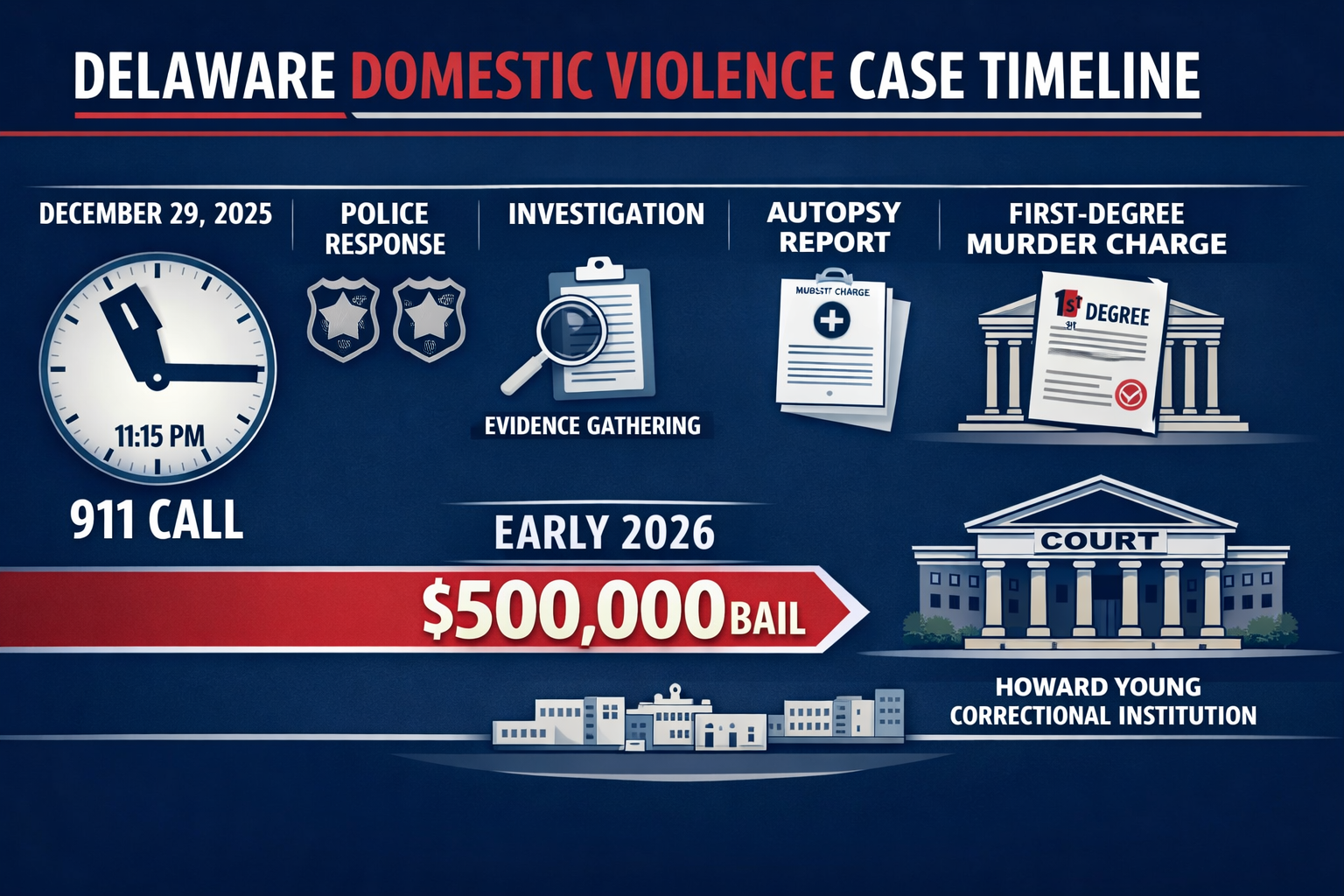
On December 29, 2025, at approximately 11:15 p.m., New Castle County police received a 911 call reporting a domestic dispute at a home in Oak Hill, on the outskirts of Wilmington, Delaware[3]. When officers arrived, they found Linda Stevenson unresponsive on the living room floor[2].
According to reports, William Stevenson himself made the 911 call and was waiting at the home when officers arrived[4]. Police immediately attempted life-saving measures, but tragically, Linda Stevenson was pronounced dead at the scene[2][3].
Initial assessments by responding officers found no immediate reports of outside intruders or forced entry from the exterior of the home, indicating the encounter was isolated to the interior[2]. This detail became crucial as investigators began piecing together what happened that night.
The Investigation Unfolds
The Delaware State Police Homicide Unit took the lead on the investigation, treating Linda Stevenson’s death with the seriousness it deserved. Detectives began the painstaking work of reviewing 911 audio logs and available digital evidence to establish a comprehensive timeline of events[2].
An autopsy was scheduled through the Delaware Division of Forensic Science to determine the official cause and manner of death[2]. These forensic findings would prove essential in building the case that ultimately led to first-degree murder charges.
Linda Stevenson’s daughter, Christina Vettori, publicly characterized the death as a “murder investigation” and referenced suspicious details regarding her mother’s death[4]. Family members often see warning signs that others miss, and their voices deserve to be heard in these investigations.
Understanding the First-Degree Murder Charge Against William Stevenson
After weeks of investigation, authorities charged William Stevenson with one felony count of first-degree murder[1]. This is not a charge that law enforcement takes lightly.
Under Delaware law, first-degree murder implies a premeditated or intentional act[2]. Prosecutors must prove that the defendant deliberately caused the victim’s death with malice aforethought. This distinguishes first-degree murder from lesser charges like manslaughter or second-degree murder, which may involve less planning or different circumstances.
The decision to pursue first-degree murder charges suggests that investigators found evidence pointing to intentional harm rather than an accident or heat-of-passion incident. While the specific evidence has not been made public—as is typical during ongoing legal proceedings—the charge itself speaks volumes about what authorities believe happened.
Bail and Current Custody Status
Following his arraignment, William Stevenson was placed at the Howard Young Correctional Institution, a medium-security facility in Wilmington, Delaware[1][2]. The court set bail at $500,000 cash, a substantial amount that reflects both the severity of the charges and potential flight risk considerations.
High bail amounts in murder cases serve multiple purposes: they ensure the defendant appears for trial, protect public safety, and acknowledge the gravity of the alleged crime. For a 76-77-year-old defendant facing life imprisonment if convicted, the bail amount also reflects concerns that he might have little incentive to return for trial.
The Broader Context: Domestic Violence as a Public Health Crisis
While this case involves specific individuals, it represents a much larger pattern that affects communities nationwide, including right here in upstate New York. Domestic violence remains one of the most underreported yet pervasive crimes in America.
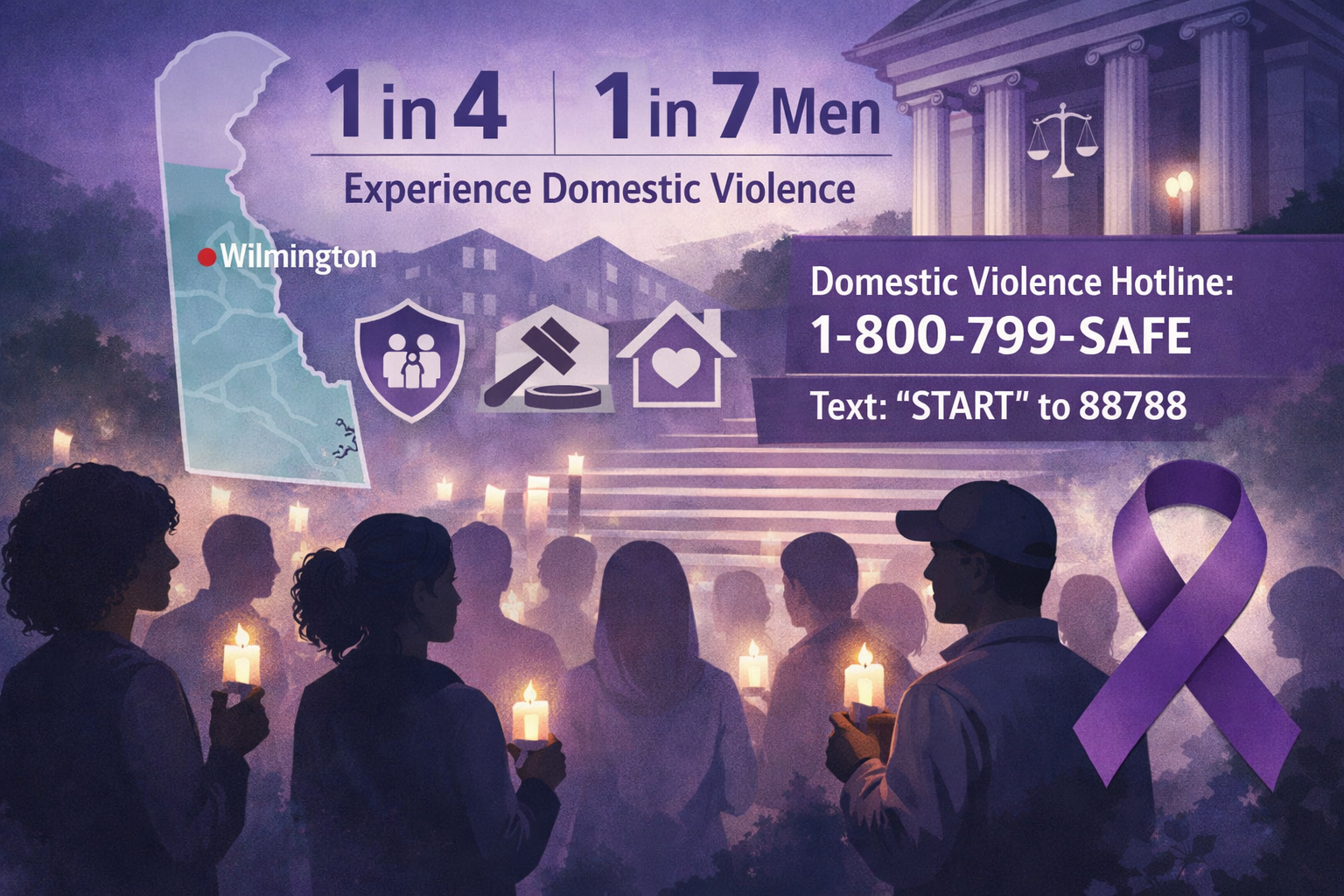
According to national statistics, approximately one in four women and one in nine men experience severe intimate partner physical violence in their lifetimes. These aren’t just statistics—they’re our neighbors, coworkers, family members, and friends.
Warning Signs Often Go Unnoticed
Domestic violence rarely begins with physical assault. It typically follows a pattern of escalating behavior:
- Controlling behavior: Monitoring phone calls, emails, or whereabouts
- Isolation: Cutting the victim off from friends and family
- Verbal abuse: Name-calling, humiliation, or constant criticism
- Financial control: Restricting access to money or employment
- Threats: Intimidation involving harm to the victim, children, or pets
By the time violence becomes physical, victims often feel trapped by fear, financial dependence, or emotional manipulation. Understanding this progression is crucial for intervention and prevention.
The Deadly Reality of Domestic Disputes
Law enforcement officers know that domestic disturbance calls are among the most dangerous situations they face. These calls can escalate rapidly and unpredictably. For victims, the moment they decide to leave or seek help is often the most dangerous time.
The fact that police responded to a domestic dispute call on December 29 suggests that the situation had reached a crisis point. Whether neighbors called or William Stevenson himself initiated contact with authorities, the outcome was devastating.
Criminal Justice Reform and Victim Protection
Cases like Linda Stevenson’s death force us to examine whether our systems are doing enough to protect vulnerable individuals and hold perpetrators accountable.
The Role of Bail Reform
The $500,000 cash bail in this case raises important questions about bail reform—a topic of significant debate in progressive circles. While high bail can keep dangerous individuals detained, cash bail systems also disproportionately affect poor defendants who may pose little threat.
However, in cases involving serious violent crimes like first-degree murder, substantial bail serves a legitimate public safety function. The challenge for reformers is creating systems that protect communities while not punishing poverty.
Domestic Violence Prevention Programs
Communities need robust prevention and intervention programs, including:
- 24/7 crisis hotlines with trained counselors
- Emergency shelters with adequate funding and security
- Legal advocacy to help victims obtain protection orders
- Counseling services for both victims and perpetrators
- Economic support to help victims achieve financial independence
- Education programs in schools and workplaces about healthy relationships
In the Mohawk Valley and across upstate New York, organizations like the YWCA and local family service agencies provide these critical services—but they’re often underfunded and overwhelmed by demand.
Lessons for Our Community: What Can We Do?
Linda Stevenson’s death should serve as a wake-up call for all of us. Whether you live in Delaware, Utica, or anywhere in between, domestic violence affects our communities, and we all have a role to play in prevention and support.
Recognize the Signs
If you notice concerning behavior in a friend, family member, or neighbor’s relationship, don’t ignore it. Signs might include:
- Unexplained injuries or frequent “accidents”
- Withdrawal from social activities
- Fearful or anxious behavior around their partner
- Partner who is excessively jealous or controlling
- Sudden changes in personality or confidence
Offer Support Without Judgment
Victims of domestic violence face enormous barriers to leaving abusive relationships. They may return to their abuser multiple times before permanently leaving. This doesn’t mean they’re weak or that they want to be abused—it reflects the complex psychological, financial, and practical challenges they face.
If someone confides in you:
- Listen without judgment: Believe them and validate their feelings
- Avoid ultimatums: Don’t demand they leave immediately
- Provide resources: Share hotline numbers and local services
- Respect their autonomy: Let them make their own decisions
- Stay connected: Continue offering support even if they stay
Know the Resources
National Domestic Violence Hotline: 1-800-799-7233 (available 24/7)
For local resources in the Mohawk Valley region:
- YWCA Mohawk Valley: Provides shelter, counseling, and advocacy
- Oneida County Family Court: Can assist with orders of protection
- Local police departments: Can respond to immediate threats
Advocate for Policy Changes
As engaged citizens, we can push for stronger protections and better-funded services:
- Contact your state legislators to support domestic violence prevention funding
- Attend town hall meetings and raise awareness about victim services
- Support local nonprofits that provide shelter and counseling
- Advocate for workplace policies that protect employees experiencing domestic violence
- Push for comprehensive sex education that includes healthy relationship skills
The Legal Process Ahead
As William Stevenson’s case moves through the Delaware court system, several key phases will unfold:
Pre-Trial Proceedings
Stevenson will likely face preliminary hearings where prosecutors present evidence to establish probable cause. His defense attorneys will have opportunities to challenge evidence, file motions, and potentially negotiate with prosecutors.
Trial or Plea Agreement
First-degree murder cases sometimes result in plea agreements where defendants plead guilty to lesser charges in exchange for reduced sentences. However, given the severity of the charge and the evidence authorities have gathered, this case may proceed to trial.
If it goes to trial, a jury will hear evidence from both sides and determine whether prosecutors have proven guilt beyond a reasonable doubt.
Sentencing Considerations
If convicted of first-degree murder in Delaware, Stevenson could face life imprisonment. Delaware abolished the death penalty in 2016, so life in prison represents the maximum sentence.
Given Stevenson’s age (76-77), a life sentence would effectively mean he would spend his remaining years incarcerated.
Remembering Linda Stevenson
Amid the legal proceedings and public attention, it’s essential to remember that Linda Stevenson was a real person with family, friends, and a life that was cut short. She was 64 years old—an age when many people are enjoying retirement, spending time with grandchildren, and looking forward to the future.
Her daughter Christina Vettori’s public statements suggest a family grappling with grief and seeking justice. They deserve answers, accountability, and the space to mourn their loss.
Too often in high-profile cases, victims become footnotes to larger narratives. Linda Stevenson deserves to be remembered as more than a statistic or a headline. She was someone’s mother, someone’s friend, someone who mattered.
Moving Forward: Building Safer Communities
The tragedy of Linda Stevenson’s death cannot be undone, but we can honor her memory by working to prevent similar tragedies in our own communities.
Community Engagement Matters
Civic participation isn’t just about voting in elections—it’s about showing up for our neighbors, supporting local services, and creating communities where everyone feels safe and valued.
Consider getting involved:
- Volunteer at domestic violence shelters or crisis hotlines
- Participate in community watch programs that look out for vulnerable neighbors
- Support local journalism that holds institutions accountable
- Attend school board meetings to advocate for relationship education programs
- Join or support grassroots activism focused on gender-based violence prevention
The Role of Men in Prevention
While domestic violence affects people of all genders, the majority of intimate partner homicides involve male perpetrators and female victims. Men have a crucial role to play in prevention by:
- Modeling healthy, respectful relationships
- Calling out misogynistic attitudes and behaviors among peers
- Supporting survivors and believing their stories
- Examining their own behaviors and seeking help if needed
- Teaching younger generations about consent and respect
Systemic Change Requires Political Will
Meaningful progress on domestic violence prevention requires adequate funding for victim services, strong legal protections, and coordinated community responses. These don’t happen by accident—they require political advocacy and government accountability.
In New York State and across the country, progressive lawmakers have championed legislation to:
- Expand funding for domestic violence shelters and services
- Strengthen gun safety laws to keep firearms away from domestic abusers
- Improve training for law enforcement on domestic violence response
- Create paid safe leave policies so victims can seek help without losing income
- Fund prevention education programs in schools and communities
Supporting these initiatives through voting, advocacy, and grassroots organizing can save lives.
Conclusion: From Tragedy to Action
William Stevenson, 77, has been charged with first-degree murder of his wife, Linda Stevenson, 64, according to New Castle County Police officials. The charges came after a weeks-long investigation into Linda Stevenson’s death. Stevenson is currently held on a $500,000 cash bail at the Howard Young Correctional Institution. Police found Linda Stevenson unresponsive in December during a domestic disturbance call that ended in tragedy.
This case reminds us that domestic violence isn’t something that only happens to “other people” in “other places.” It happens in suburbs and cities, in wealthy neighborhoods and working-class communities, to people of all ages and backgrounds.
But here’s what else is true: we’re not powerless.
Every one of us can take action to create safer communities. We can educate ourselves about the warning signs of abuse. We can support organizations that provide life-saving services to victims. We can advocate for policies that prioritize prevention and accountability. We can believe survivors when they tell their stories.
As the legal process unfolds in Delaware, let’s use this moment to examine our own communities, strengthen our support systems, and recommit ourselves to the principle that everyone deserves to live free from violence and fear.
Take Action Today
- Save the National Domestic Violence Hotline number in your phone: 1-800-799-7233
- Learn about local resources in your area and share them with others
- Contact your representatives to support domestic violence prevention funding
- Volunteer or donate to organizations serving survivors in your community
- Start conversations about healthy relationships with young people in your life
- Believe survivors and offer support without judgment
Linda Stevenson’s life mattered. Her death should not be in vain. Let’s build communities where everyone is safe, supported, and valued—because that’s the kind of society we all deserve.
References
[1] Watch – https://www.youtube.com/watch?v=ZjfbRKE0UMY
[3] Wife Jill Biden Ex Husband 002506448 – https://www.aol.com/news/wife-jill-biden-ex-husband-002506448.html
[4] Watch – https://www.youtube.com/watch?v=eTpwcp80RXg
[5] Woman Dies During Domestic Dispute Call New Castle County Police – https://www.livenowfox.com/news/woman-dies-during-domestic-dispute-call-new-castle-county-police


