


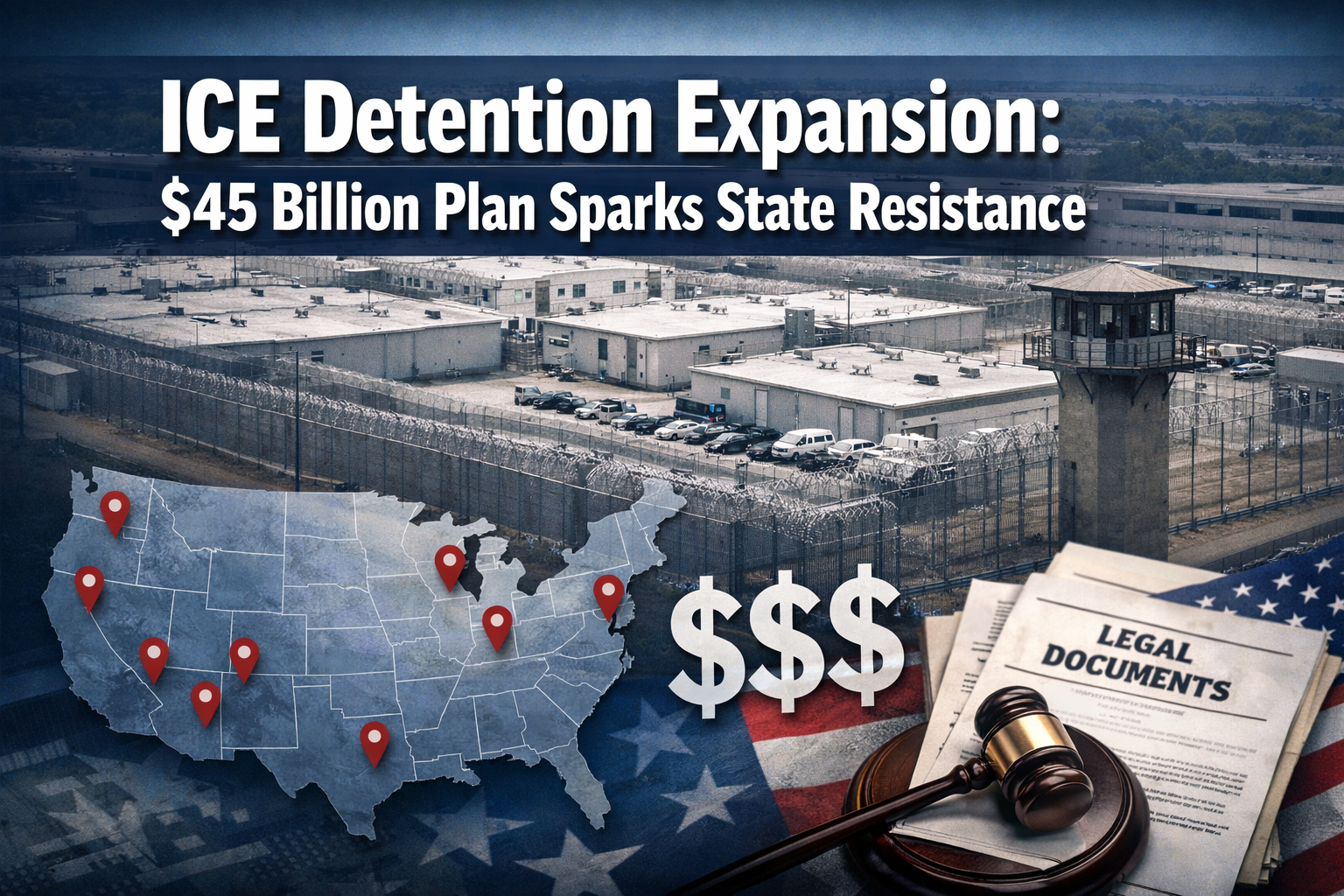
Federal officials are rolling out a $45 billion plan to expand detention facilities as ICE detainee numbers rose to more than 70,000, with 212 detention sites now operating across 47 states. While the Democratic-led New Mexico House on Friday passed legislation banning state and local government contracts for ICE detention facilities, with some cities moving to block leases last week, the expansion continues at an unprecedented pace. Local officials are seeking attorney reviews and proposing moratoria after scouting a 7,500-bed site, while legal experts say courts have struck down bans on detention facilities. Meanwhile, local officials warn that water and sewer shortfalls and Otero County’s $16.5 million debt threaten detention site conversions and fiscal stability. Federal procurement notices and public comment solicitations highlight active site scouting, including a proposed purchase in Chester, New York, and a recent site tour in Orlando, Florida.
The collision between federal immigration enforcement expansion and state-level resistance represents one of the most significant constitutional confrontations of 2026. As Immigration and Customs Enforcement transforms into the highest-funded federal law enforcement agency in government, communities across the nation face difficult questions about infrastructure capacity, fiscal responsibility, and the moral implications of hosting detention facilities that critics say operate with insufficient oversight and deteriorating conditions.
Key Takeaways
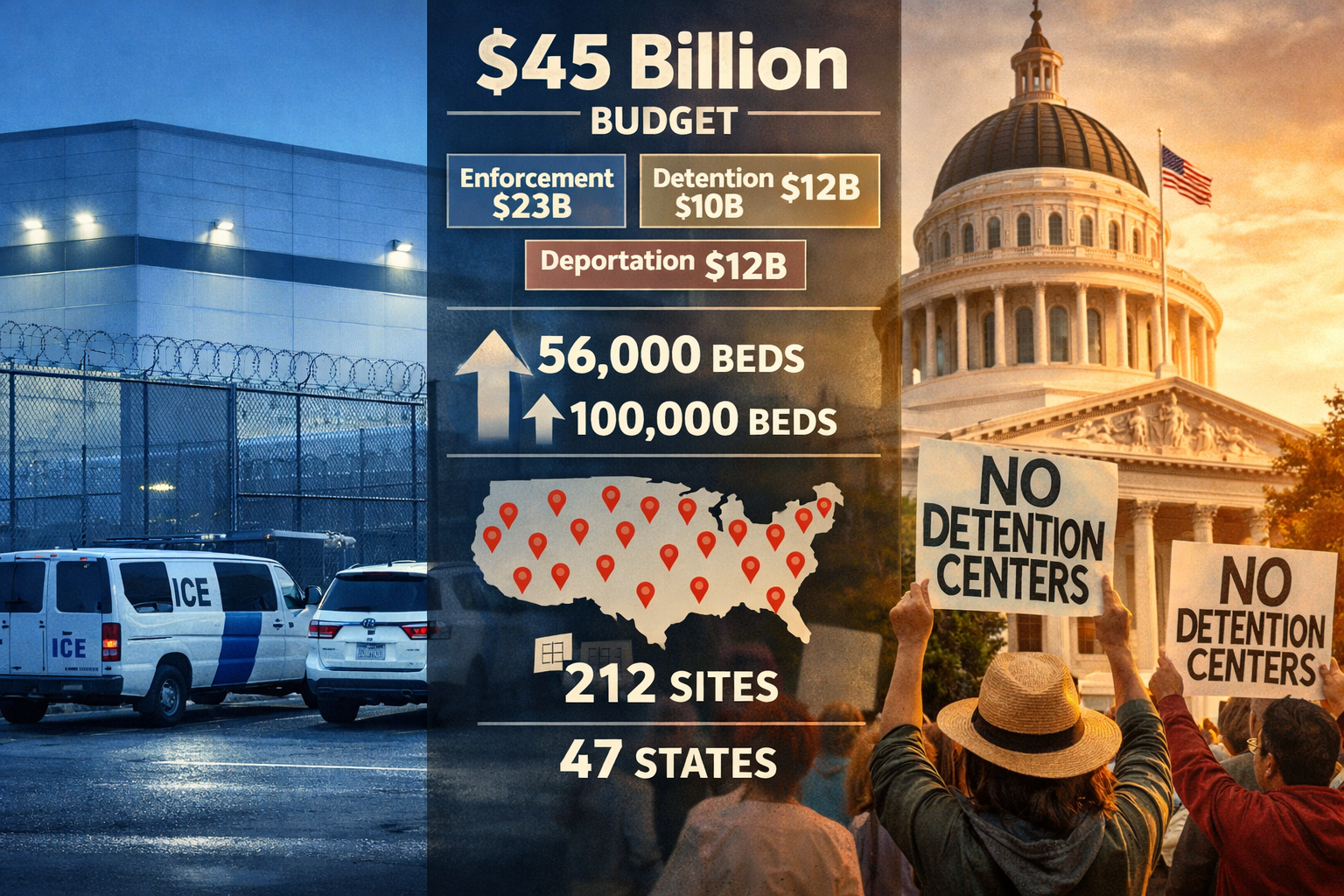
- Massive funding increase: ICE received $45 billion specifically for detention expansion, with an additional $30 billion for arrest and deportation operations, making it the most heavily funded federal law enforcement agency[2]
- Capacity nearly doubling: Detention capacity is expanding from approximately 56,000-58,000 beds to potentially over 100,000 beds, with current detainee numbers already exceeding 70,000[1][2]
- State resistance growing: New Mexico’s Democratic-led House passed legislation banning state and local contracts for ICE facilities, while multiple cities are moving to block leases and impose moratoria
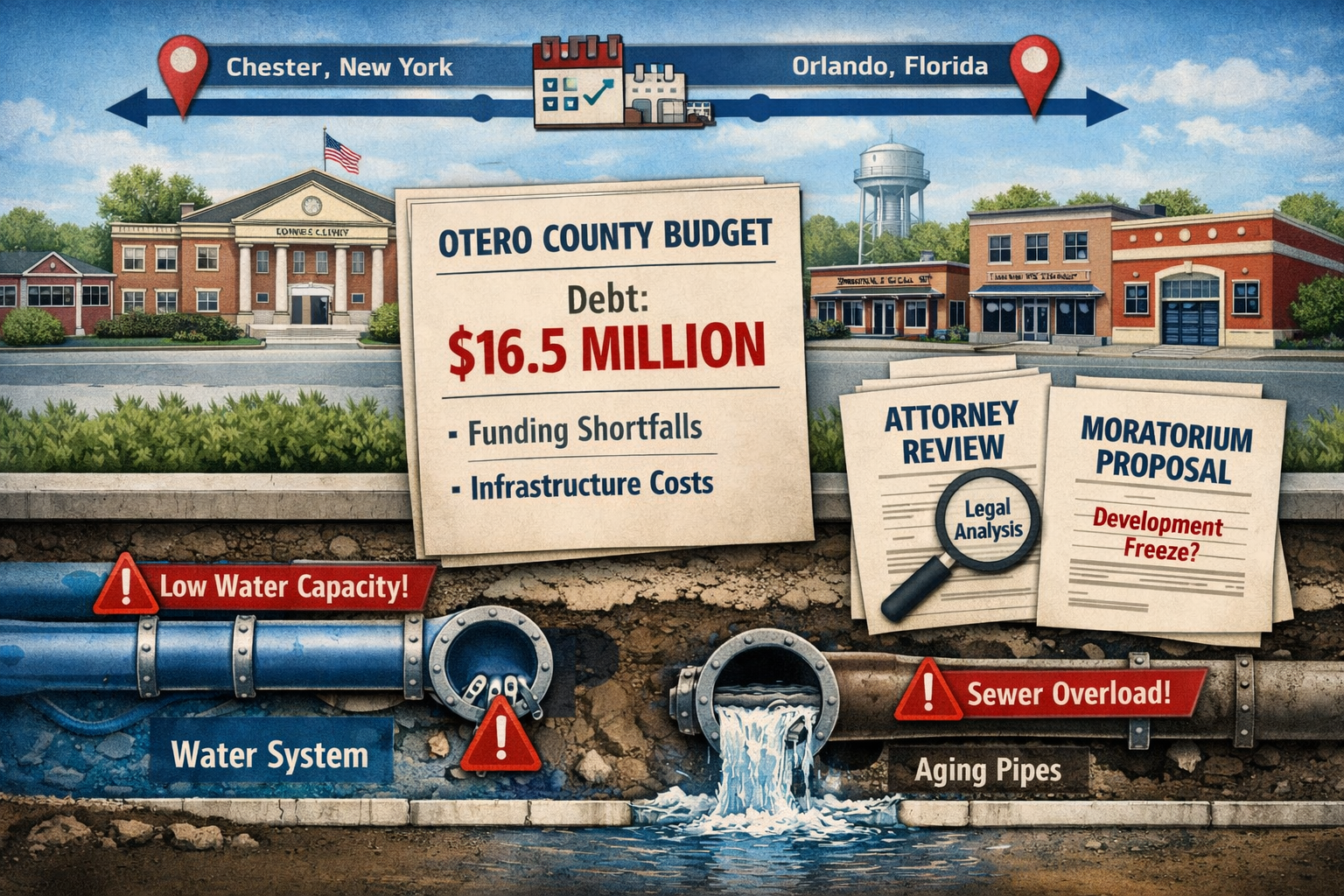
- Infrastructure challenges mounting: Local officials warn that water and sewer shortfalls, combined with significant municipal debt like Otero County’s $16.5 million burden, threaten the viability of facility conversions
- Private prison windfall: Nearly 90 percent of ICE detainees are held in for-profit facilities, with major contractors like CoreCivic and GEO Group receiving lucrative no-bid contracts[1]
The Scale of Federal Detention Expansion
Historic Funding Levels Transform ICE Operations
Immigration and Customs Enforcement has received an unprecedented financial boost that fundamentally reshapes federal law enforcement priorities. The $45 billion allocated specifically for detention expansion represents the largest single investment in immigration detention infrastructure in American history[2].
This funding doesn’t exist in isolation. An additional $30 billion has been earmarked for arrest and deportation operations, including plans to hire 10,000 new deportation agents—doubling the current workforce from 5,000 to 15,000[2]. The Trump administration has set an ambitious target of 3,000 immigration arrests per day, creating intense demand for detention space as detainees must be adjudicated from within facilities[3].
The numbers tell a stark story:
| Metric | Previous Capacity | 2026 Expansion | Percentage Increase |
|---|---|---|---|
| Detention Beds | 56,000-58,000 | 100,000+ | 73-78% |
| Detention Sites | Approximately 150 | 212 | 41% |
| States with Facilities | Data limited | 47 | Near-universal |
| Current Detainees | Variable | 70,000+ | At capacity |
| Deportation Agents | 5,000 | 15,000 | 200% |
Warehouse Acquisition Strategy Accelerates
As of January 31, 2026, the administration has pivoted to an aggressive warehouse purchase strategy, targeting small towns and cities with available industrial infrastructure. ICE has already purchased two warehouses—one in Maryland and one in Arizona—for a combined $172 million[3].
The proposed Texas warehouse purchase represents one of the largest real estate transactions of any kind in the United States, with plans to convert the facility into an 8,500-bed detention center[3]. This approach bypasses traditional government procurement processes and allows for rapid expansion without the lengthy environmental reviews or public comment periods typically required for new construction.
Facilities being reactivated without competitive bidding include:
- Dilley Immigration Processing Center (Dilley, Texas): 2,400 beds, operated by CoreCivic[1]
- Leavenworth facility (Kansas): Up to 1,033 detainees
- Delaney Hall (Newark, New Jersey): 1,000 beds, operated by GEO Group[1]
These reopenings signal a return to facilities previously shuttered due to documented human rights concerns, including inadequate medical care, unsanitary conditions, and allegations of abuse.
State and Local Resistance Intensifies
New Mexico Leads Legislative Pushback
The Democratic-led New Mexico House made national headlines Friday by passing groundbreaking legislation that would ban state and local government contracts for ICE detention facilities. The bill represents the most aggressive state-level challenge to federal detention expansion, directly confronting the administration’s warehouse acquisition strategy.
State Representative Andrea Romero, a key sponsor, framed the legislation as both a moral imperative and a practical fiscal decision. “We refuse to make our communities complicit in a system that separates families and operates with zero accountability,” she stated during floor debate. “New Mexico taxpayers shouldn’t subsidize private prison profits built on human suffering.”
The legislation faces an uncertain future in the state Senate and would likely face immediate legal challenge if signed into law. However, its passage through the House demonstrates growing willingness among Democratic-controlled state legislatures to use their authority over state contracts and local zoning to resist federal immigration enforcement expansion.
Cities Move to Block Leases and Impose Moratoria
Beyond state legislatures, municipal governments are taking direct action. Last week, several cities moved to block leases for proposed detention facilities, using local zoning authority and land-use regulations as tools of resistance.
Local officials are pursuing multiple strategies:
- Attorney reviews: Cities are commissioning legal analyses of their authority to restrict detention facility development through zoning ordinances and building permits
- Moratoria proposals: Several jurisdictions are considering temporary bans on new detention facility construction while comprehensive reviews are conducted
- Public comment processes: Communities are demanding transparency through open hearings before any facility conversions proceed
The proposed 7,500-bed site currently under consideration has become a flashpoint for this resistance. Local officials are seeking attorney reviews specifically focused on whether municipalities can legally refuse permits, deny water and sewer connections, or otherwise impede facility development.
Legal Landscape Remains Uncertain
Legal experts caution that courts have historically struck down local bans on detention facilities, viewing them as unconstitutional interference with federal immigration enforcement authority. The Supremacy Clause of the Constitution generally prevents state and local governments from directly obstructing federal operations.
However, attorneys supporting local resistance argue that municipalities retain legitimate authority over land use, building codes, and utility infrastructure. “The question isn’t whether cities can ban ICE operations,” explained immigration attorney Maria Gonzalez. “The question is whether they can apply neutral zoning and infrastructure regulations that happen to make detention facilities impractical or impossible.”
This legal gray area has created a patchwork of local responses, with some communities aggressively using every available regulatory tool while others feel legally constrained from taking action.
Infrastructure and Fiscal Challenges Threaten Expansion
Water and Sewer Capacity Shortfalls
Local officials warn that water and sewer shortfalls represent a significant practical barrier to detention facility conversions, particularly in smaller communities targeted for warehouse acquisitions. A facility housing 7,500 detainees would require water and wastewater infrastructure equivalent to a small city—capacity that many rural communities simply don’t possess.
Infrastructure concerns include:
- Water supply: Detention facilities require massive daily water volumes for drinking, cooking, sanitation, and facility operations
- Wastewater treatment: Existing municipal treatment plants may lack capacity to handle additional sewage from thousands of detainees
- Emergency services: Fire, medical, and law enforcement resources in small towns may be inadequate for large institutional facilities
- Transportation: Rural locations often lack public transit or highway access necessary for staff, visitors, and detainee transfers
These infrastructure limitations aren’t merely technical obstacles—they represent potential legal grounds for denying permits or refusing utility connections, even in jurisdictions reluctant to directly challenge federal authority.
Otero County’s $16.5 Million Debt Warning
Otero County’s financial struggles provide a cautionary tale about the fiscal risks of detention-dependent economies. The county currently carries $16.5 million in debt, much of it accumulated during previous detention facility operations that promised economic benefits but delivered fiscal instability.
County Commissioner Susan Flores has been outspoken about the risks. “We were told detention facilities would save our budget,” she explained at a recent public meeting. “Instead, we’re drowning in debt from infrastructure upgrades, legal costs, and services we had to provide. When ICE changes priorities or contracts end, communities like ours are left holding the bag.”
The Otero County experience highlights several fiscal dangers:
- Boom-and-bust cycles: Detention contracts can be terminated or relocated, leaving communities with expensive infrastructure and no revenue
- Hidden costs: Counties often bear expenses for emergency medical care, court proceedings, and public safety not fully reimbursed by federal contracts
- Economic dependency: Over-reliance on detention facilities crowds out more sustainable economic development
- Debt burdens: Infrastructure investments required to support facilities often exceed the revenue they generate
Active Site Scouting and Procurement
Chester, New York Purchase Proposal
Federal procurement notices reveal that ICE is actively pursuing a facility purchase in Chester, New York, a small Orange County town of approximately 12,000 residents. The proposed purchase has generated intense local opposition, with residents packing town hall meetings to voice concerns about community character, property values, and moral complicity in detention operations.
The Chester proposal exemplifies the administration’s small-town targeting strategy. The community lacks the political influence of larger cities, has available industrial properties due to manufacturing decline, and faces fiscal pressures that make federal money attractive to some local officials despite community opposition.
Public comment solicitations have drawn hundreds of submissions, overwhelmingly opposed to the facility. However, federal procurement processes don’t require local approval, leaving Chester residents feeling powerless to stop a development that would fundamentally alter their community.
Orlando, Florida Site Tour
A recent site tour in Orlando, Florida, attracted federal officials, private prison contractors, and local government representatives. The facility under consideration could house several thousand detainees in a metropolitan area with existing detention infrastructure and immigrant communities.
Orlando represents a different strategic approach than rural warehouse conversions. The city offers:
- Existing infrastructure: Adequate water, sewer, and transportation systems
- Labor pool: Available workforce for facility staffing
- Legal resources: Immigration courts and legal services already present
- Transportation hubs: Airport and highway access for detainee transfers
However, Orlando also has a politically engaged immigrant rights community and Democratic-leaning local government, setting up potential conflicts between federal plans and local resistance.
The Private Prison Profit Boom
CoreCivic and GEO Group Windfall
Nearly 90 percent of people in ICE custody are held in for-profit facilities, making the detention expansion an unprecedented windfall for private prison corporations[1]. CoreCivic and GEO Group, the two largest private prison operators in the United States, are receiving lucrative contracts anticipated to generate hundreds of millions in revenue.
The Dilley Immigration Processing Center contract with CoreCivic alone is valued at tens of millions annually. With 2,400 beds and per-detainee daily rates often exceeding $100, the facility generates over $87 million in annual revenue at full capacity.
The private prison business model depends on:
- High occupancy rates: Contracts often include minimum occupancy guarantees, incentivizing maximum detention
- Low operational costs: Facilities frequently face allegations of inadequate food, medical care, and staffing to maximize profit margins
- Limited oversight: Private contractors operate with less transparency than government-run facilities
- Political influence: Major contractors make significant campaign contributions to lawmakers supporting detention expansion
Oversight Restrictions Raise Alarms
The Department of Homeland Security is actively blocking congressional oversight of detention facilities, denying site visit requests from lawmakers and limiting access to detention data[1]. This lack of transparency occurs as reports document growing unsanitary, harsh, and unsafe conditions within facilities.
At least 10 people died in immigration detention during 2025, representing a mortality rate nearly three times higher than the average over the previous four years[1]. Medical neglect, inadequate mental health care, and delayed emergency treatment have been documented in multiple facilities, yet oversight mechanisms remain inadequate.
Advocacy organizations have filed Freedom of Information Act requests seeking basic data about detention conditions, deaths, and medical care, only to receive heavily redacted documents or outright denials. The combination of private operation and federal secrecy creates an accountability vacuum that immigrant rights advocates say enables abuse.
Surveillance Technology Expansion
Biometric Tracking and Facial Recognition
Beyond physical detention infrastructure, ICE is purchasing advanced surveillance technology as part of the expansion. Investments include facial recognition systems, biometric trackers, mobile phone location databases, spyware, and drones[3].
This surveillance infrastructure serves multiple purposes:
- Detainee tracking: Biometric systems monitor individuals throughout the detention and deportation process
- Arrest operations: Mobile phone location data and facial recognition assist in locating targets for arrest
- Facility security: Drones and surveillance cameras monitor detention facility perimeters
- Protest monitoring: Expanded authority allows ICE to monitor anti-ICE protest networks, including those involving U.S. citizens[3]
The expansion of surveillance authority to include monitoring of U.S. citizens engaged in lawful protest activity has raised significant civil liberties concerns. The American Civil Liberties Union has filed suit challenging these monitoring programs as violations of First Amendment rights to free speech and assembly.
Digital Dragnet Concerns
Immigration attorneys report that the surveillance expansion has created a “digital dragnet” that captures not only immigrants targeted for enforcement but also their families, employers, and community members. Mobile phone location databases purchased from commercial data brokers allow ICE to track individuals without warrants, circumventing traditional Fourth Amendment protections.
“ICE is building a surveillance infrastructure that would make authoritarian regimes envious,” warned digital rights attorney James Chen. “The technology being deployed goes far beyond immigration enforcement—it’s a tool for monitoring entire communities.”
What This Means for Mohawk Valley Communities
Upstate New York in the Crosshairs
The proposed Chester, New York, purchase places upstate New York communities directly in the path of detention expansion. While Chester sits in Orange County, the targeting of small upstate towns for facility development suggests that Mohawk Valley communities could face similar proposals.
Oneida County, with its manufacturing legacy and available industrial properties, fits the profile of communities ICE is targeting. Local officials should be prepared for potential facility proposals and begin planning community responses now, before federal procurement processes advance.
Economic Development Alternative
Progressive economic development experts argue that communities should resist the false choice between detention facilities and economic stagnation. “Detention-dependent economies are fundamentally unstable,” explained regional planning consultant Dr. Sarah Martinez. “Communities need sustainable development strategies—green energy jobs, workforce development, infrastructure investment in broadband and public transit—not boom-and-bust detention contracts.”
The Mohawk Valley has significant opportunities for economic revitalization through:
- Manufacturing modernization: Advanced manufacturing and automation technology
- Green energy transition: Solar installation, energy efficiency retrofitting, electric vehicle infrastructure
- Healthcare expansion: Growing demand for medical services and mental health care
- Education and workforce development: Community college partnerships and apprenticeship programs
These alternatives offer more stable employment, better wages, and economic development that builds community wealth rather than extracting it through private prison profits.
Taking Action: What Residents Can Do
Engage Local Government
Attend town hall meetings and county legislature sessions to voice opposition to detention facility proposals. Local officials need to hear from constituents that communities reject detention-dependent development strategies.
Contact your representatives:
- Oneida County Legislature: Demand transparency about any federal facility proposals and insist on public hearings before any decisions
- Municipal officials: Urge adoption of resolutions opposing detention facilities and supporting immigrant rights
- State legislators: Support New Mexico-style legislation prohibiting state and local contracts for ICE facilities
Support Immigrant Communities
Volunteer with immigrant services organizations providing legal assistance, family support, and community resources. Organizations like the Mohawk Valley Resource Center for Refugees need volunteers, donations, and community support.
Participate in sanctuary efforts that protect immigrant community members from enforcement actions. Know your rights and the rights of immigrants in your community during ICE operations.
Advocate for Oversight and Accountability
Demand congressional oversight of detention facilities by contacting your U.S. Representative and Senators. Insist on site visits, transparency about conditions, and investigations into deaths and abuse allegations.
Support litigation efforts by organizations like the ACLU, American Immigration Council, and immigrant rights groups challenging detention expansion and surveillance overreach.
Build Coalition Resistance
Join or form local coalitions bringing together immigrant rights advocates, civil liberties organizations, faith communities, labor unions, and progressive activists. Coordinated resistance is more effective than isolated efforts.
Participate in public comment processes when federal procurement notices are published. Submit detailed comments raising infrastructure concerns, fiscal risks, and community opposition.
Conclusion
Federal officials are rolling out a $45 billion plan to expand detention facilities as ICE detainee numbers rose to more than 70,000, with 212 detention sites across 47 states creating the largest immigration detention infrastructure in American history. While the Democratic-led New Mexico House on Friday passed legislation banning state and local government contracts for ICE detention facilities, with some cities moving to block leases last week, the legal and practical challenges remain formidable.
Local officials seeking attorney reviews and proposing moratoria after scouting a 7,500-bed site face an uncertain legal landscape where courts have historically struck down detention facility bans. Meanwhile, warnings that water and sewer shortfalls and Otero County’s $16.5 million debt threaten detention site conversions and fiscal stability highlight the practical and economic risks of detention-dependent development.
Federal procurement notices and public comment solicitations for sites including the proposed purchase in Chester, New York, and the recent site tour in Orlando, Florida, demonstrate that expansion efforts continue despite growing resistance.
The collision between federal detention expansion and state-local resistance represents a defining constitutional confrontation of 2026. Communities across the nation face fundamental questions about complicity, fiscal responsibility, and the kind of economic development they want to pursue.
The path forward requires:
✅ Sustained political pressure on local, state, and federal officials to reject detention expansion
✅ Legal challenges using every available tool from zoning authority to civil rights litigation
✅ Community organizing that builds broad coalitions capable of sustained resistance
✅ Alternative economic development that provides genuine opportunity without moral compromise
✅ Solidarity with immigrant communities facing the human consequences of detention expansion
The fight over detention expansion isn’t merely about immigration policy—it’s about what kind of communities we want to build, what values we’re willing to compromise, and whether we’ll accept a system that profits from human suffering. The Mohawk Valley and communities across America face this choice now. The decisions we make will shape our communities for generations.
References
[1] Budget Bill Massively Increases Funding Immigration Detention – https://www.brennancenter.org/our-work/analysis-opinion/budget-bill-massively-increases-funding-immigration-detention
[2] Watch – https://www.youtube.com/watch?v=ZV7PU5NRrkU
[3] Watch – https://www.youtube.com/watch?v=_Em5mFFFugM


